
Nachricht
adjustable stroke tattoo machine
Is the Dragonhawk Fold Pro Worth Buying?
Is the Dragonhawk Fold Pro Worth Buying?
Yes, if you regularly switch between lining, shading, and color packing and want one wireless pen to cover all three. No, if you only ever tattoo at one stroke length, because you will be paying for six settings you never touch. The Fold Pro earns its price on range and on its battery fallback, not on any single spec.
Most wireless pens force a choice early: pick a stroke, live with it, and buy another pen when your work changes. The Fold Pro refuses that trade, with seven strokes from 2.4mm to 4.2mm in 0.3mm steps, a coreless motor, and a battery you can swap for an RCA connector when it dies. That combination is the whole argument for it, and where buyers get tripped up, because not every pen sold under the Fold Pro name is the same configuration.
What you actually get
The Dragonhawk Wireless Tattoo Pen Machine with 7 Stroke Length | Fold Pro is a wireless pen with a 32mm grip, an LED screen that shows battery, session time, and voltage, and an instant start-up function that Dragonhawk says handles large needle groupings without hesitation. Working voltage runs from 4V to 12V, and the motor is rated at 8V / 6500 RPM. It is 128mm long and weighs 200g with the battery fitted, or 199g with the RCA connector instead.
A 32mm grip is thick, and 200g is not a featherweight pen. If you tattoo long sessions with a tight grip, that weight and diameter will tell you more about comfort than any review can. The LED screen is useful in a working studio: voltage and battery at a glance, plus session time to pace a long appointment.
Specifications at a glance
Spec
Fold Pro (INKSOUL listing)
Stroke lengths
7 adjustable: 2.4 / 2.7 / 3.0 / 3.3 / 3.6 / 3.9 / 4.2mm
Motor
Coreless motor, 8V / 6500 RPM
Voltage
4 to 12V
Battery
1500mAh lithium, 4 to 6 hours per battery
Charging
USB-C, about 1.5 hours
Connection
Wireless battery or interchangeable RCA connector
Size and weight
128mm long, 32mm diameter, 200g with battery / 199g with RCA
Display
LED screen showing battery, timing, and voltage
Price at INKSOUL
$249 with one battery, $279 with two batteries, $60 for a spare battery
Prices: INKSOUL listing.
What the seven strokes are actually for
The 0.3mm steps look like overkill until you have worked both ends of the range. Then they make sense: they let you change hit and needle travel without changing pens mid-session. Treat the table below as starting points, not rules. Skin, grouping, voltage, and hand speed all shift the result, and the right stroke is the one that gives clean healed work, not the one a chart prescribes.
Stroke
Where artists usually start
2.4 to 2.7mm
Fine lines, detail work, and fine hair strokes for SMP
3.0 to 3.3mm
General lining and everyday shading
3.6mm
Soft shading and grey wash
3.9 to 4.2mm
Bold lining, color packing, and large needle groupings
Two practical consequences follow. First, one Fold Pro can replace a short-stroke pen and a long-stroke pen, which matters most for guest spots, where every extra pen is weight and a thing to lose. Second, small steps cut both ways: the difference between 3.6mm and 3.9mm is subtle, so note your stroke setting at setup, and check the screen separately for voltage and battery, rather than assuming the pen is still where you left it. Our guide to whether you really need an adjustable stroke machine covers the same trade-off in more depth.
The battery math, done honestly
One battery is rated at 4 to 6 hours. Treat 4 hours as your planning number. A short appointment or a half-day guest spot is fine on one battery. A full day is not a one-battery job, and pretending otherwise is how artists end up charging a pen between clients while the next client waits.
The two-battery version at $279 is the sensible default for working artists: roughly 8 to 12 hours across both batteries, with a hot swap instead of a charging break. A spare battery alone is $60, so buying two up front is cheaper than adding one later. And there is a fallback most wireless pens do not give you: when the battery is flat, swap in the RCA connector and keep working wired from a power supply. A dead battery stops being a cancelled appointment and becomes a thirty-second swap. Our guide to choosing a battery pen that will not die mid-session makes the same point: plan for the worst battery day, not the best one.
The edition trap: check before you buy
This is the detail that catches buyers. Fold Pro is a model family, not a single identical pen. The INKSOUL listing is the classic version: 1500mAh battery, 128mm length, 200g with the battery. Other editions under the same name list different batteries, lengths, and weights, including a Snake Year edition at 3000mAh and 245g. Same name, different pen in your hand.
Before you pay anywhere, check battery capacity, length, and weight on that listing against the table above. If they do not match, it is a different configuration, and battery-life claims from one edition do not transfer to the other.
Who should buy it, and who should skip it
Buy it if you:
Regularly switch between lining, shading, and color packing in the same session or the same week.
Work guest spots or travel, and want one pen instead of two or three.
Do SMP or fine detail work as well as tattoos, and will actually use the 2.4mm and 2.7mm strokes.
Want the RCA fallback, so a flat battery never ends a session.
Skip it if you:
Only ever tattoo at one stroke length. A fixed-stroke pen does the same job for less money.
Know a heavy, thick pen tires your wrist. At 200g and 32mm, this pen will not fix that.
Are buying your first pen on a tight budget and have not yet learned which stroke you prefer.
Fold Pro vs a fixed-stroke pen
A fixed-stroke pen is simpler, usually cheaper, and forces you to learn one stroke properly. That is a real advantage for a beginner, and for an artist who has tattooed at 3.5mm for years and has no reason to change. The Fold Pro wins on versatility and kit size: one pen, seven strokes, no pen swap when a design moves from fine line to bold packing. It loses on price and weight, and it asks you to watch a setting a fixed pen never makes you think about.
For contrast, the HV6 Pro at INKSOUL is a 4.2mm pen with two 2000mAh batteries, two grips, and two operating modes, built around doing one stroke length well rather than covering seven. If your work lives at 4.2mm, that is the honest comparison: the HV6 Pro trades range for two 2000mAh batteries and 33mm or 38mm grips, so its case is longer run time and grip choice, not versatility.
What the listing does not say
Some things buyers ask are not published on the INKSOUL listing, so this article does not guess at them: a maximum needle grouping, heat or voltage-drop figures under full load, whether the stroke adjustment has a click-lock, box contents, and warranty terms. If any of those decide the purchase, check the listing or ask support before ordering, and set your stroke before you bag or wrap the pen.
Buying checklist
Confirm the edition: 1500mAh battery, 128mm length, 200g with battery on the INKSOUL listing.
Choose the battery count for your longest day, not your average day: two batteries for full-day work.
Check the grip: 32mm is thick. If thick grips tire you, factor that in before the price.
Set your stroke before wrapping, and check the LED screen for voltage and battery before you start.
Keep the RCA connector in your kit. It is the cheapest insurance against a flat battery mid-session.
Judge a new pen with cartridges from a different box before blaming the machine: our guide to diagnosing a spitting cartridge walks through that check in order.
The verdict is straightforward. The Fold Pro is worth buying if your work spans its range and you will use the RCA fallback and two-battery setup. Otherwise, it is a very good pen bought for the wrong reason, and a cheaper fixed-stroke pen will tattoo just as well.
FAQ
Is the Dragonhawk Fold Pro good for beginners?Yes, with one reservation: the price. The controls are simple, the LED screen shows voltage, battery, and session time, and one pen covers lining through color packing, so a beginner does not need three machines to learn each stroke. But at $249 for one battery, it is a lot to spend before you know which stroke you tattoo with most. If budget is tight, a fixed-stroke pen is the cheaper way to learn.
How long does the Fold Pro battery really last?Dragonhawk rates each 1500mAh battery at 4 to 6 hours, and that range is the honest answer: voltage, needle grouping, and how hard you run the pen all move the number. Plan on the low end for a long day. The two-battery version, at $279, is the practical buy for full-day work, giving roughly 8 to 12 hours across both batteries, and a spare battery on its own is $60. Charging is USB-C and takes about 1.5 hours.
Can the Fold Pro do SMP and PMU work as well as tattoos?That is what the short end of the range is for. The 2.4mm and 2.7mm strokes suit fine hair strokes and detail work, which is why Dragonhawk positions the pen for tattooing through SMP. It does not make it a dedicated PMU machine, and it does not replace technique: short strokes punish a heavy hand, so practice on practice skin first if SMP or PMU is new to you.
Is 200g heavy for a wireless pen?It is on the heavier side, and you will feel it on a long lining session, especially with a 32mm grip. Weight is personal: some artists prefer a heavier pen because it steadies their hand, while others get wrist fatigue by hour four. If a thick, heavy pen already tires you out, take this spec seriously; the RCA version at 199g will not save you.
How do I avoid buying the wrong Fold Pro edition?Check three numbers before you pay: battery capacity, length, and weight. The INKSOUL listing is the classic version: 1500mAh battery, 128mm length, 200g with the battery. Other Fold Pro editions, including the Snake Year edition, list different batteries and dimensions. If a listing shows 3000mAh or 245g, it is not the same configuration, even though the name matches.
Dragonhawk Fold Pro
What Is a Tattoo Pen Machine?
A tattoo pen machine is a rotary tattoo machine built into a pen-shaped body. A small motor inside the body drives a cartridge needle straight in and out, and the cartridge twists into the front of the machine. There is no coil frame, no needle bar, and no separate tube to assemble. If you have ever picked up a thick marker and thought, "this is how a tattoo machine should feel in the hand," that is the idea.
That shape is not just cosmetic. It changes how you hold the machine, how fast you change needles, and what you can fix when something goes wrong. This guide covers what a pen is, how it differs from coil and traditional rotary machines, and what to check before buying.
How a tattoo pen machine works
Inside the body sits a motor, usually a coreless motor on better pens. The motor turns a cam, the cam pushes the needle up and down, and the cartridge controls the return. Each cartridge has its own membrane, which pulls the needle back and keeps ink from travelling up into the machine. That membrane is doing more work than most artists give it credit for: when a cartridge starts spitting ink or running unevenly, the membrane and the needle weld are the first suspects, not the motor.
The needle travel is called the stroke. Stroke is measured in millimetres and it decides how far the needle moves on every hit. A short stroke hits soft and fast. A long stroke hits harder and pushes more ink per pass. Voltage controls speed, not stroke. Turning the voltage up does not turn a 3.5mm pen into a 4.2mm pen, and that confusion causes more bad purchases than any other single misunderstanding in this category.
Most pens take standard cartridges, so you are not locked into one needle brand. Still, check the cartridge system before buying: a pen that only runs well with one maker's cartridges can strand you mid-session when your usual box runs out.
Tattoo pen vs coil vs traditional rotary
All three put ink in skin. They get there differently, and the difference shows up in your hand after four hours, not ten minutes in.
Machine type
How it drives the needle
Feel in the hand
Best for
Tattoo pen
Motor in a pen-shaped body, cartridge needle
Balanced, quiet, low vibration
Fine line, shading, PMU, long sessions
Traditional rotary
Motor with an exposed mechanism, needle bar and tube
Smooth, but bulkier to grip
Artists who like rotary power with classic setup
Coil
Electromagnetic coils pull an armature bar
Strong punch, more vibration and noise
Bold lining and artists who want tactile feedback
A coil talks back: you feel every hit, and some liners prefer that feedback for bold work. A pen is quieter and smoother, suiting fine line, black and grey, and cosmetic work where a heavy hand is a liability. A traditional rotary sits between the two, but you still deal with bars, tubes, and a slower breakdown for cleaning.
None of this makes one type "better" in the abstract. If you line bold traditional work all day and love coil punch, a pen will feel soft. If you do realism, fine line, or PMU, that softness is exactly what you are paying for.
What stroke length actually means in practice
Stroke is the spec most buyers get wrong, because shops list it as a number with no translation:
Stroke
What it suits
Watch out for
2.4–3.0mm
Fine line, PMU, delicate shading
Too soft for solid colour packing
3.5mm
The all-rounder: lining, shading, and light packing
Good first pen if you only buy one
4.0–4.2mm
Colour packing, bold shading, larger magnums
Less forgiving on thin or delicate skin
If you only buy one pen, 3.5mm is the safe centre. If you already own a 3.5mm pen and want a second machine for packing, that is when a 4.0mm or 4.2mm pen earns its place. Adjustable-stroke pens solve the same problem a different way: instead of owning two pens, you turn a dial. The Dragonhawk Fold Pro offers seven strokes from 2.4mm to 4.2mm, so one pen can cover fine line in the morning and colour packing in the afternoon. The catch with any adjustable pen is the lock: check that the stroke setting stays put under load, and re-check it before a long session, because a stroke that drifts mid-tattoo changes your line without warning.
Wireless or wired: the real trade-off
A wireless pen runs on a battery pack at the back of the machine. A wired pen runs through an RCA cable to a power supply. Wireless wins on movement: no cable dragging across your tray, no cable to snag when you reposition around a client, and an easy setup for guest spots and conventions. Wired wins on one thing only, and it matters: the power never runs out.
That is why the battery plan matters more than the number on the box. A milliamp-hour rating is measured under a light load, not under your hand at working voltage with a large magnum. Judge a pen by working time at real settings and by whether you can swap the battery in seconds. The Fold Pro is rated at 4–6 hours from its 1500mAh battery, charges by USB-C in about 1.5 hours, and can also run through an interchangeable RCA connector when the battery is out. That fallback is what lets you finish a session instead of ending it early.
The cleanest full-day setup is two batteries on rotation: one in use, one charging. Our own INKSOUL HV6 Pro ships that way, with two true 2000mAh batteries in the box, plus two grips and two working modes. You are not buying a bigger battery. You are buying the ability to keep working while the other battery charges.
Buying checklist: six things that actually matter
Grip diameter and grip removal. You hold this for hours, so diameter is not a detail. The HV6 Pro ships with 33mm and 38mm aluminium grips, both autoclavable, which lets you find the size your hand actually likes instead of adapting to one fixed grip. Just as important, the grip must come off for proper cleaning. A real-world report from a Mast Archer user in 2026 tells the story: the small screw holding a fixed grip stripped, the grip could not be removed for thorough cleaning, and the machine was effectively scrapped. Before you buy, confirm the grip removes cleanly, check the fixing screw, and keep a spare grip in the drawer. Between clients, many artists also run a disposable pen sleeve over the body; it does not replace grip removal and cleaning, it just keeps the body itself from becoming the dirty part.
Weight and balance, not weight alone. A 200g pen can feel heavier than a 230g pen if the battery hangs off the back and pulls the nose up. The Fold Pro weighs about 200g with its battery. Hold it the way you tattoo, and notice whether your wrist fights to keep the needle level.
Stroke choice. Fixed 3.5mm for a first pen, fixed 4.2mm for a dedicated packing pen, or adjustable 2.4–4.2mm if you want one pen to do both jobs. Skip adjustable if you never change it.
Motor and voltage control. A coreless motor runs smoother and quieter than a cheap brushed motor, and it holds speed better when the needle meets skin. The HV6 Pro also offers two modes: a standard voltage-adjustment mode and a fixed-frequency mode, which is useful if you want the hit rate to stay consistent while you change other settings. Do not chase the highest voltage number; chase consistent behaviour at the voltage you actually work at.
Battery plan. One battery means a hard stop. Two batteries, or an RCA fallback, means a session that finishes. Ask how long charging takes and whether the pen still works while a battery charges elsewhere.
Spare parts and service. Grips, battery packs, and RCA connectors are wear items. A pen with no spare grip or battery available is a pen with a built-in expiry date. Buy where parts are stocked.
Who should buy a pen machine, and who should not
Buy a pen if you do fine line, realism, black and grey, PMU, or long sessions where vibration and wrist fatigue limit you. Buy one if you want fast cartridge changes between clients, a setup that breaks down in seconds, and a machine that packs small for guest spots without a nest of cables.
Think twice if you do bold traditional lining all day and prefer coil punch and feedback, or if you enjoy tuning every part of your machine by hand. A pen trades tunability for consistency: a good trade for most working artists, a bad one for the few who enjoy the tuning itself.
One honest note: a pen does not make a beginner good, and an expensive pen does not fix depth, hand speed, or skin stretch. A good pen simply stops fighting you, so what you still need to learn stays visible instead of being masked by vibration or an inconsistent needle.
If you have decided a pen is the right tool, the next step is picking the model: our tattoo pen comparison for 2026 puts nine machines side by side, from budget brand-name pens to the INKSOUL HV6 PRO, our pick.
Frequently asked questions
Is a tattoo pen machine the same as a rotary machine?
Yes, in the sense that matters: a pen is a rotary machine in a pen-shaped body. The motor drives the needle in a rotary motion, but the housing, grip, and cartridge system are built for a pen grip instead of a classic rotary frame with a needle bar and tube.
Do I need a power supply for a wireless tattoo pen?
No, for the pen itself. A wireless pen runs on its battery pack and adjusts voltage on the machine. You still need a charger for the battery, and a pen with an RCA connector, like the Fold Pro, can also run from a standard power supply when the battery is out.
What stroke should a beginner start with?
Start with 3.5mm. It is versatile enough for lining, shading, and light colour packing without feeling too soft or too aggressive, so you can learn depth, hand speed, and voltage on one setting before you specialise.
Can I use any cartridge needles with a tattoo pen?
Most pens accept standard cartridge needles, but check before you buy. Cartridge fit, membrane return, and needle grouping all affect how a pen performs, so confirm your usual cartridges run cleanly in the pen rather than assuming every cartridge fits every machine.
Why does my tattoo pen spit ink?
Check the cartridge first. Swap in a cartridge from a different box: if the spitting stops, the problem was the cartridge, usually uneven needle welding, a weak membrane, or a bent needle. If it continues across cartridges, then look at the machine, your voltage, and your technique, in that order.
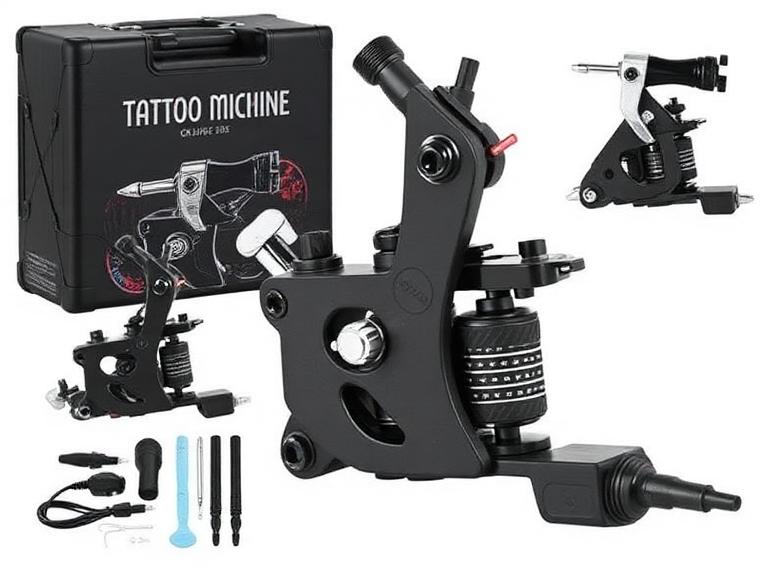
beginner tattoo machine
Die 10 besten Tattoo-Maschinen-Startersets und Maschinen für Anfänger im Jahr 2026
Die Auswahl des besten Tätowiergeräts für Einsteiger im Jahr 2026 ist einfacher als noch vor wenigen Jahren, aber es ist auch einfacher, Geld zu verschwenden. Der Markt ist überschwemmt mit günstigen drahtlosen Tattoo-Pens, die online professionell aussehen, aber bei der Arbeit auf der Haut an Beständigkeit, Akkulaufzeit und Nadelstabilität mangeln.
Basierend auf unserer Erfahrung in der Zusammenarbeit mit Tätowierern, Auszubildenden und Studiobesitzern konzentrieren sich Anfänger oft zu sehr auf den Preis, anstatt auf eine effiziente Lernweise zu achten. Das richtige Einsteigergerät sollte Ihnen dabei helfen, die richtige Technik, Linienführung und Sicherheit aufzubauen. Das falsche Gerät kann Ihren Fortschritt bremsen und schlechte Angewohnheiten fördern, die später nur schwer zu korrigieren sind.
Wenn Sie auf der Suche nach dem besten Tätowiergerät für den Einstieg sind, wird Ihnen dieser Ratgeber helfen, eine praktische Kaufentscheidung auf Basis realer Leistung statt auf Marketingversprechen zu treffen.
Kurzantwort
Das beste Tätowiergerät für Einsteiger im Jahr 2026 ist ein zuverlässiger drahtloser Tattoo-Pen mit stabiler Spannungsausgabe, ergonomischem Komfort, verstellbaren Huboptionen und ausreichender Akkulaufzeit für Übungseinheiten.
Bestes Einsteigergerät insgesamt: INKSOUL® HV6 PRO
Bestes Gerät mit verstellbarem Hub: Dragonhawk Fold Pro
Beste Budget-Option: Dragonhawk Mast Tour
Am besten für Auszubildende: FK Irons EXO
Am besten für zukünftige Profis: Bishop Power Wand
Für die meisten Anfänger empfehlen wir den Einstieg mit einem hochwertigen drahtlosen Pen anstelle einer herkömmlichen Spulenmaschine. Die Lernkurve ist kürzer, die Wartung einfacher und die Kontrolle über das Gerät deutlich besser.
Inhaltsverzeichnis
Kurze Zusammenfassungstabelle
Was ist ein Tätowiergerät für Einsteiger?
Wie es funktioniert
Die 10 besten Tätowiergeräte für Einsteiger
Vor- und Nachteile
Vergleichstabelle
Kaufberatung
Häufige Anfängerfehler
Empfehlung der Experten
Fazit
Häufig gestellte Fragen (FAQs)
Referenzen
Kurze Zusammenfassungstabelle
Rang
Gerät
Am besten für
Wertung
1
INKSOUL® HV6 PRO
Preis-Leistungs-Verhältnis für Einsteiger
9.8/10
2
Dragonhawk Fold Pro
Vielseitigkeit des Hubs
9.6/10
3
Bishop Power Wand
Berufliche Entwicklung
9.4/10
4
FK Irons EXO
Auszubildende
9.3/10
5
Dragonhawk Mast Tour
Günstiges Lernen
9.1/10
6
Cheyenne Sol Nova
Premium-Nutzer
9.0/10
7
Mast Archer
Drahtloses Üben
8.9/10
8
Ambition Soldier
Budget-Wireless
8.8/10
9
Stigma Force
Sanftes Schattieren
8.7/10
10
CNC Q2
Einsteiger-Künstler
8.6/10
Was ist ein Tätowiergerät für Einsteiger?
Ein Tätowiergerät für Einsteiger ist eine benutzerfreundliche Maschine, die neuen Künstlern dabei hilft, Linienführung, Schattierung, Farbpacken und Maschinenhandhabung zu erlernen, ohne dass fortgeschrittene Kenntnisse in der Einrichtung erforderlich sind.
Im Jahr 2026 sind die meisten Einsteigeroptionen drahtlose Rotations-Tattoo-Pens. Diese Maschinen bieten einen ruhigeren Betrieb, weniger Vibrationen und eine einfachere Wartung als herkömmliche Spulenmaschinen.
Für Anfänger sollte ein Einsteigergerät Konsistenz der rohen Leistung vorziehen. Das Ziel ist das Erlernen der Grundlagen des Tätowierens, statt die Geschwindigkeit zu maximieren.
Wie ein modernes Tätowiergerät funktioniert
Moderne Tattoo-Pens verwenden ein motorgetriebenes Rotationssystem, das eine Drehbewegung in eine lineare Nadelbewegung umwandelt.
Diese Bewegung drückt Tattoo-Nadelmodule mit kontrollierter Geschwindigkeit und Tiefe in die Haut. Hochwertige Maschinen behalten während der gesamten Sitzung eine konstante Leistung bei, was zu saubereren Linien und einer vorhersehbareren Heilung führt.
Das Verständnis der Geräteleistung ist nur ein Teil der Gleichung. Anfänger sollten auch die richtige Pigmentauswahl unter Verwendung hochwertiger Tattoofarbe für Anfänger erlernen, bevor sie an echter Haut arbeiten.
Die 10 besten Optionen für Tätowiergeräte im Jahr 2026
1. INKSOUL® HV6 PRO – Das beste Tätowiergerät für Einsteiger insgesamt
INKSOUL® HV6 PRO Drahtloser Tattoo-Pen
4,2 mm Hub, zwei Griffe, zwei Akkus, zwei Betriebsmodi und professionelle Leistung in einem einsteigerfreundlichen Paket.
Zum Produkt
Nach unserer Erfahrung bietet der HV6 PRO eines der besten Preis-Leistungs-Verhältnisse, die heute erhältlich sind. Der mitgelieferte Ersatzakku und das Dual-Griff-Setup machen ihn für lange Übungseinheiten und schließlich für die professionelle Arbeit geeignet.
2. Dragonhawk Fold Pro – Bestes Gerät mit verstellbarem Hub
Dragonhawk Fold Pro
Sieben einstellbare Hublängen machen dieses Gerät zu einem der vielseitigsten Einsteigergeräte auf dem Markt.
Zum Produkt
Für Anfänger, die mit einer Maschine Linien ziehen, schattieren und Farbe packen möchten, ist der Fold Pro eine exzellente Wahl.
3. Bishop Power Wand
Ein Premium-Gerät mit außergewöhnlicher Balance und Präzision. Teuer, aber in der Lage, eine komplette berufliche Laufbahn zu begleiten.
4. FK Irons EXO
Beliebt bei Auszubildenden aufgrund seines zuverlässigen Motorsystems und seines professionellen Rufs.
5. Dragonhawk Mast Tour
Eines der erschwinglichsten Geräte, mit dem respektable Ergebnisse für Anfänger erzielt werden können.
6. Cheyenne Sol Nova
Deutsche Ingenieurskunst und herausragende Zuverlässigkeit machen es zu einem Favoriten unter erfahrenen Künstlern.
7. Mast Archer
Eine praktische drahtlose Lösung für Künstler, die von Übungshaut auf echte Kunden umsteigen.
8. Ambition Soldier
Starke Akkuleistung zu einem wettbewerbsfähigen Preis.
9. Stigma Force
Sanfter Betrieb und angenehme Ergonomie für lange Sitzungen.
10. CNC Q2
Bezahlbarkeit für Einsteiger, ohne auf wesentliche Funktionalität zu verzichten.
Wer sollte ein Einsteiger-Tätowiergerät verwenden?
Angehende Tätowierer
Tattoo-Auszubildende
Künstler, die auf synthetischer Haut üben
Auszubildende im Bereich Permanent Make-up
Künstler, die von Spulenmaschinen umsteigen
Wer benötigt kein Einsteigergerät?
Etablierte professionelle Tätowierer
Studiobesitzer, die auf Premium-Ausrüstung aufrüsten
Künstler, die bereits mit verschiedenen Hubeinstellungen vertraut sind
Vor- und Nachteile von Einsteiger-Tätowiergeräten
Vorteile
Nachteile
Leicht zu erlernen
Eingeschränkte Zusatzfunktionen
Bezahlbare Investition
Einige Budget-Modelle haben wenig Kraft
Wartungsarm
Akkuausdauer variiert
Leichtes Design
Könnte zukünftige Upgrades erfordern
Drahtlose Bequemlichkeit
Premium-Modelle kosten mehr
Vergleichstabelle
Gerät
Drahtlos
Hub-Optionen
Zielgruppe
HV6 PRO
Ja
4,2 mm
Die meisten Anfänger
Fold Pro
Ja
7 Optionen
Lernen mehrerer Stile
Bishop Power Wand
Ja
Mehrere Versionen
Profis
FK EXO
Ja
Mehrere Versionen
Auszubildende
Mast Tour
Nein
Fest
Budget-Nutzer
Kaufüberlegungen
Faktor
Empfehlung
Wichtigkeit
Akkulaufzeit
6+ Stunden
Hoch
Gewicht
Unter 220g
Hoch
Hublänge
3,5 mm - 4,2 mm
Hoch
Spannungsstabilität
Konstante Leistung
Kritisch
Griffkomfort
Ergonomisches Design
Hoch
In den meisten professionellen Situationen bestimmt die Leistung der Maschine allein nicht die Ergebnisse. Auch die unterstützende Ausrüstung zählt. Die richtige Tattoo-Beleuchtungsausrüstung kann die Sichtbarkeit und die Präzision der Linien drastisch verbessern.
Künstler sollten außerdem Pigmente effizient mit einem speziellen Tattoofarben-Display organisieren und die Farbkonsistenz mit professionellem Mischzubehör beibehalten.
Häufige Anfängerfehler
Kauf der billigsten verfügbaren Maschine
Billige Maschinen erzeugen oft eine ungleichmäßige Nadeltiefe und instabile Spannungsausgabe.
Ignorieren von Hygieneausrüstung
Viele Anfänger geben ihr gesamtes Budget für eine Maschine aus und vergessen wesentliche Hygieneartikel wie Reinigungszubehör für Tattoo-Nadeln.
Zu frühes Arbeiten auf echter Haut
Übungshaut existiert aus einem Grund. Bauen Sie zuerst das Muskelgedächtnis auf.
Fokus nur auf Maschinenspezifikationen
Die Technik zählt mehr als das neueste Gerät.
Empfehlung der Experten
Für Anfänger empfehlen wir ein Gerät zu wählen, das man realistisch gesehen mindestens ein bis zwei Jahre nutzen kann. Ständiges Aufrüsten der Ausrüstung verlangsamt die Entwicklung der Fähigkeiten.
Nach unserer Erfahrung bietet der INKSOUL® HV6 PRO die stärkste Kombination aus Zuverlässigkeit, Wert, Komfort und langfristiger Nutzbarkeit für neue Künstler.
Für Nutzer, die maximale Flexibilität wünschen, bleibt der Dragonhawk Fold Pro eine der besten Optionen, da sein einstellbares Hubsystem das Experimentieren mit verschiedenen Tattoo-Stilen ermöglicht.
Das Lernen der Grundlagen sollte Priorität haben. Das Verständnis der Heilungsphasen von Tattoos, die ordnungsgemäße Beratung der Kunden und realistische Erwartungen mithilfe eines professionellen Tattoo-Preisratgebers tragen langfristig mehr zum Erfolg bei als das Jagen nach Trends bei der Ausrüstung.
Für angehende Künstler, die noch nicht für permanente Tätowierungen bereit sind, kann das Experimentieren mit temporären Tattoo-Ideen, das Lesen von Testberichten zu Tattoo-Markern, das Lernen wie man temporäre Tattoos macht oder das Erforschen eines Glitzer-Tattoo-Ratgebers wertvolle künstlerische Übung bieten.
Fazit
Das beste Einsteiger-Tätowiergerät im Jahr 2026 ist nicht zwangsläufig das teuerste. Es ist das Gerät, das Ihnen hilft, effizient zu lernen, konsequent zu üben und sich professionell weiterzuentwickeln, ohne sofort Ersatz kaufen zu müssen.
Für die meisten Anfänger ist der INKSOUL® HV6 PRO unsere Top-Empfehlung, da er Leistung auf Profi-Niveau, Einsteigerfreundlichkeit, Akku-Komfort und langfristigen Wert vereint.
Wenn Vielseitigkeit Ihre Priorität ist, ist der Dragonhawk Fold Pro dank seines verstellbaren Hubsystems und des breiten Anwendungsbereichs eine hervorragende zweite Wahl.
Investieren Sie einmal in hochwertige Ausrüstung, konzentrieren Sie sich auf die Technik und vermeiden Sie die typische Anfängerfalle, ständig neuem Equipment hinterherzujagen.
Häufig gestellte Fragen (FAQs)
Was ist das beste Tätowiergerät für Einsteiger?
Der INKSOUL® HV6 PRO ist unsere Top-Empfehlung für Einsteiger aufgrund seiner Zuverlässigkeit, des kabellosen Designs und der Leistung auf Profi-Niveau.
Sollten Anfänger Spulenmaschinen oder Rotationsmaschinen verwenden?
Die meisten Anfänger sollten mit Rotations-Tattoo-Pens beginnen, da diese einfacher zu kontrollieren sind und weniger Wartung erfordern.
Lohnt sich ein drahtloses Tätowiergerät?
Ja. Moderne drahtlose Maschinen bieten exzellente Leistung und größere Bewegungsfreiheit.
Wie viel sollte ein Anfänger für ein Tätowiergerät ausgeben?
Die meisten hochwertigen Einsteigergeräte kosten zwischen 100 und 400 Euro, abhängig von Ausstattung und Markenruf.
Kann ich mit einem Einsteigergerät professionell tätowieren?
Viele moderne Einsteigergeräte sind bei richtiger Technik absolut für die professionelle Arbeit geeignet.
Wie lange sollte ein hochwertiges Tätowiergerät halten?
Ein gut gebautes Gerät kann bei ordnungsgemäßer Wartung und Akkupflege mehrere Jahre zuverlässig funktionieren.
Am Anfang Ihrer Reise? Überspringen Sie die mysteriösen Komplettsets – unser Tattoo-Pen-Set enthält vollständige, echte Starter-Pakete mit allem Zubehör in einem Karton.
Referenzen
FK Irons Technische Ressourcen
Bildungsratgeber für Tätowierer (Allied Health Schools)
Occupational Safety and Health Administration (OSHA)