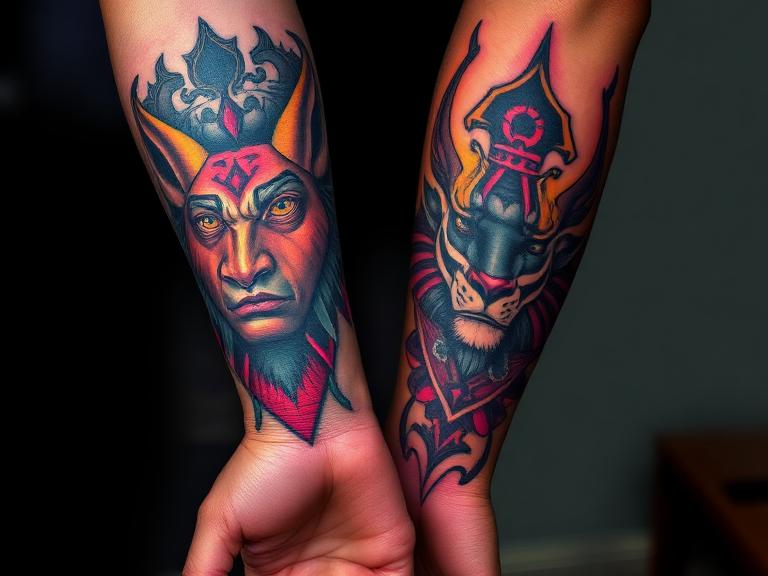
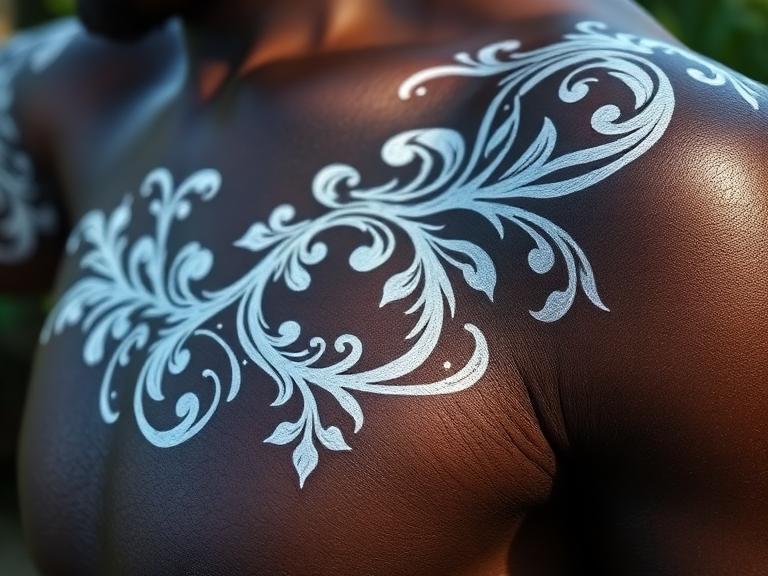
The visual drama of pure white ink geometric patterns sitting across solid, fully saturated blackwork has exploded across social media. Known across studios as "white-on-black," "whiteout," or "blast-over highlights," this style promises an architectural, high-contrast aesthetic that seems to defy the traditional limitations of skin pigmentation. But when clients walk into a studio asking whether does white ink on black tattoos last, they are rarely given the unvarnished truth. Many artists either overpromise an impossible, glowing white finish that lasts forever or dismiss the entire technique as an unviable gimmick.

From our experience supplying professional studios and auditing healed body modifications over decades, the reality sits firmly in the middle. White ink over solid blackwork does hold up, but it does not age into the stark, hyper-contrasted white paper look that fresh Instagram photos show under polarized studio lighting. It ages into a refined, etched stone, gunmetal gray, or ghostly porcelain effect. If you understand the biological mechanics of the dermis, execute strict session scheduling, and deploy the right high-power hardware, this technique produces breathtaking, permanent art. In this guide, we break down the physics, biology, procedural requirements, and equipment standards needed to make white-on-black tattooing truly last.
Quick Answer: Does White Ink on Black Tattoos Last?
Yes, white ink on black tattoos lasts permanently as a distinct design, but it will not remain bright paper-white. As the skin regenerates, melanin and new epidermal layers form over the pigment, shifting the stark white into an opaque slate, ash gray, or silver-toned highlight. Achieving lasting contrast requires tattooing over fully healed blackwork (never fresh black), using dense titanium-dioxide-based opaque white pigment, utilizing high-torque adjustable stroke machines, and committing to 2 to 3 layered sessions spaced 2 to 3 months apart.
Table of Contents
- What It Is: The White-on-Black Tattooing Technique
- How It Works: The Cellular Biology of Ink Layering
- Quick Summary: Healed Realities vs. Fresh Myths
- Practical & Aesthetic Benefits of the Technique
- Inherent Limitations and Long-Term Aging Shifts
- Who Should Get It vs. Who Should Avoid It
- Comparison Table: White on Black vs. Traditional Cover-ups vs. Laser
- Common Mistakes That Ruin White-on-Black Tattoos
- Equipment & Needle Selection for Maximum Pigment Retention
- Expert Recommendation from InksoulSupply
- Frequently Asked Questions (FAQ)
- Authoritative References
What It Is: The White-on-Black Tattooing Technique
White-on-black tattooing is the advanced procedural practice of packing heavy-opacity white pigment directly into dense, previously healed blacked-out skin. While traditional tattooing uses the skin's natural tone as the lightest value and applies black to create shadow, white-on-black inverts the visual hierarchy. The solid black carbon background acts as negative space, and the white pigment acts as the foreground light source.
This method has evolved from simple blast-over accents into intricate sacred geometry, mandalas, fine-line etchings, and ornamental lace work. However, achieving this look is vastly different from doing a standard line drawing on virgin skin. It requires deep saturation, specialized needle configurations, and precise stencil positioning using reliable tools like a thermal tattoo printer and dedicated tattoo stencil paper guide protocols to ensure the pattern transfers visibly over dark skin.
How It Works: The Cellular Biology of Ink Layering
To understand why white ink behaves the way it does over black ink, you must look at how the dermis holds pigment. Tattoo ink is not paint sitting on top of a canvas; it is an array of microscopic pigment particles engulfed by dermal macrophages and trapped within fibroblasts beneath the basal layer of the epidermis.
1. Pigment Molecule Chemistry: Black tattoo ink is composed primarily of tiny carbon black particles that absorb all light wavelengths. White tattoo ink is composed of heavy, large-molecule titanium dioxide ($TiO_2$) or zinc oxide particles that scatter light. Because titanium dioxide particles are physically much larger and denser than carbon particles, they can sit alongside and slightly over carbon-saturated cells, reflecting light back out through the skin.
2. The Epidermal Melanin Filter: When a tattoo is freshly applied, the white ink sits inside open, bleeding skin and on the epidermal surface, looking glowing white. As the tattoo heals over 4 to 6 weeks, the epidermis regenerates over the dermis. The natural melanin in your skin, combined with ambient UV exposure, acts as a tinted filter over the white pigment. This optical filter is why white ink shifts from stark white to a muted bone, cream, or silver-gray tone.
3. Preventing Ink Bleed: If white ink is injected into fresh, unhealed black ink, the needles puncture liquid carbon cells, mixing the two pigments directly in the skin and turning your white ink into muddy dark gray instantly. The black base must be completely encapsulated by healed collagen fibers before introducing white pigment.
| Aspect | Fresh / Day 1 Reality | Healed (1 to 2 Years) | Long-Term (5+ Years) |
|---|---|---|---|
| Color Value | Stark paper-white, high contrast | Opaque slate, ash, or cool silver-gray | Soft charcoal-gray, stone-like contrast |
| Line Definition | Razor-sharp outer boundaries | Slightly softened edges via natural macrophage migration | Stable, legible contrast pattern |
| Session Requirement | Initial pass looks bright immediately | Requires 2nd or 3rd pass for true opacity | Periodic single-pass touchup maintains brightness |
| Skin Texture | Mild swelling and surface redness | Completely flat, smooth healed epidermis | Permanent, supple healed tissue |
Practical & Aesthetic Benefits of the Technique
In most professional situations, clients choose white ink over black tattoos for three distinct commercial and aesthetic reasons:
1. Reclaiming Heavy Blackout Coverage: Blackout sleeves are often chosen to cover poorly executed, dark vintage tattoos that laser cannot easily remove. Adding white ink on top breathes new life into a solid black arm, transforming a monolithic block of black into an artistic ornamental piece.
2. High Visual Depth: Layering white ink over healed black creates a two-tone dimensionality that is impossible to achieve on virgin skin. The black background provides infinite depth, making the geometric white lines stand out with an almost three-dimensional relief.
3. Zero Skin Bleaching: Unlike harsh acid removals or unpredictable color-cover methods, white-on-black utilizes proven titanium dioxide inks that do not chemically attack or scar the surrounding dermal tissue when applied with appropriate machine speed and hand pressure.
Inherent Limitations and Long-Term Aging Shifts
We must use practical and commercial judgment here: white ink over black has clear limitations that every client and artist must accept prior to starting a multi-session project.
The primary limitation is that white ink will never be whiter than your natural untattooed skin tone once fully healed. If you have warm, olive, or deeper skin tones, the melanin in your epidermis will tint the healed white ink toward beige, amber, or cool slate. Furthermore, white pigment breaks down faster under direct solar ultraviolet (UV) radiation than carbon black. If the wearer does not apply daily broad-spectrum SPF 50 sunscreen, the white linework will fade into the background blackwork within three to four years.
Who Should Get It vs. Who Should Avoid It
For experienced collectors with solid blackwork: If you already have a fully healed, dense black sleeve or chest piece and want to add geometric texture, sacred geometry, or ornamental filigree, white-on-black is an exceptional option. You understand the multi-session healing process and have realistic expectations about color shifts.
Who does not need it: If you are looking for a quick, one-session coverup solution for an old ex-partner's name or a dark tribal band, do not attempt white-on-black. You cannot simply blast white ink over an uneven, patchy old tattoo and expect it to cover. It requires a uniform, saturated black canvas first. For beginners looking into first-time procedures, exploring standard linework with proper tattoo machines for beginners is far more appropriate than attempting advanced pigment layering.
| Method | Sessions Required | Average Cost | Pain & Skin Trauma | Longevity & Outcome |
|---|---|---|---|---|
| White Ink Over Healed Blackout | 2 to 4 passes (after blacking out) | Moderate to High | Moderate (standard tattoo recovery) | Permanent, unique silver-gray contrast on black |
| Full Q-Switched / Pico Laser Removal | 8 to 15+ sessions | Very High ($1,500 – $4,000+) | High (thermal blistering, long healing) | Fades ink significantly, but rarely 100% invisible |
| Traditional Color Cover-Up | 1 to 3 heavy passes | Moderate | Moderate | Old dark ink often bleeds through colored ink over 5 years |
Common Mistakes That Ruin White-on-Black Tattoos
In our industry testing and studio observations, failed white-on-black tattoos almost always boil down to three procedural errors:
1. Rushing the Healing Time of the Black Base: Tattooing white over black that has only been healed for 3 or 4 weeks is a recipe for failure. While the surface epidermis looks healed, the deeper dermis is still actively remodeling collagen. We recommend waiting a minimum of 3 to 6 months after the final blackout session before applying the first layer of white ink.
2. Using Watered-Down or Thin Mixing Whites: There are two types of white ink: mixing whites (used to tint other colors) and lining/opaque whites (high-viscosity, high-pigment load titanium dioxide). Using a thin mixing white will result in total absorption into the black background, leaving zero visible trace after 8 weeks. You must use ultra-dense, concentrated lining whites.
3. Chewing the Skin with Excessive Passes: Because white ink is difficult to see when the skin is inflamed and bloody during the session, inexperienced artists tend to overwork the area, going over the same line four or five times in one sitting. This turns the skin into scar tissue. Scar tissue rejects pigment and heals with a raised, milky texture that distorts the design.
Equipment & Needle Selection for Maximum Pigment Retention
Commercial users and tattoo artists must understand that packing dense, high-viscosity titanium dioxide into toughened, previously tattooed dermal tissue requires serious hardware. A weak, short-stroke machine will bog down, resulting in shallow needle penetration and immediate ink fallout.
Stroke Length Requirements: In our testing, short-stroke machines (2.5mm to 3.0mm) lack the punch needed to deposit thick white ink into scarred or dense blackwork. We recommend a long, hard-hitting stroke length between 3.8mm and 4.2mm. An adjustable stroke machine allows you to shift from a 4.2mm stroke for bold white linework to a softer 3.5mm stroke for multi-pass dotwork shading.
Needle Groupings: Use high-grade tight Round Liners (RL) with a medium to long taper for crisp line work, or tightly grouped Round Shaders (RS) to deposit heavier pigment volumes without cutting the skin. Understanding the difference in needle dynamics through an rs vs rl tattoo needles guide is critical to avoid over-traumatizing dense black dermal layers.
| Hardware Component | Recommended Specification | Why It Matters for White-on-Black |
|---|---|---|
| Machine Stroke | Adjustable (3.8mm to 4.2mm preferred) | Drives heavy titanium dioxide pigment deep into dense dermal collagen without stalling. |
| Needle Cartridge Gauge | #10 (0.30mm) or #12 (0.35mm) Long Taper | Delivers concentrated pigment flow while minimizing surface puncture trauma. Read our tattoo needle sizes guide. |
| Motor Type | High-Torque Brushless DC Motor | Maintains consistent RPM even when pushing large needle groupings into resistant scar tissue. |
| Stencil Transfer Unit | High-Resolution Thermal Printer | Ensures crisp stencil adhesion over dark backgrounds using a touch screen tattoo printer. |

Dragonhawk Wireless Tattoo Pen Machine | Mast Fold 2 Pro
Adjustable 2.4mm – 4.2mm Stroke | Wireless Dual Battery System
When executing complex white-on-black tattoos, hardware adaptability is mandatory. The Mast Fold 2 Pro provides 7 adjustable stroke settings on the fly, allowing you to switch instantly from a delicate 2.4mm stroke for fine gray-scale stippling to a powerful 4.2mm punch for packing thick opaque white pigment into solid blackwork.
- Variable Stroke Versatility: Instantly click between 2.4, 2.7, 3.0, 3.3, 3.6, 3.9, and 4.2mm.
- Consistent Direct Drive Power: Powerful coreless motor ensures zero needle bogging during heavy white pigment packing.
- Extended Battery Life: Dual wireless battery packs ensure zero interruptions during lengthy multi-hour blackout blast-overs. Review wireless tattoo gun battery life benchmarks.
Expert Recommendation from InksoulSupply
In most professional situations, we recommend approaching white-on-black tattoos as a committed journey rather than a single afternoon session. If you are an artist offering this service, you must manage your client's expectations: educate them on the shift from fresh titanium white to healed slate-gray, enforce a mandatory 3-month healing window on the black base, and schedule a minimum of two passes to achieve enduring opacity.
For artists looking to master this style, upgrading to high-torque, adjustable-stroke professional tattoo machines from verified top tattoo machine brands is essential. When combined with accurate stenciling from the best tattoo stencil printers, proper equipment gives you the power to deposit heavy white pigment cleanly in a single pass without chewing up the client's skin. White ink on black tattoos absolutely lasts—provided you respect the biology of the skin and deploy the right tools for the job.
Frequently Asked Questions (FAQ)
Authoritative References
To ensure our technical advice aligns with medical dermatology and professional safety standards, consult the following authoritative resources:
- American Academy of Dermatology (AAD) - Clinical guidelines on tattoo healing, epidermal regeneration, and long-term skin health.
- Alliance of Professional Tattooists (APT) - Industry body standardizing aseptic techniques, machine safety, and pigment application protocols.
- National Center for Biotechnology Information (NCBI / PubMed) - Peer-reviewed research on the chemical behavior, macrophage encapsulation, and laser interaction of titanium dioxide ($TiO_2$) in human dermal tissue.