
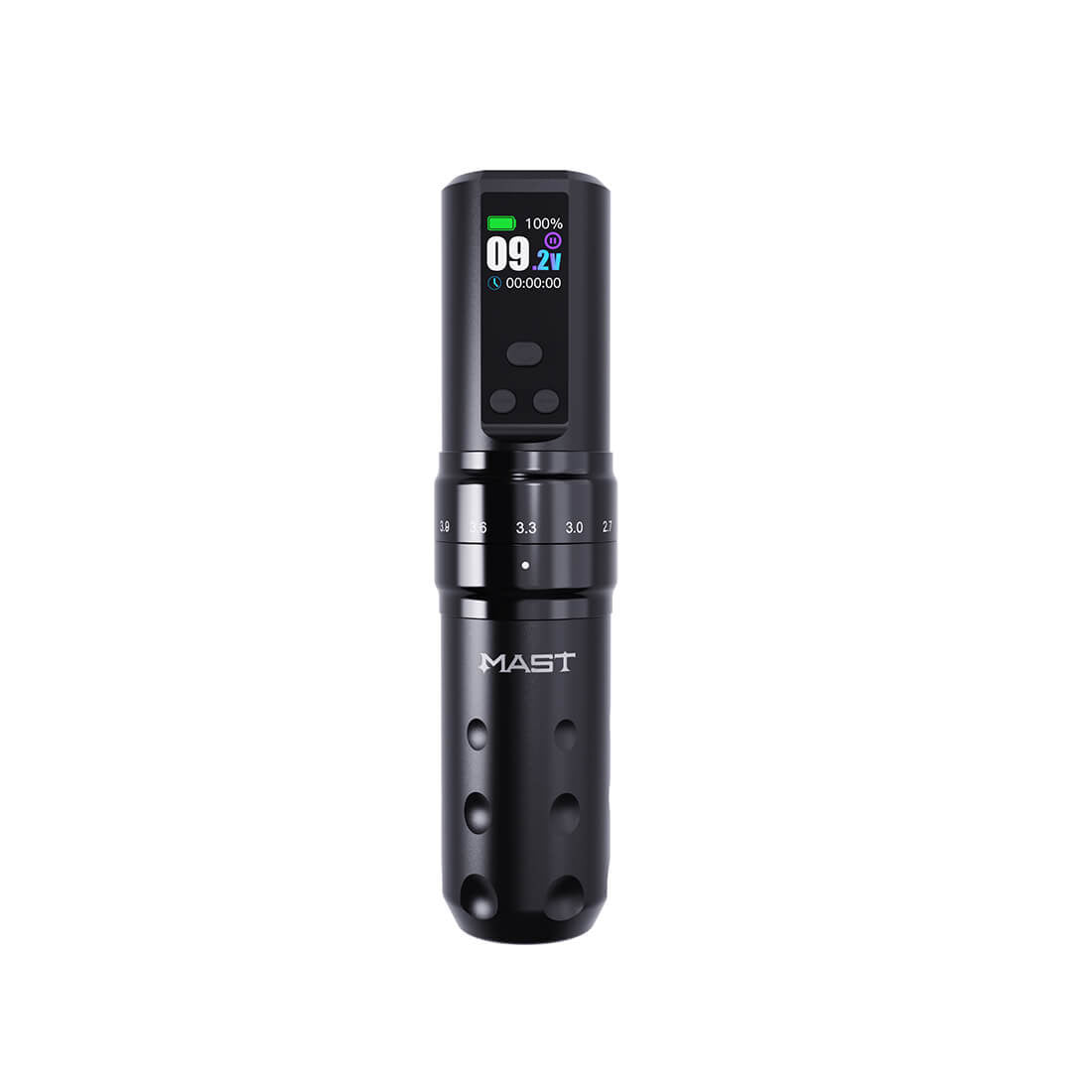
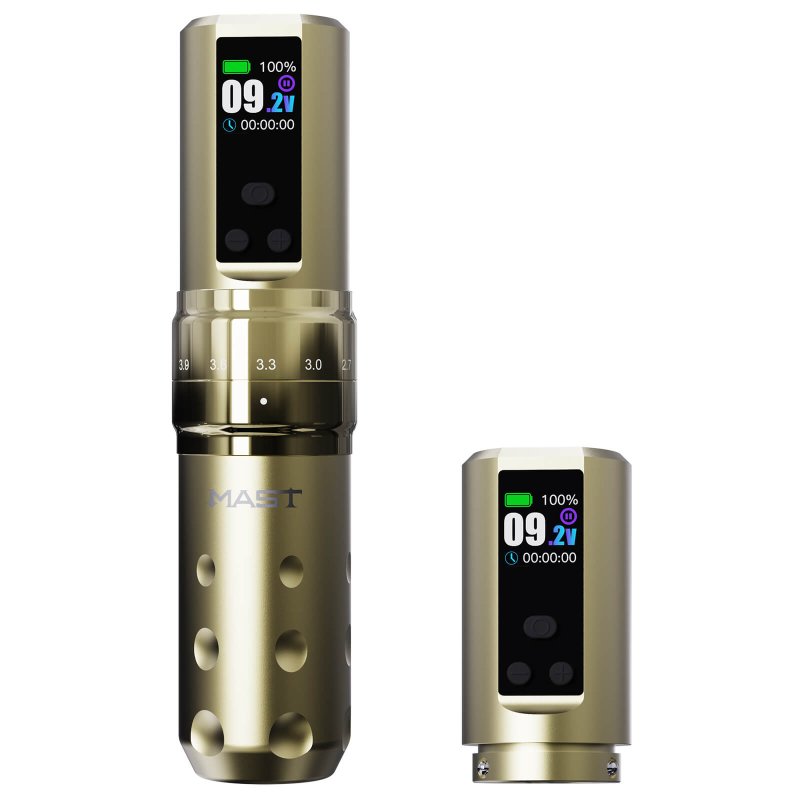
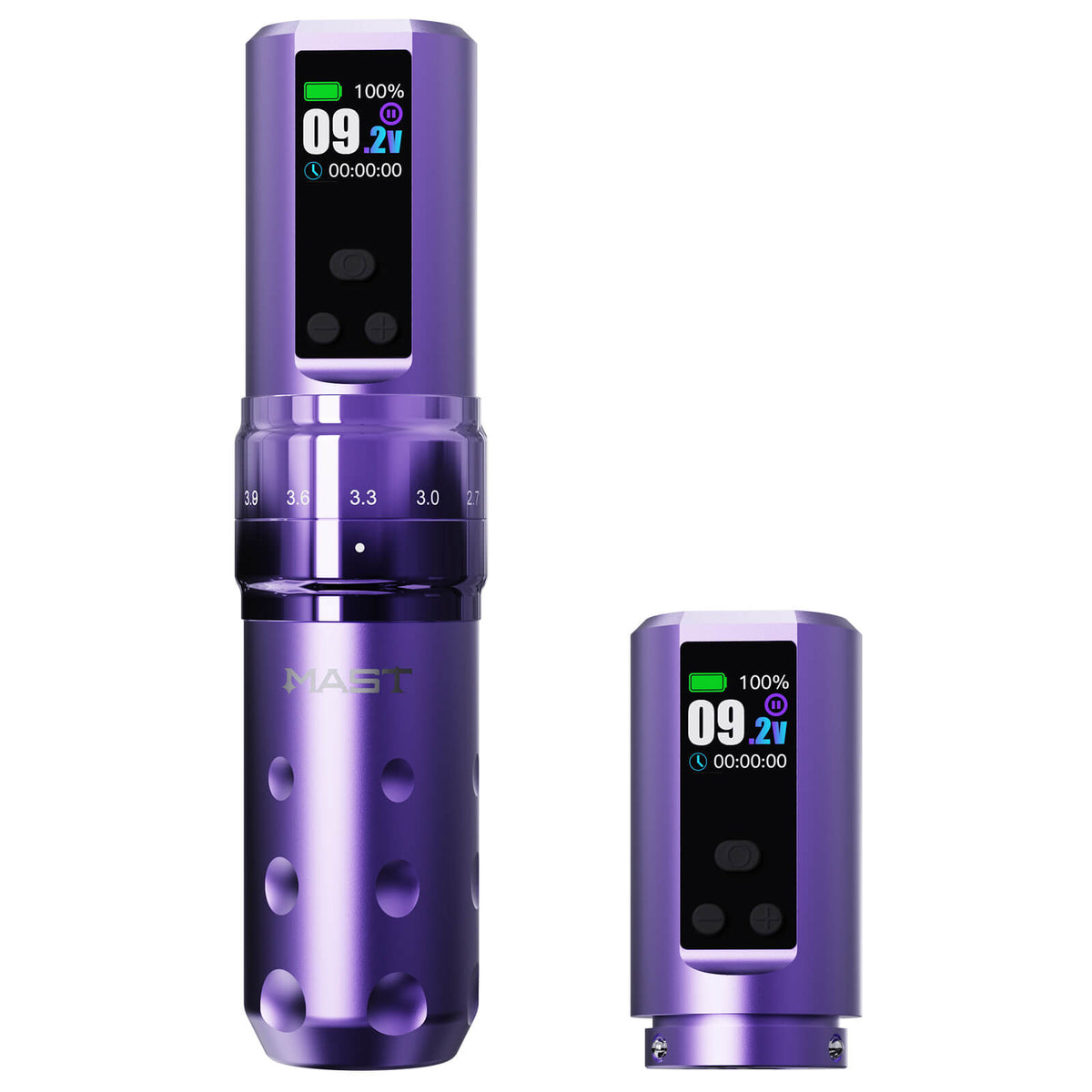
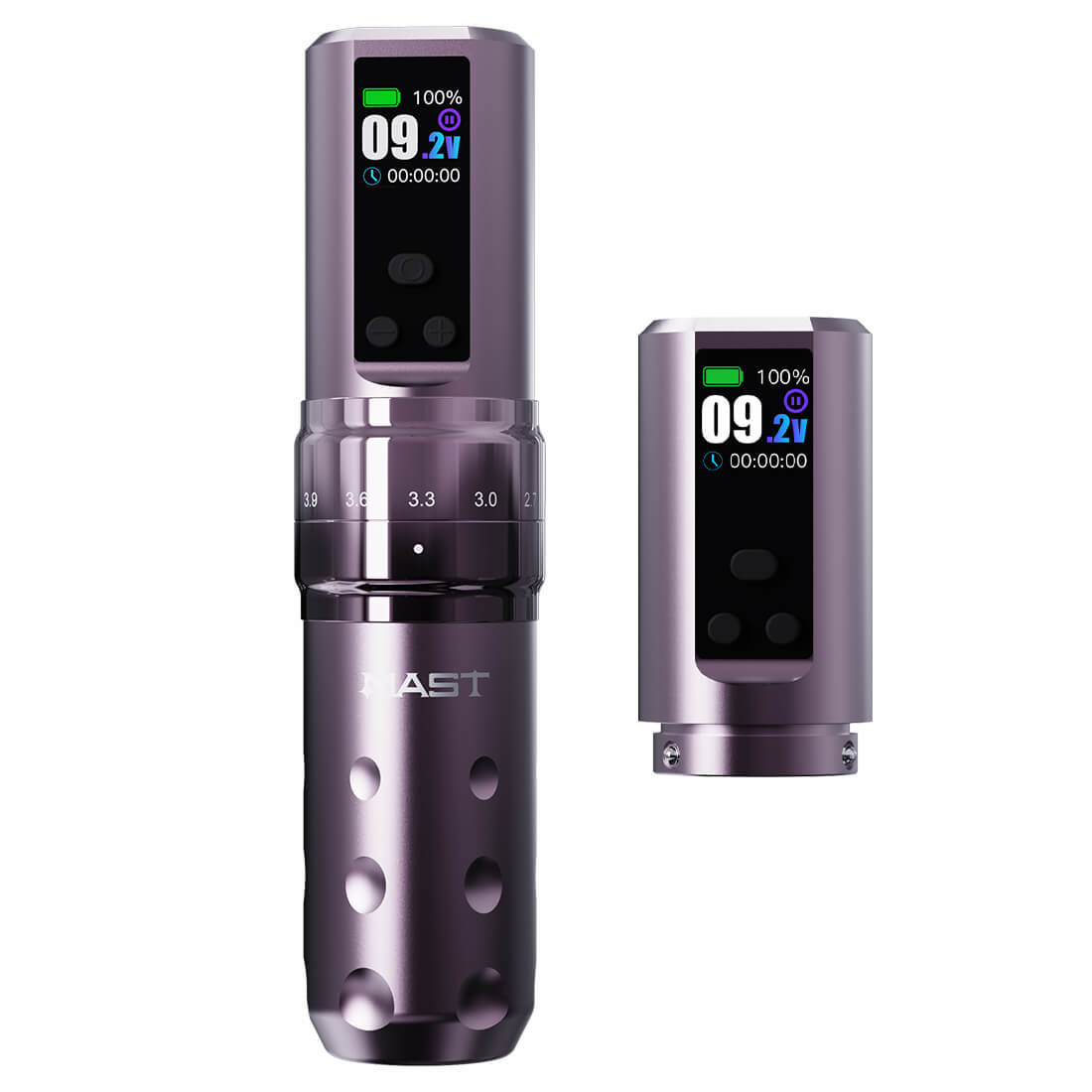
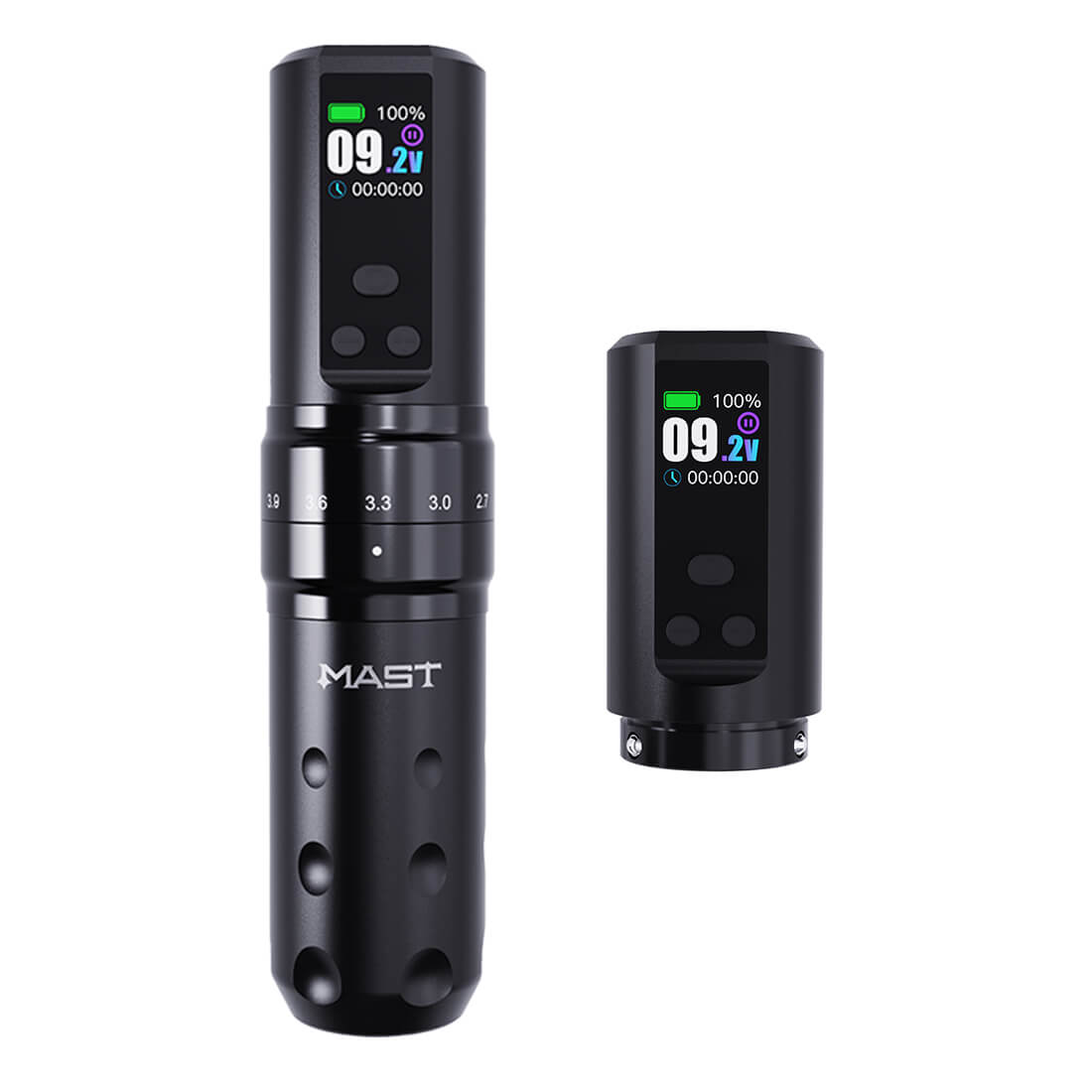
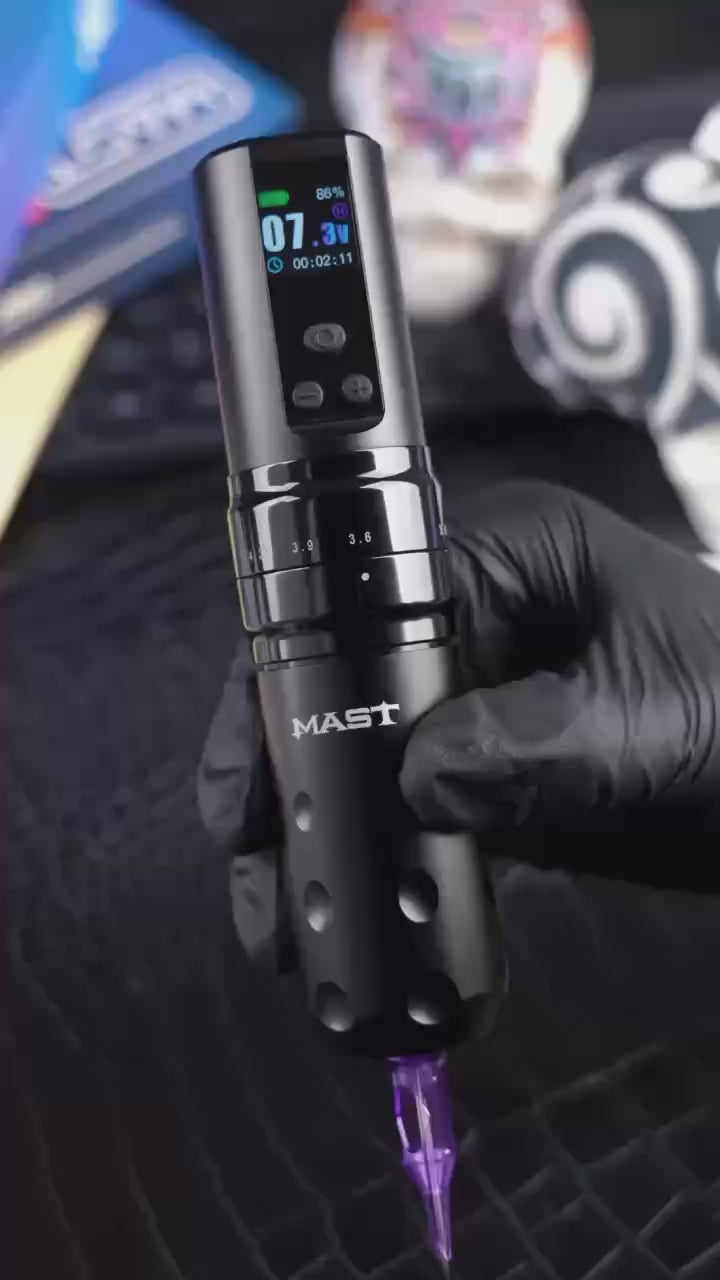
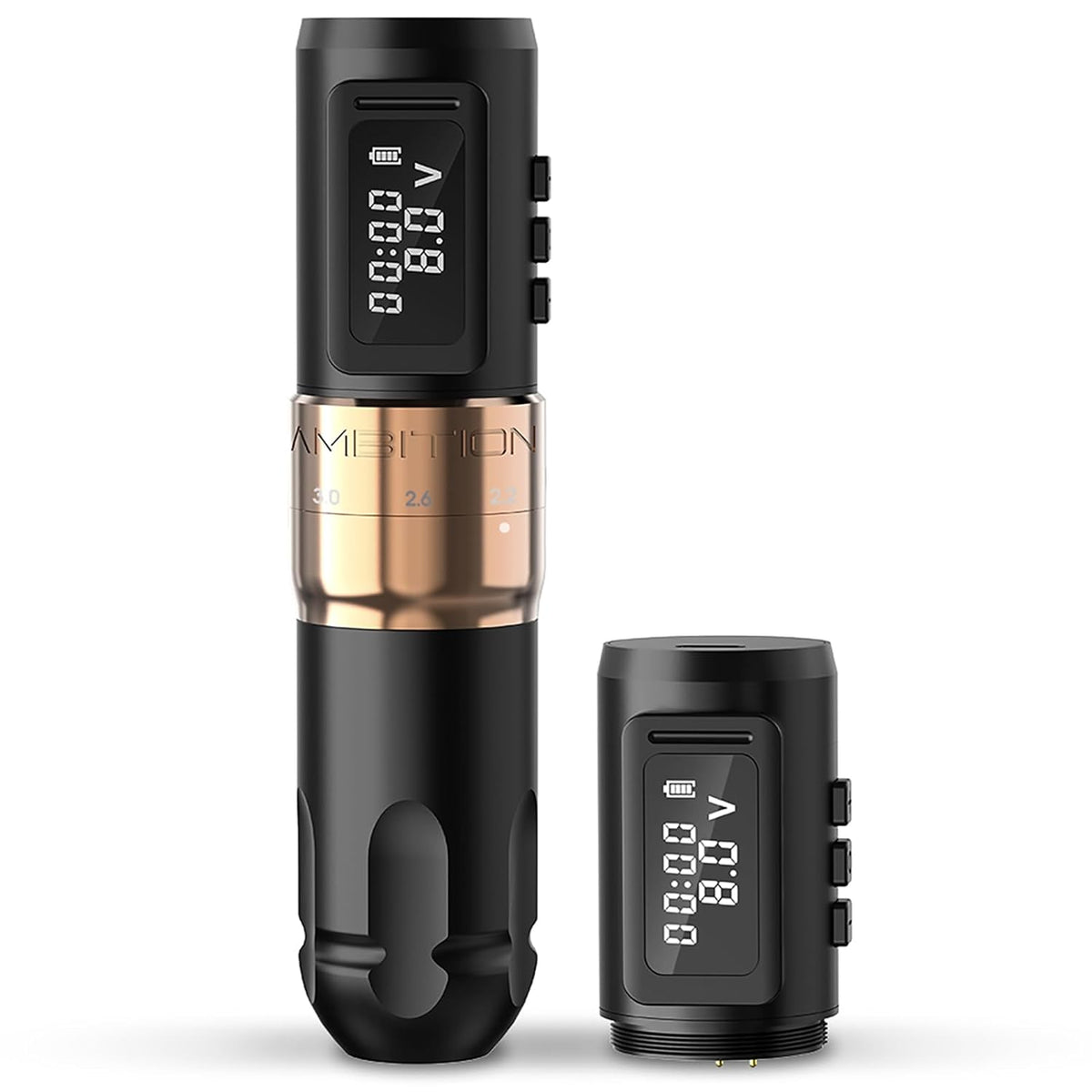
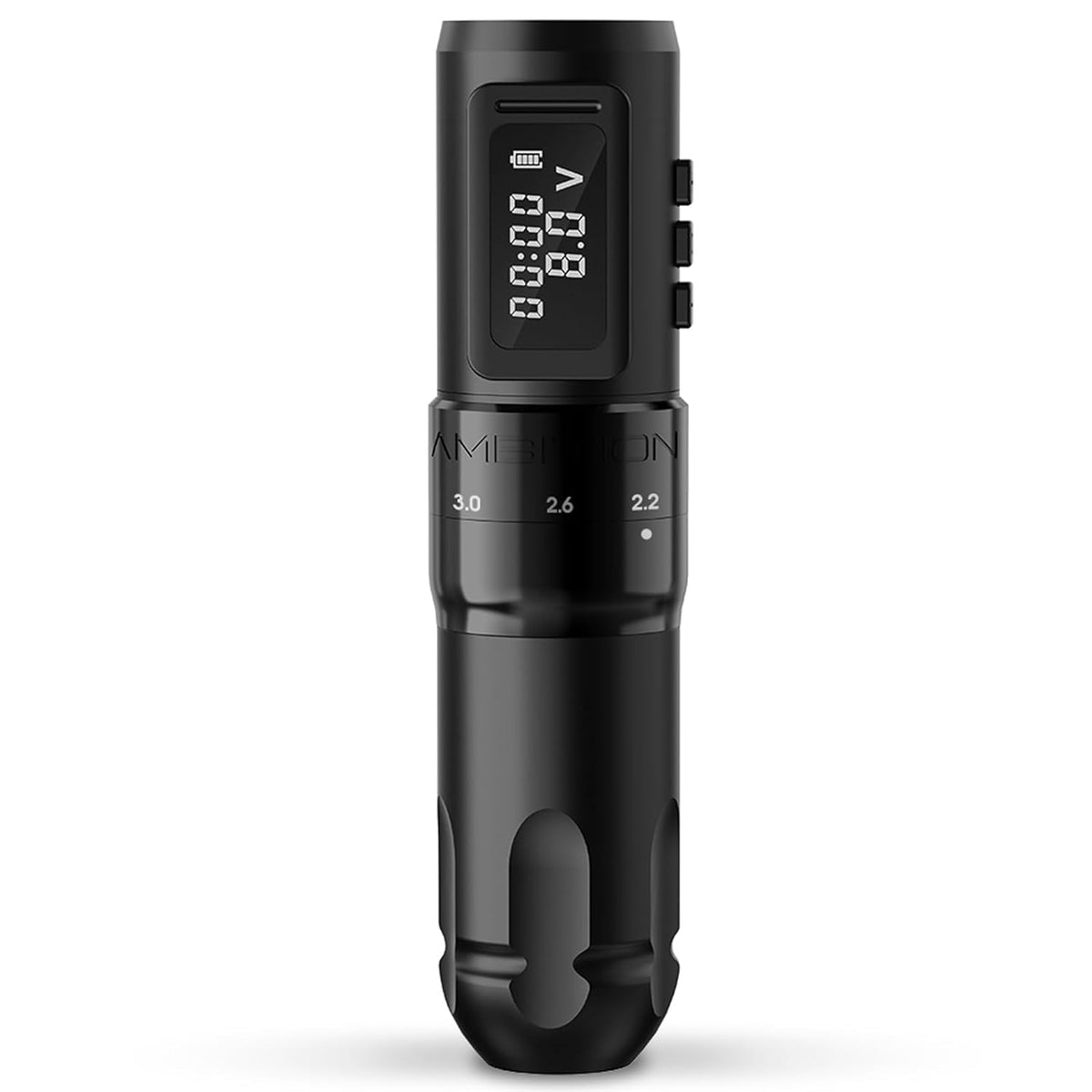
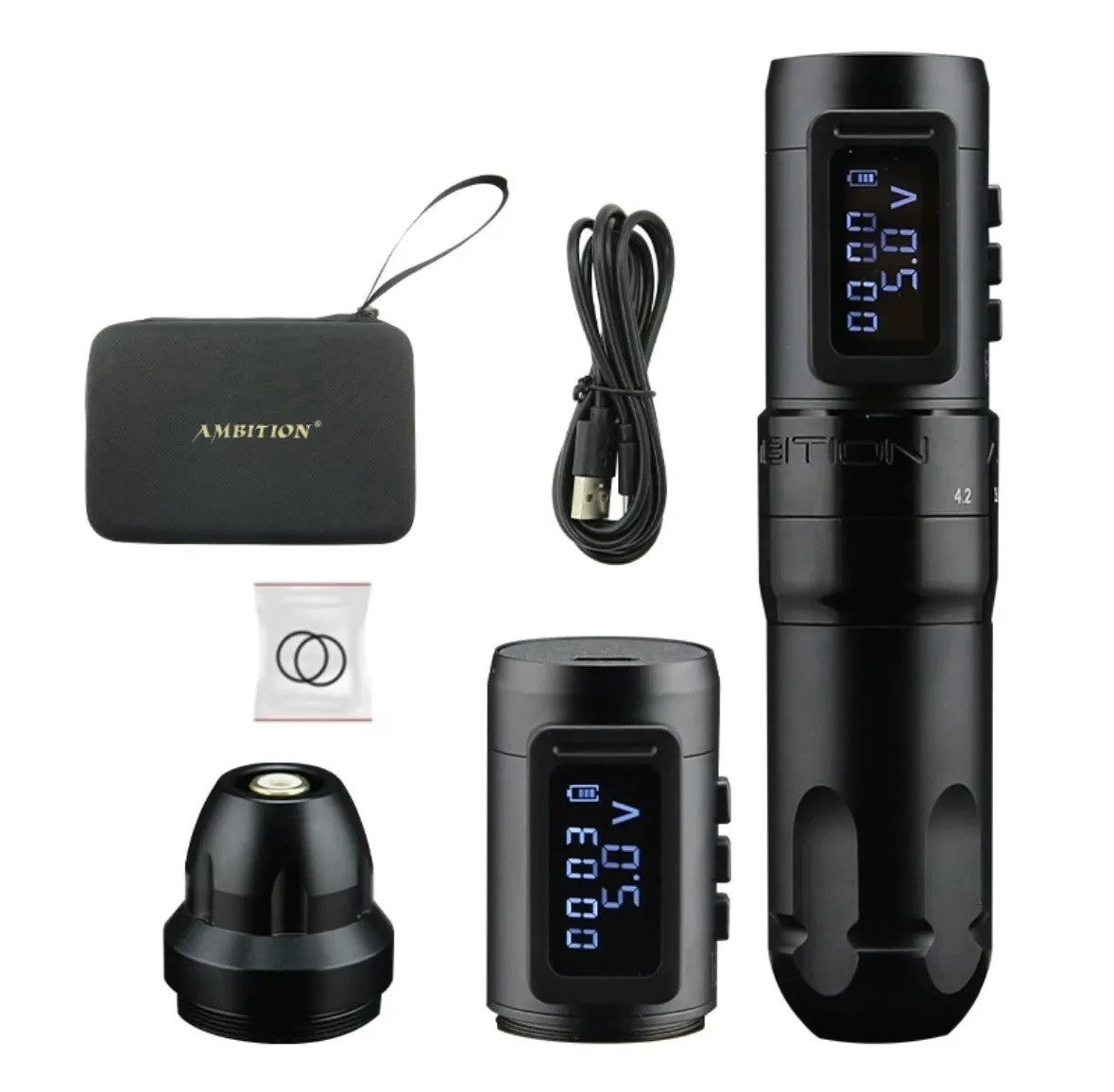
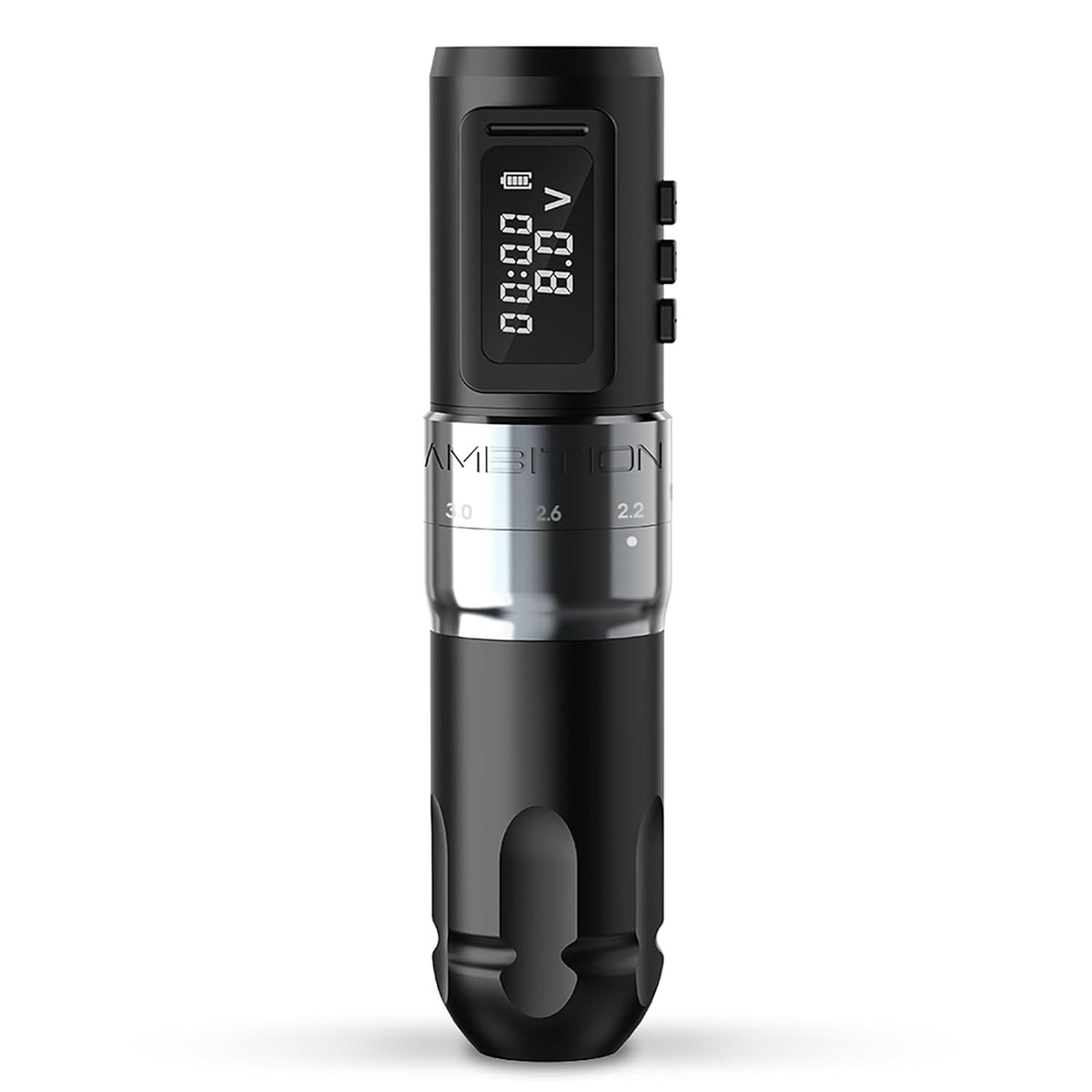
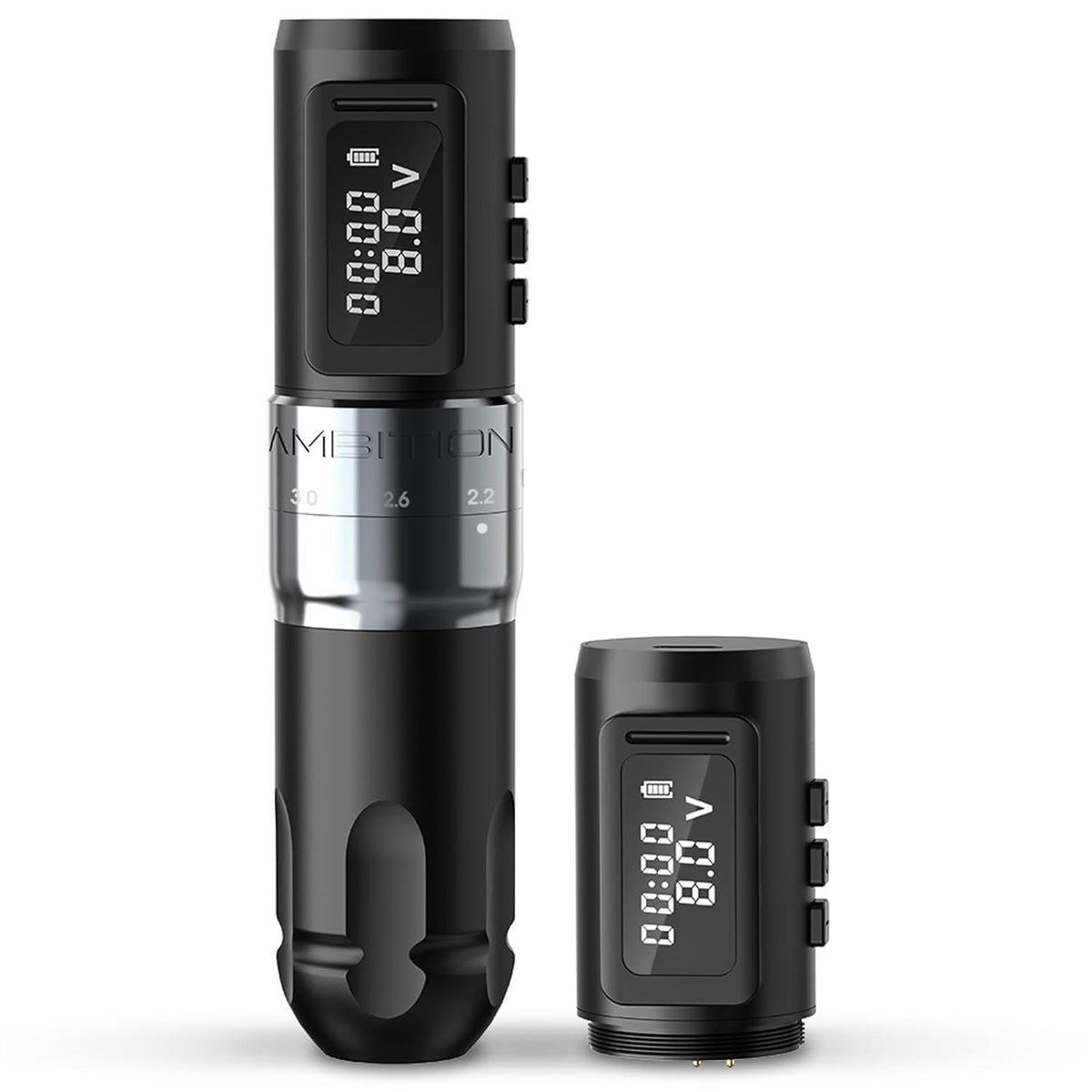
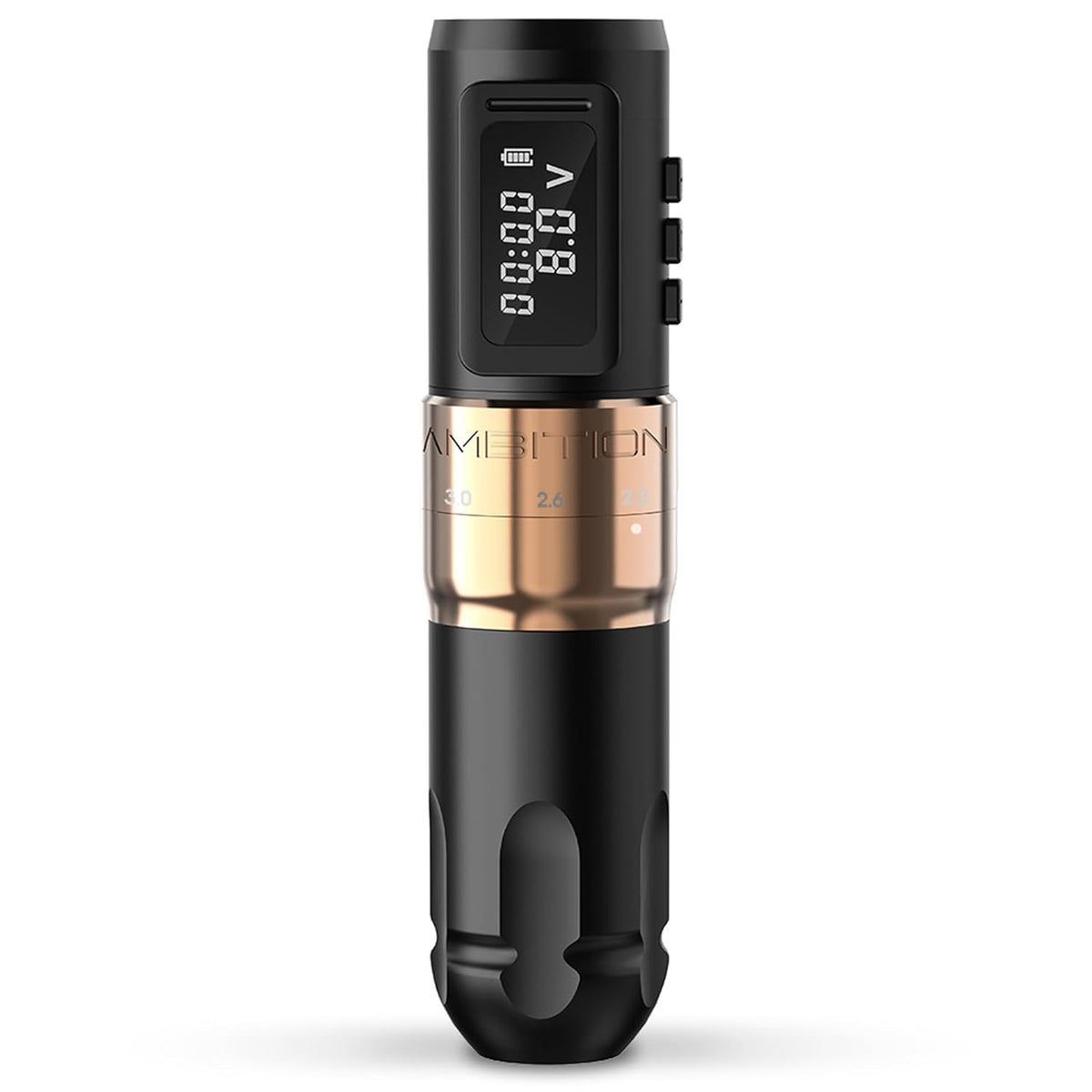
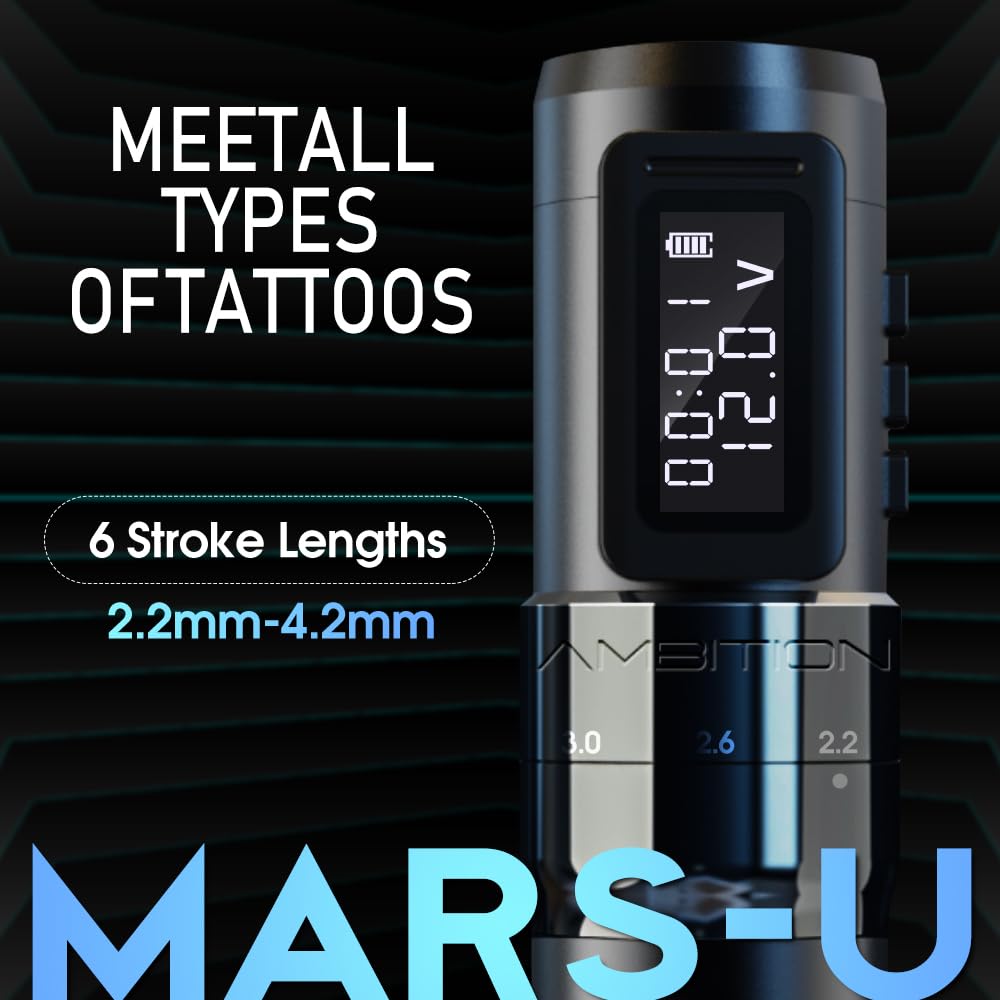
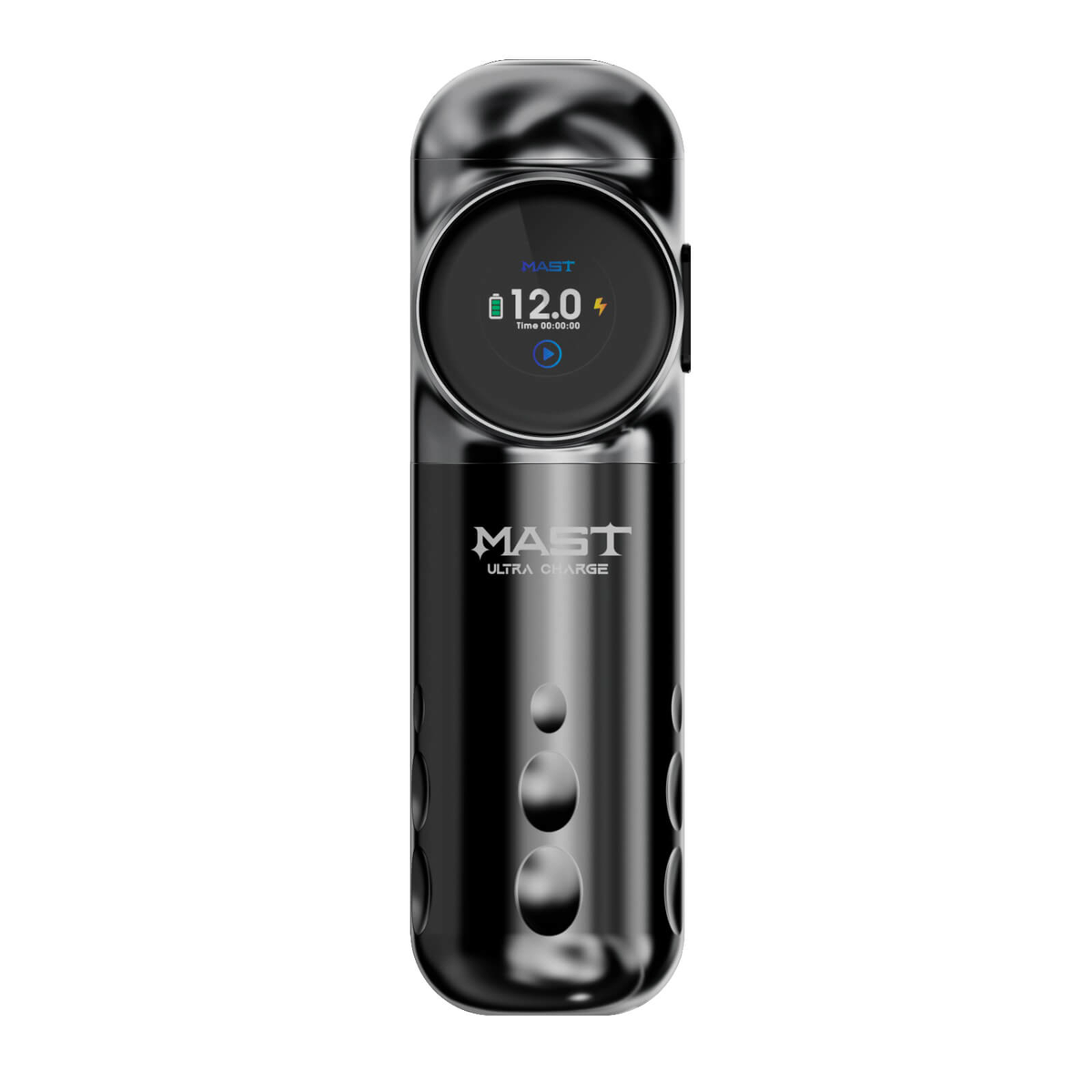
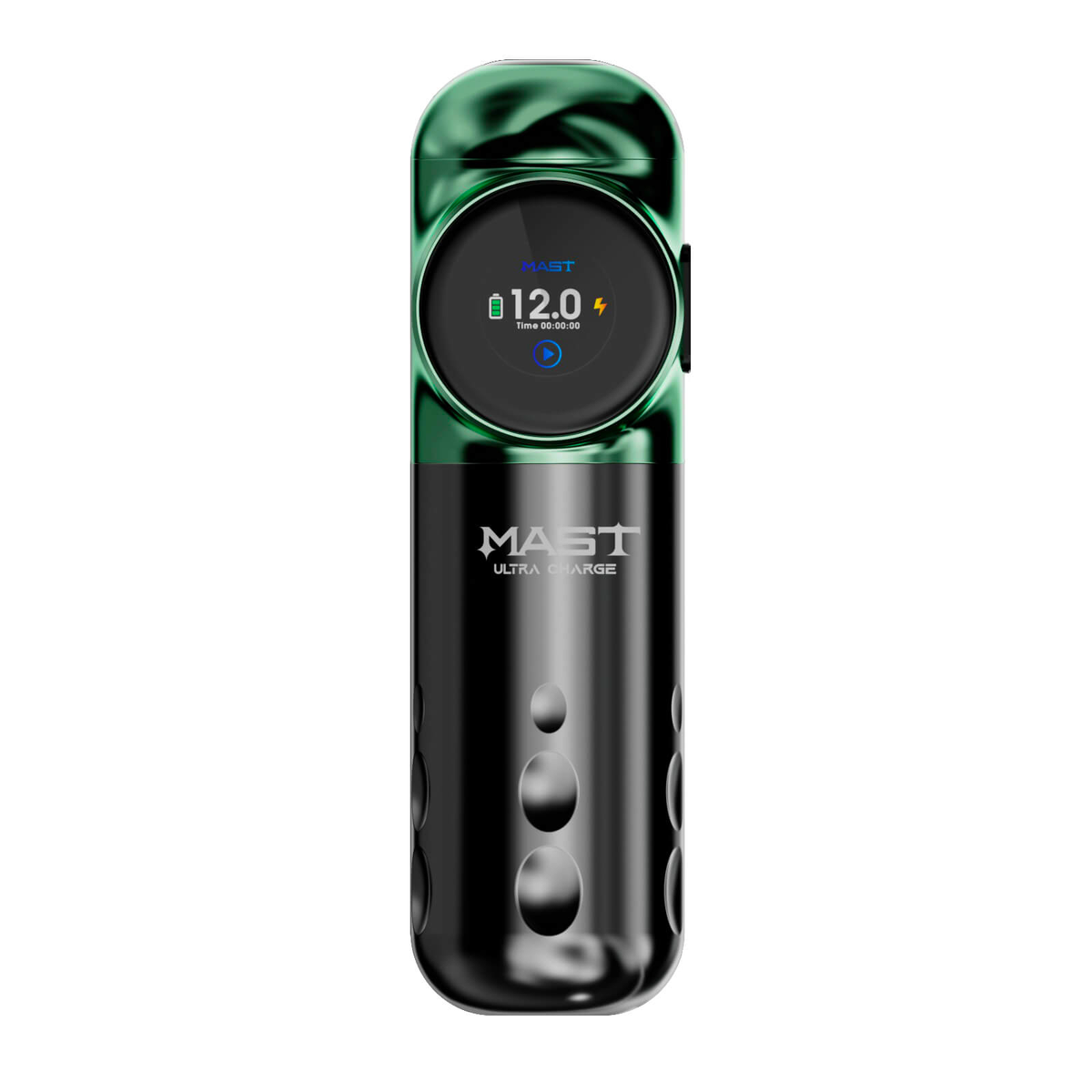
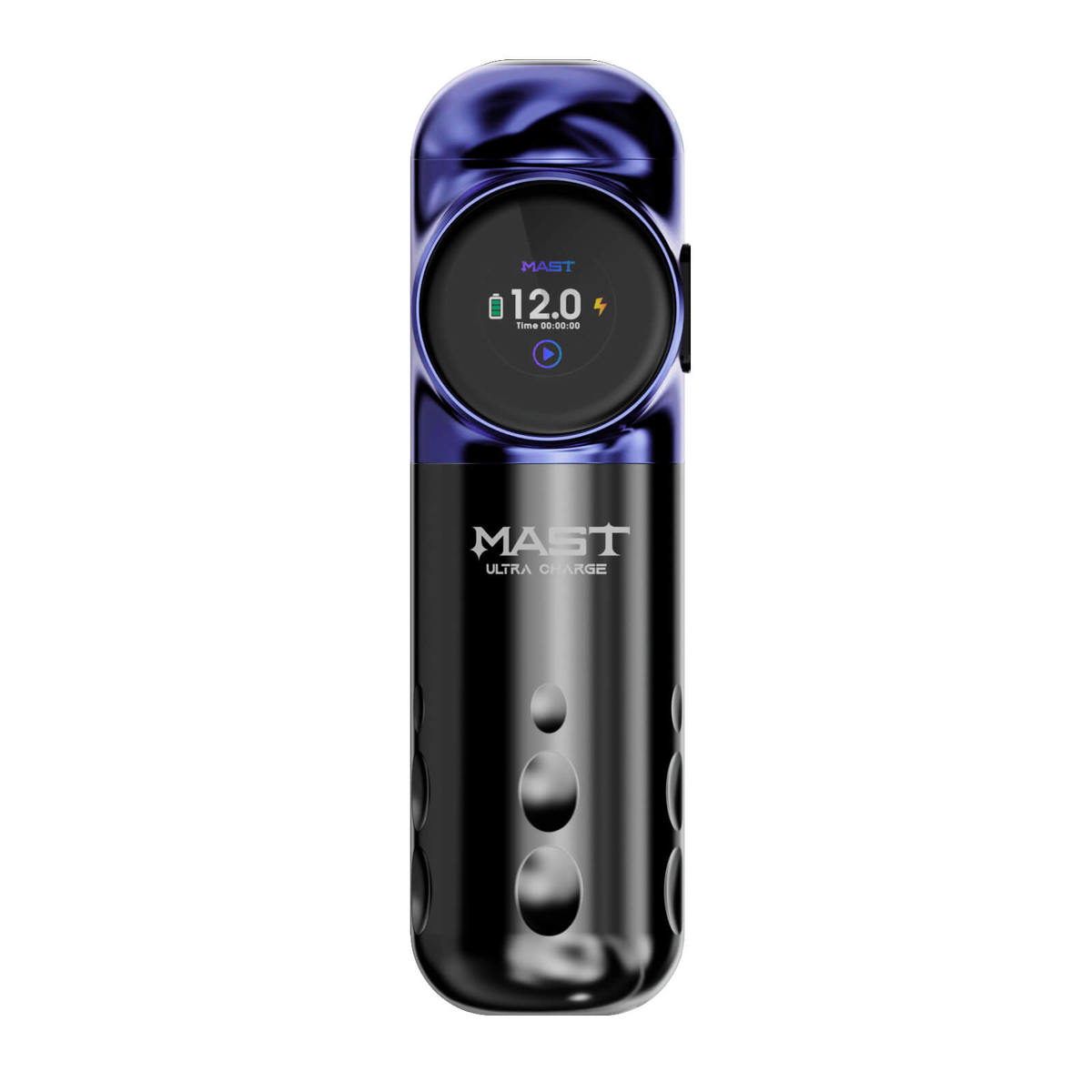
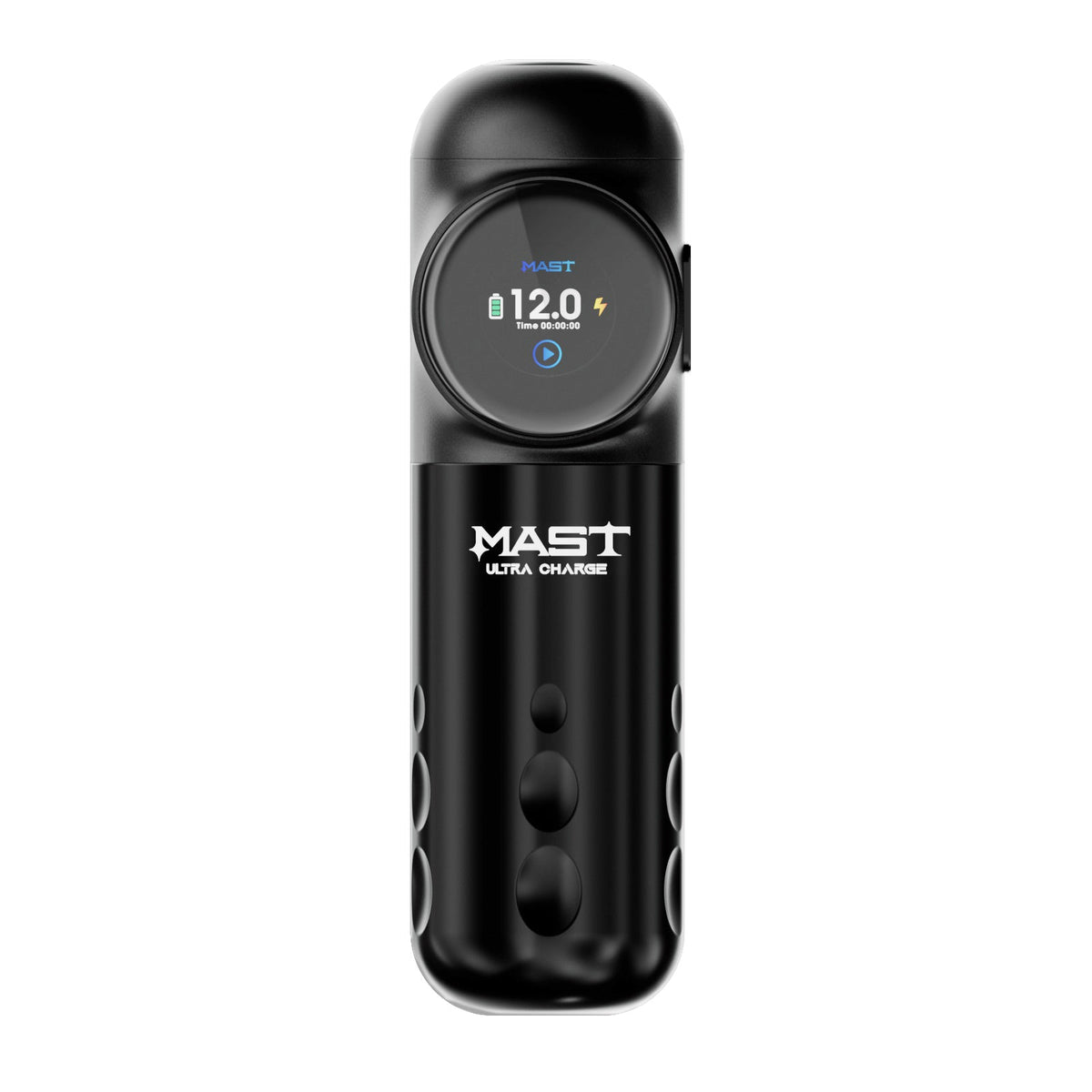
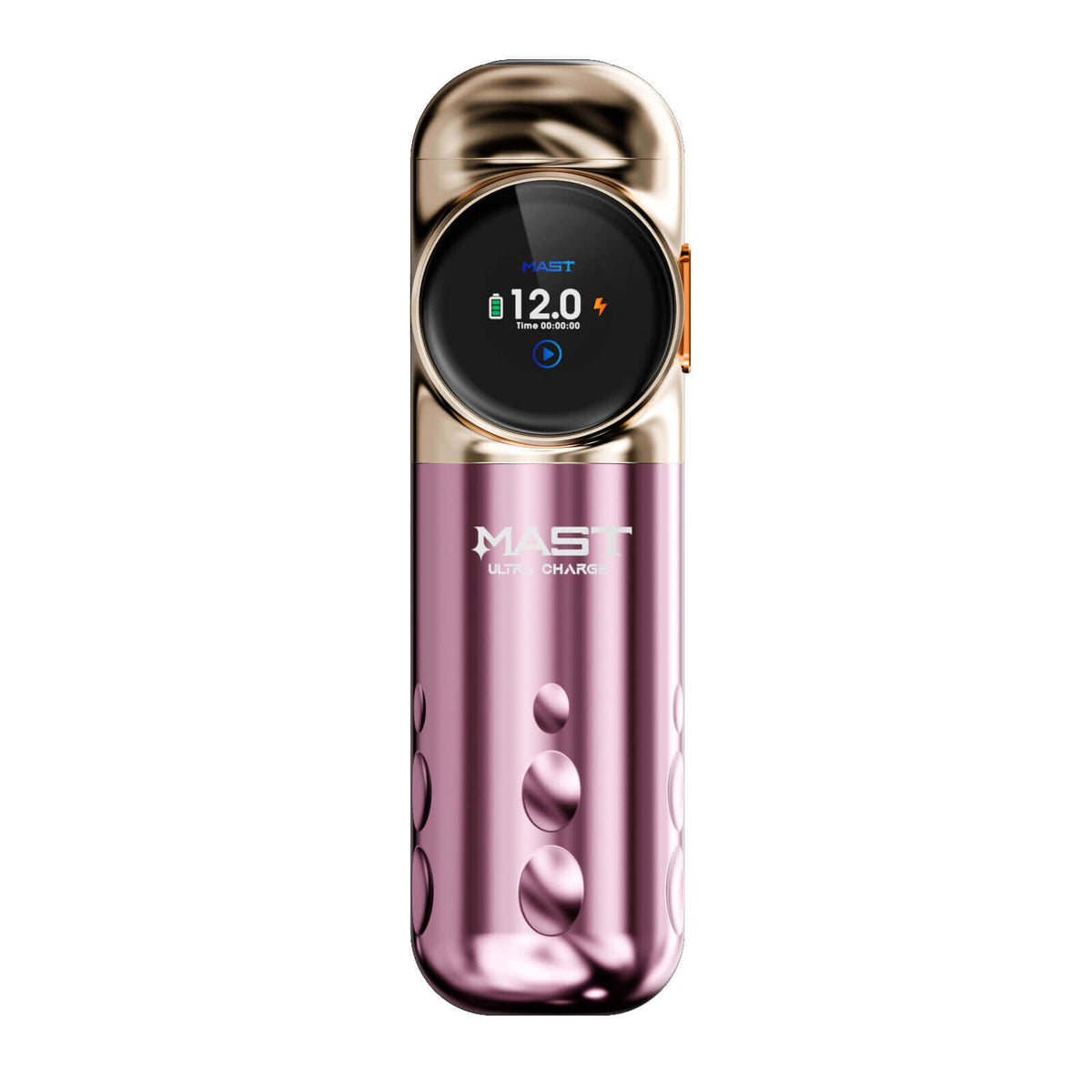
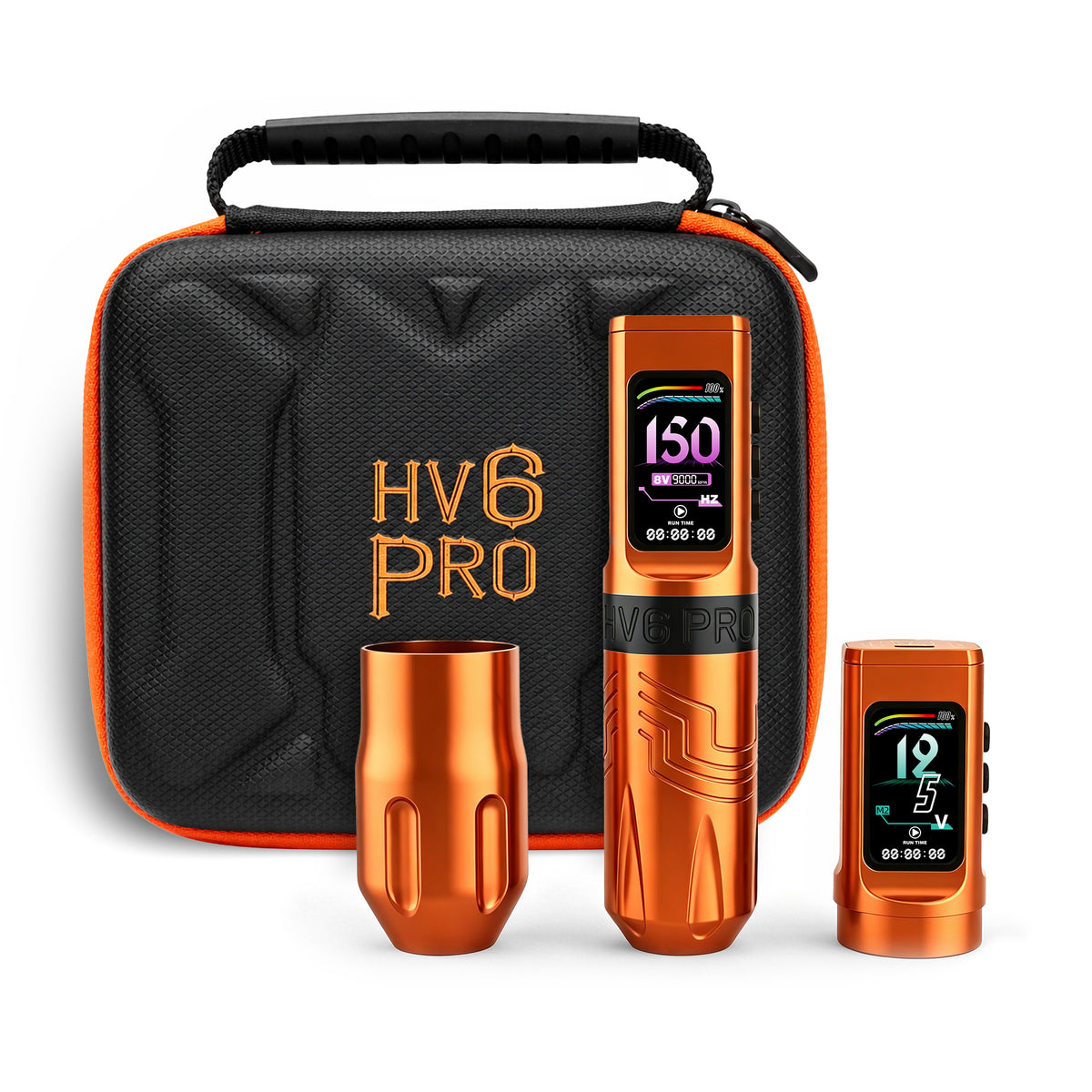
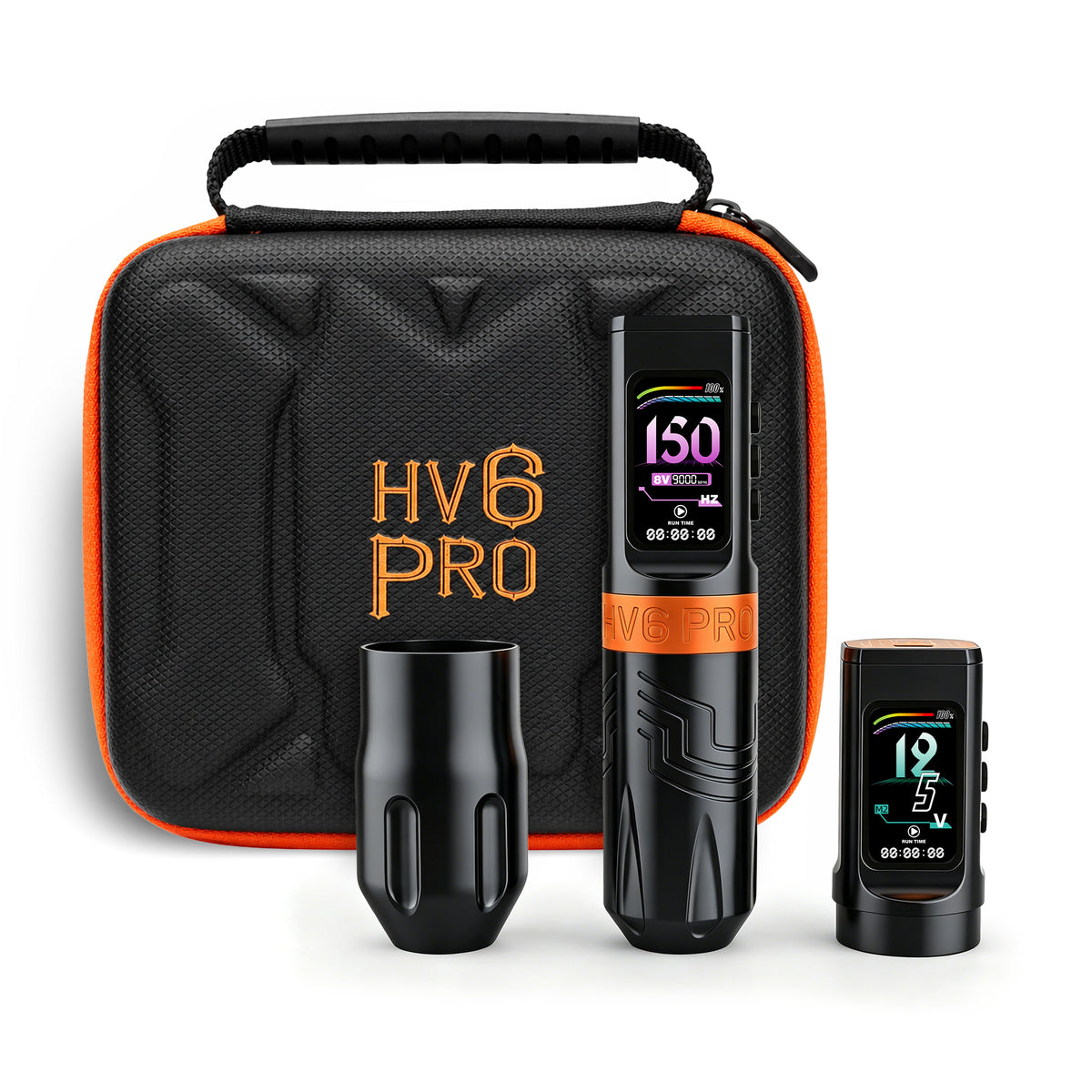
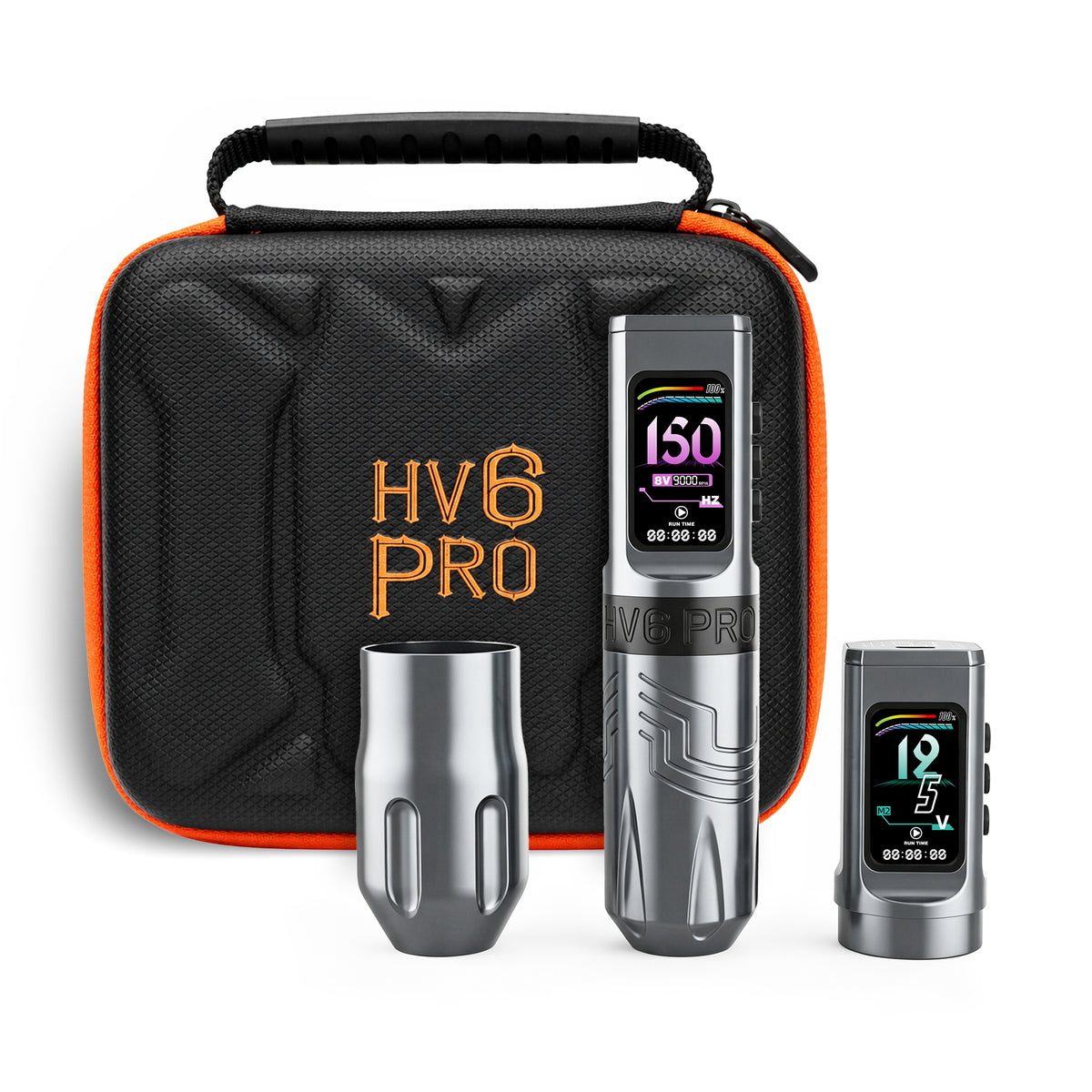

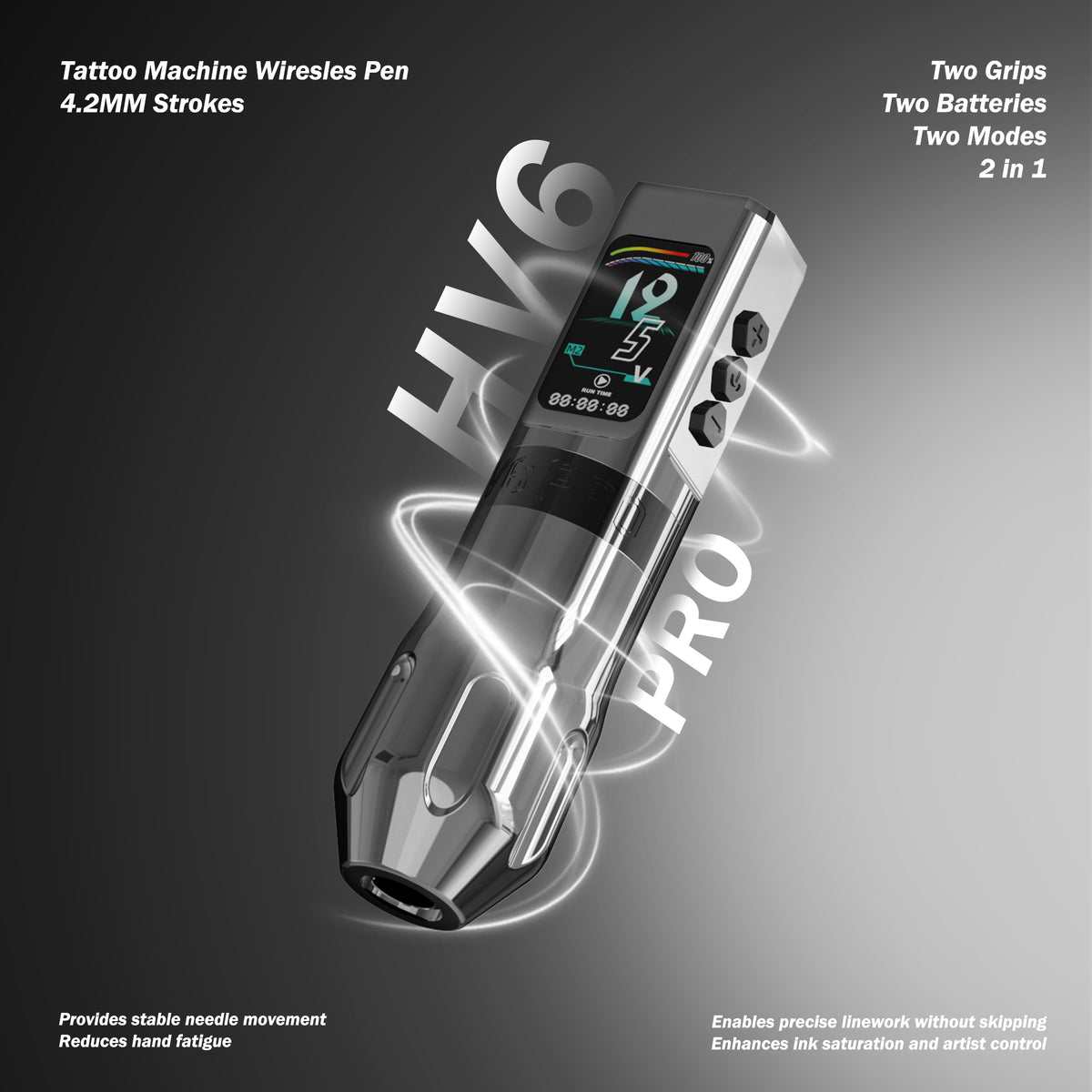

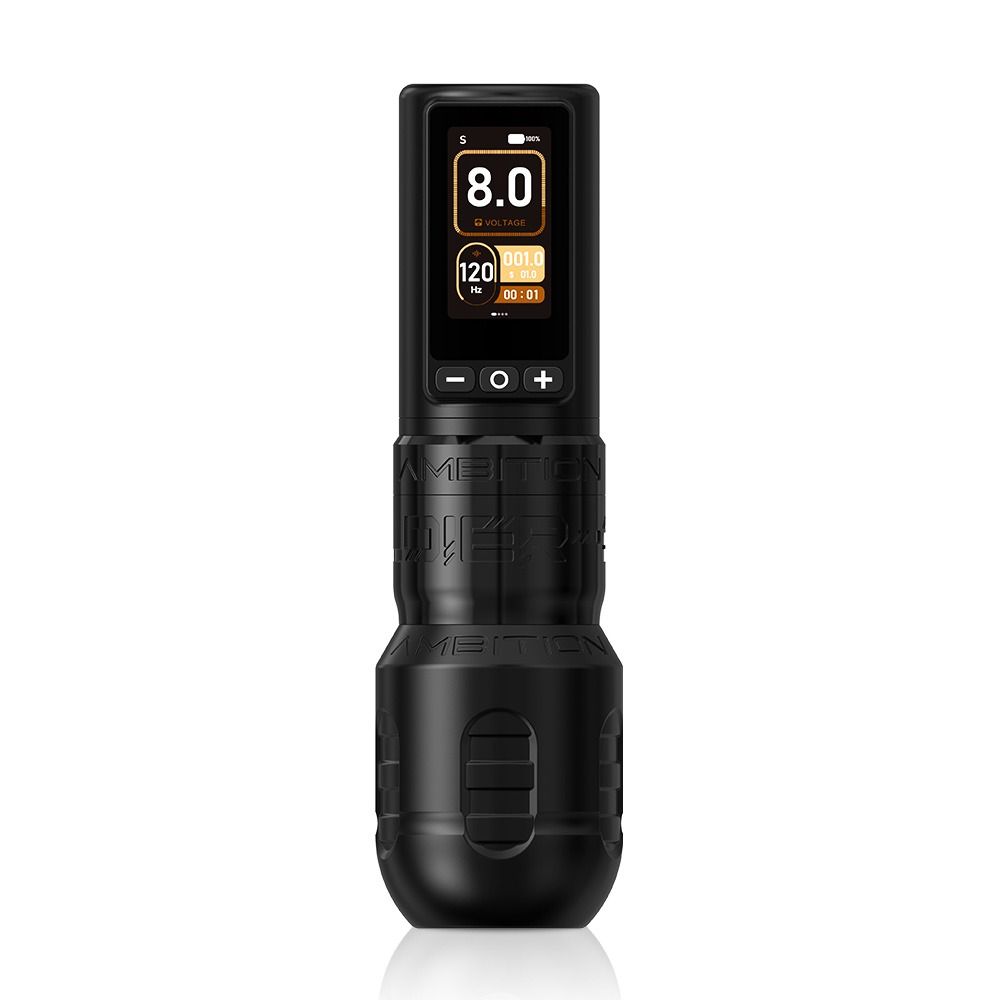
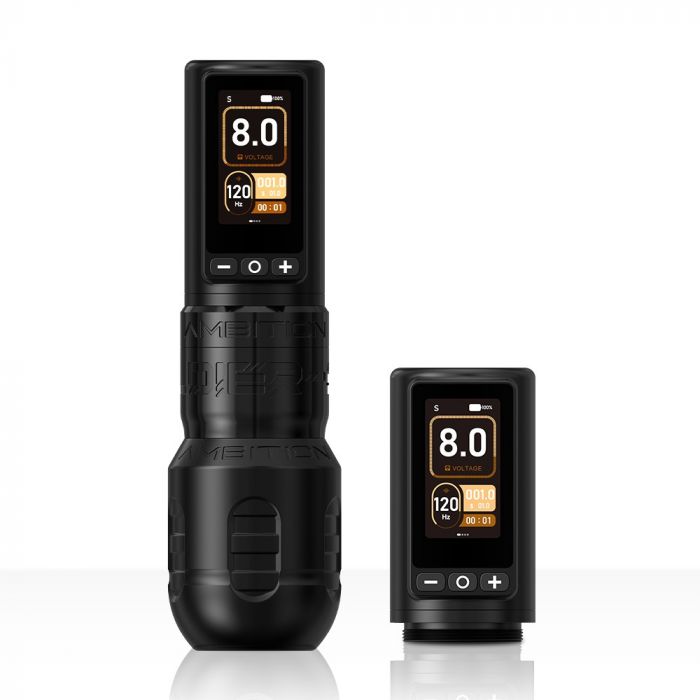
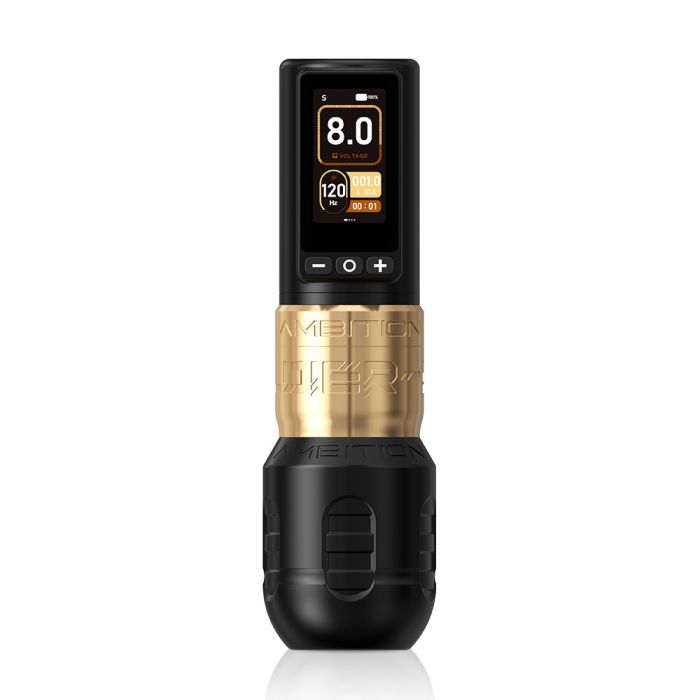
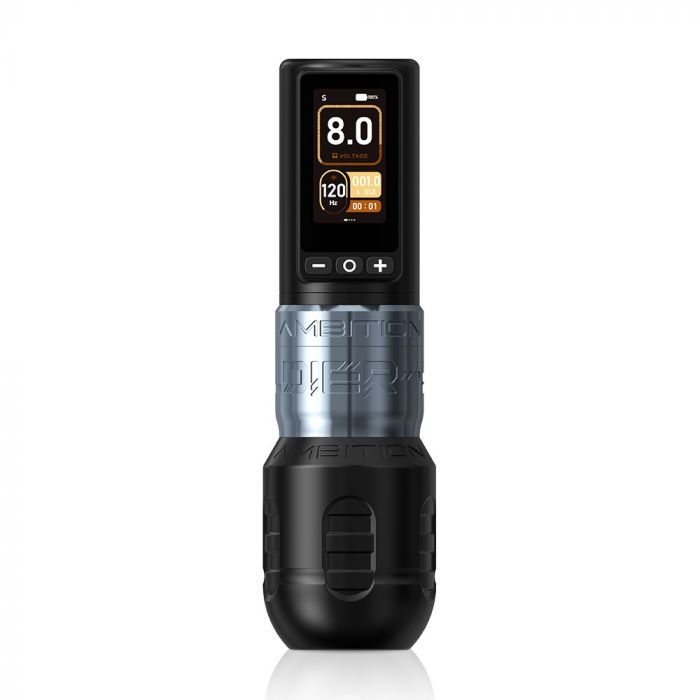
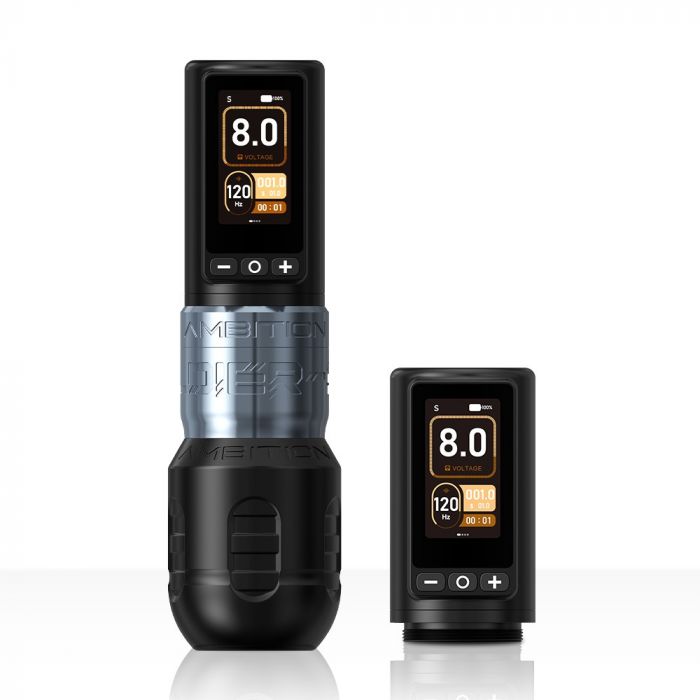

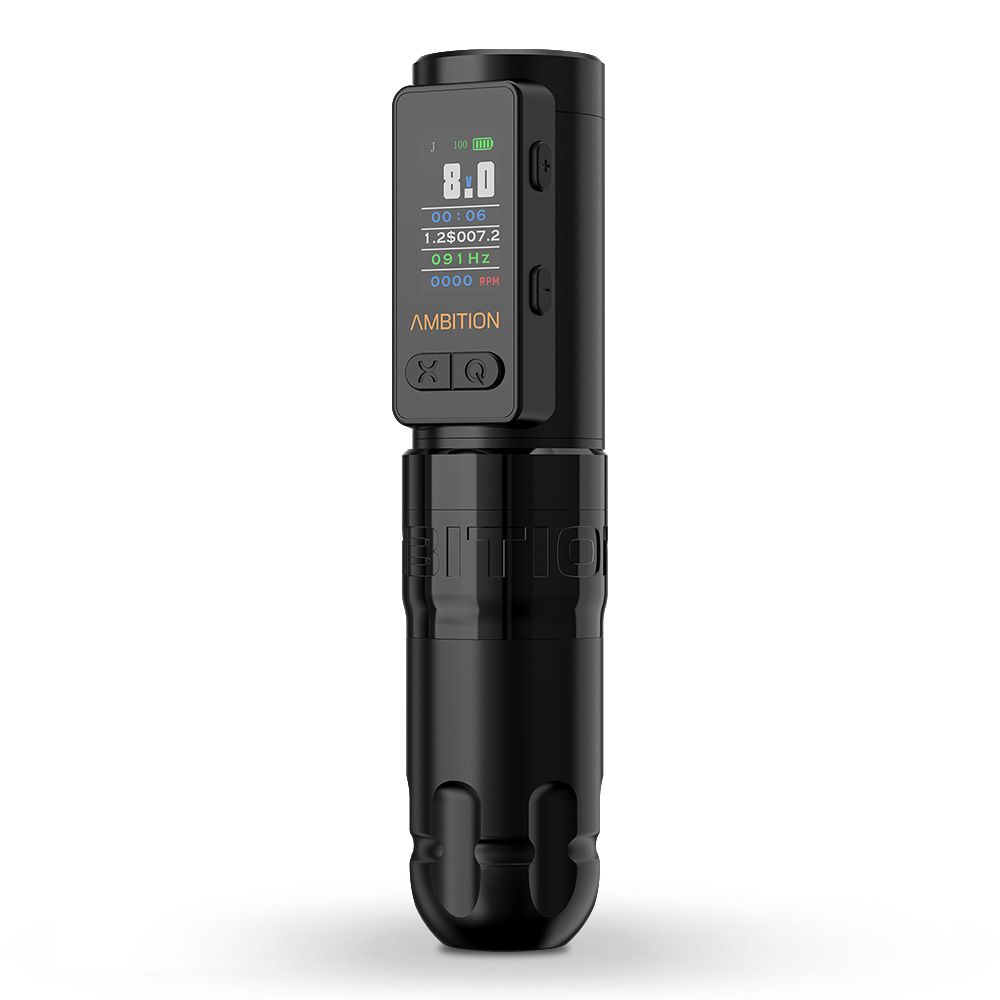
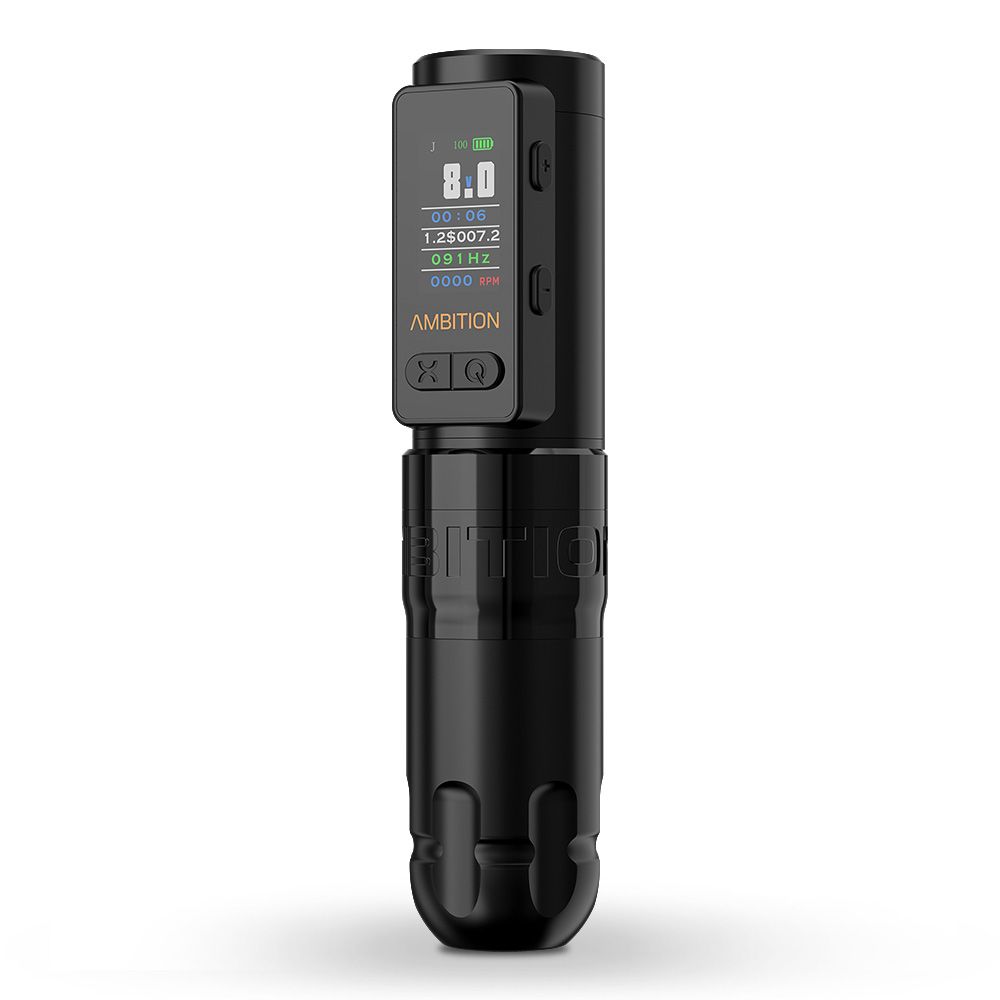
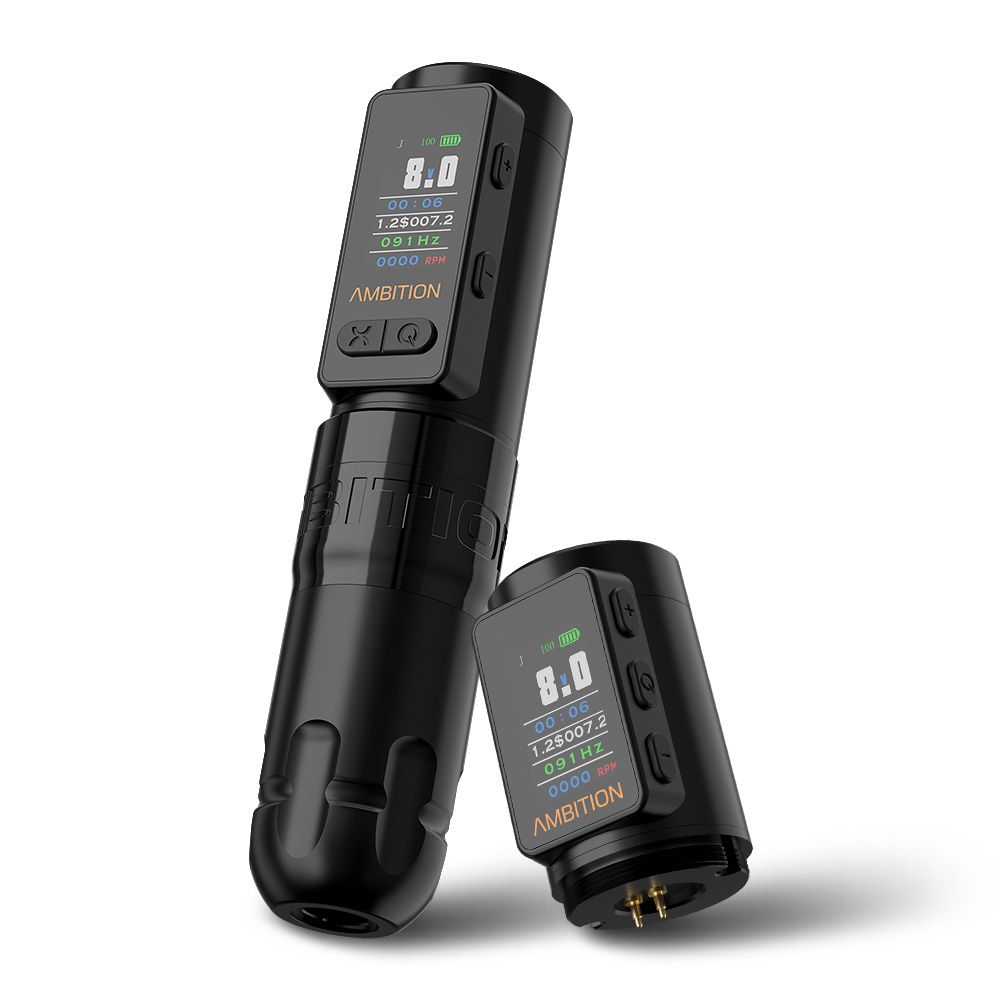
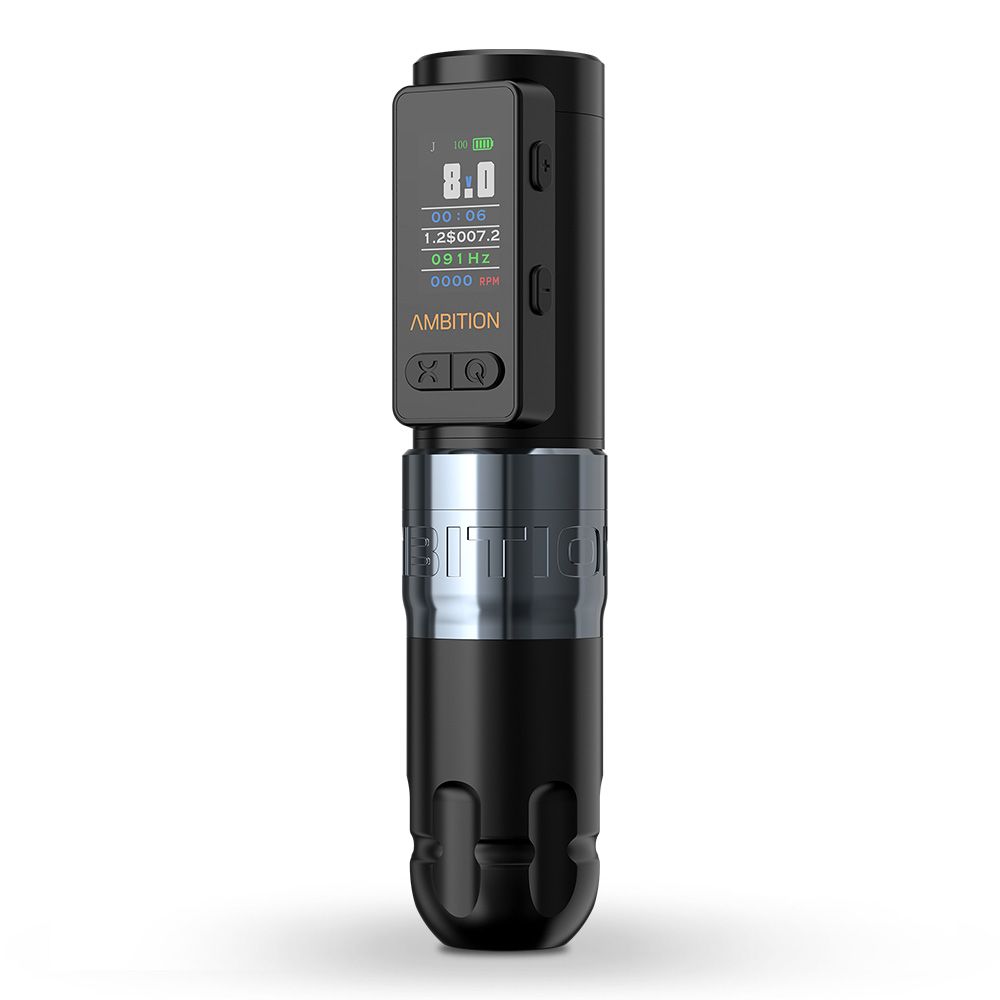
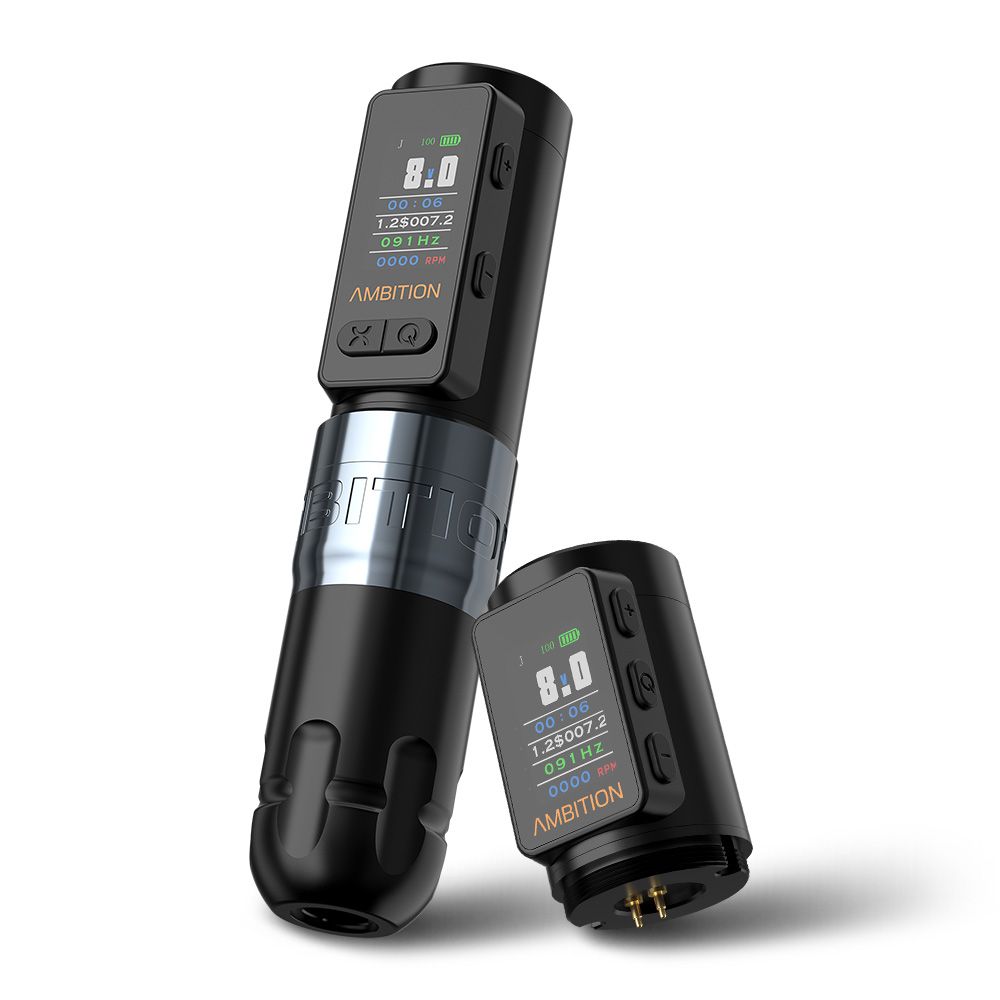
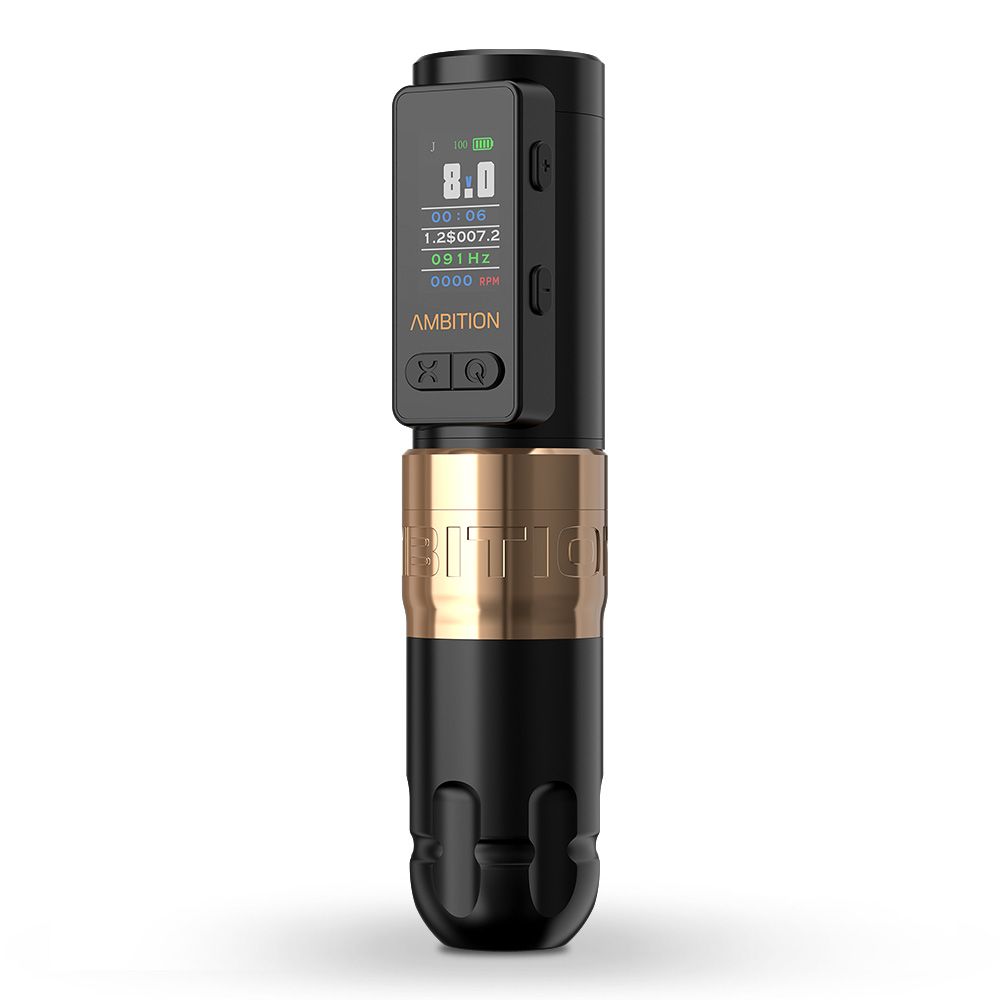
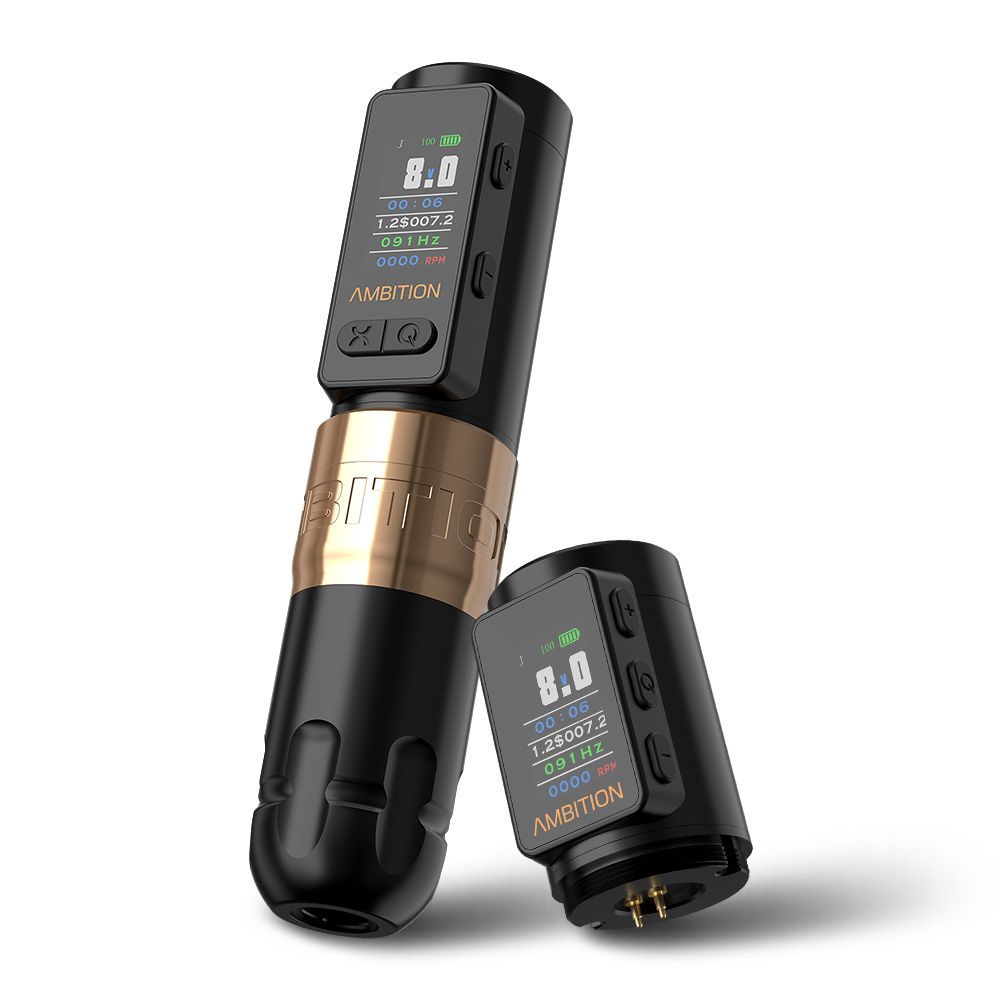
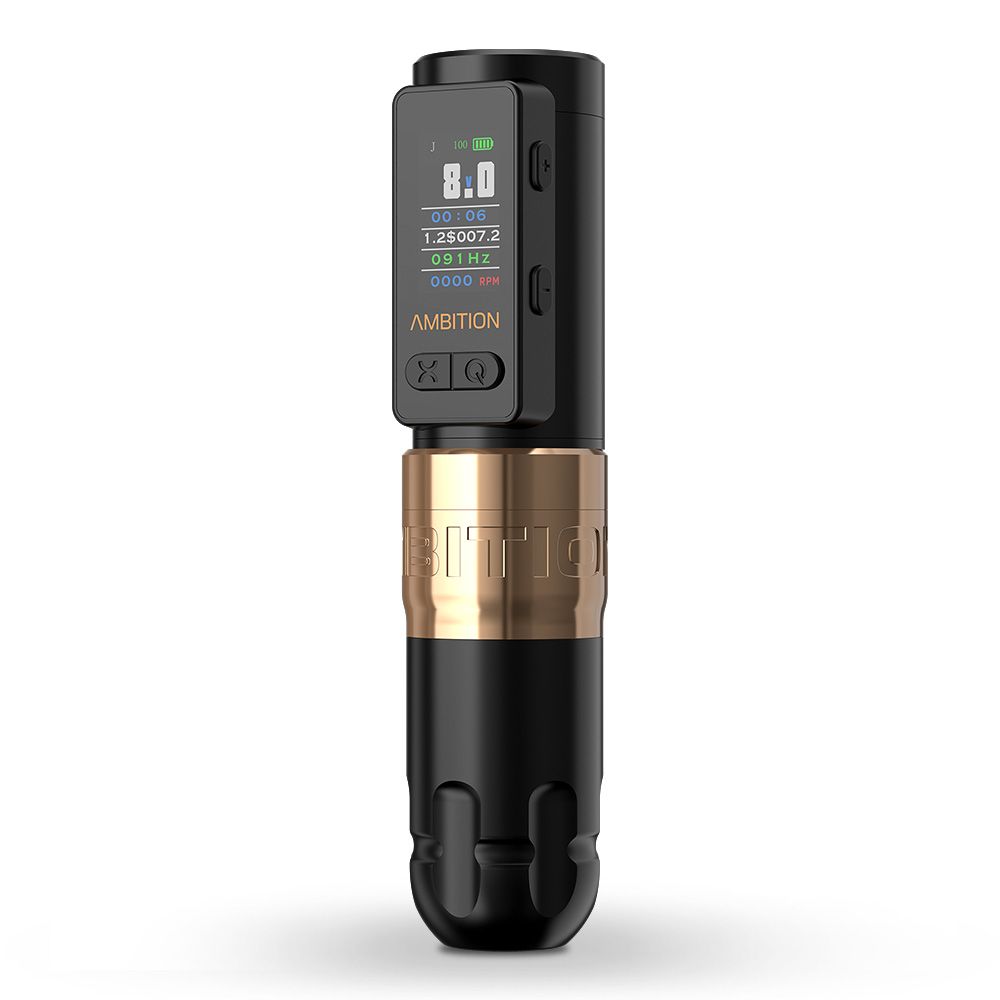
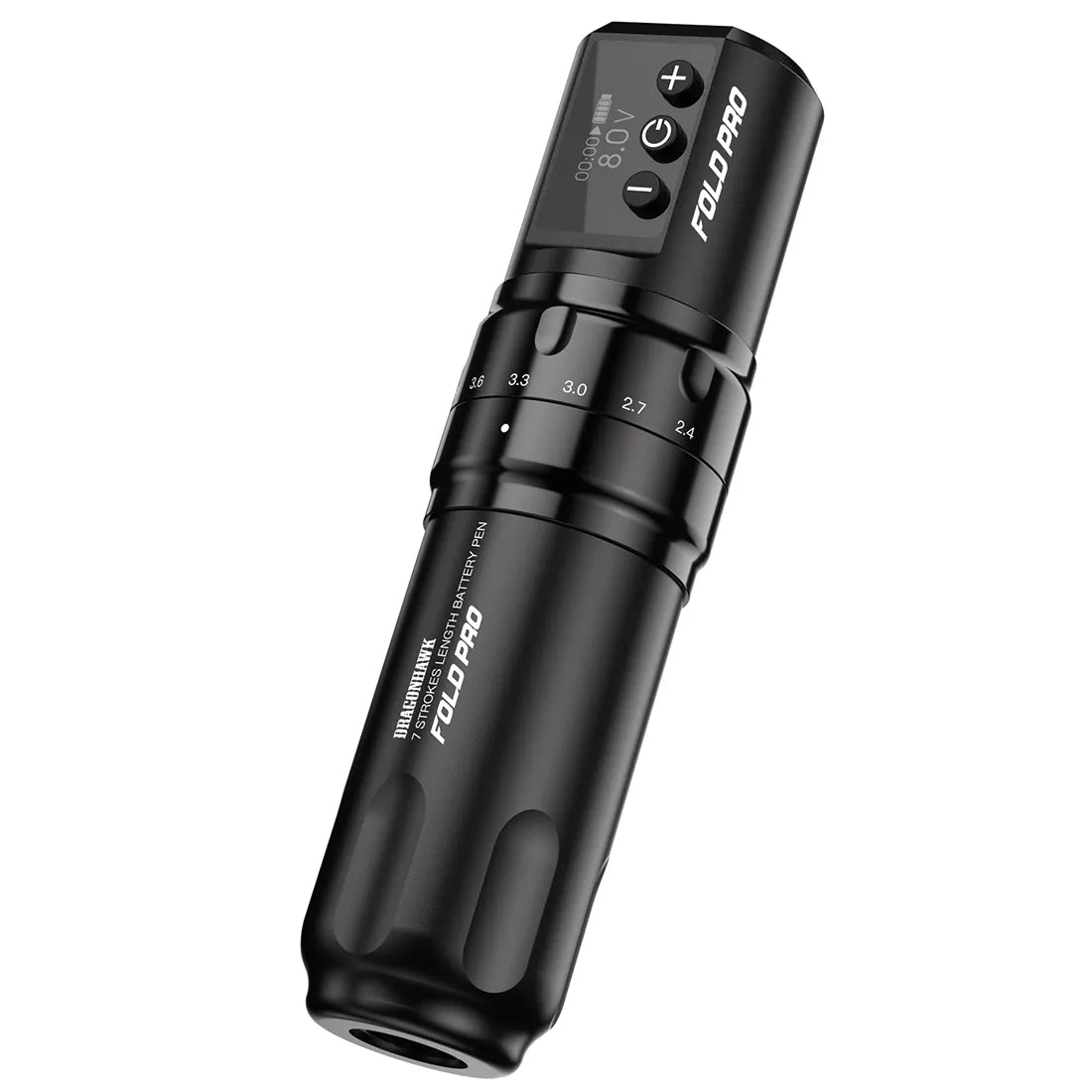
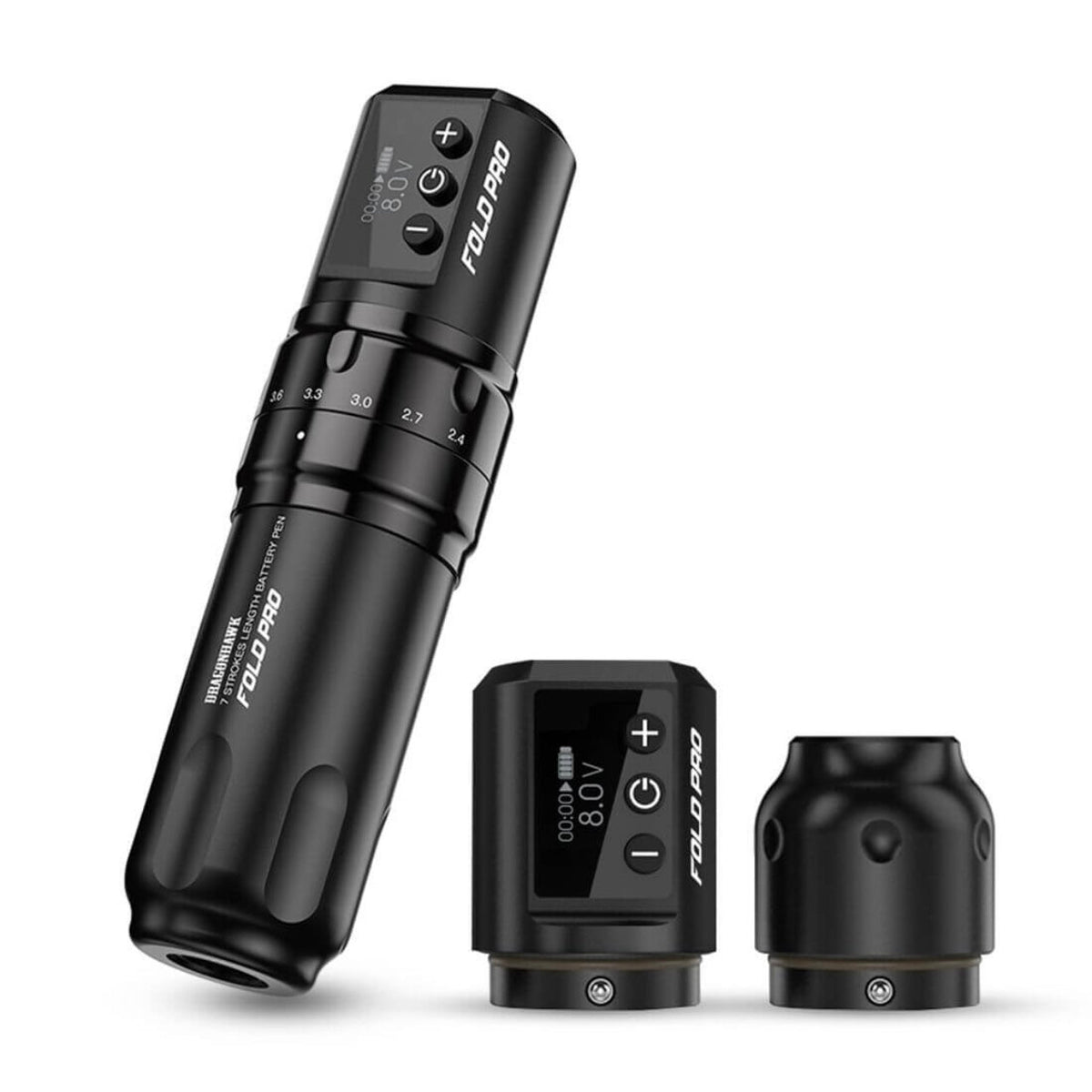
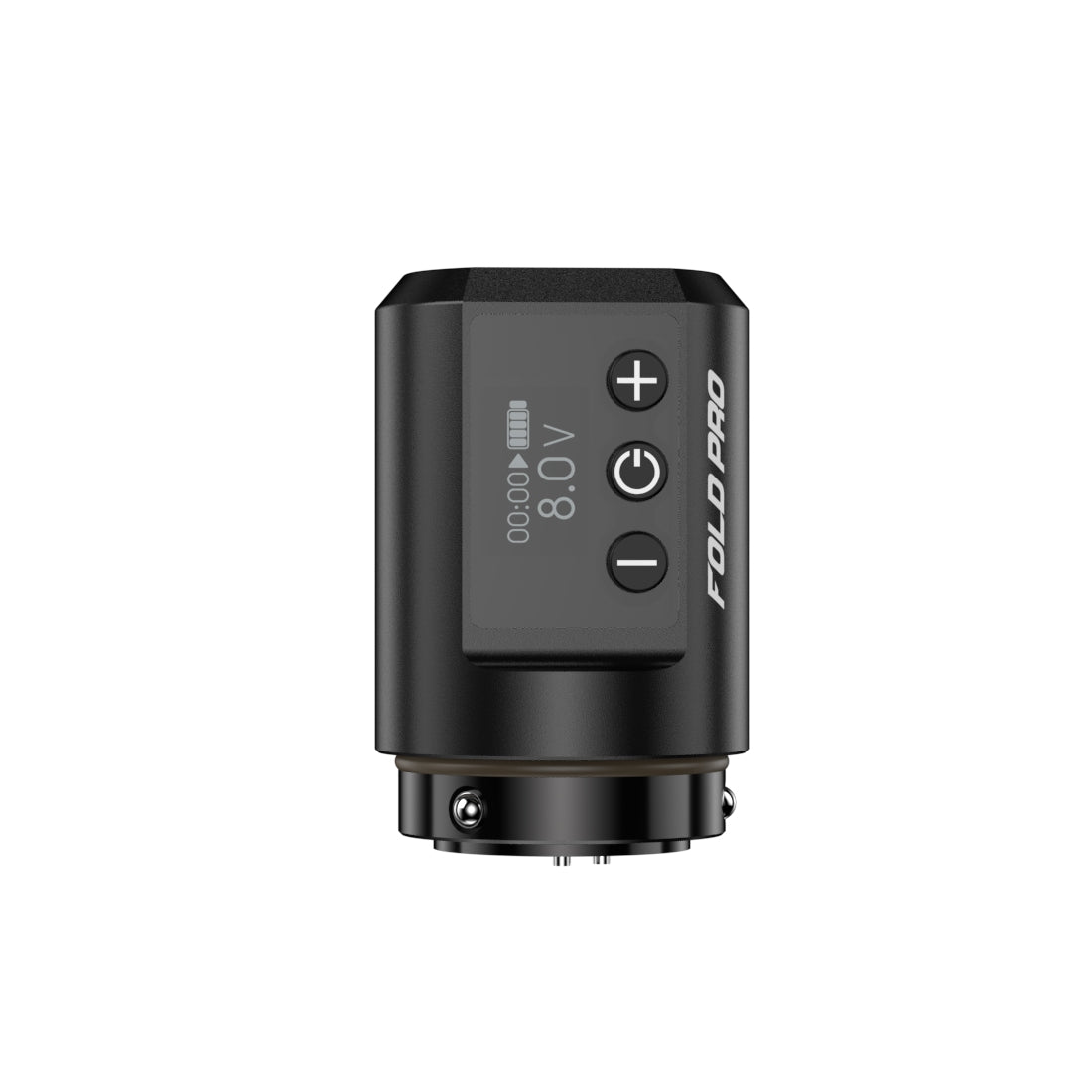

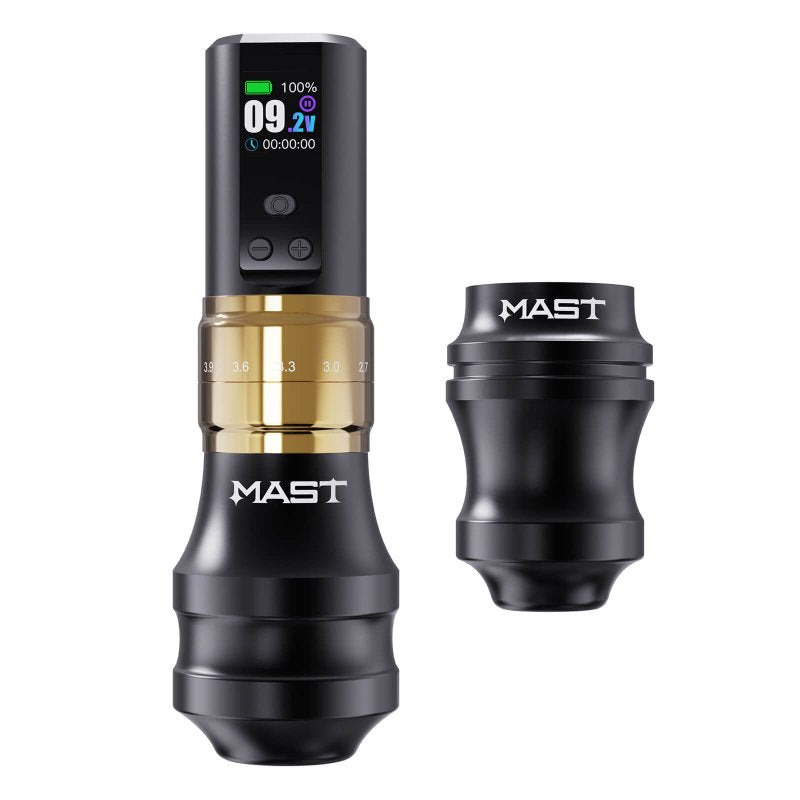
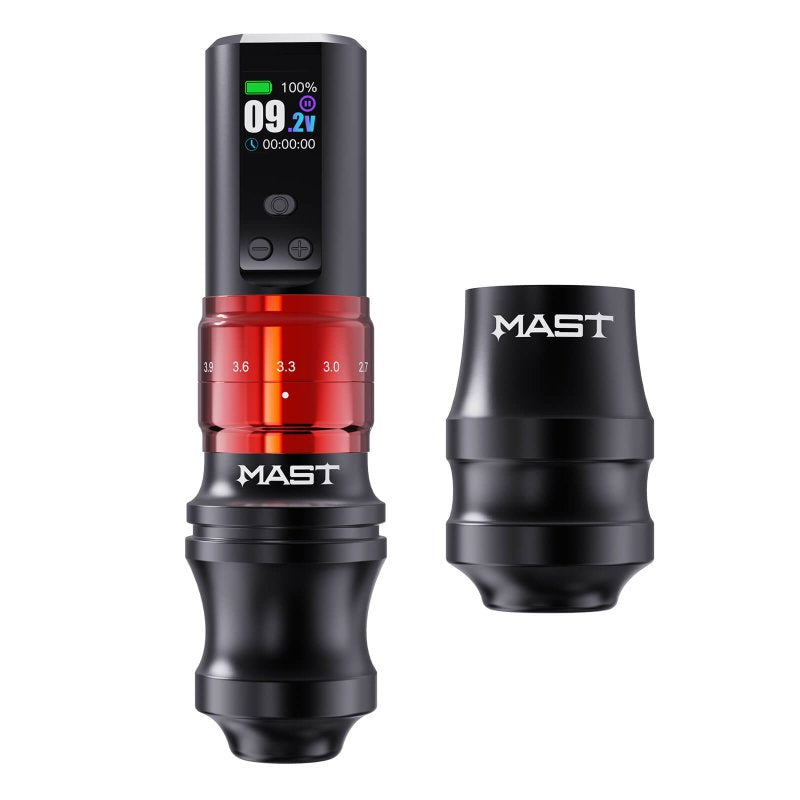
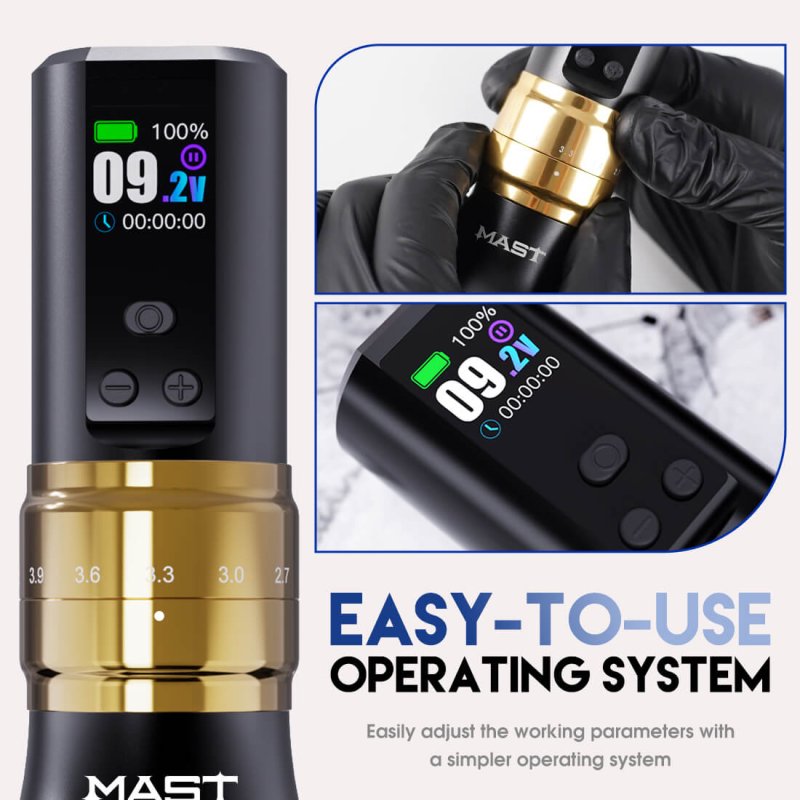


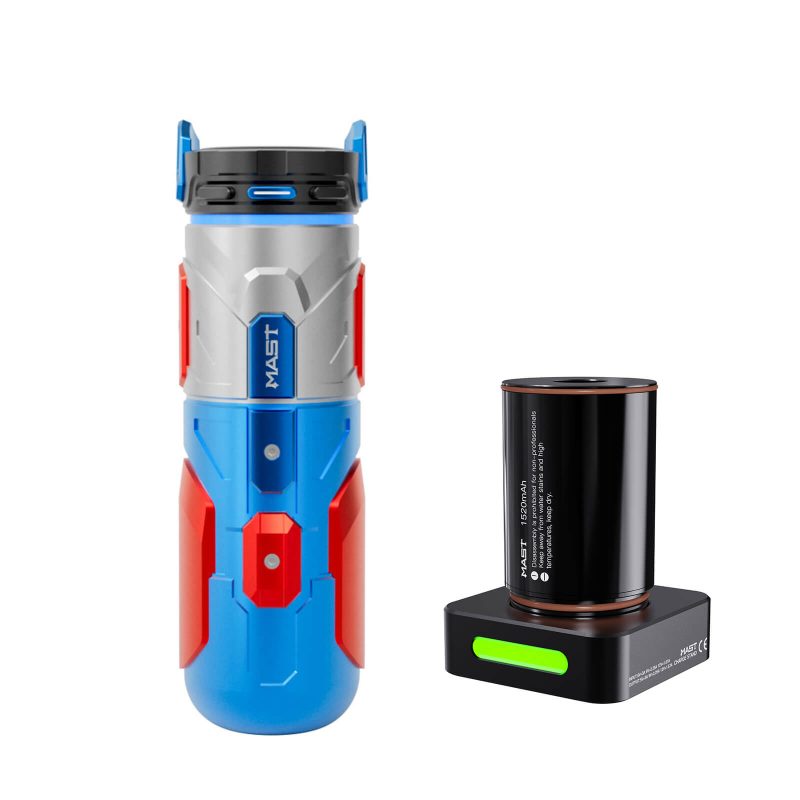
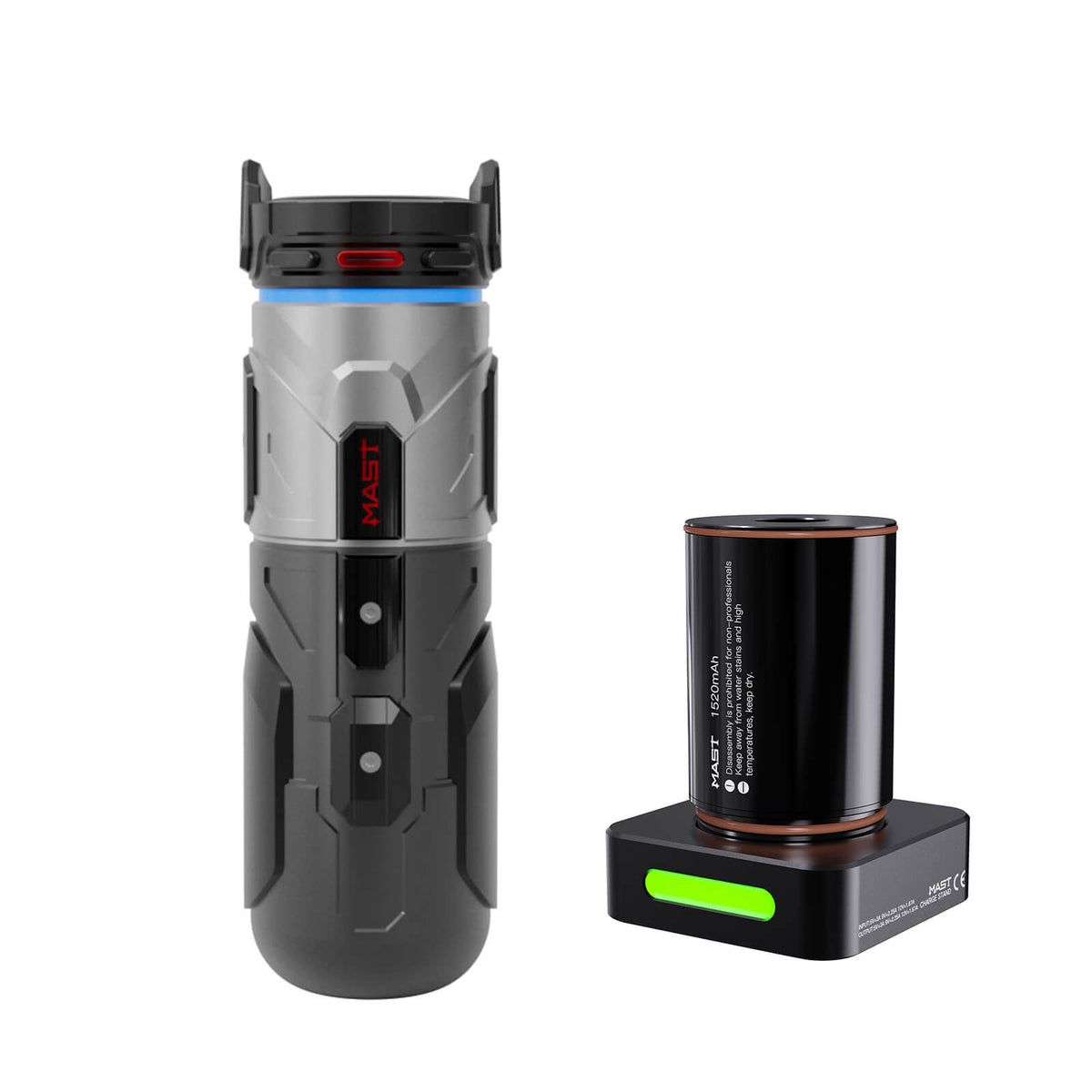

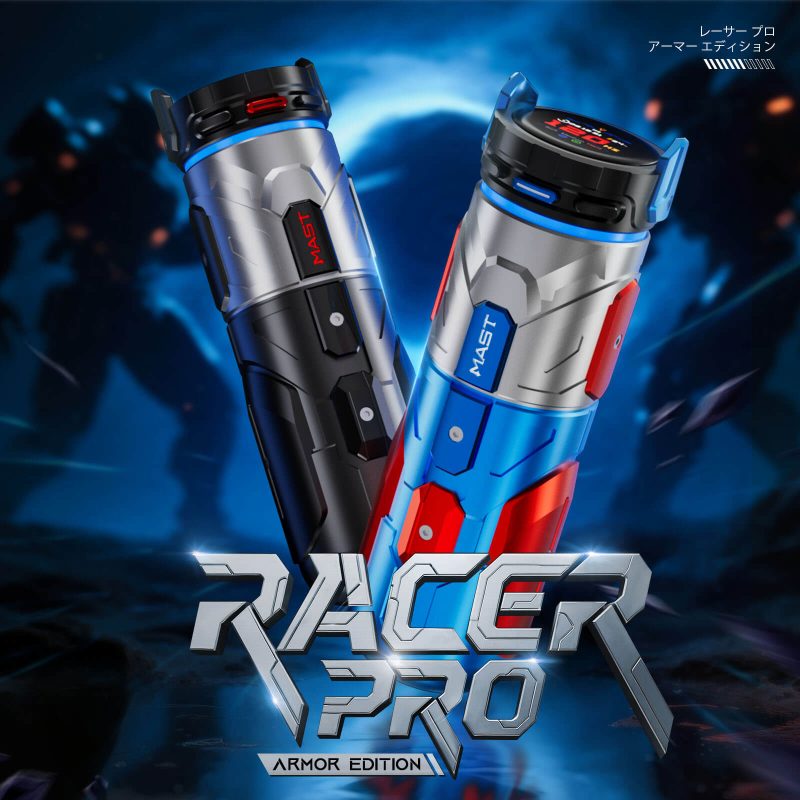


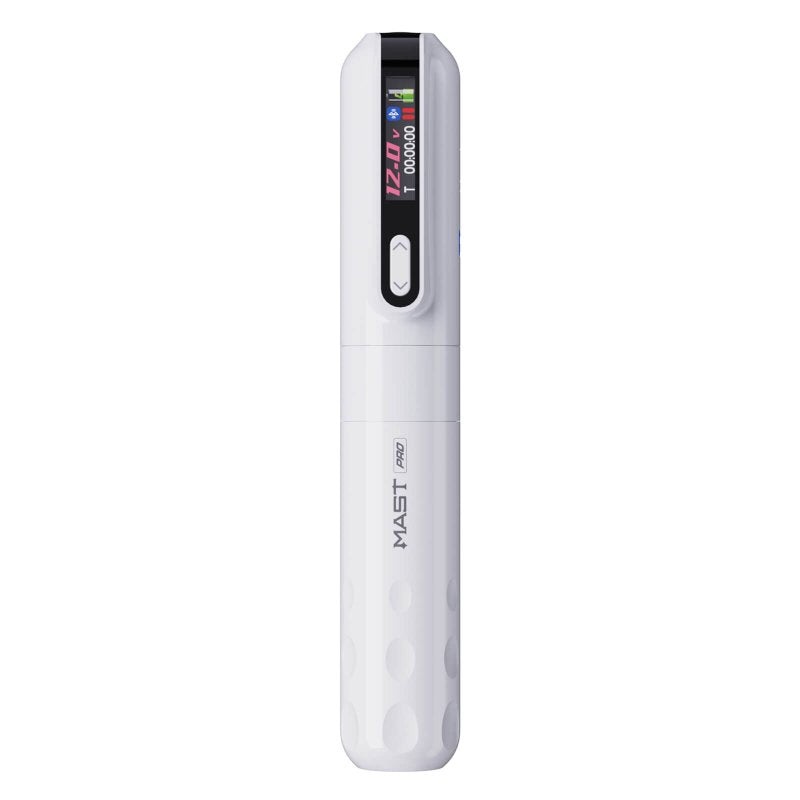
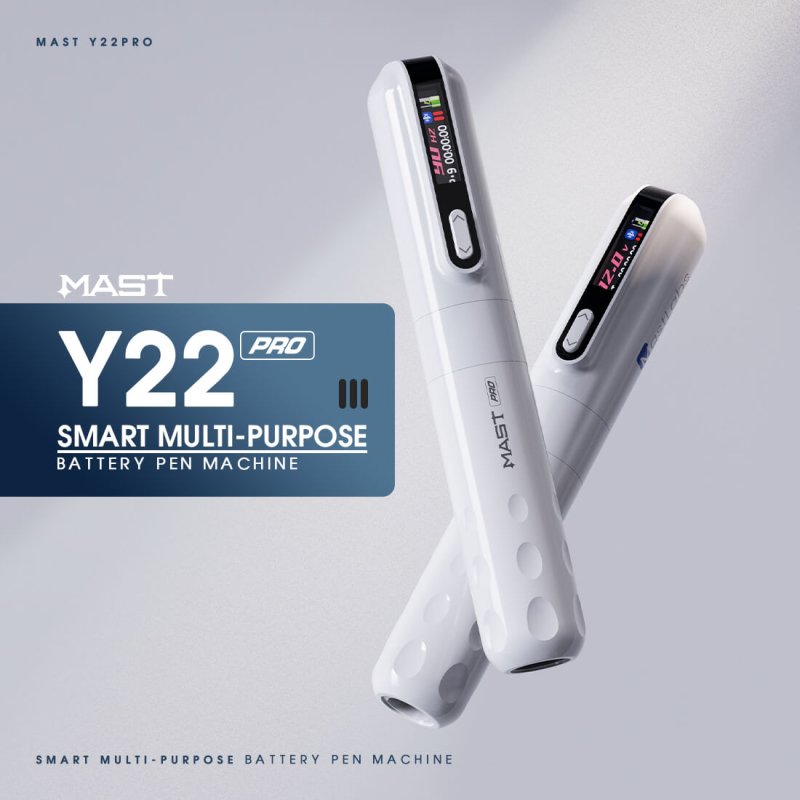
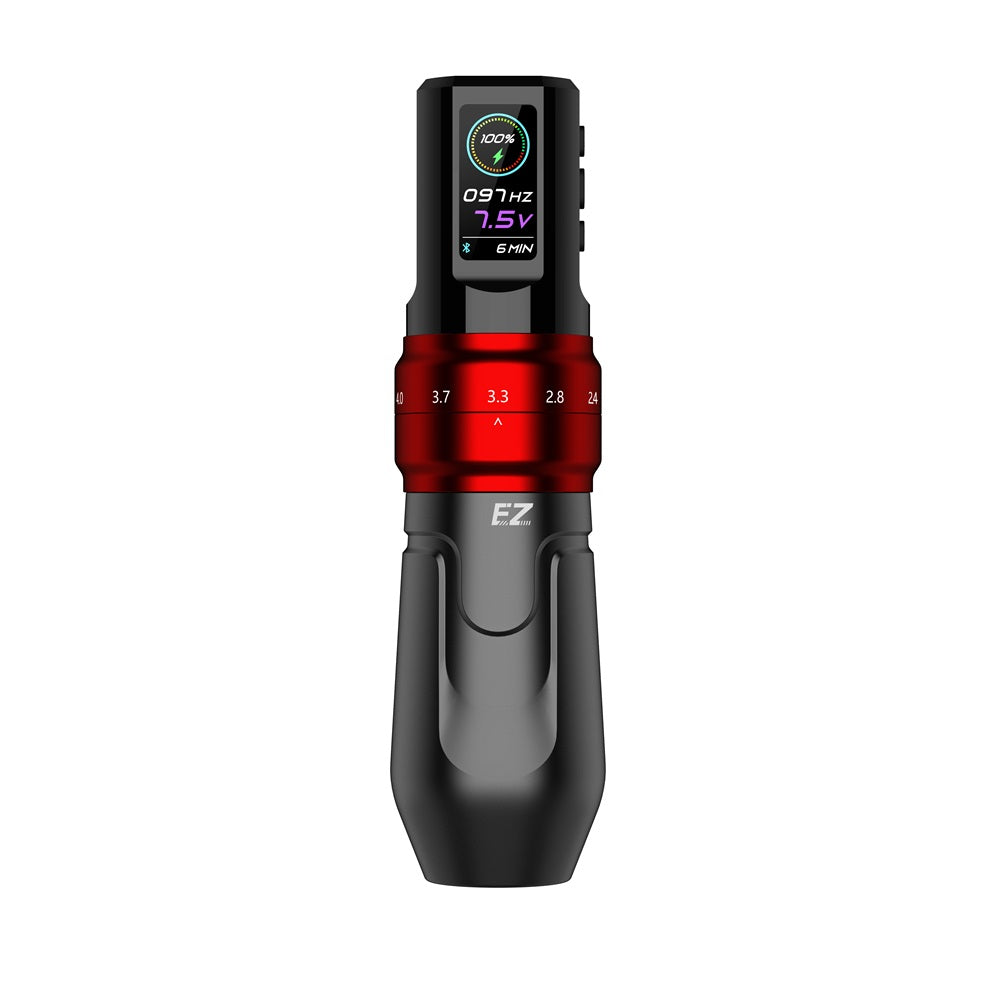
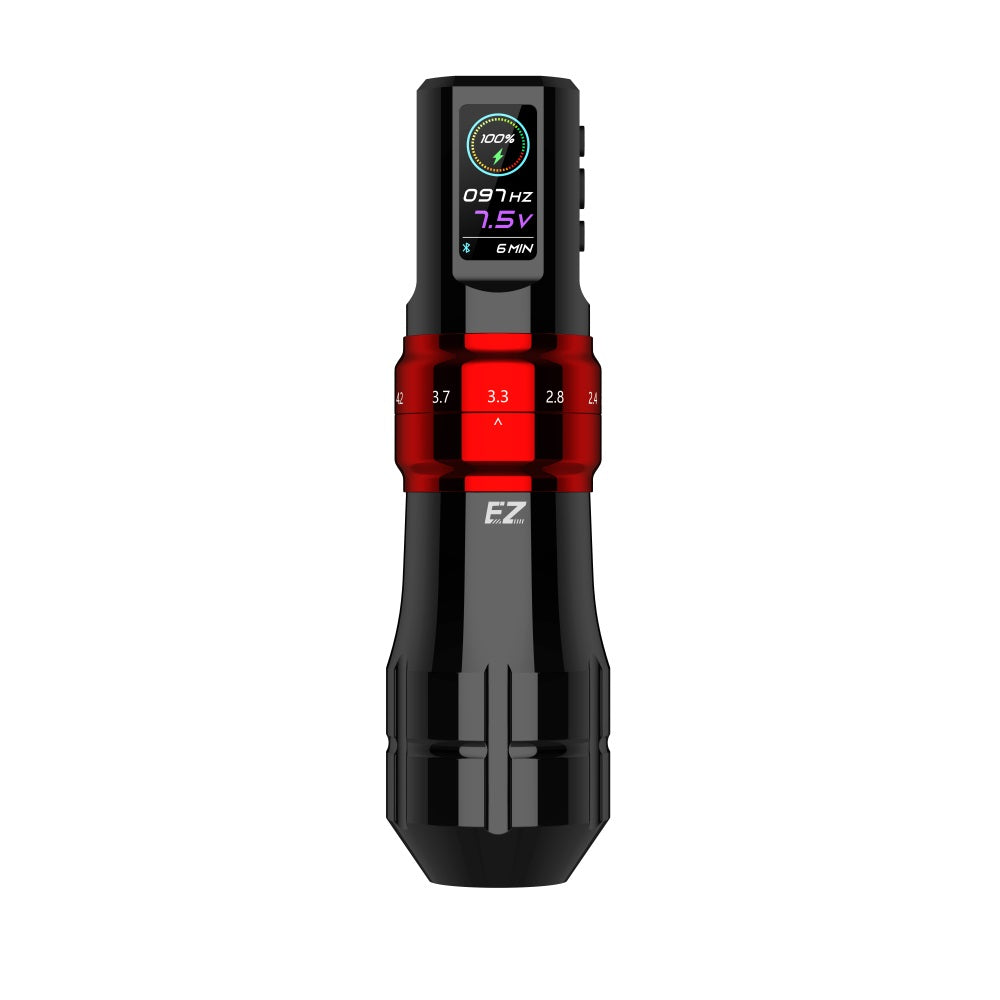
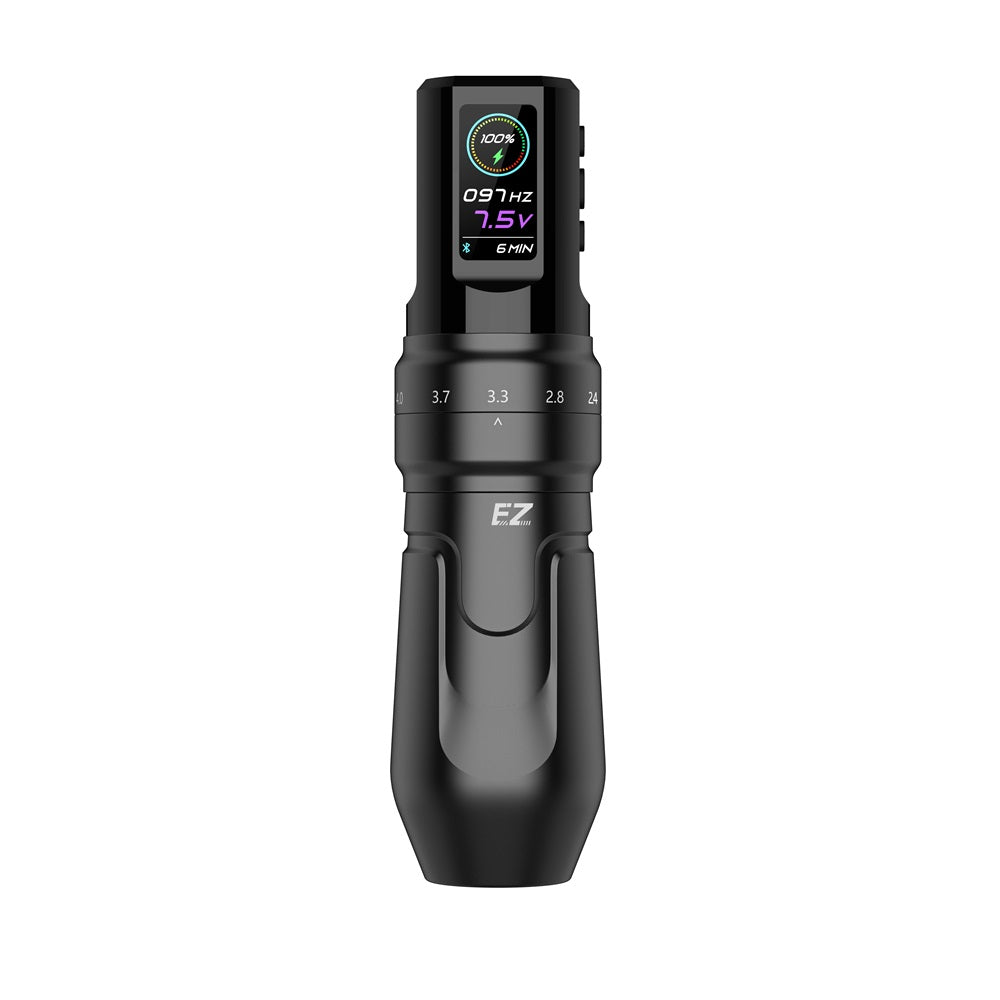
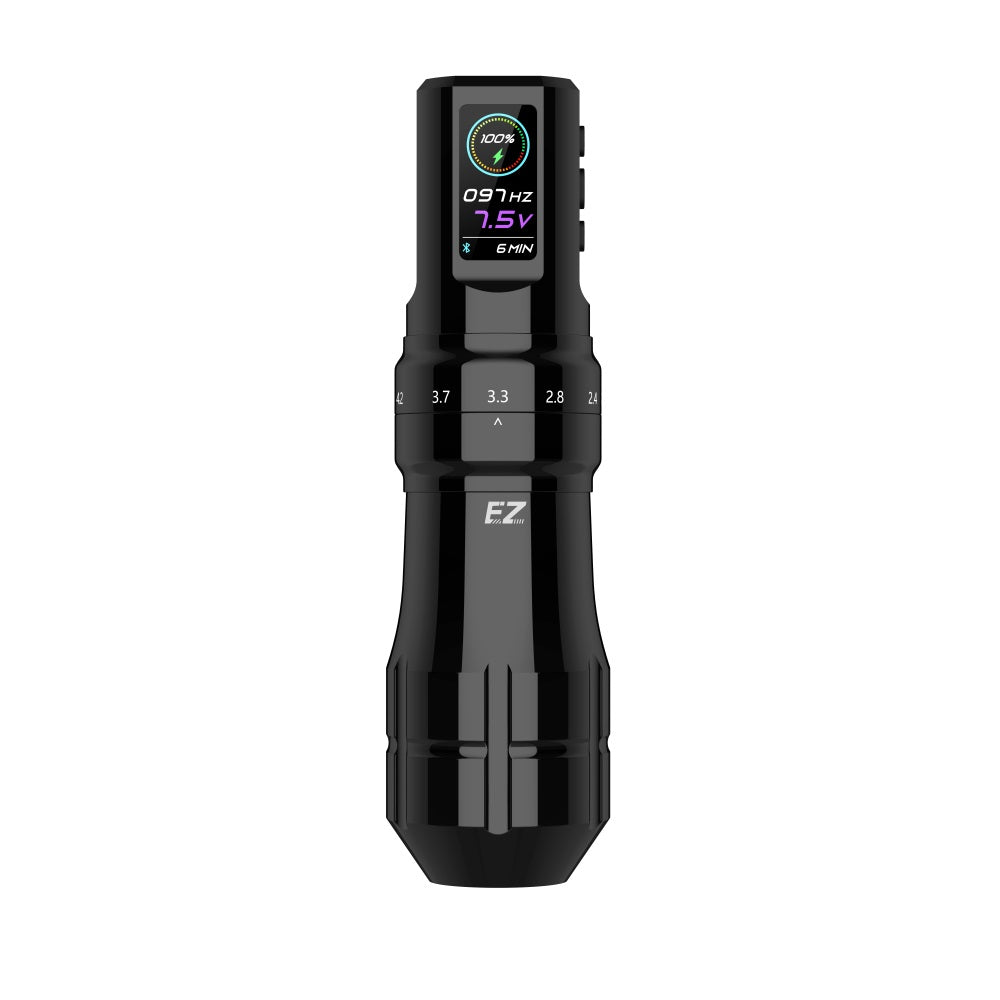
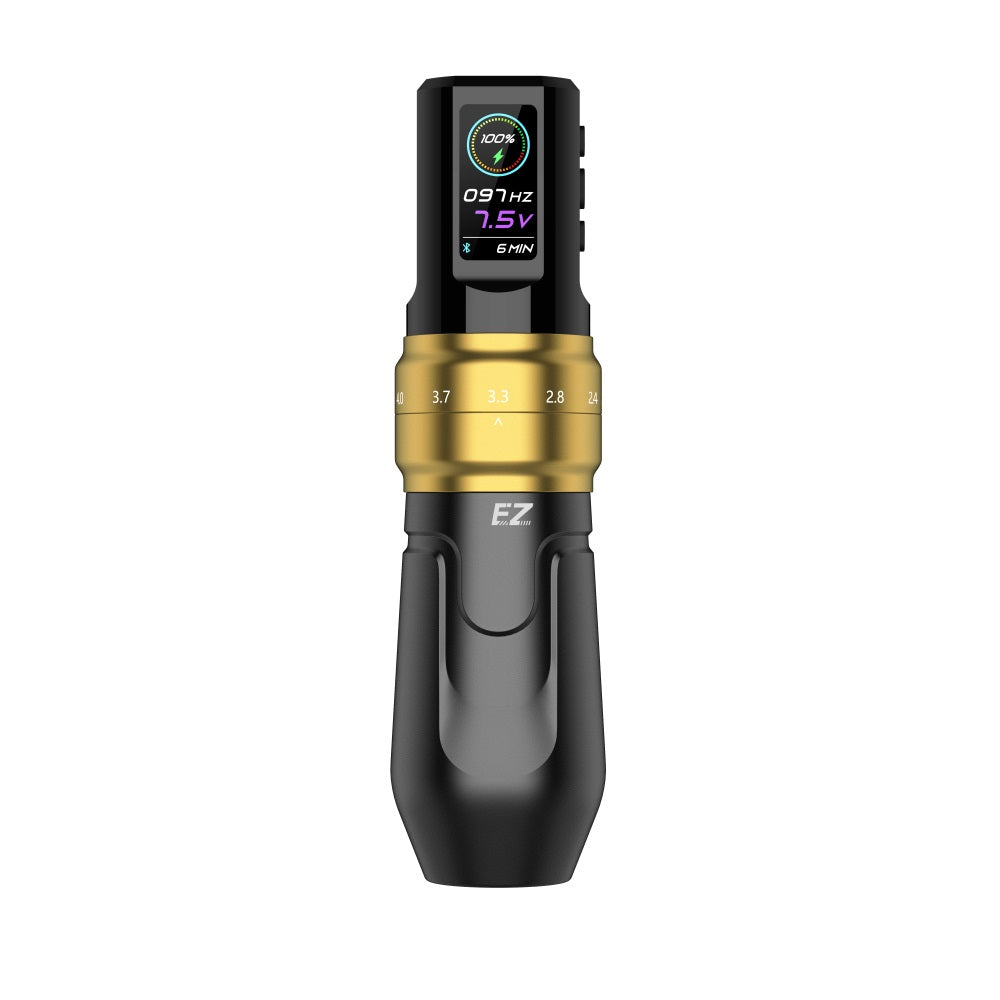
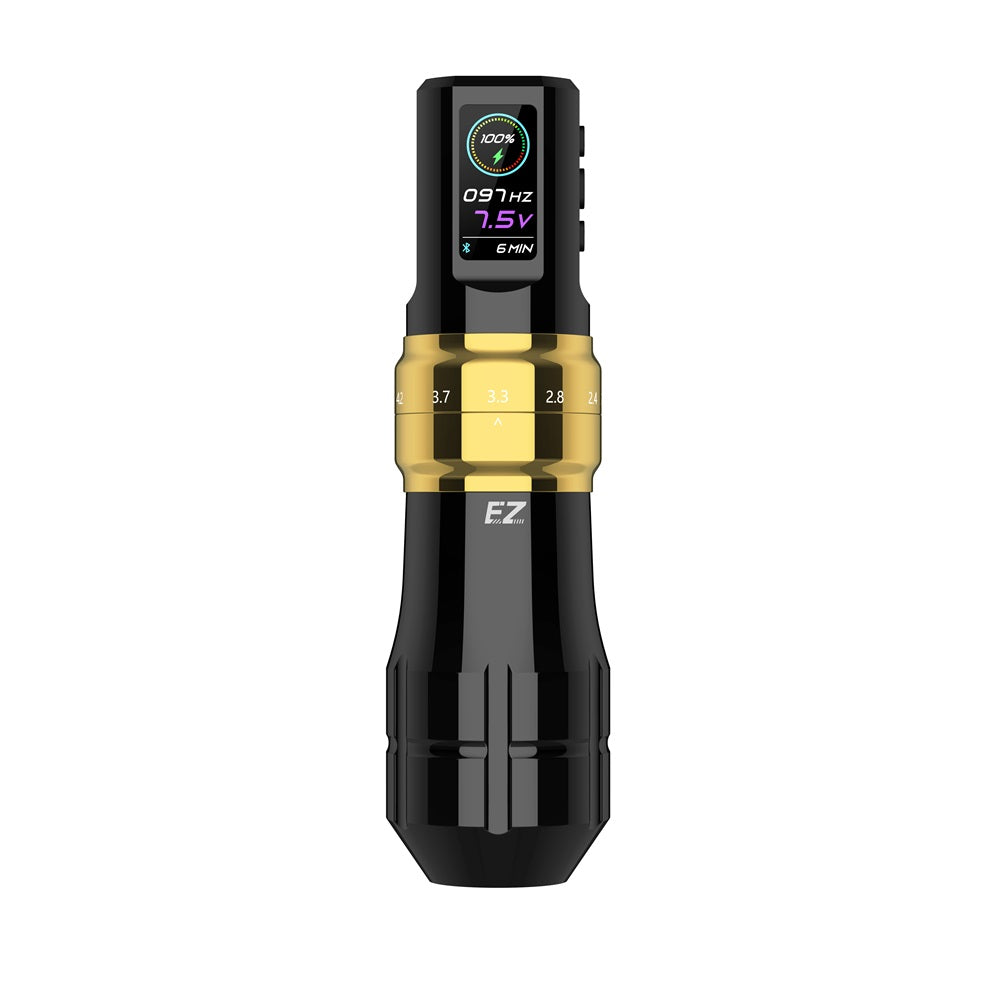
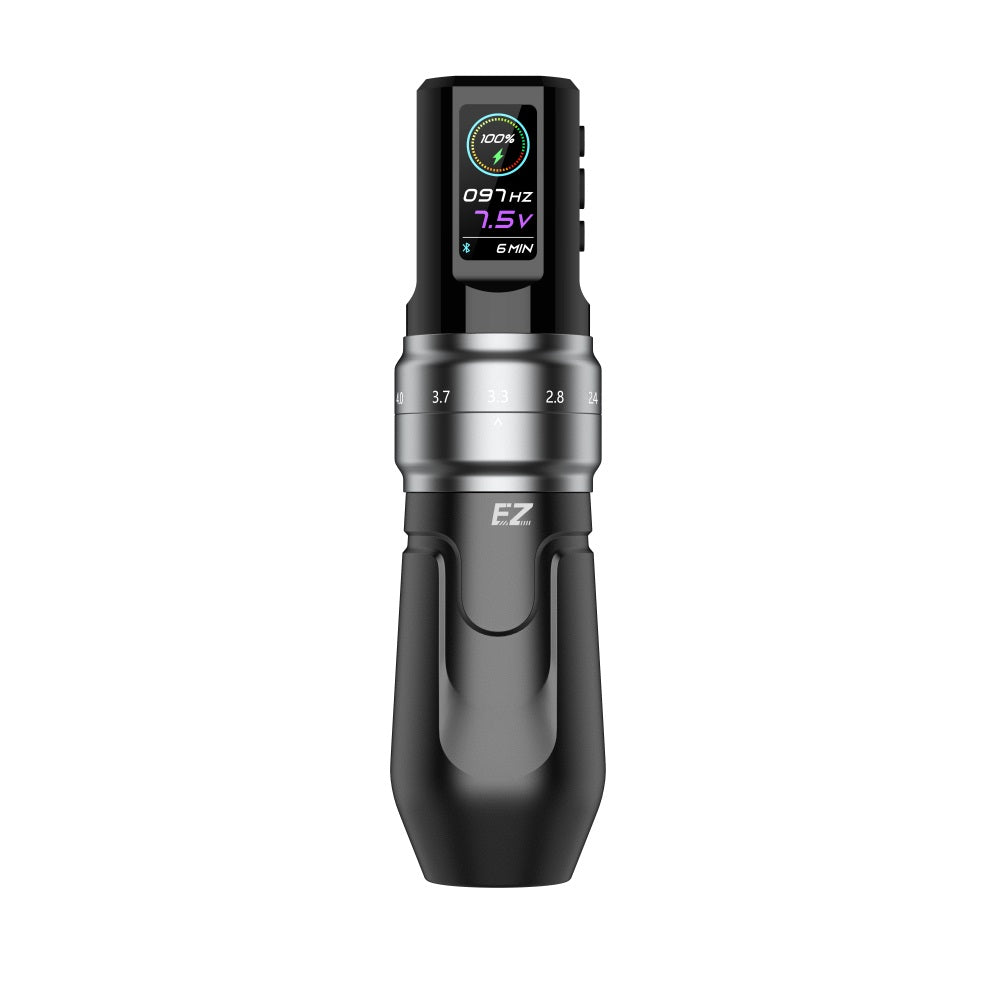
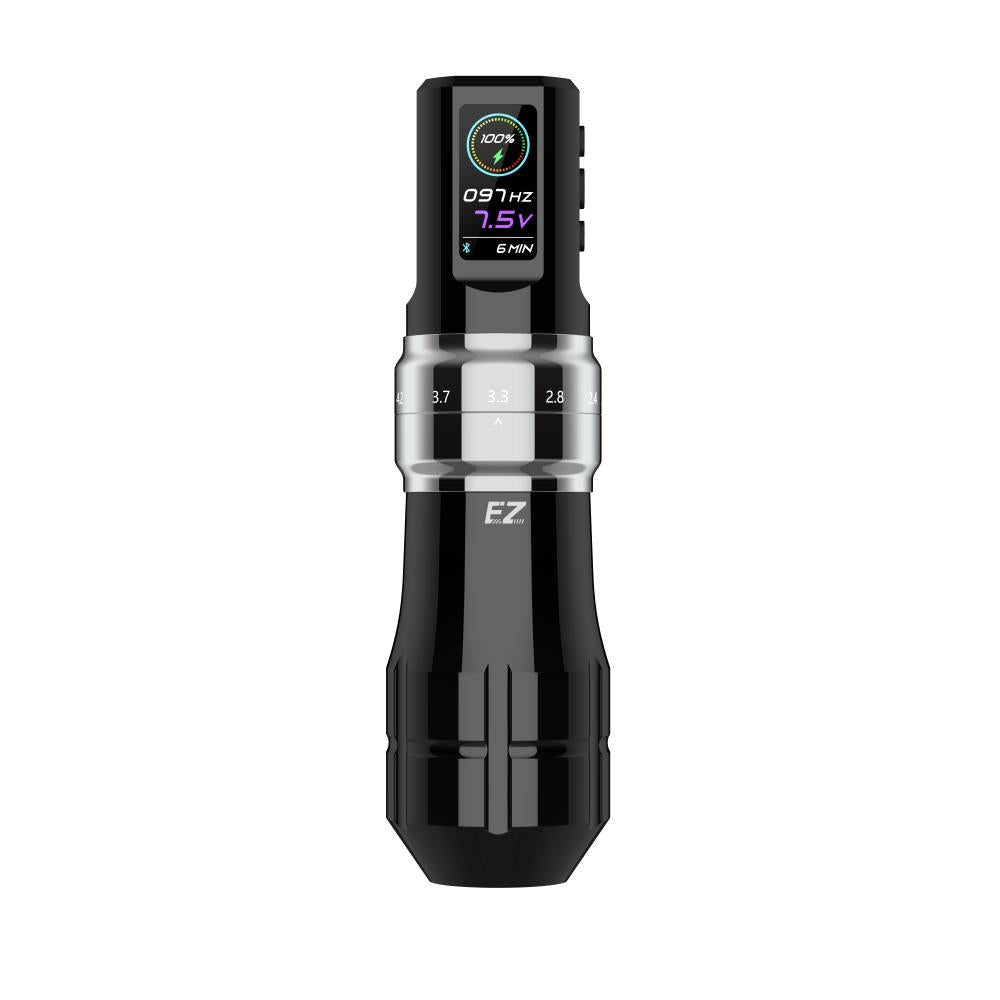
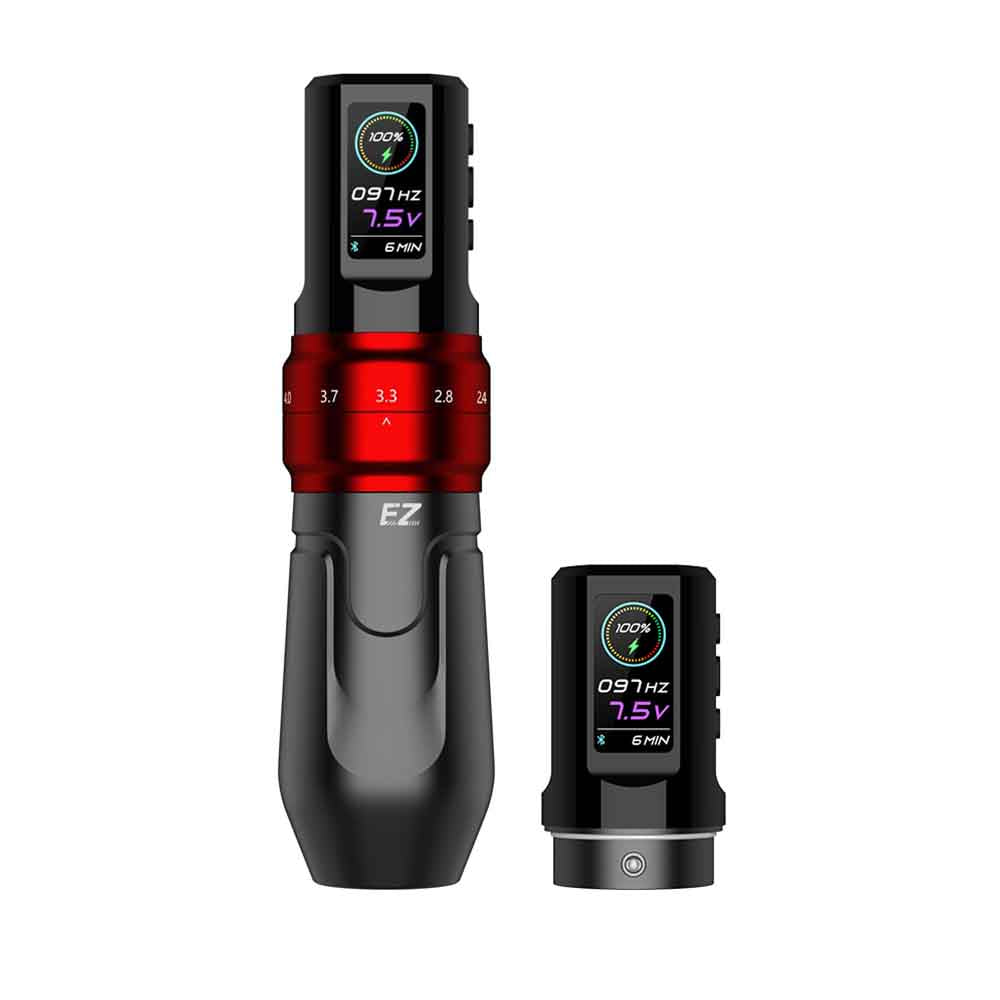
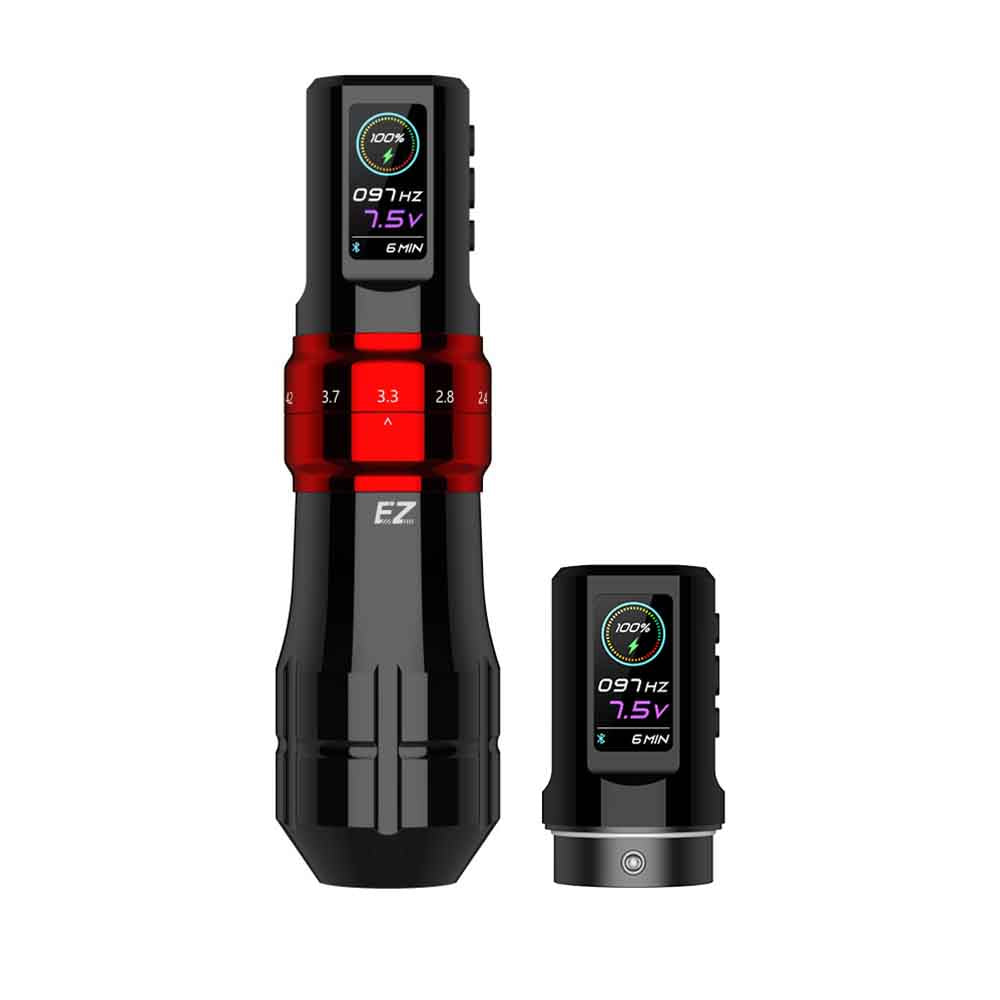
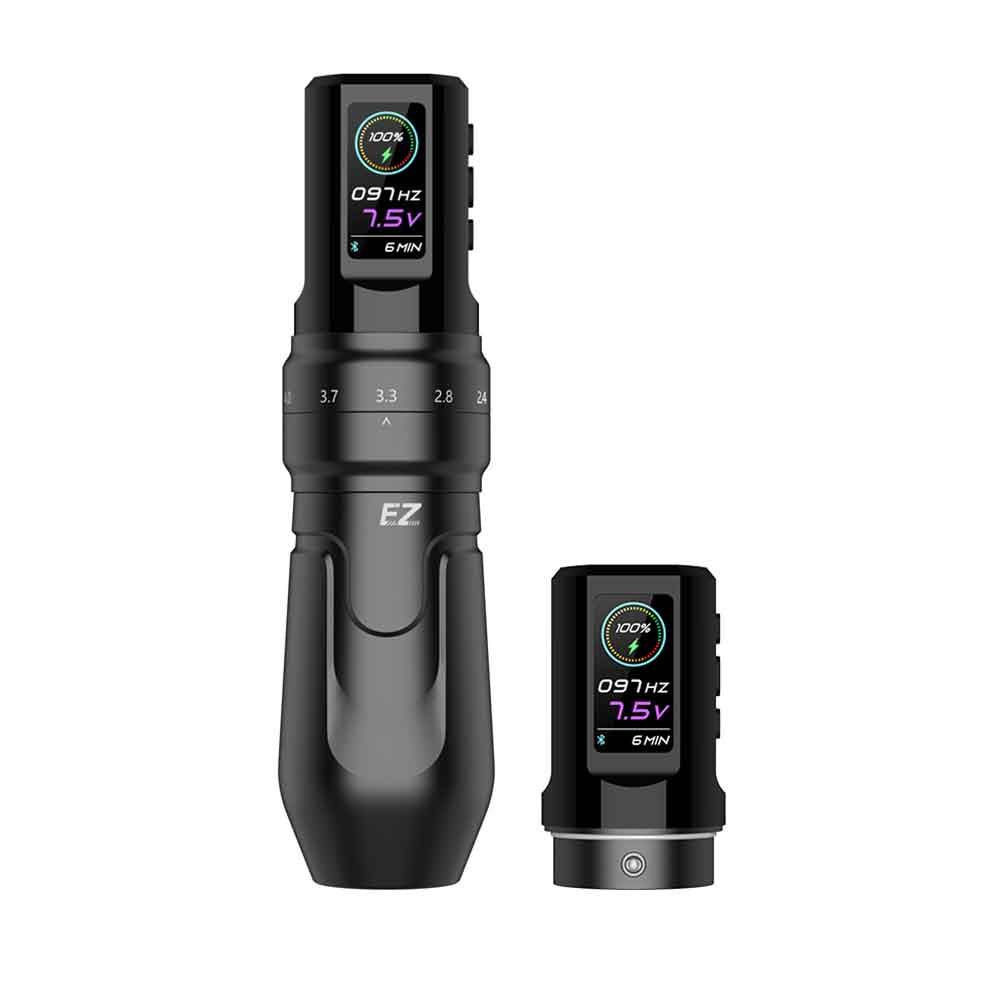
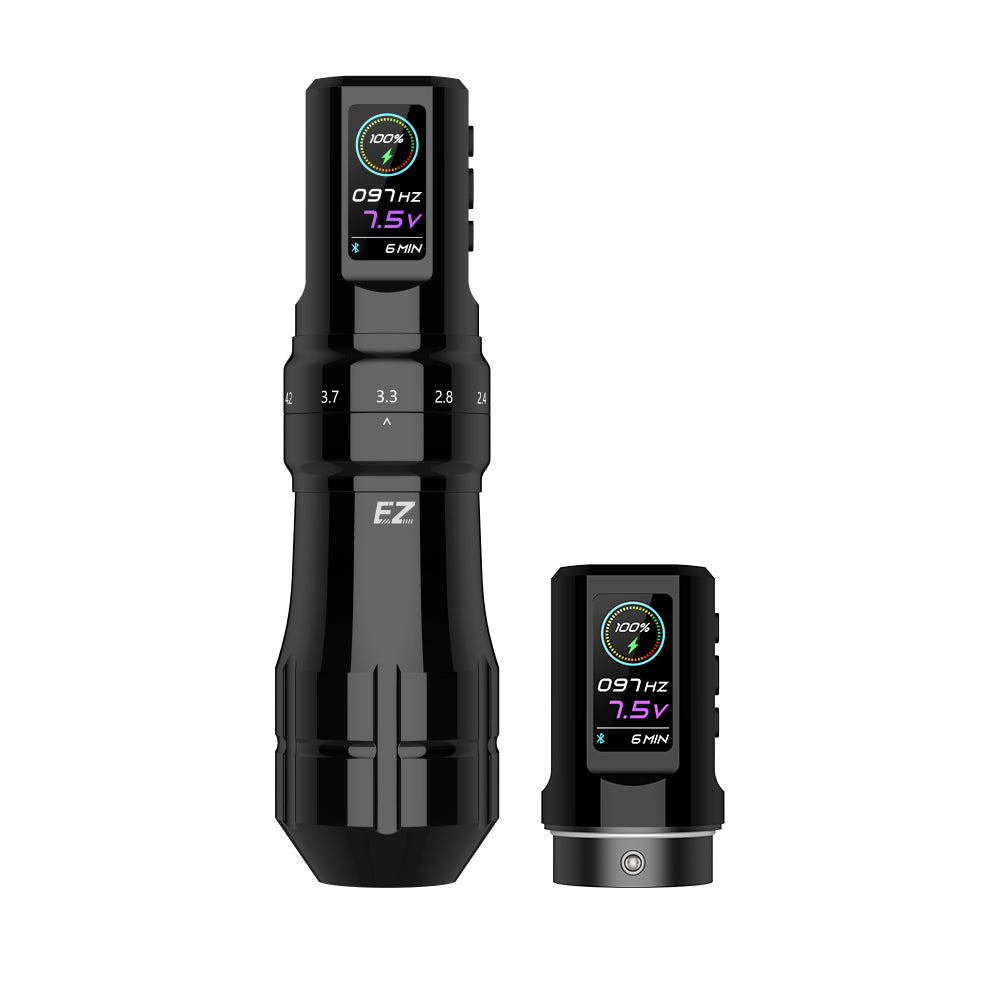
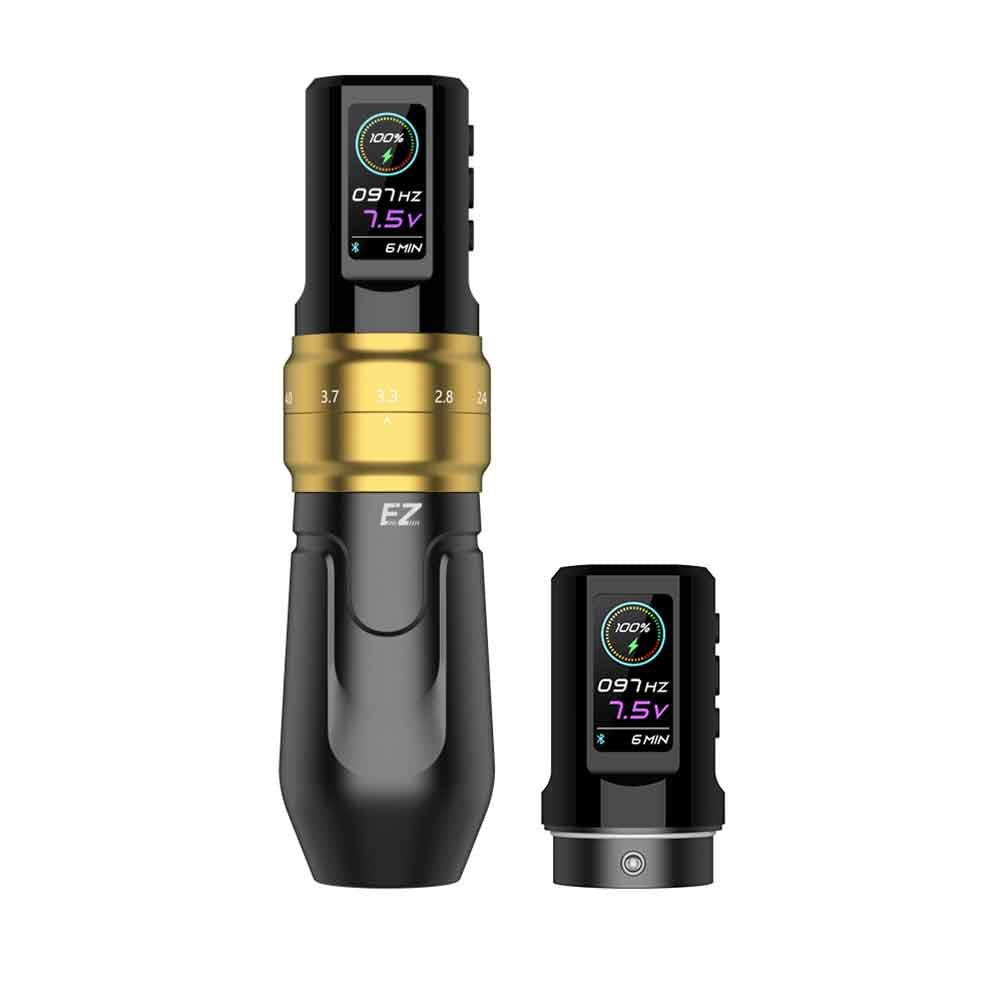
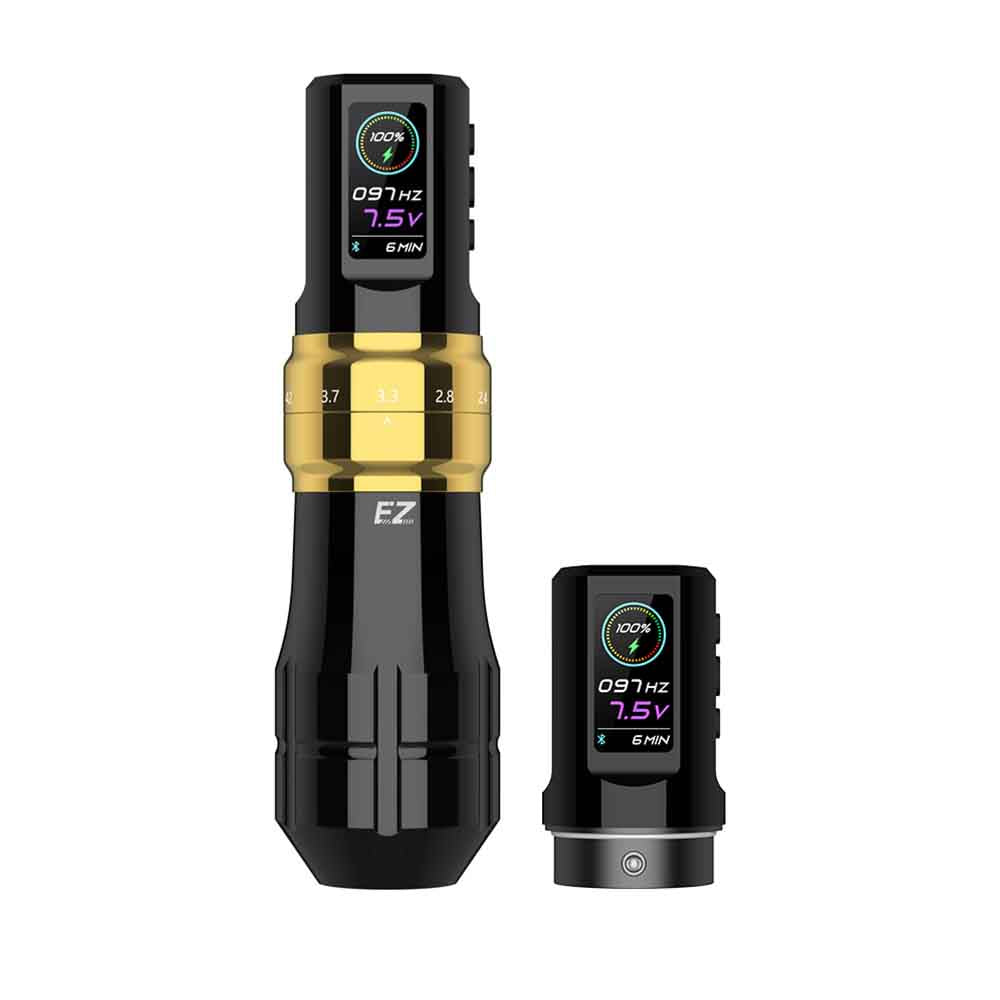
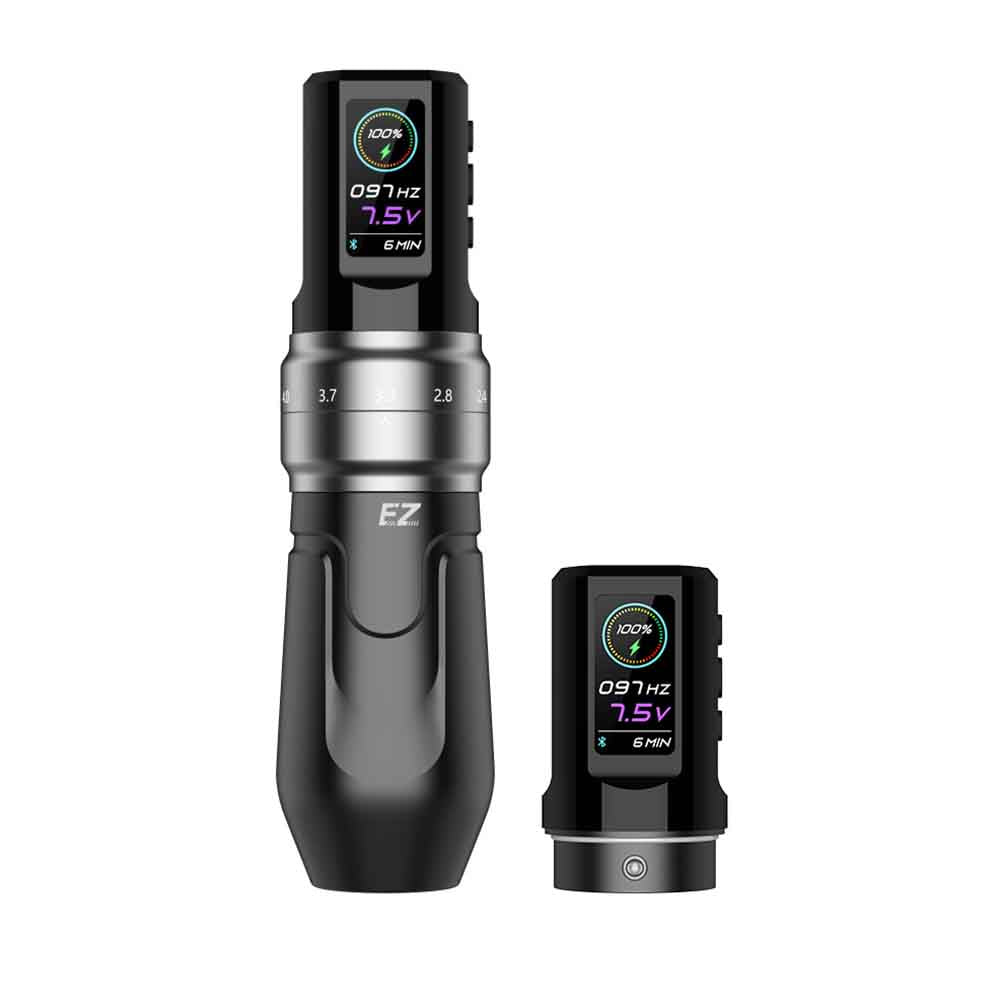
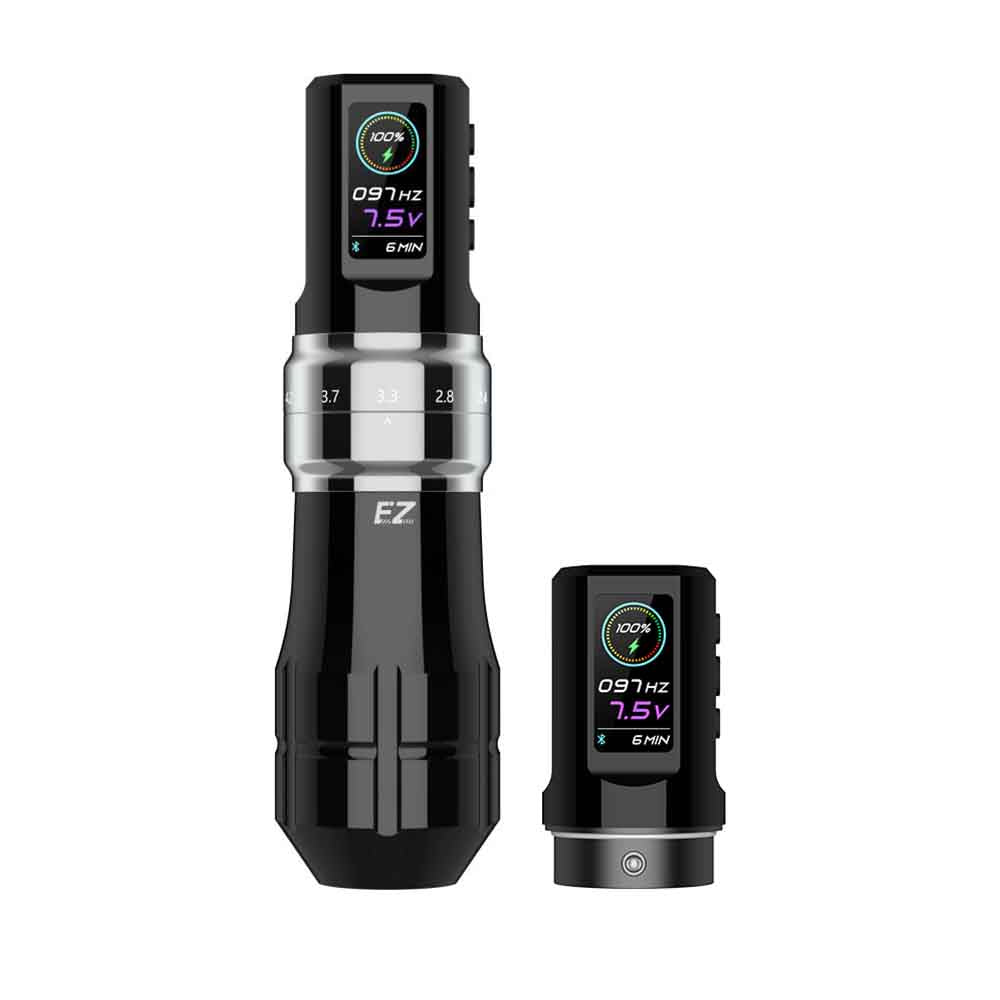

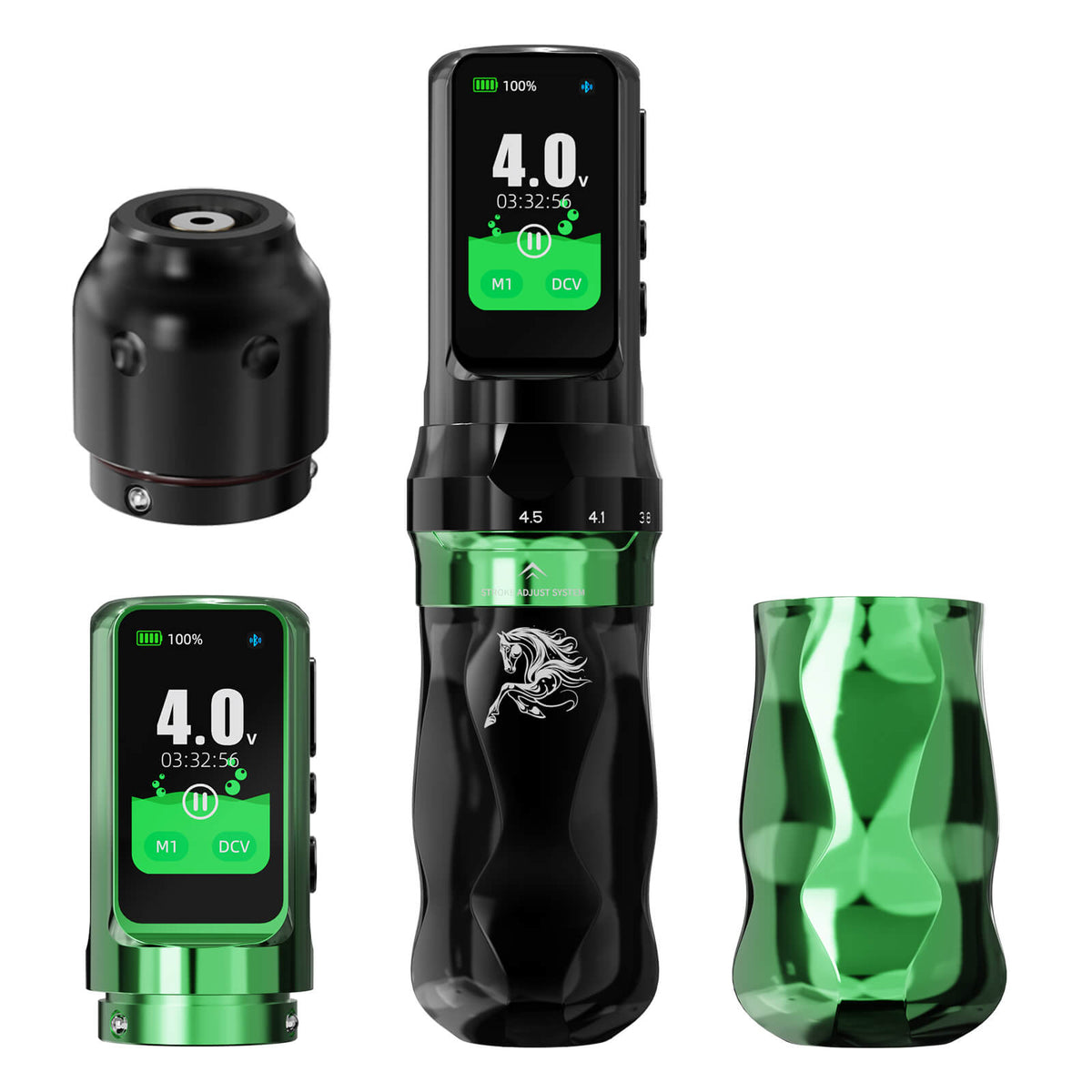
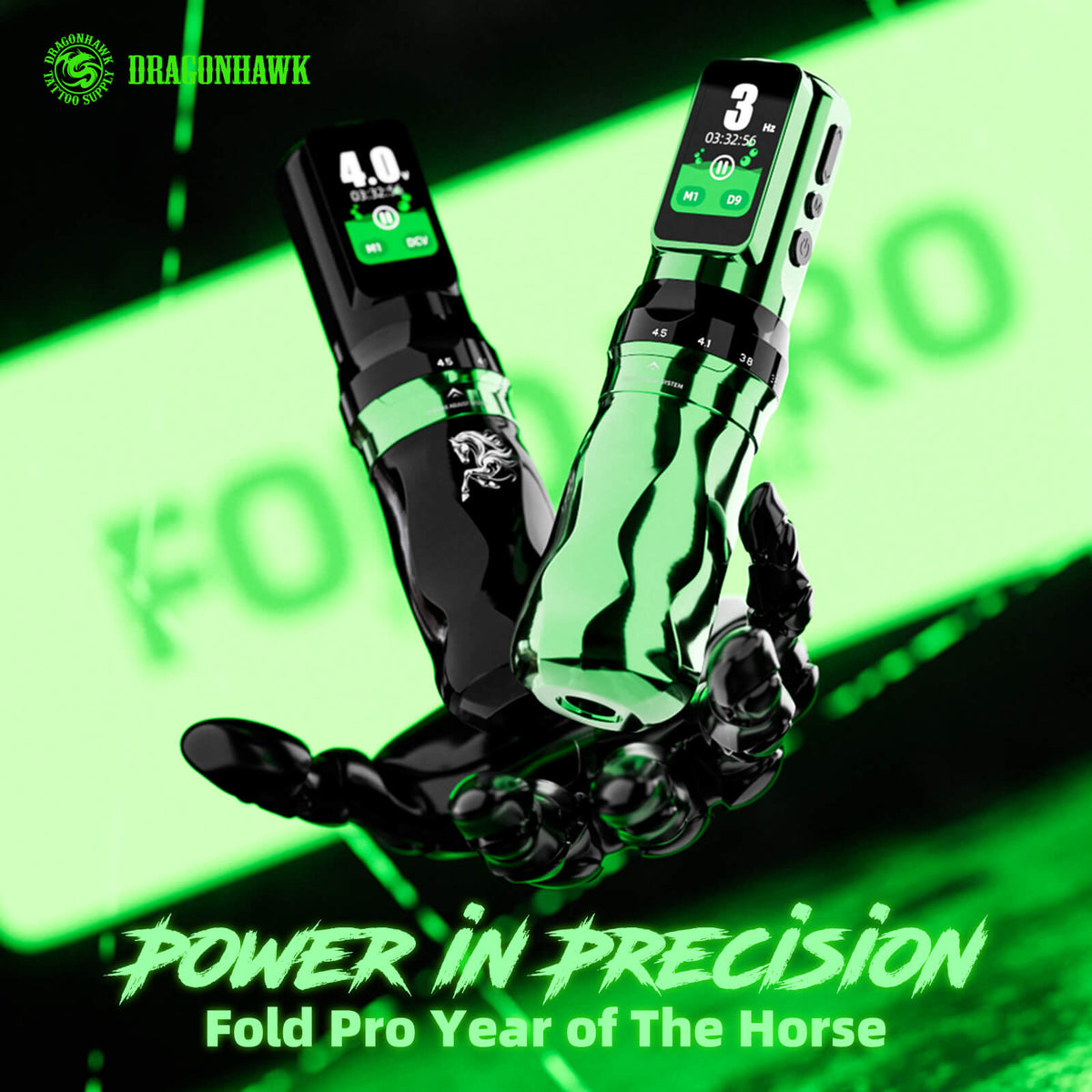
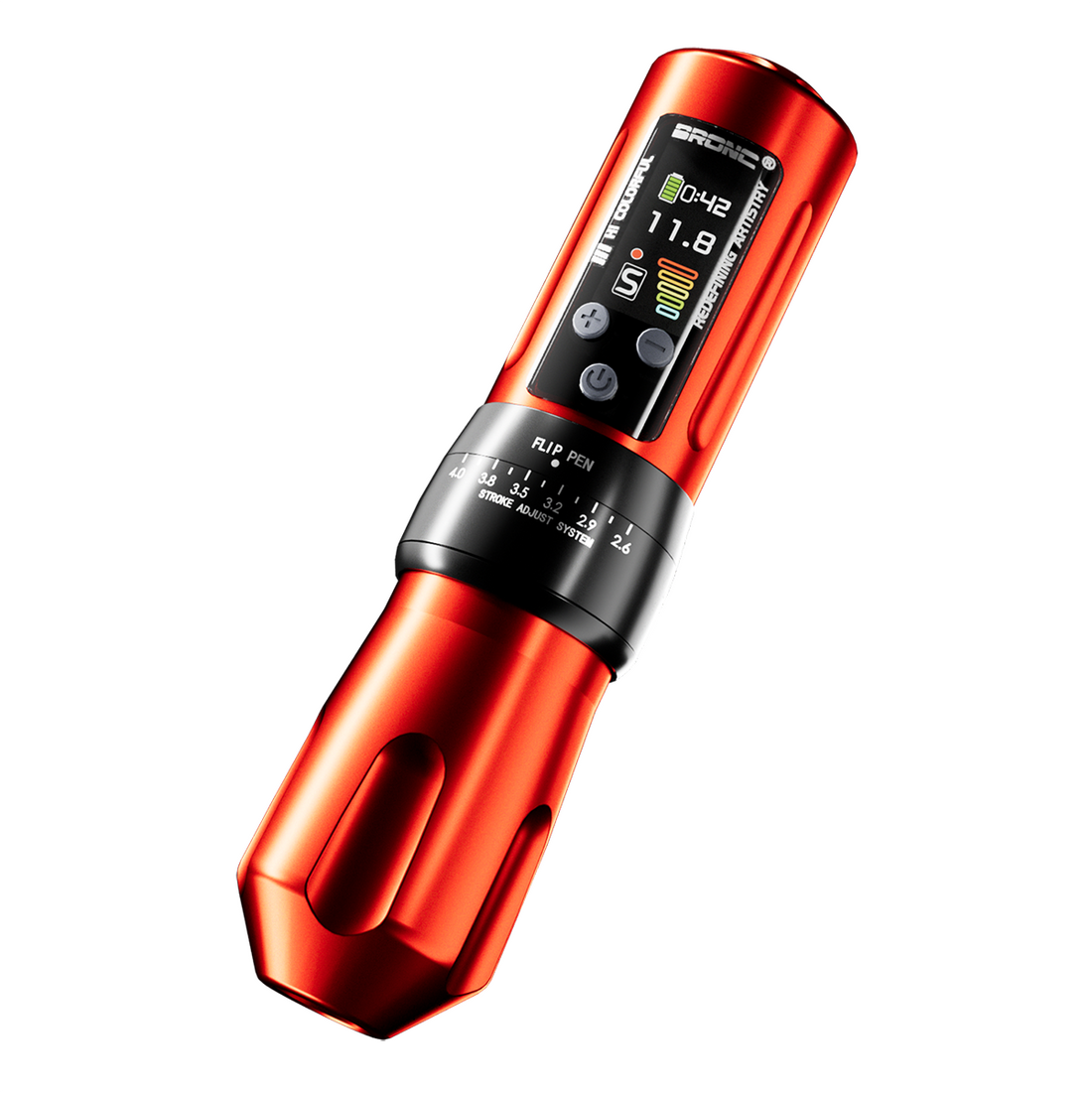
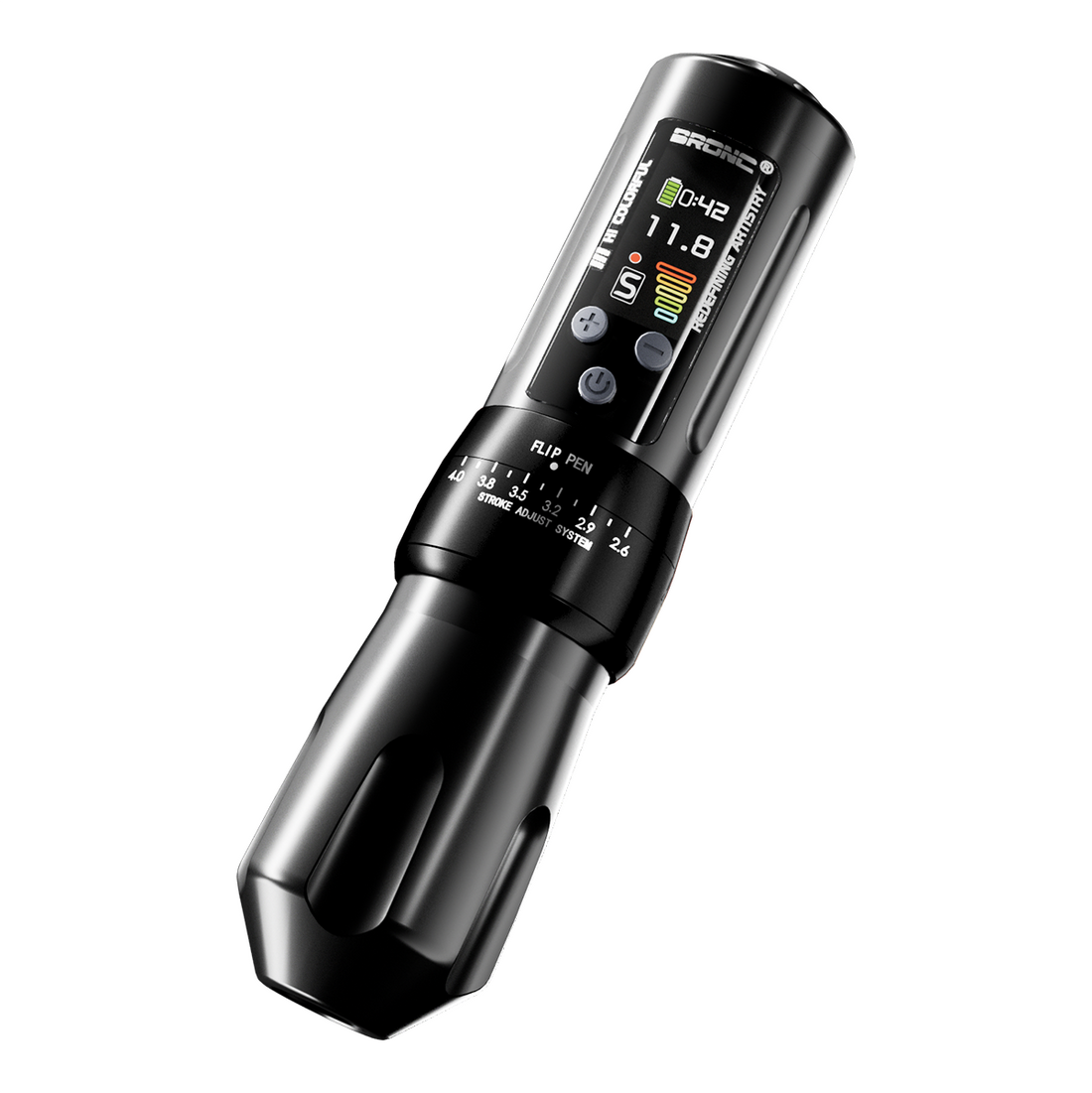
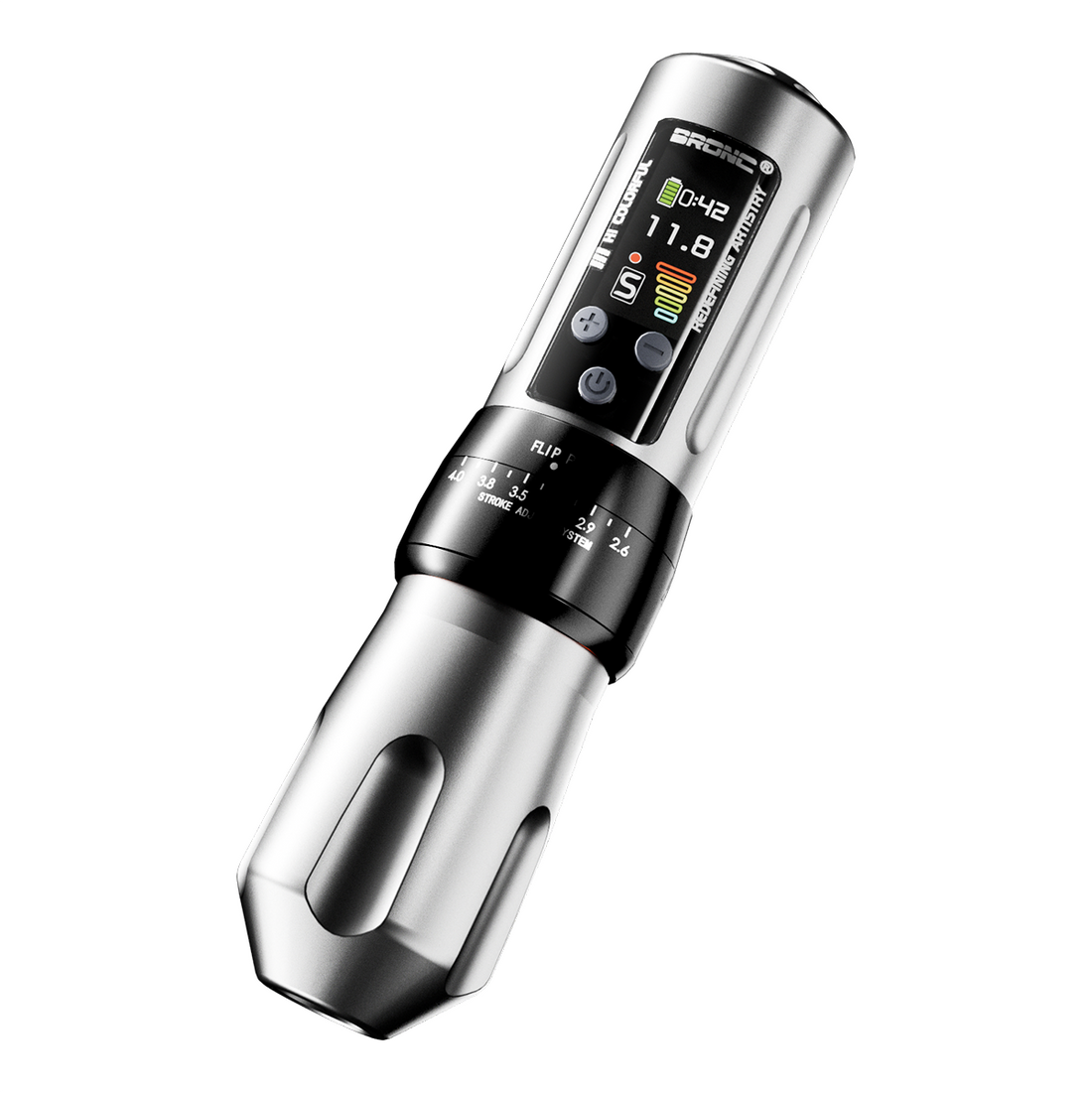
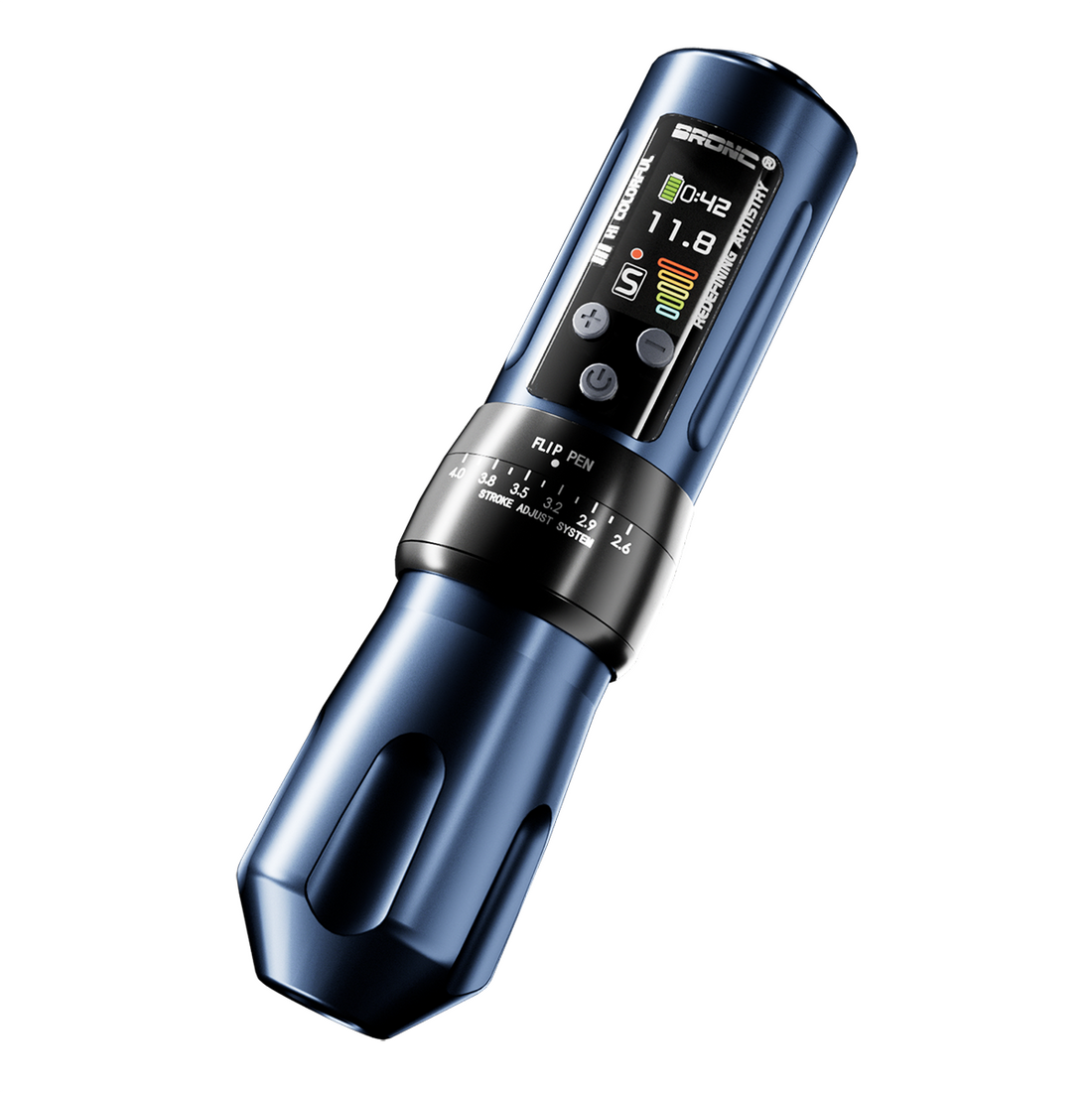
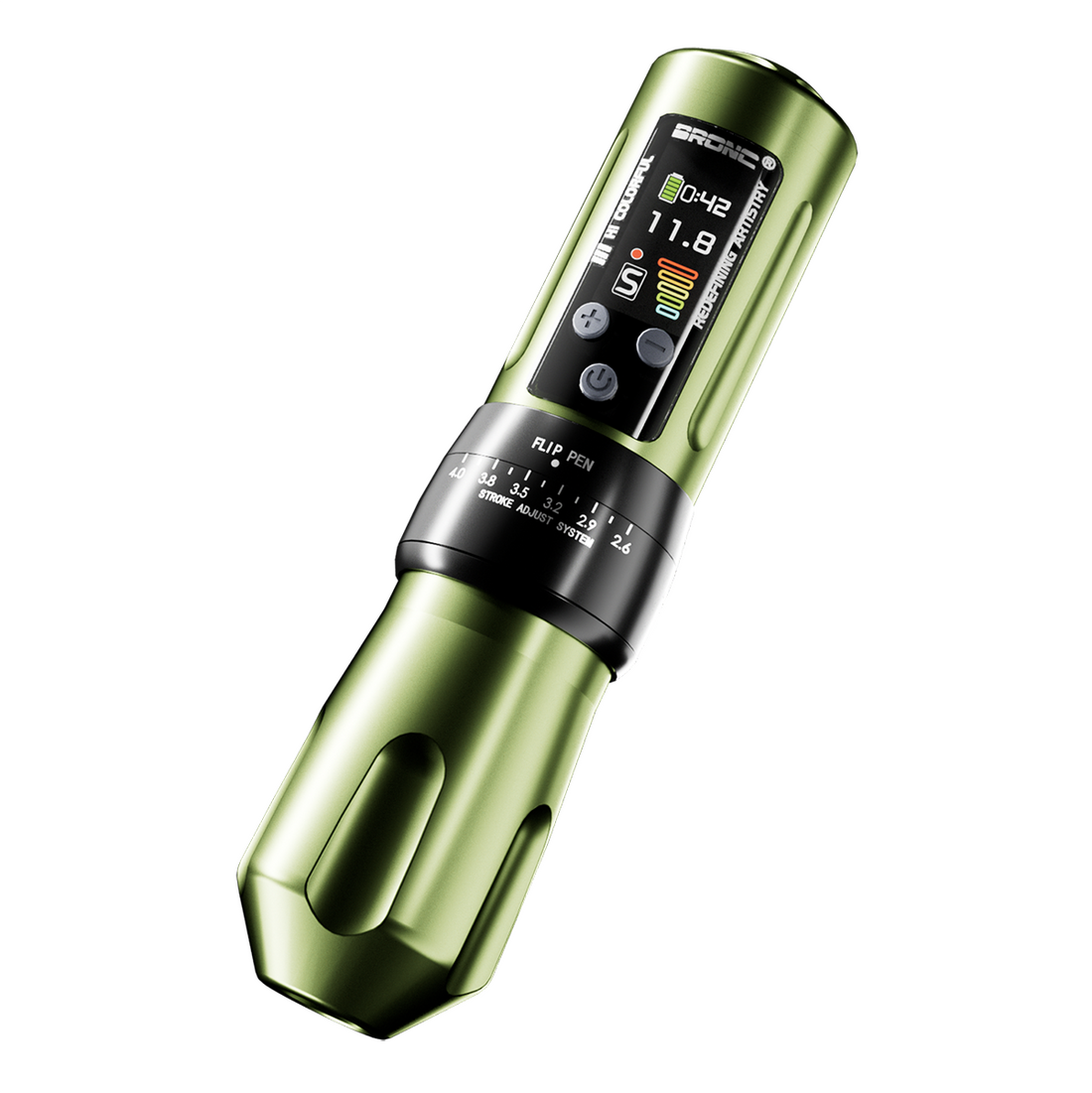
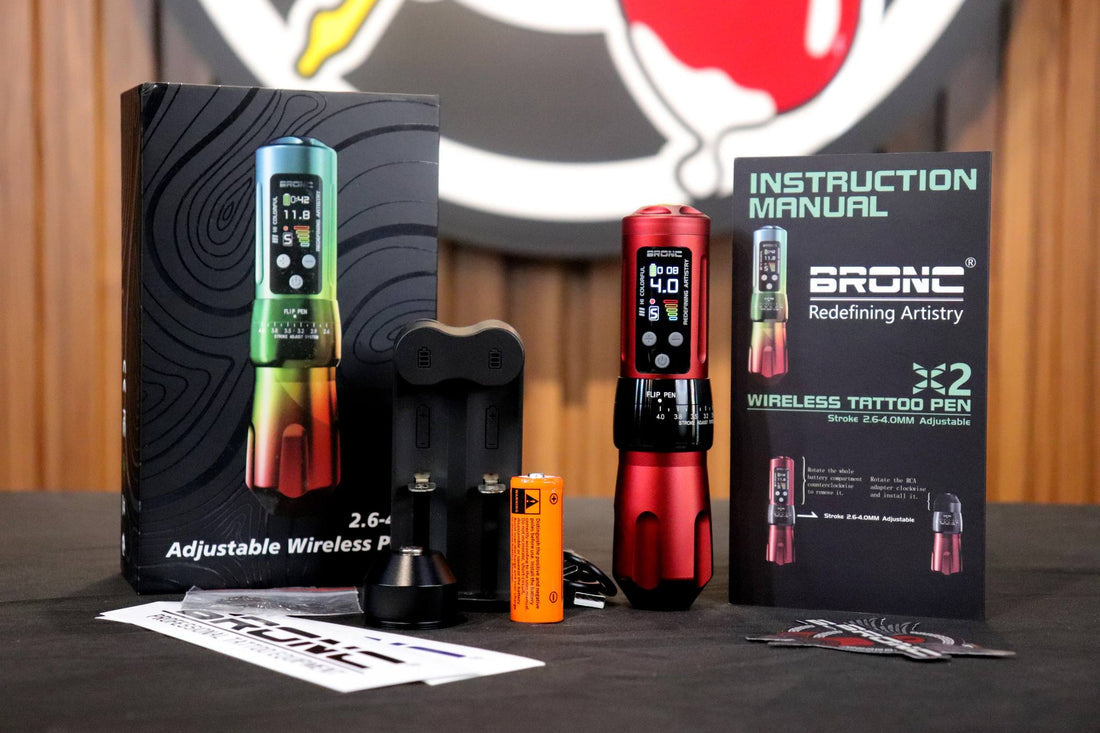

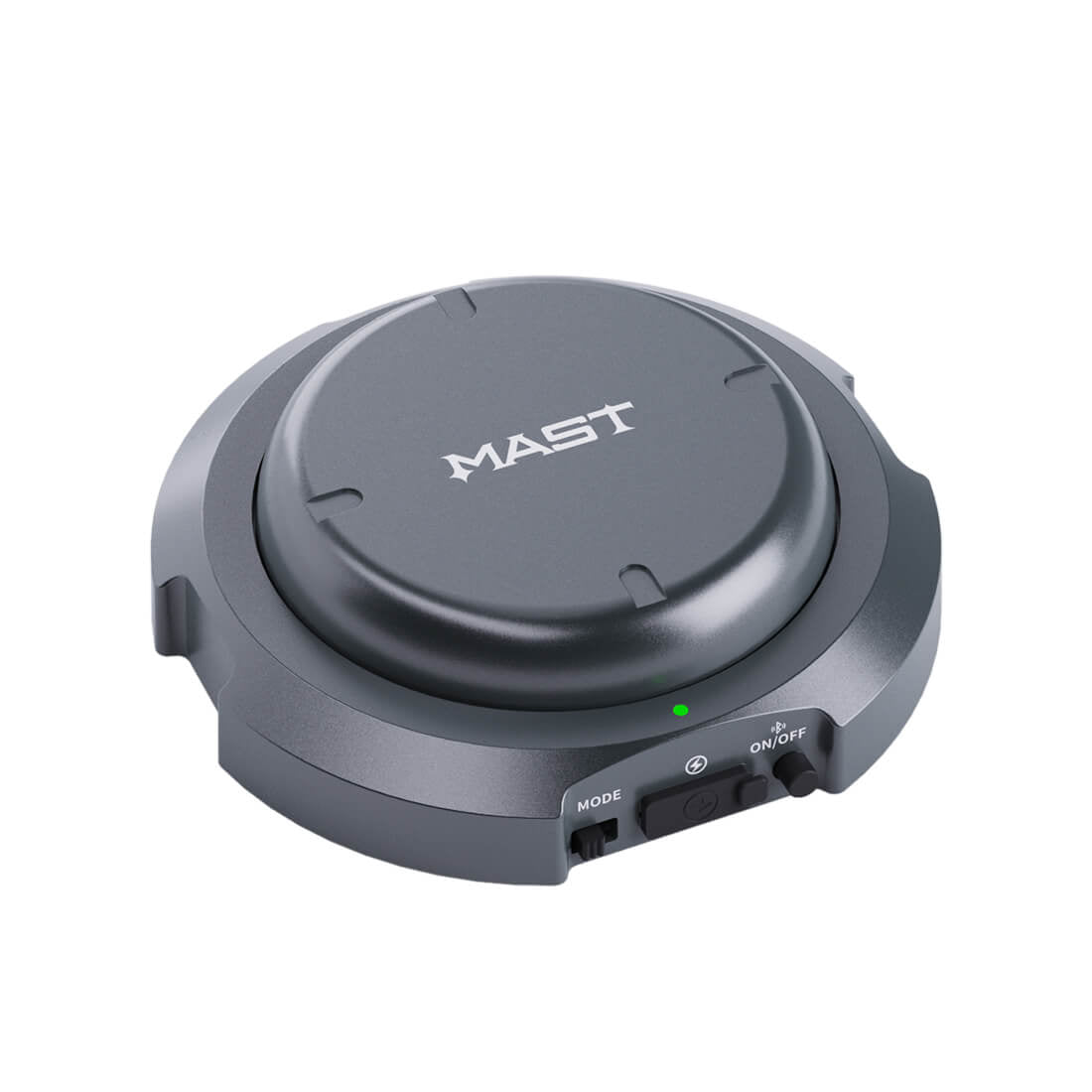


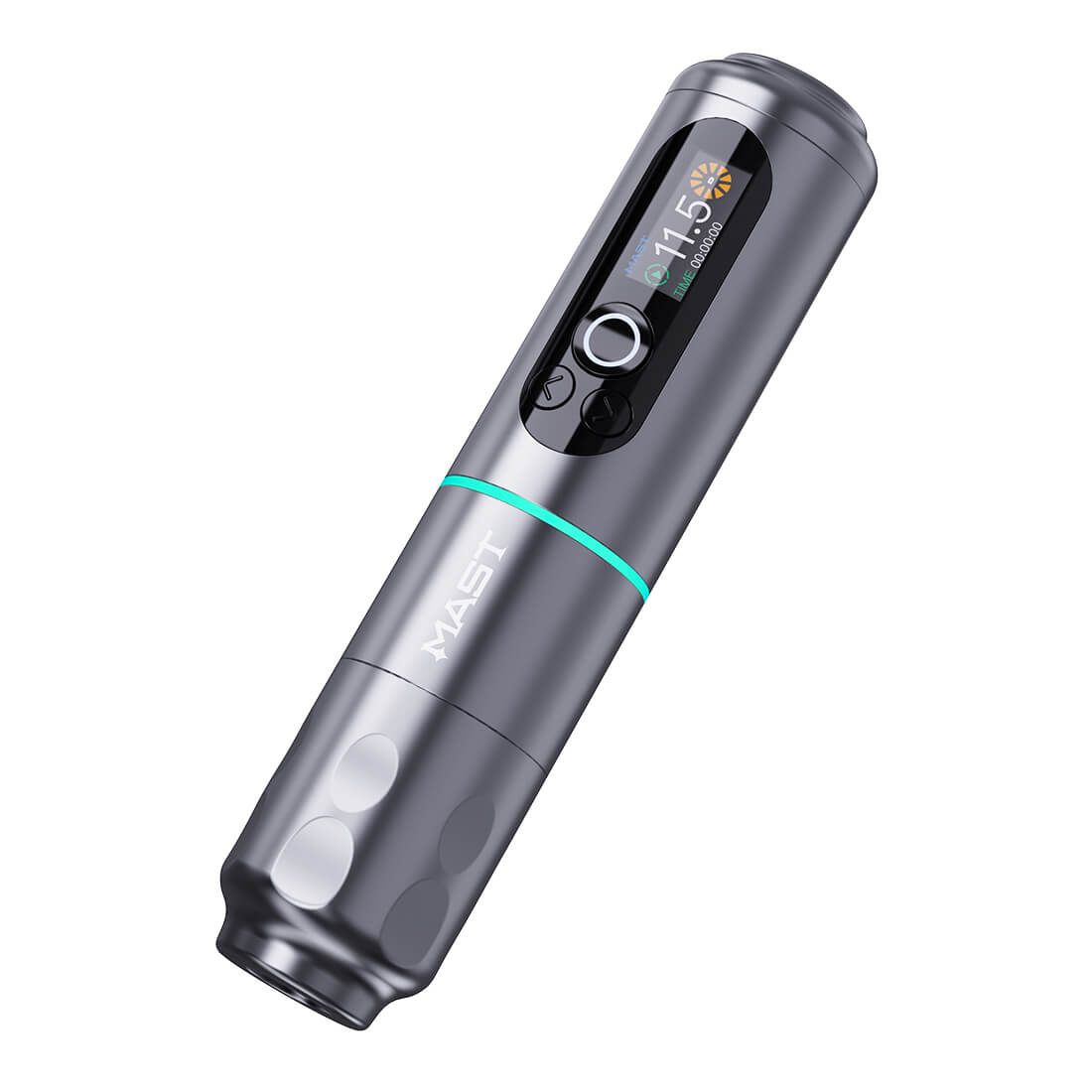
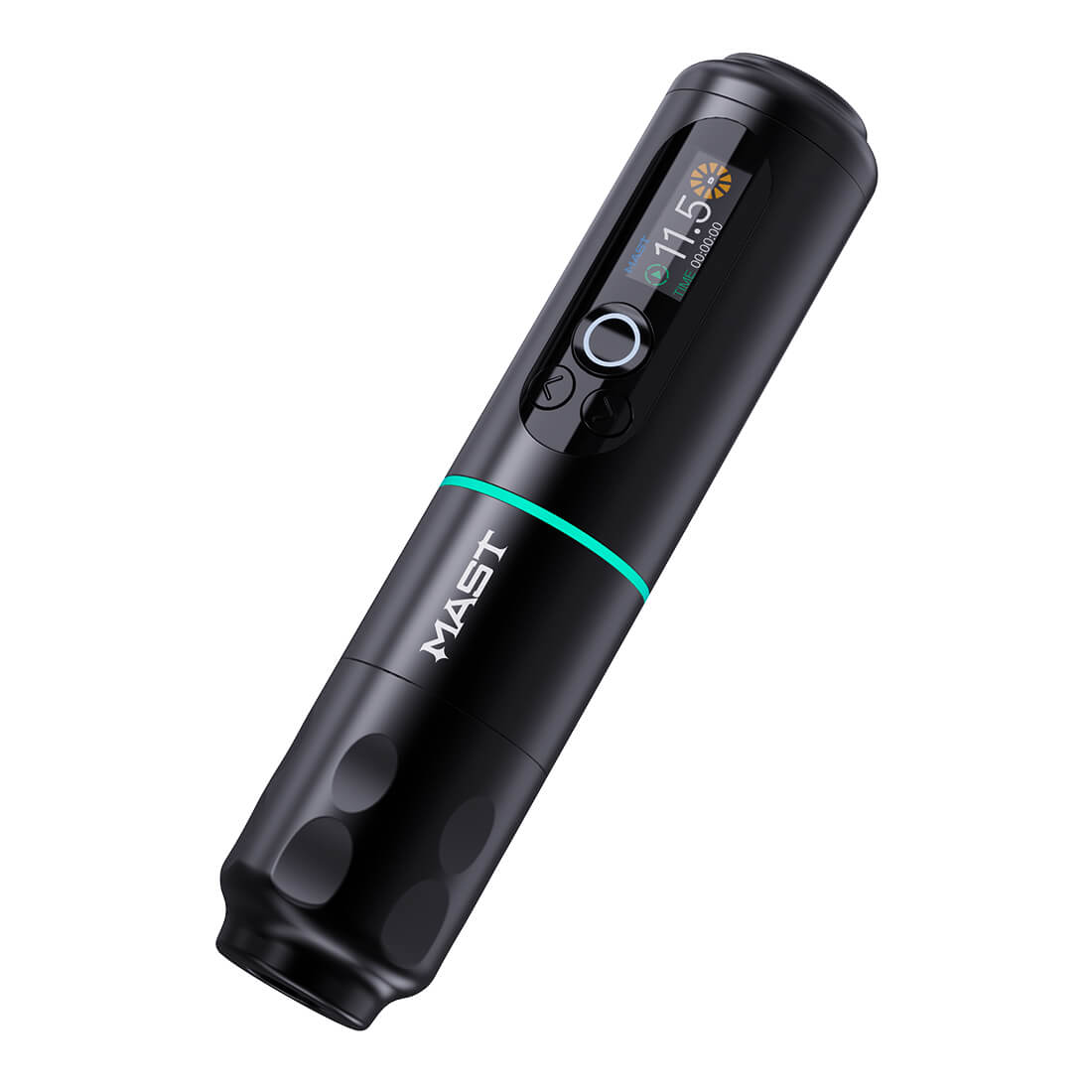

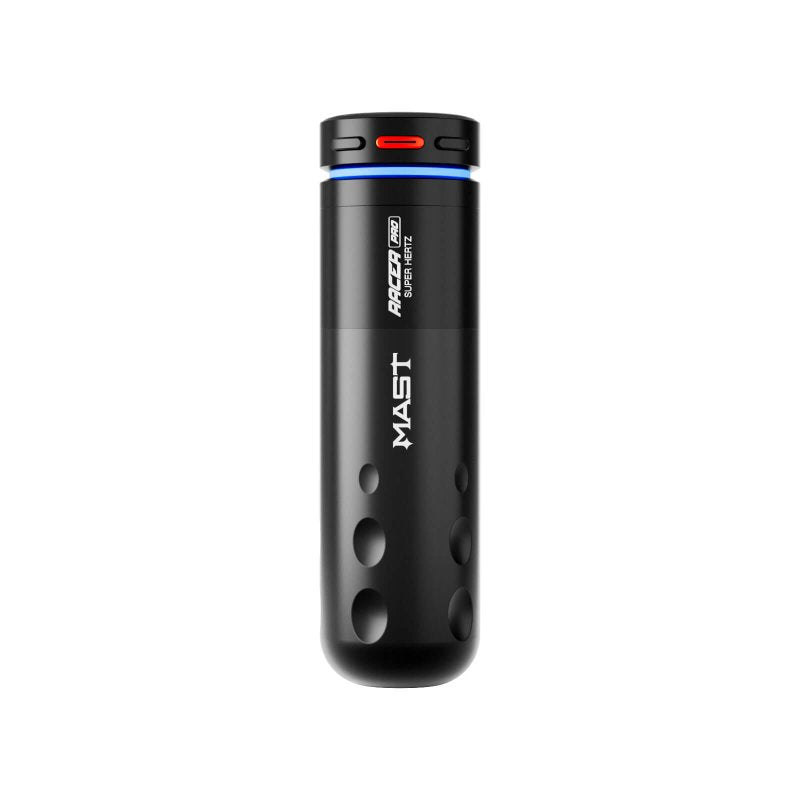
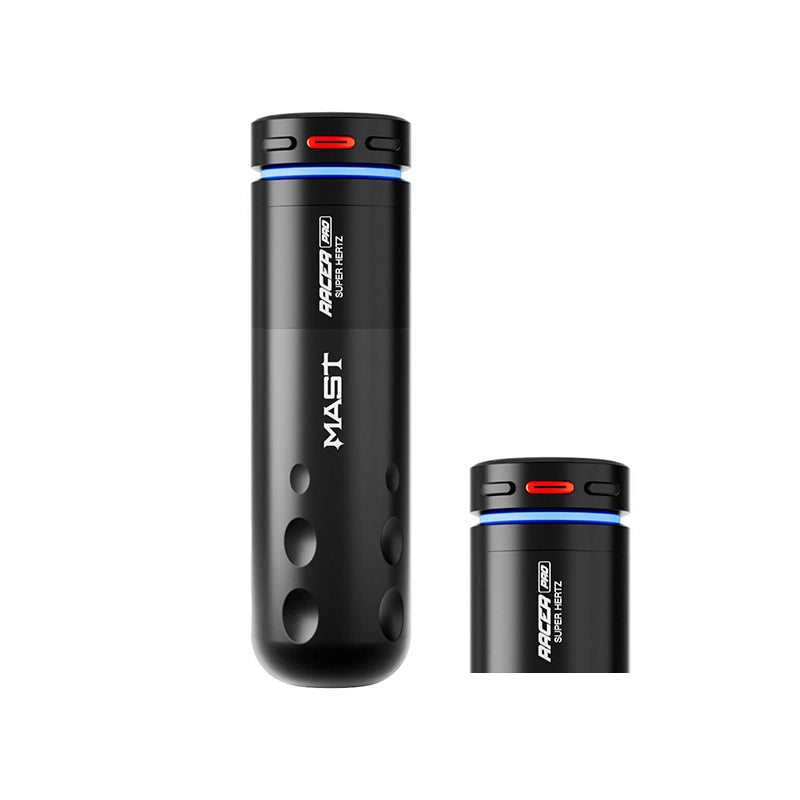
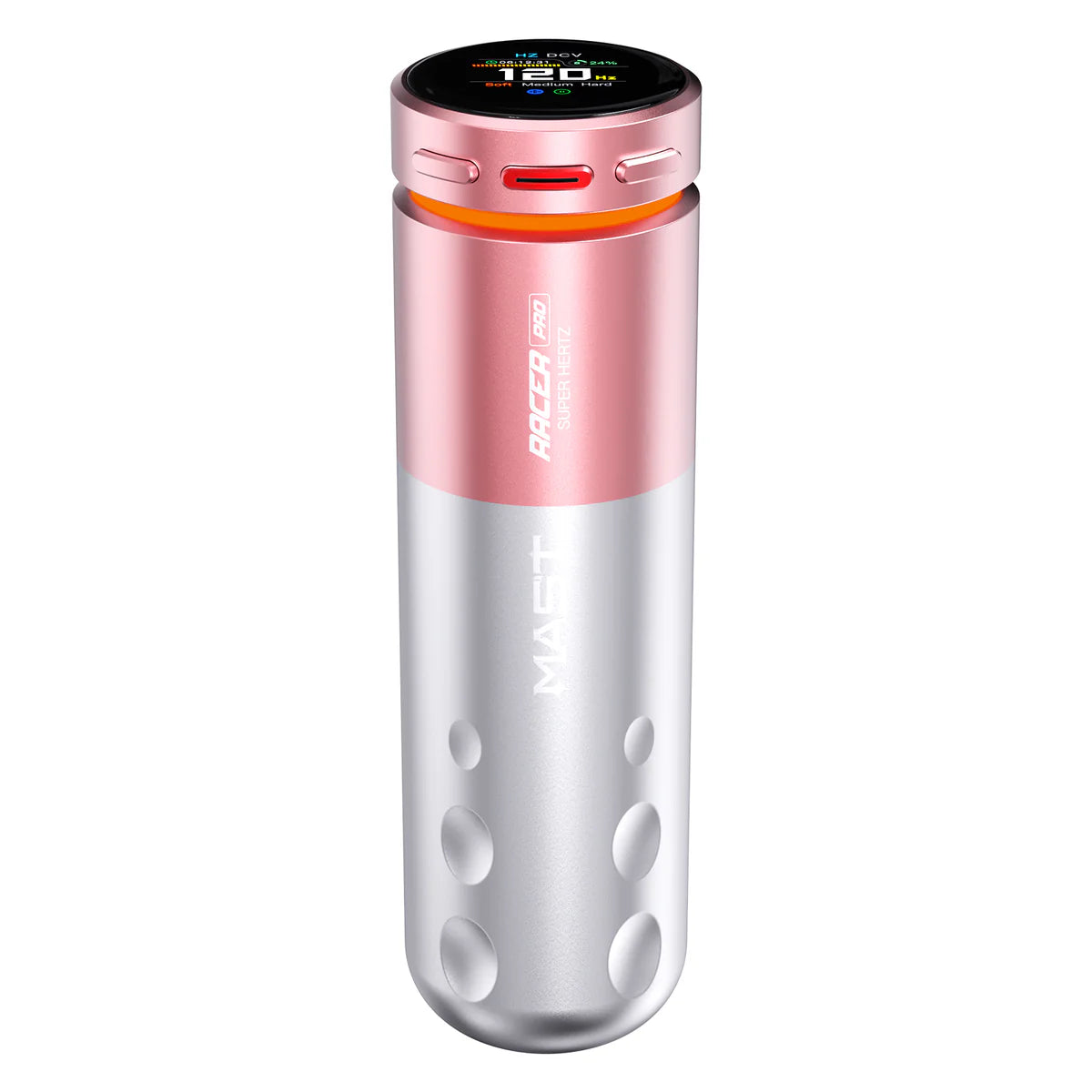
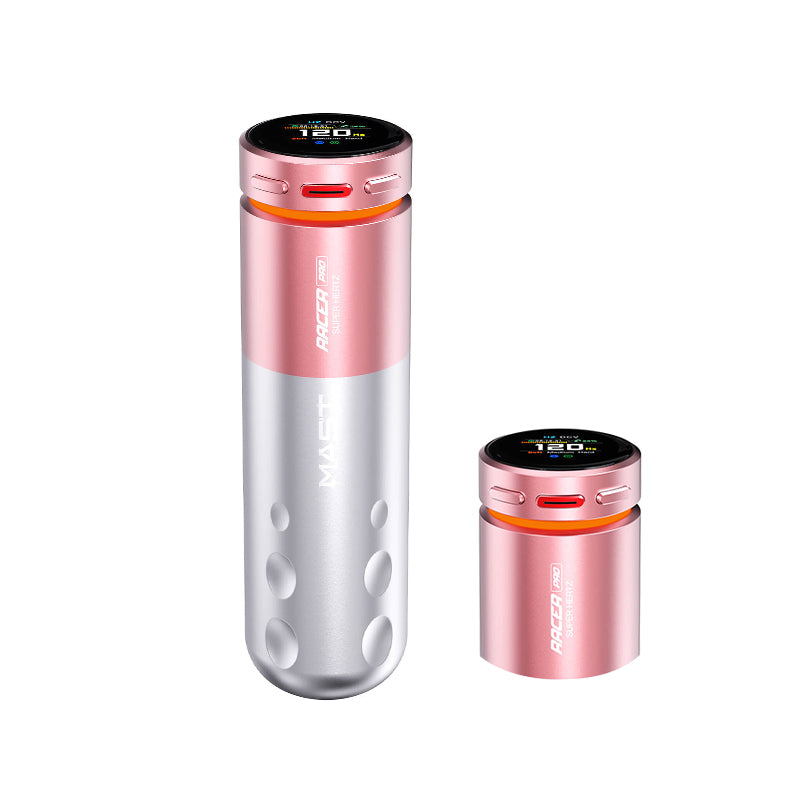
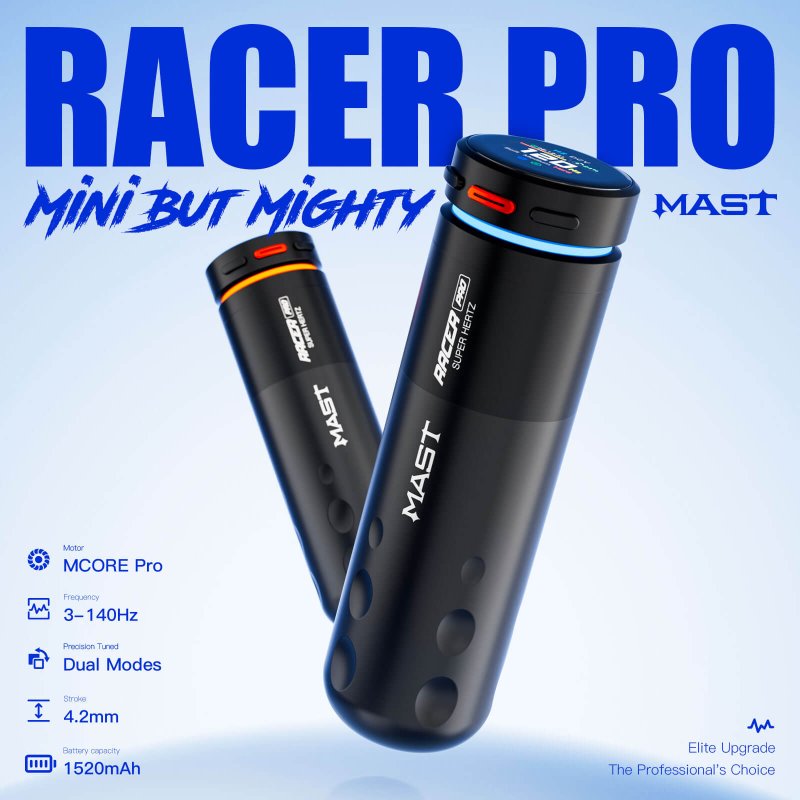
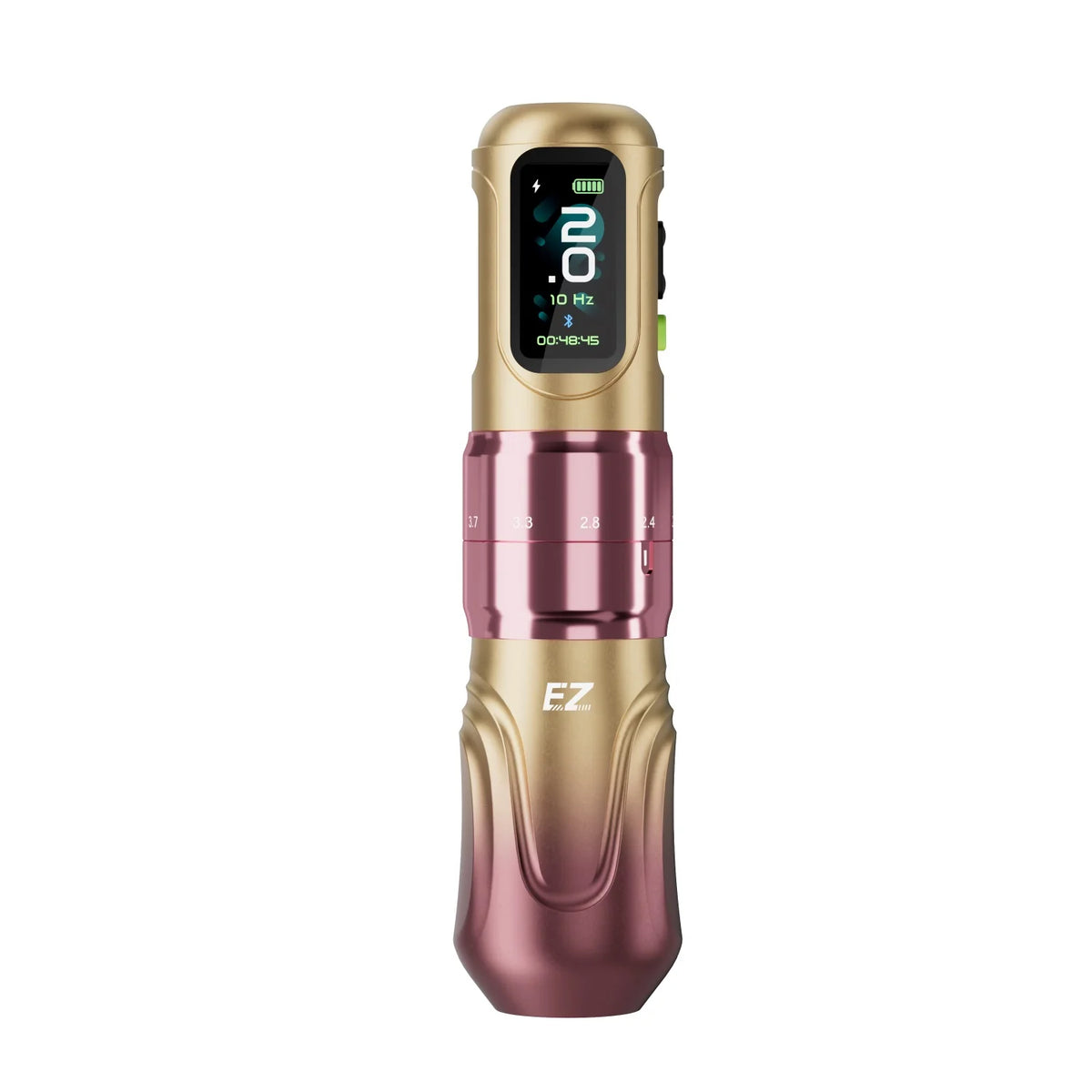
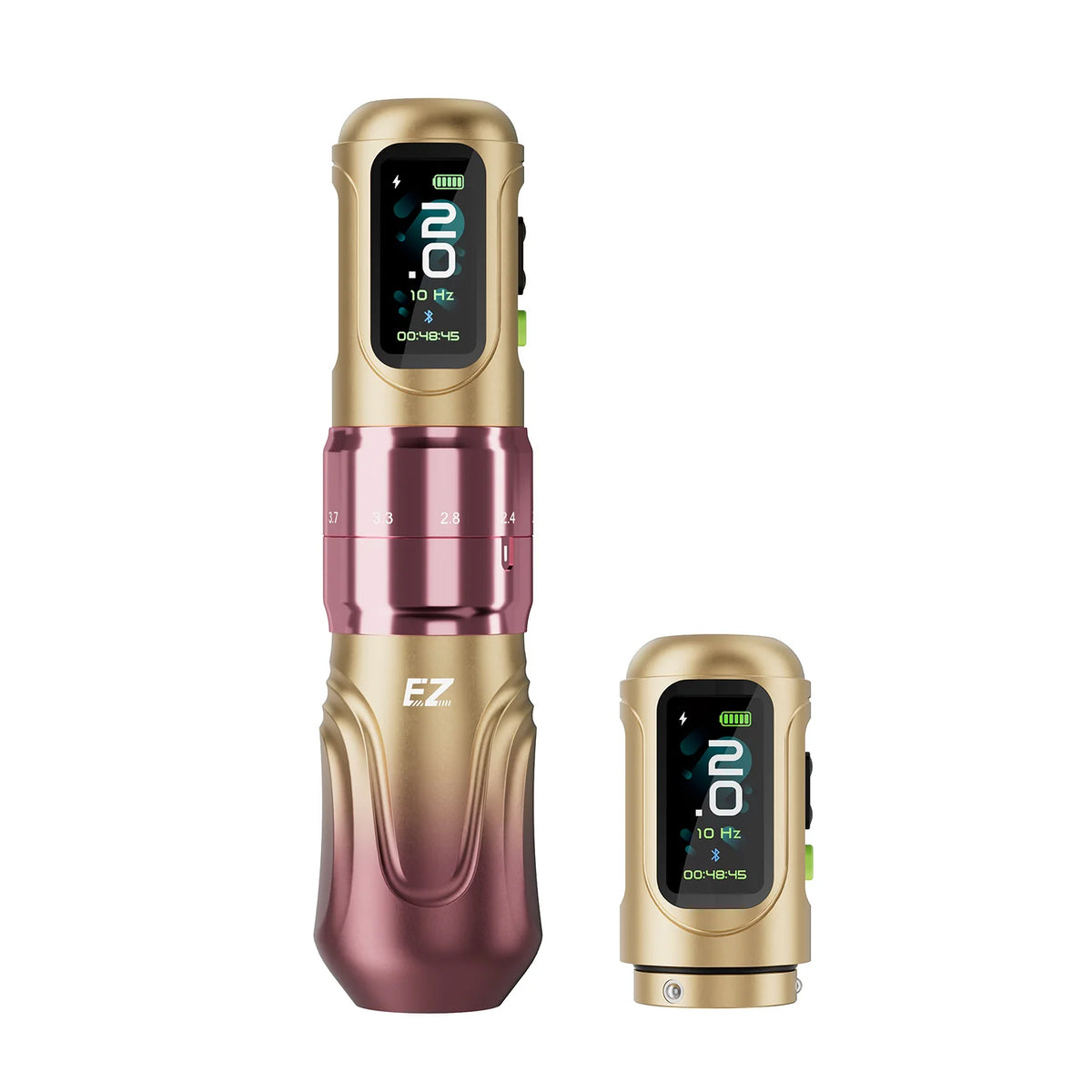
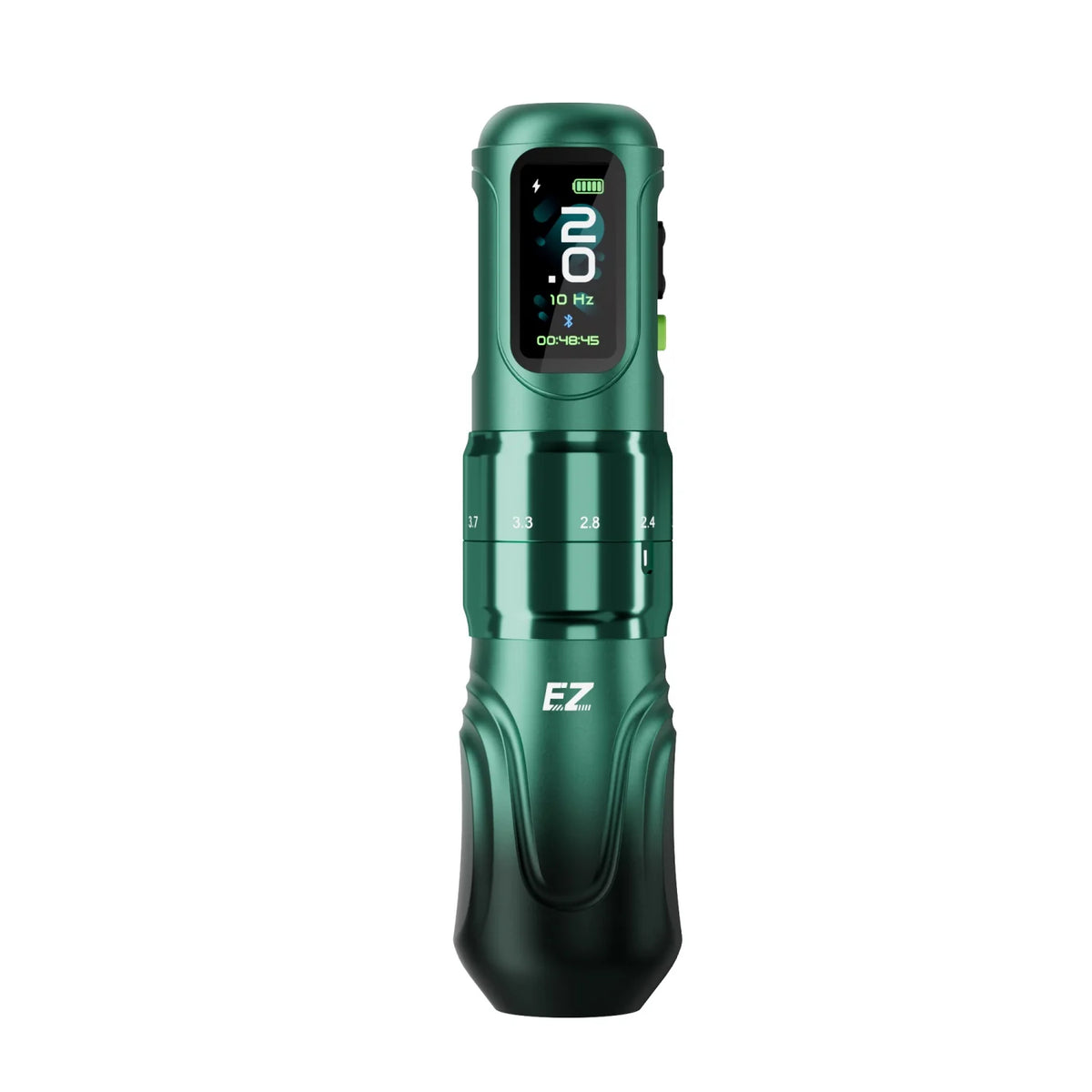
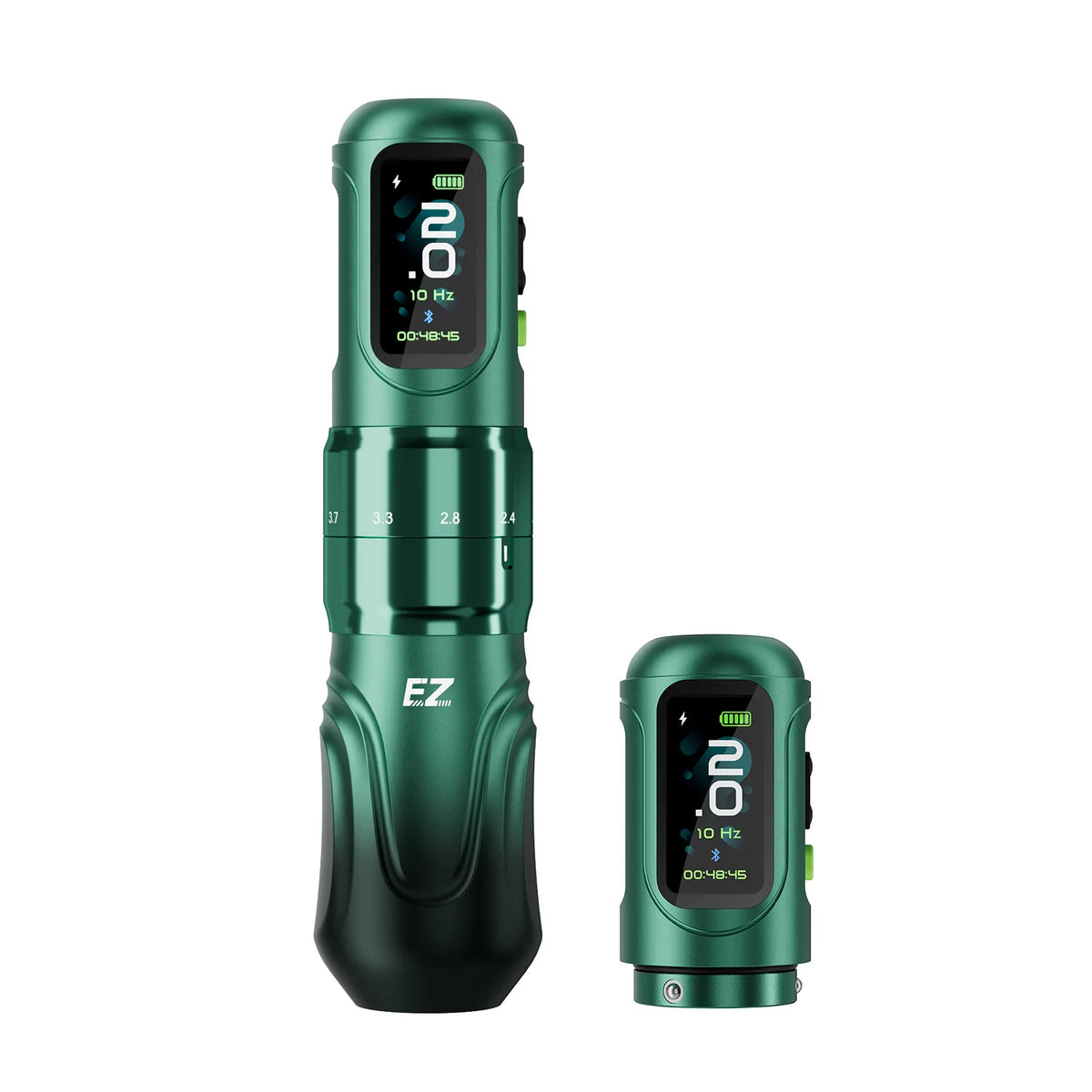
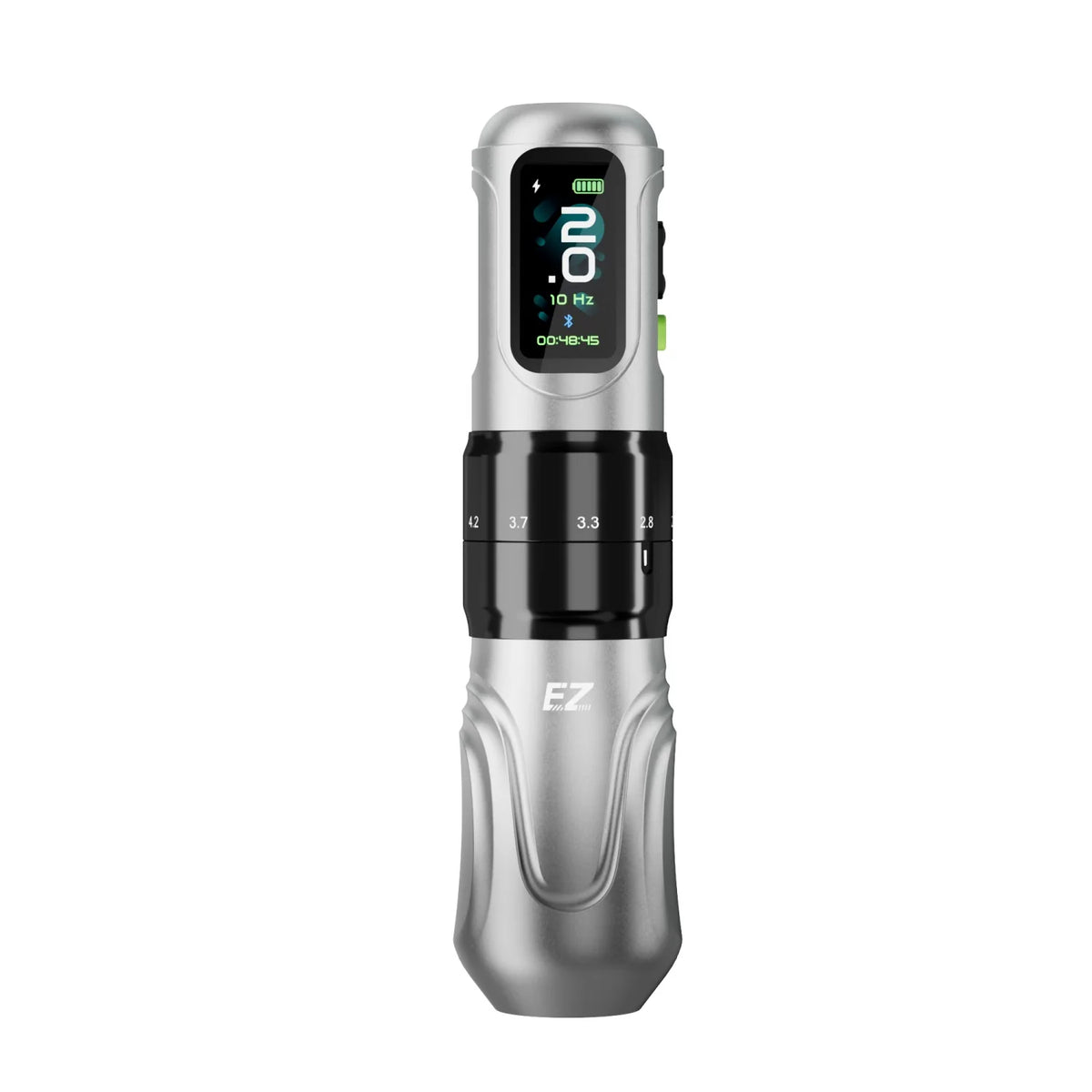
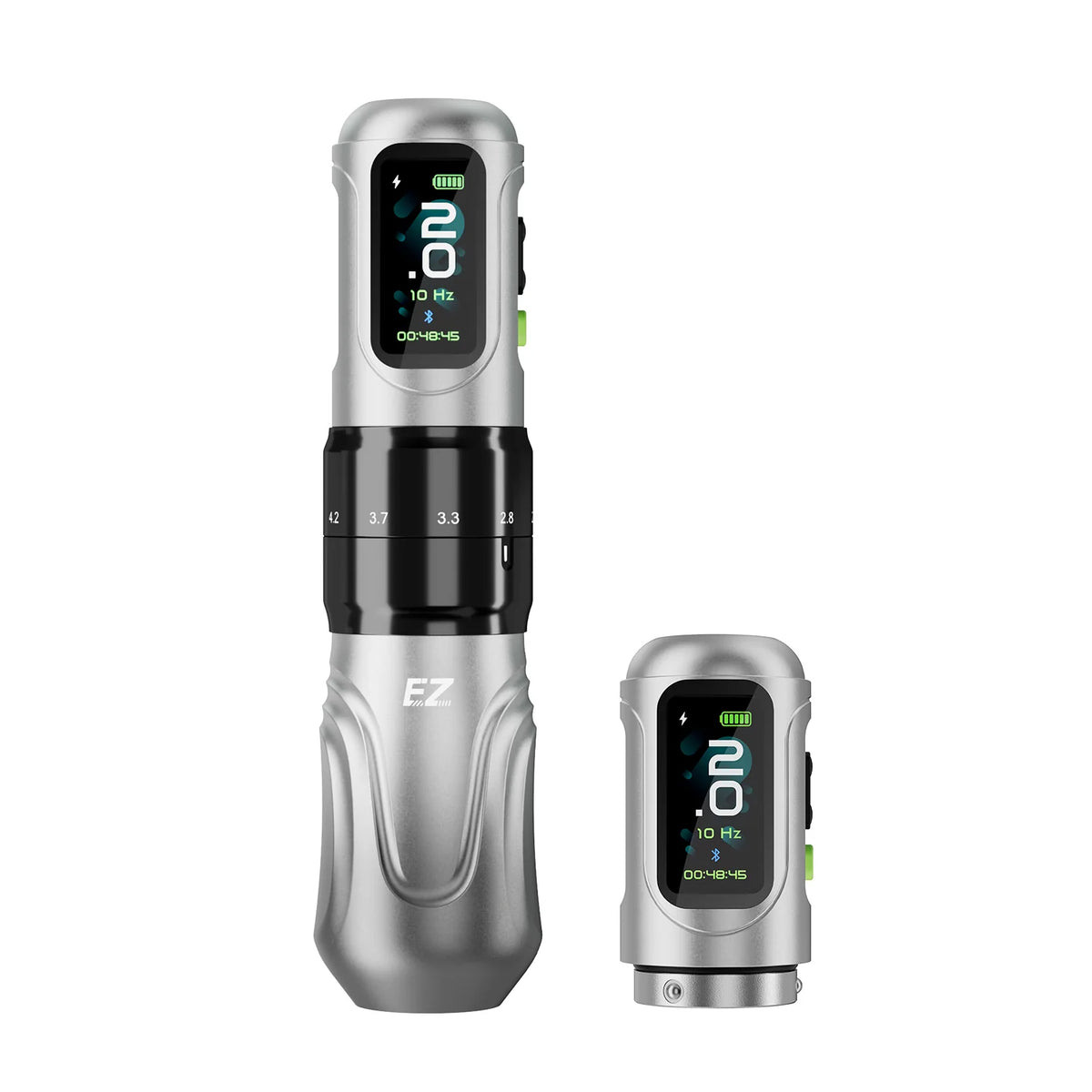
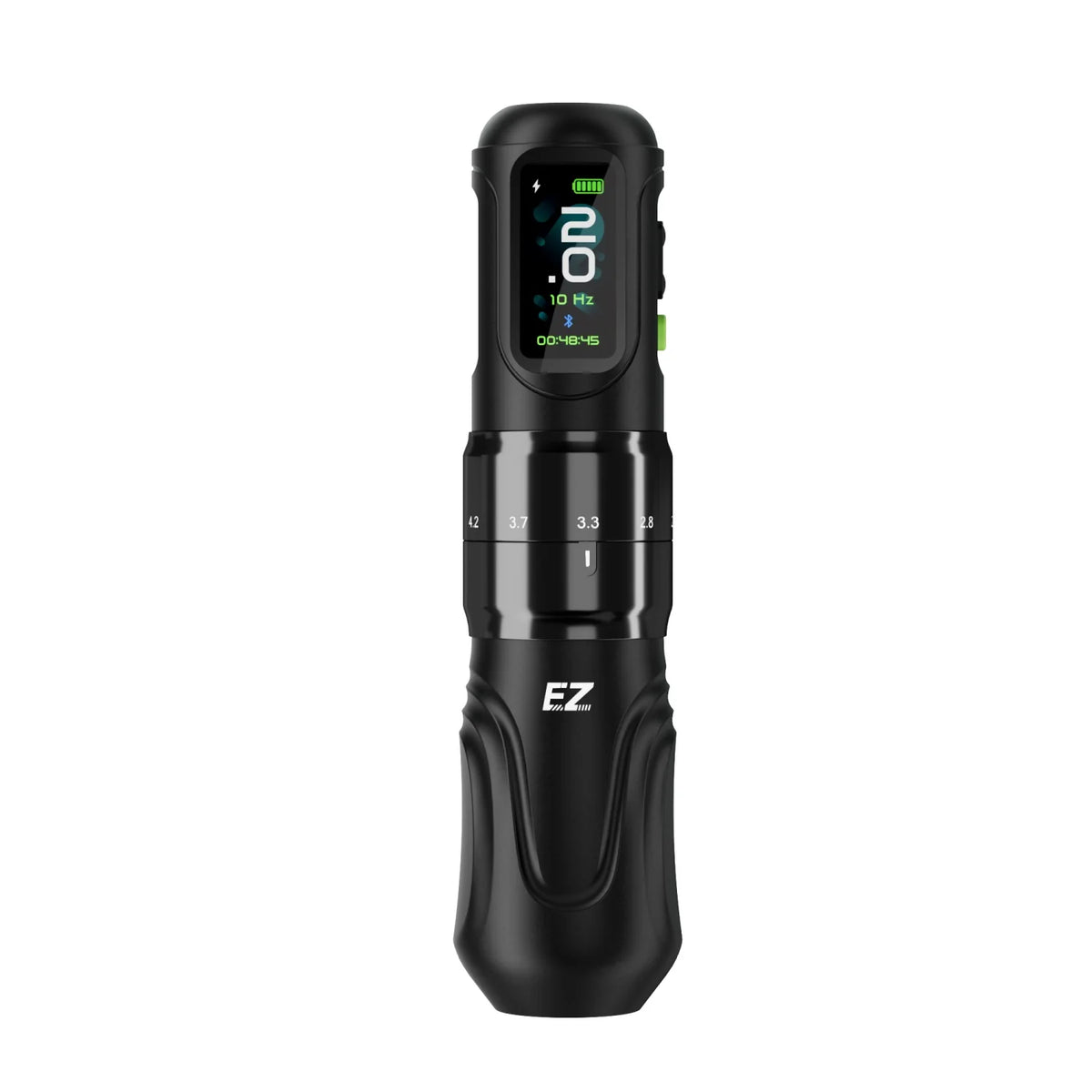
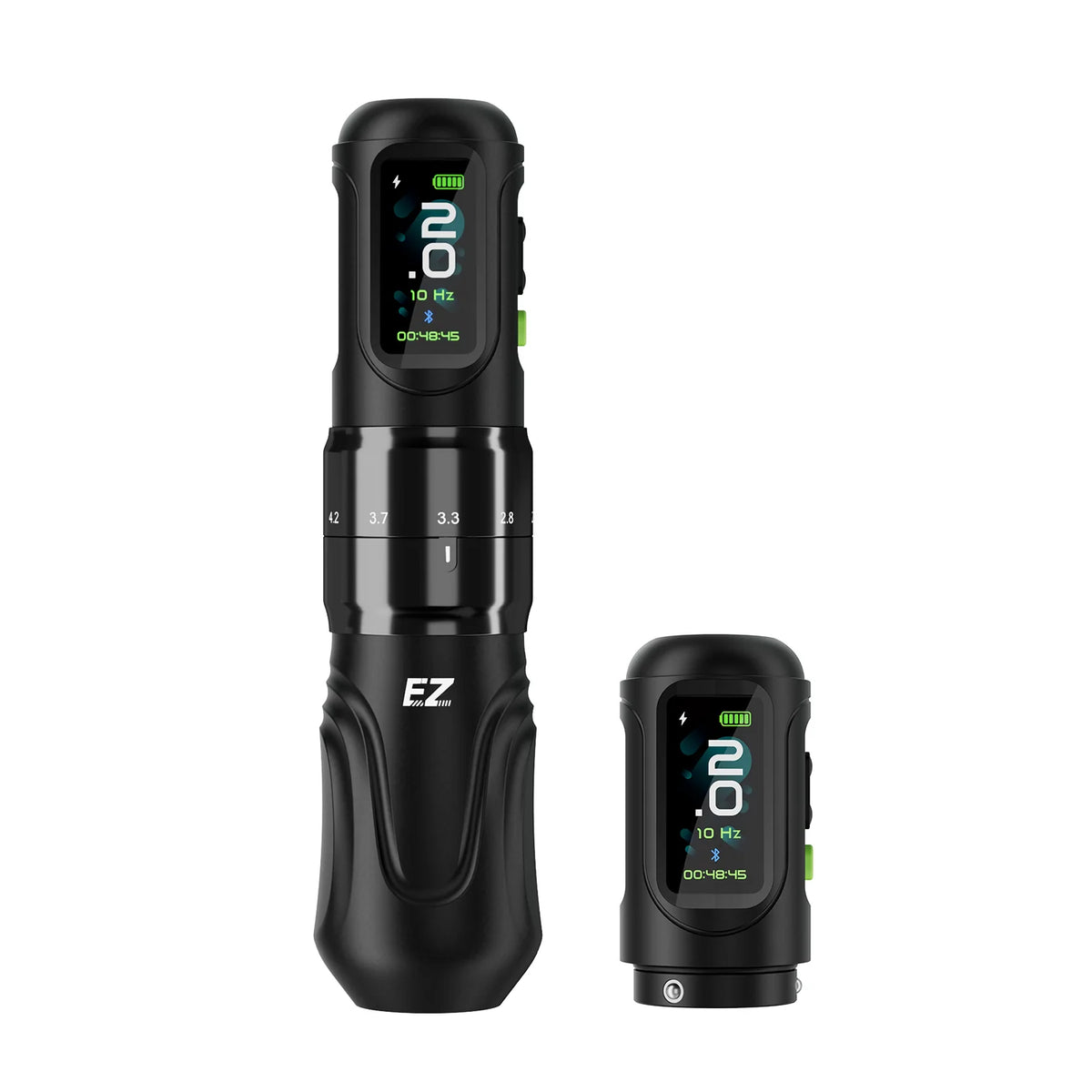
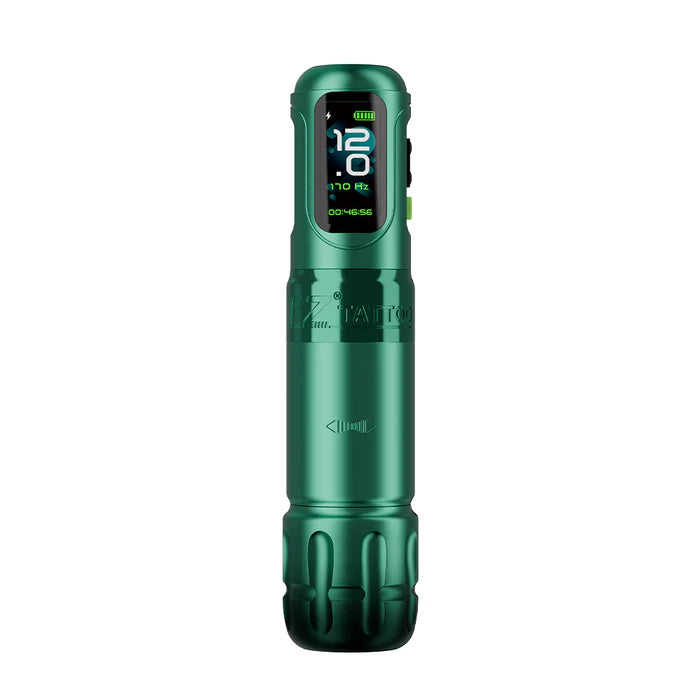
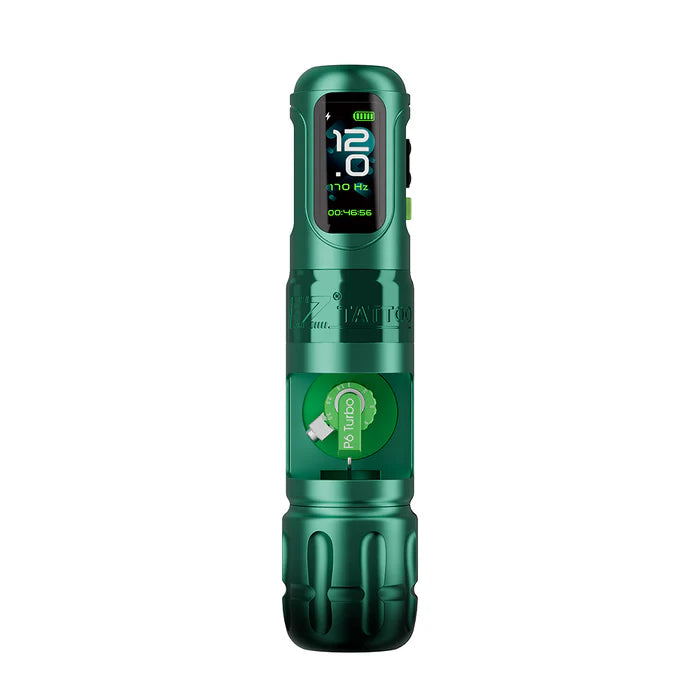
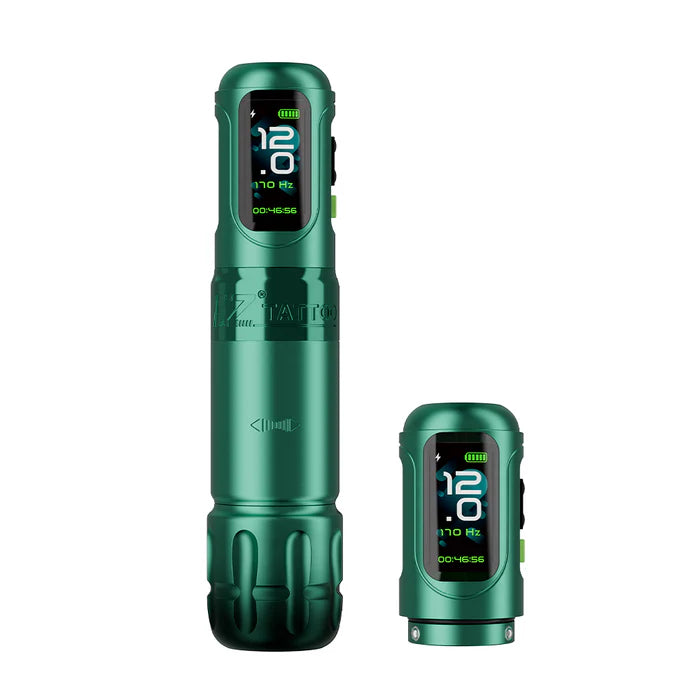
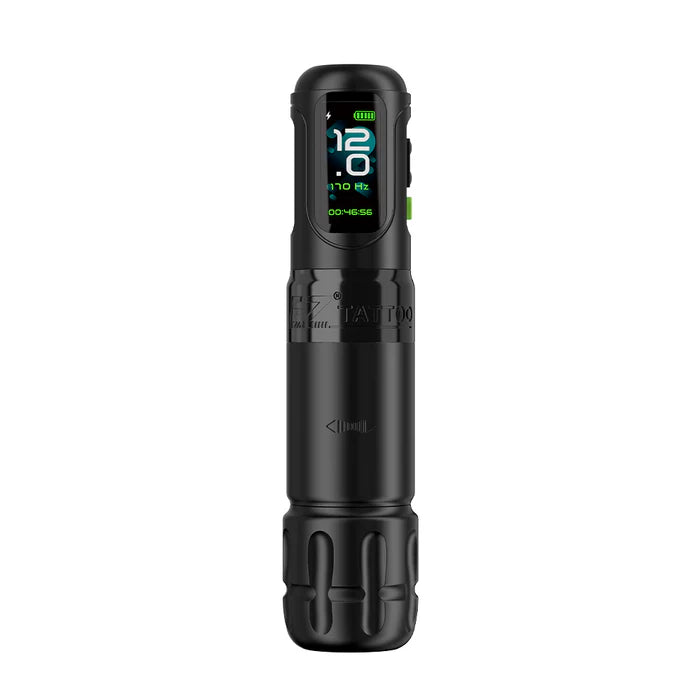
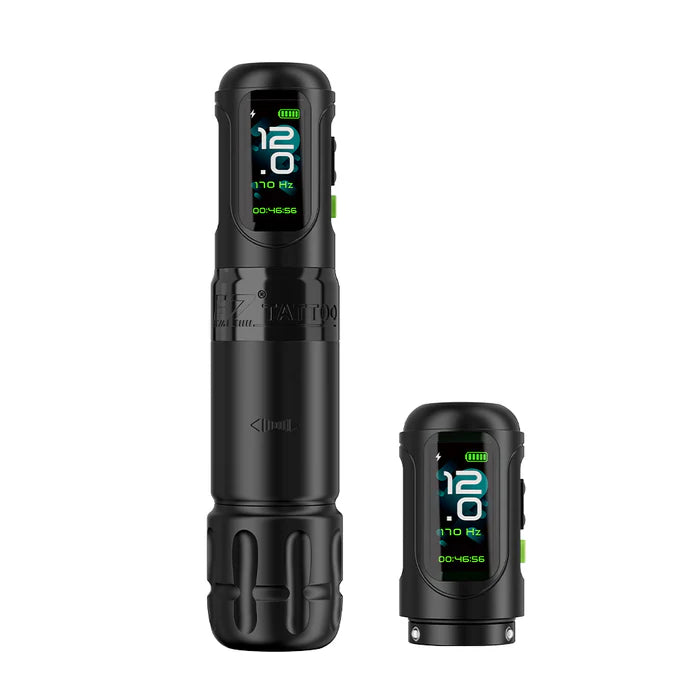
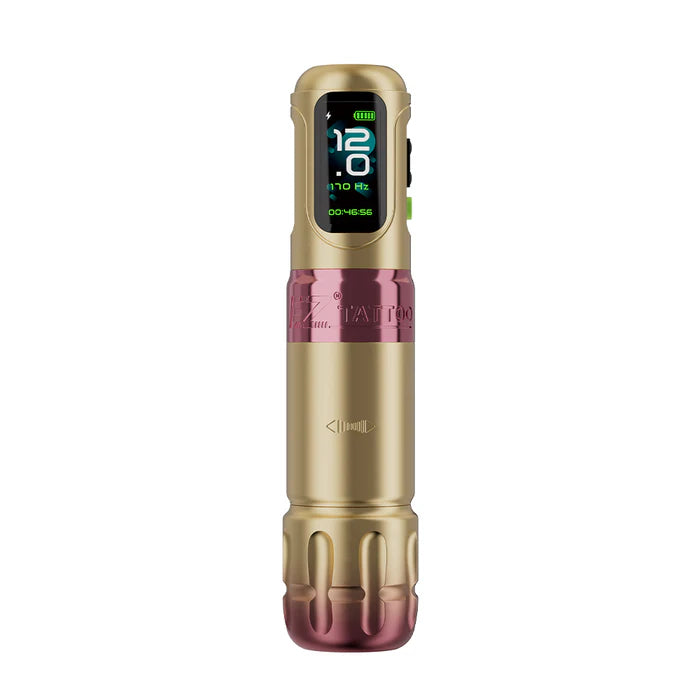
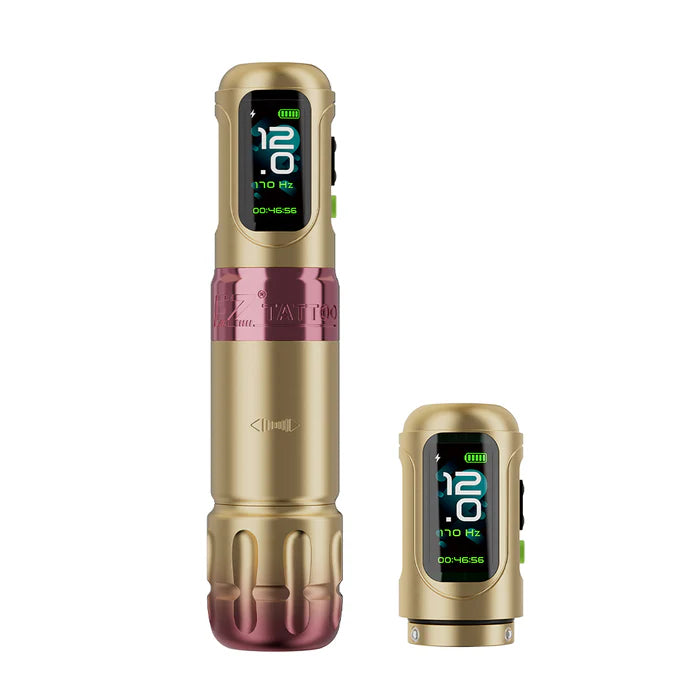
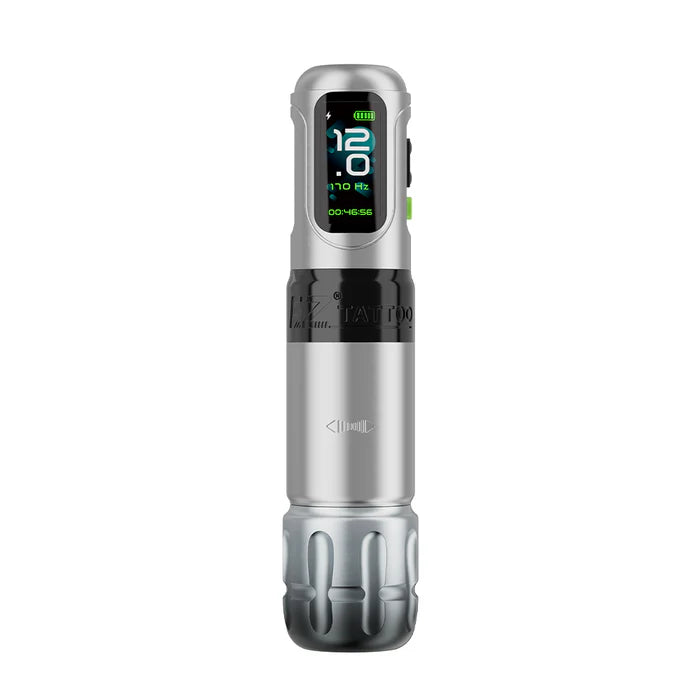
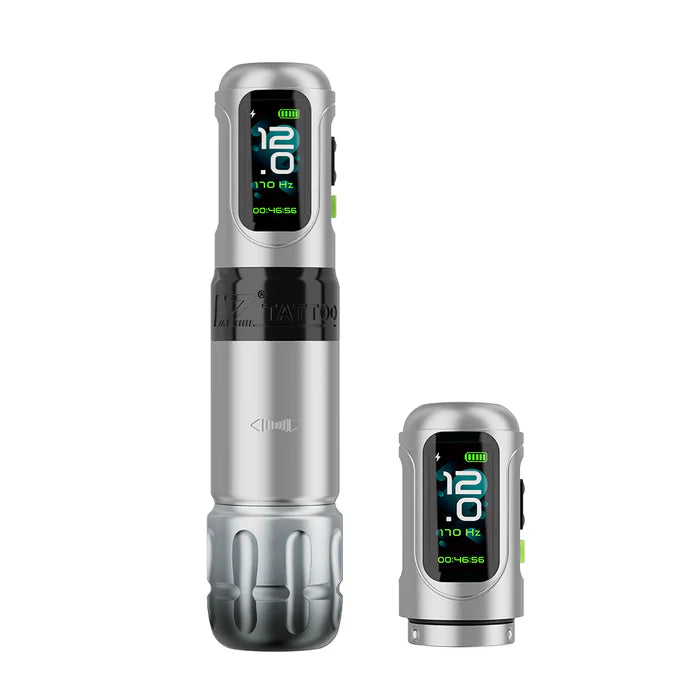
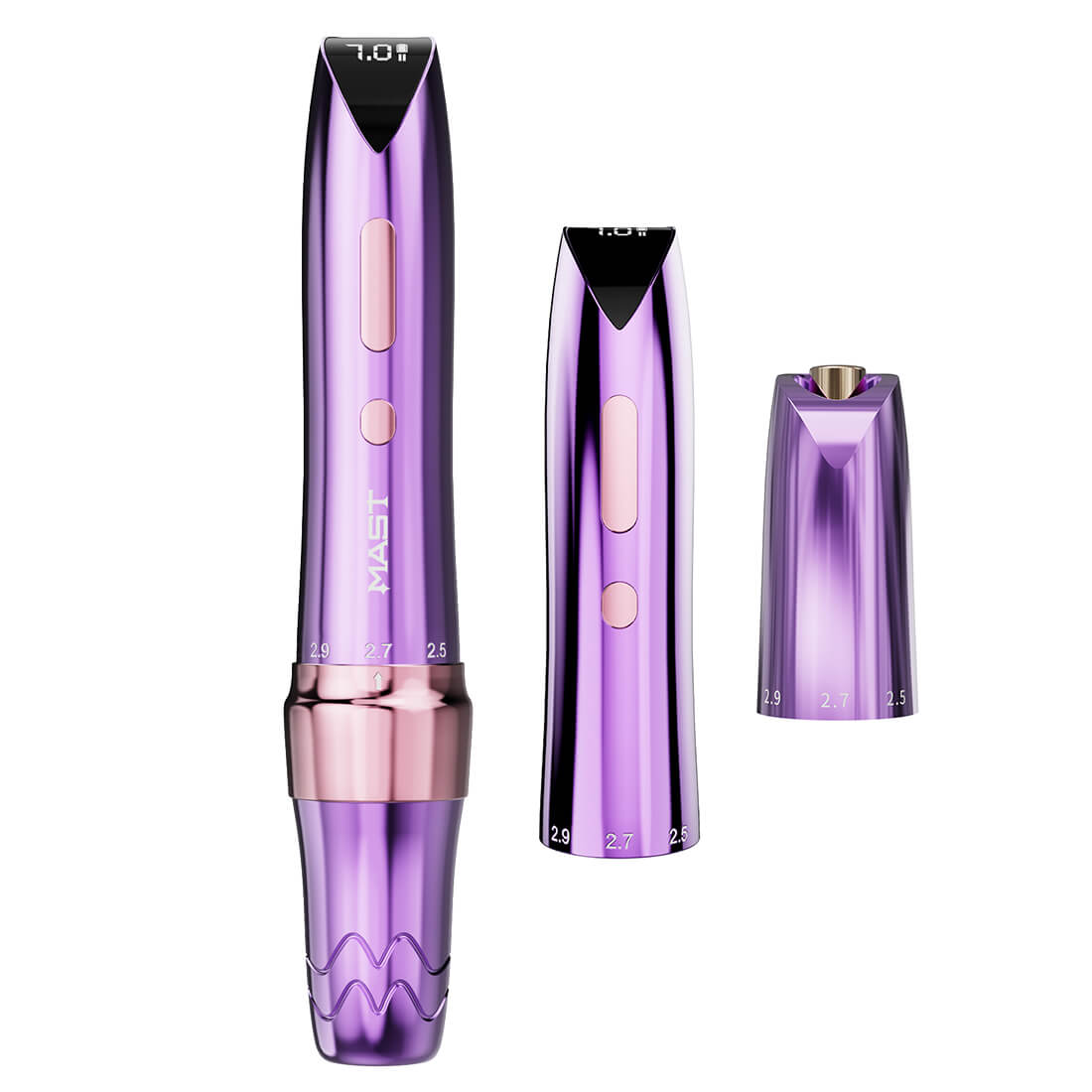
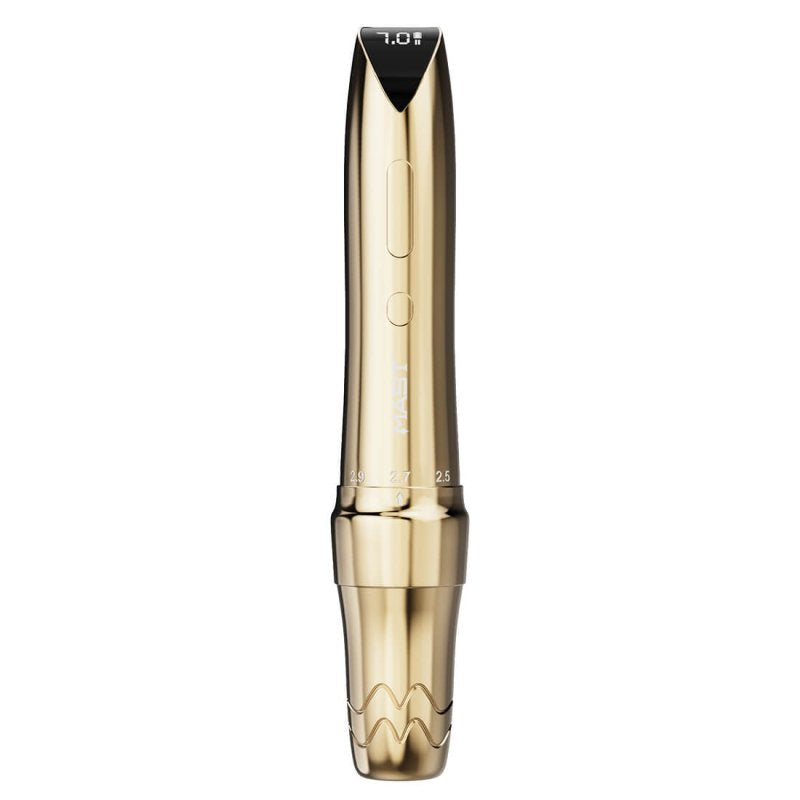
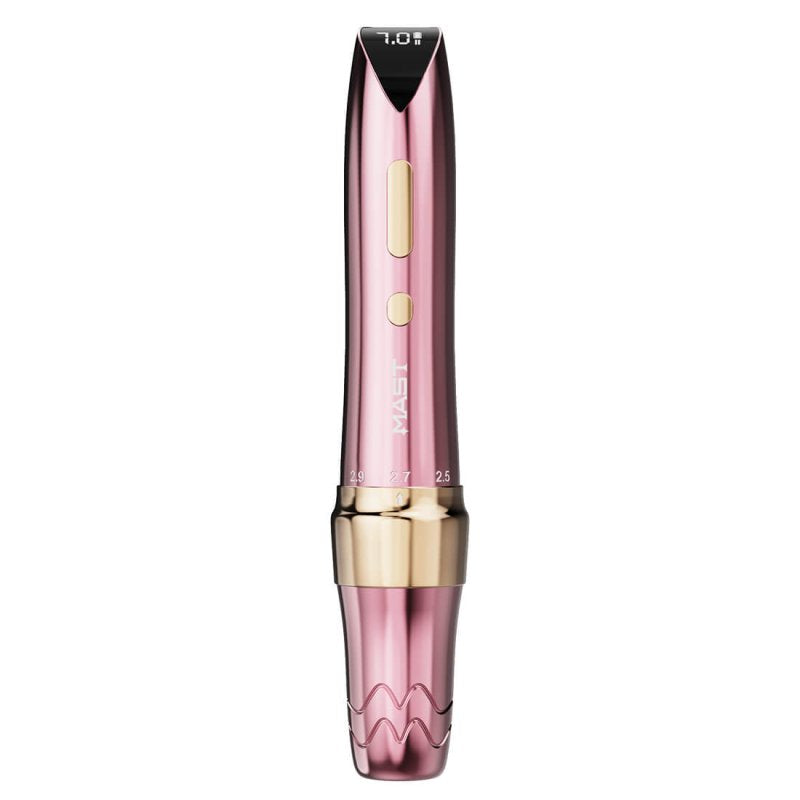
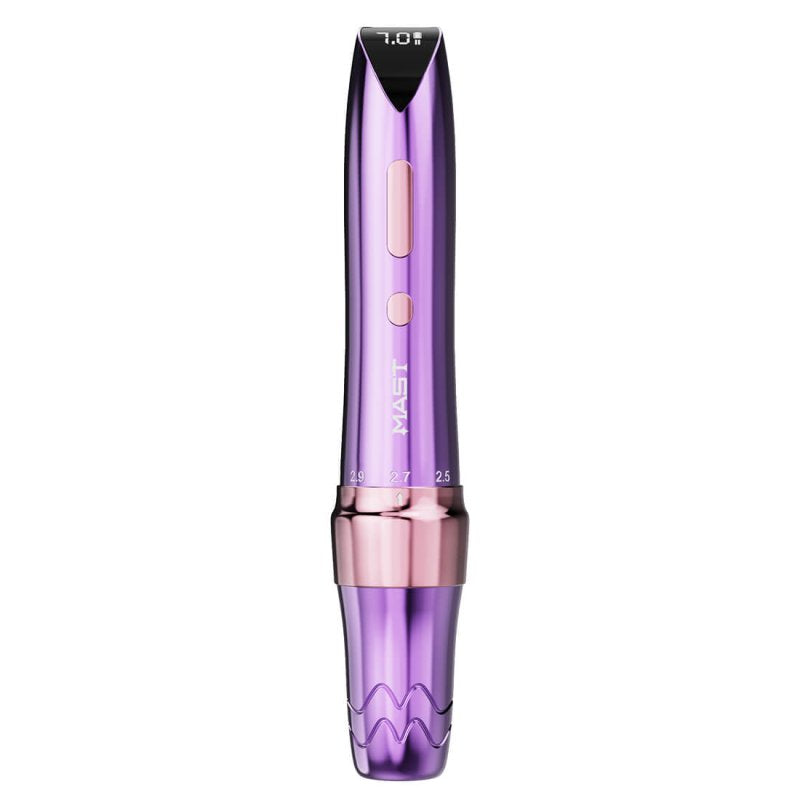
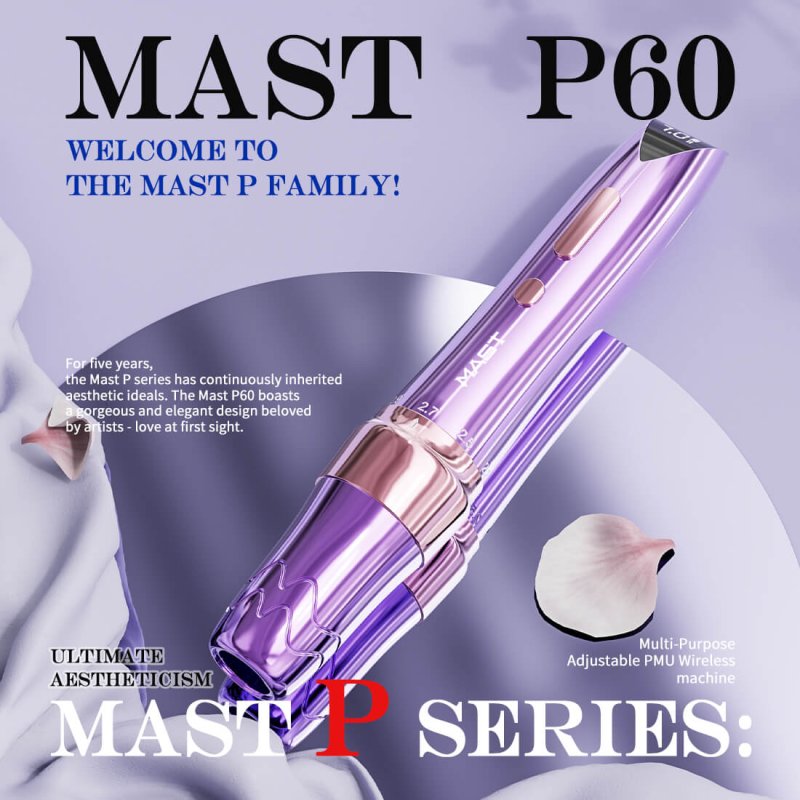


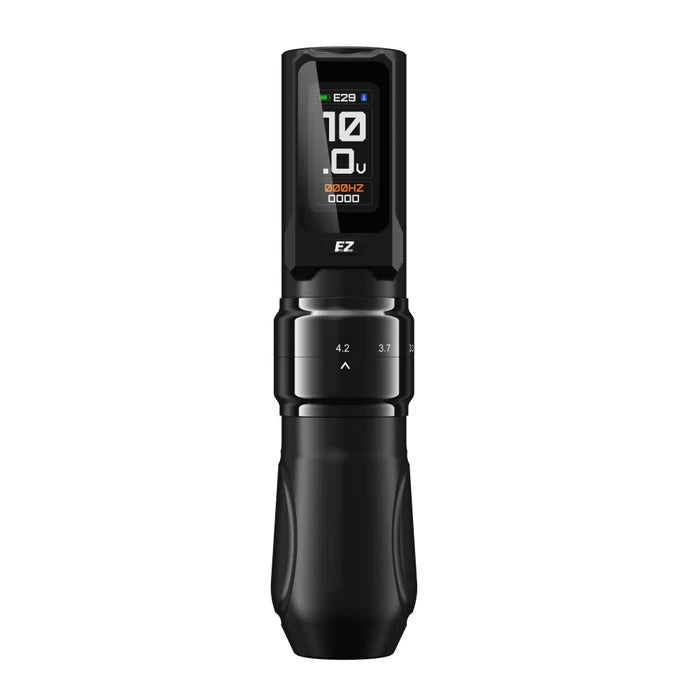
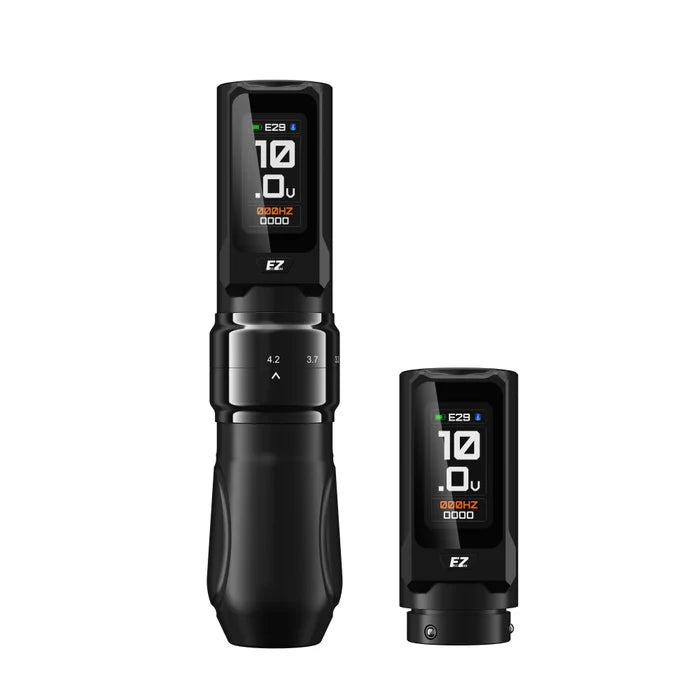
Cut the cord. A wireless tattoo pen runs on a rechargeable battery pack mounted directly on the machine — no power supply on the table, no RCA cable dragging across your client, no footswitch cord to trip over at conventions. The motor is the same one the wired version uses; only the power source changed. What actually matters: hot-swap batteries (a dead battery costs thirty seconds, not your session), fast charging, weight balance, and the motor — modern wireless pens from MAST, Dragonhawk, EZ, Bronc and Ambition match their wired counterparts hit-for-hit.
Swappable beats built-in for working artists; built-in designs are slimmer and suit short sessions or PMU work. Every wireless pen here is factory-sourced from our authorized brands, warranty-backed, and 100% genuine — counterfeit wireless pens are where the worst batteries in the industry hide.
Frequently Asked Questions
Q1: How long does a wireless tattoo pen battery last?
It depends on the battery capacity and how hard you run the machine, but most quality pens cover several hours of continuous work per charge. Working artists keep a second charged battery on hand and hot-swap mid-session — recharge times vary by battery and charger.
Q2: Are wireless tattoo pens as powerful as wired ones?
Yes — the motor is identical; only the power source differs. Reputable brands engineer their wireless pens to hit just as hard as the wired versions. Weak performance in a wireless pen almost always traces back to a cheap motor or a counterfeit, not the battery concept itself.
Q3: Swappable battery or built-in battery — which is better?
Swappable, for anyone who tattoos full sessions: a dead battery costs you thirty seconds instead of ending your day. Built-in batteries make for a slimmer pen and suit short sessions or PMU work, where a single charge easily covers the appointment.