ニュース
Dragonhawk Fold Pro
What Is a Tattoo Pen Machine?
A tattoo pen machine is a rotary tattoo machine built into a pen-shaped body. A small motor inside the body drives a cartridge needle straight in and out, and the cartridge twists into the front of the machine. There is no coil frame, no needle bar, and no separate tube to assemble. If you have ever picked up a thick marker and thought, "this is how a tattoo machine should feel in the hand," that is the idea.
That shape is not just cosmetic. It changes how you hold the machine, how fast you change needles, and what you can fix when something goes wrong. This guide covers what a pen is, how it differs from coil and traditional rotary machines, and what to check before buying.
How a tattoo pen machine works
Inside the body sits a motor, usually a coreless motor on better pens. The motor turns a cam, the cam pushes the needle up and down, and the cartridge controls the return. Each cartridge has its own membrane, which pulls the needle back and keeps ink from travelling up into the machine. That membrane is doing more work than most artists give it credit for: when a cartridge starts spitting ink or running unevenly, the membrane and the needle weld are the first suspects, not the motor.
The needle travel is called the stroke. Stroke is measured in millimetres and it decides how far the needle moves on every hit. A short stroke hits soft and fast. A long stroke hits harder and pushes more ink per pass. Voltage controls speed, not stroke. Turning the voltage up does not turn a 3.5mm pen into a 4.2mm pen, and that confusion causes more bad purchases than any other single misunderstanding in this category.
Most pens take standard cartridges, so you are not locked into one needle brand. Still, check the cartridge system before buying: a pen that only runs well with one maker's cartridges can strand you mid-session when your usual box runs out.
Tattoo pen vs coil vs traditional rotary
All three put ink in skin. They get there differently, and the difference shows up in your hand after four hours, not ten minutes in.
Machine type
How it drives the needle
Feel in the hand
Best for
Tattoo pen
Motor in a pen-shaped body, cartridge needle
Balanced, quiet, low vibration
Fine line, shading, PMU, long sessions
Traditional rotary
Motor with an exposed mechanism, needle bar and tube
Smooth, but bulkier to grip
Artists who like rotary power with classic setup
Coil
Electromagnetic coils pull an armature bar
Strong punch, more vibration and noise
Bold lining and artists who want tactile feedback
A coil talks back: you feel every hit, and some liners prefer that feedback for bold work. A pen is quieter and smoother, suiting fine line, black and grey, and cosmetic work where a heavy hand is a liability. A traditional rotary sits between the two, but you still deal with bars, tubes, and a slower breakdown for cleaning.
None of this makes one type "better" in the abstract. If you line bold traditional work all day and love coil punch, a pen will feel soft. If you do realism, fine line, or PMU, that softness is exactly what you are paying for.
What stroke length actually means in practice
Stroke is the spec most buyers get wrong, because shops list it as a number with no translation:
Stroke
What it suits
Watch out for
2.4–3.0mm
Fine line, PMU, delicate shading
Too soft for solid colour packing
3.5mm
The all-rounder: lining, shading, and light packing
Good first pen if you only buy one
4.0–4.2mm
Colour packing, bold shading, larger magnums
Less forgiving on thin or delicate skin
If you only buy one pen, 3.5mm is the safe centre. If you already own a 3.5mm pen and want a second machine for packing, that is when a 4.0mm or 4.2mm pen earns its place. Adjustable-stroke pens solve the same problem a different way: instead of owning two pens, you turn a dial. The Dragonhawk Fold Pro offers seven strokes from 2.4mm to 4.2mm, so one pen can cover fine line in the morning and colour packing in the afternoon. The catch with any adjustable pen is the lock: check that the stroke setting stays put under load, and re-check it before a long session, because a stroke that drifts mid-tattoo changes your line without warning.
Wireless or wired: the real trade-off
A wireless pen runs on a battery pack at the back of the machine. A wired pen runs through an RCA cable to a power supply. Wireless wins on movement: no cable dragging across your tray, no cable to snag when you reposition around a client, and an easy setup for guest spots and conventions. Wired wins on one thing only, and it matters: the power never runs out.
That is why the battery plan matters more than the number on the box. A milliamp-hour rating is measured under a light load, not under your hand at working voltage with a large magnum. Judge a pen by working time at real settings and by whether you can swap the battery in seconds. The Fold Pro is rated at 4–6 hours from its 1500mAh battery, charges by USB-C in about 1.5 hours, and can also run through an interchangeable RCA connector when the battery is out. That fallback is what lets you finish a session instead of ending it early.
The cleanest full-day setup is two batteries on rotation: one in use, one charging. Our own INKSOUL HV6 Pro ships that way, with two true 2000mAh batteries in the box, plus two grips and two working modes. You are not buying a bigger battery. You are buying the ability to keep working while the other battery charges.
Buying checklist: six things that actually matter
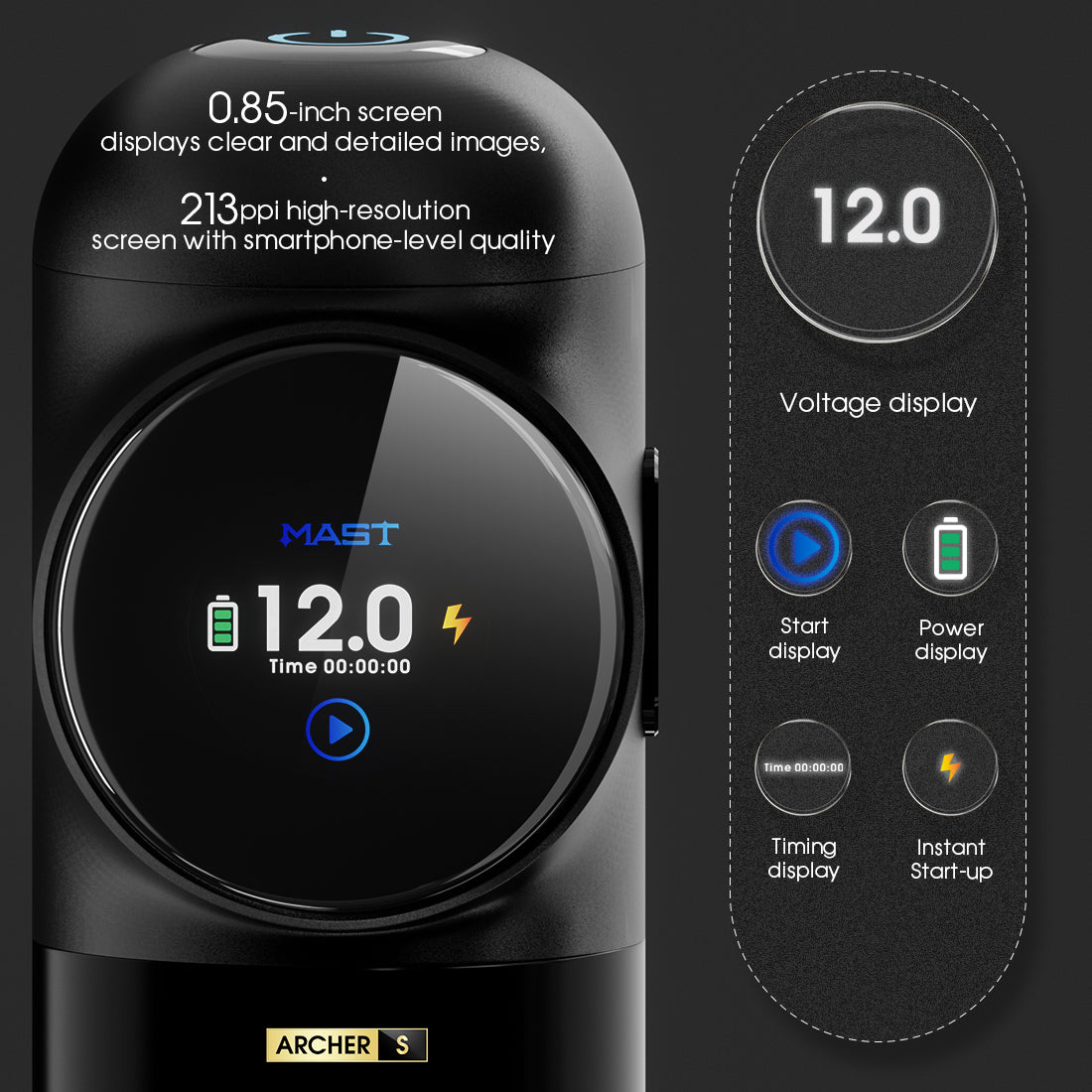
Grip diameter and grip removal. You hold this for hours, so diameter is not a detail. The HV6 Pro ships with 33mm and 38mm aluminium grips, both autoclavable, which lets you find the size your hand actually likes instead of adapting to one fixed grip. Just as important, the grip must come off for proper cleaning. A real-world report from a Mast Archer user in 2026 tells the story: the small screw holding a fixed grip stripped, the grip could not be removed for thorough cleaning, and the machine was effectively scrapped. Before you buy, confirm the grip removes cleanly, check the fixing screw, and keep a spare grip in the drawer. Between clients, many artists also run a disposable pen sleeve over the body; it does not replace grip removal and cleaning, it just keeps the body itself from becoming the dirty part.
Weight and balance, not weight alone. A 200g pen can feel heavier than a 230g pen if the battery hangs off the back and pulls the nose up. The Fold Pro weighs about 200g with its battery. Hold it the way you tattoo, and notice whether your wrist fights to keep the needle level.
Stroke choice. Fixed 3.5mm for a first pen, fixed 4.2mm for a dedicated packing pen, or adjustable 2.4–4.2mm if you want one pen to do both jobs. Skip adjustable if you never change it.
Motor and voltage control. A coreless motor runs smoother and quieter than a cheap brushed motor, and it holds speed better when the needle meets skin. The HV6 Pro also offers two modes: a standard voltage-adjustment mode and a fixed-frequency mode, which is useful if you want the hit rate to stay consistent while you change other settings. Do not chase the highest voltage number; chase consistent behaviour at the voltage you actually work at.
Battery plan. One battery means a hard stop. Two batteries, or an RCA fallback, means a session that finishes. Ask how long charging takes and whether the pen still works while a battery charges elsewhere.
Spare parts and service. Grips, battery packs, and RCA connectors are wear items. A pen with no spare grip or battery available is a pen with a built-in expiry date. Buy where parts are stocked.
Who should buy a pen machine, and who should not
Buy a pen if you do fine line, realism, black and grey, PMU, or long sessions where vibration and wrist fatigue limit you. Buy one if you want fast cartridge changes between clients, a setup that breaks down in seconds, and a machine that packs small for guest spots without a nest of cables.
Think twice if you do bold traditional lining all day and prefer coil punch and feedback, or if you enjoy tuning every part of your machine by hand. A pen trades tunability for consistency: a good trade for most working artists, a bad one for the few who enjoy the tuning itself.
One honest note: a pen does not make a beginner good, and an expensive pen does not fix depth, hand speed, or skin stretch. A good pen simply stops fighting you, so what you still need to learn stays visible instead of being masked by vibration or an inconsistent needle.
If you have decided a pen is the right tool, the next step is picking the model: our tattoo pen comparison for 2026 puts nine machines side by side, from budget brand-name pens to the INKSOUL HV6 PRO, our pick.
Frequently asked questions
Is a tattoo pen machine the same as a rotary machine?
Yes, in the sense that matters: a pen is a rotary machine in a pen-shaped body. The motor drives the needle in a rotary motion, but the housing, grip, and cartridge system are built for a pen grip instead of a classic rotary frame with a needle bar and tube.
Do I need a power supply for a wireless tattoo pen?
No, for the pen itself. A wireless pen runs on its battery pack and adjusts voltage on the machine. You still need a charger for the battery, and a pen with an RCA connector, like the Fold Pro, can also run from a standard power supply when the battery is out.
What stroke should a beginner start with?
Start with 3.5mm. It is versatile enough for lining, shading, and light colour packing without feeling too soft or too aggressive, so you can learn depth, hand speed, and voltage on one setting before you specialise.
Can I use any cartridge needles with a tattoo pen?
Most pens accept standard cartridge needles, but check before you buy. Cartridge fit, membrane return, and needle grouping all affect how a pen performs, so confirm your usual cartridges run cleanly in the pen rather than assuming every cartridge fits every machine.
Why does my tattoo pen spit ink?
Check the cartridge first. Swap in a cartridge from a different box: if the spitting stops, the problem was the cartridge, usually uneven needle welding, a weak membrane, or a bent needle. If it continues across cartridges, then look at the machine, your voltage, and your technique, in that order.
guide
2026年ワイヤレス・タトゥーペンガイド|バッテリーと電源のコツ
2026年ワイヤレスタトゥーペンの選び方:バッテリー持続時間、交換式パック、充電、電圧安定性、正規ブランドの本当におすすめ機種。
beginner tattoo machine
2026年初心者向けタトゥーマシンスターターキット10選
2026年に初心者向けベストのタトゥーマシンを選ぶことは、数年前に比べて簡単になりました。しかしその一方で、お金を無駄にしてしまう可能性も高くなっています。市場には安価なワイヤレス・タトゥーペンがあふれ、ネット上ではプロ仕様に見えますが、実際に皮膚に彫り始めると、一貫性、バッテリー持続時間、ニードルの安定性に欠けるものが多くあります。
タトゥーアーティスト、見習い、スタジオオーナーと仕事をしてきた私たちの経験から言えば、初心者は学習効率よりも価格に注目しがちです。適切なスターターマシンは、正しいテクニック、ラインコントロール、そして自信を築く助けになるはずです。間違ったマシンを選ぶと、上達が遅れ、後で修正が難しい悪い癖がついてしまう可能性があります。
初心者向けベストのタトゥーマシンをお探しの方へ。このガイドは、マーケティングの謳い文句ではなく実際の性能に基づいた、現実的な購入判断のお役に立ちます。
クイックアンサー
2026年の初心者向けベストなタトゥーマシンスターターは、安定した電圧出力、快適なエルゴノミクス、調整可能なストロークオプション、そして練習セッションに十分なバッテリー持続時間を備えた、信頼性の高いワイヤレス・タトゥーペンです。
総合ベスト・スターターマシン:INKSOUL® HV6 PRO
ストローク調整ベストマシン:Dragonhawk Fold Pro
ベスト予算オプション:Dragonhawk Mast Tour
見習いに最適:FK Irons EXO
将来のプロフェッショナルに最適:Bishop Power Wand
ほとんどの初心者には、従来のコイルマシンではなく、質の高いワイヤレスペンから始めることをおすすめします。習得が早く、メンテナンスも簡単で、マシンのコントロール性が格段に優れています。
目次
クイックサマリーテーブル
タトゥーマシンスターターとは?
仕組み
初心者向けベスト10選
メリット・デメリット
比較表
購入ガイド
初心者がよく犯すミス
専門家のおすすめ
まとめ
よくある質問
参考文献
クイックサマリーテーブル
順位
マシン
おすすめ
コスパスコア
1
INKSOUL® HV6 PRO
初心者向け総合評価
9.8/10
2
Dragonhawk Fold Pro
ストロークの汎用性
9.6/10
3
Bishop Power Wand
プロへの成長
9.4/10
4
FK Irons EXO
見習い
9.3/10
5
Dragonhawk Mast Tour
予算重視の学習
9.1/10
6
Cheyenne Sol Nova
プレミアムユーザー
9.0/10
7
Mast Archer
ワイヤレス練習
8.9/10
8
Ambition Soldier
予算重視ワイヤレス
8.8/10
9
Stigma Force
スムーズなシェーディング
8.7/10
10
CNC Q2
エントリーレベルのアーティスト
8.6/10
タトゥーマシンスターターとは?
タトゥーマシンスターターとは、高度なセットアップ知識を必要とせずに、新しいアーティストがラインワーク、シェーディング、パッキング、マシンの取り扱いを学べるように設計された、初心者向けのタトゥーマシンのことです。
2026年現在、ほとんどのタトゥーマシンスターターはロータリー式ワイヤレス・タトゥーペンです。これらのマシンは、従来のコイルマシンと比べて、よりスムーズな動作、振動の低減、メンテナンスの簡素化を実現しています。
初心者にとって、スターターマシンはパワーよりも一貫性を優先すべきです。目標はスピードを最大化することではなく、正しいタトゥーの基礎を学ぶことです。
最新タトゥーマシンの仕組み
最新のタトゥーペンは、回転運動を直線的なニードルの動きに変換するモーター駆動のロータリーシステムを採用しています。
この動きにより、タトゥーカートリッジが制御された速度と深さで皮膚に押し込まれます。高品質なマシンは、セッション全体を通して安定したパワーを維持し、クリーンなラインと予測可能なヒーリング(回復)をもたらします。
マシンの性能を理解することは方程式の一部に過ぎません。初心者は、実際の皮膚に彫る前に、質の高い初心者向けタトゥーインクを使った適切な色素の選び方も学ぶべきです。
2026年・初心者向けタトゥーマシンおすすめ10選
1. INKSOUL® HV6 PRO – 総合ベスト・タトゥーマシンスターター
INKSOUL® HV6 PRO ワイヤレス・タトゥーペン
4.2mmストローク、デュアルグリップ、デュアルバッテリー、2つの動作モードを搭載し、初心者に優しいプラットフォームでプロレベルの性能を発揮します。
商品を見る
私たちの経験から言えば、HV6 PROは現在入手可能な中で、価格対性能比が最も優れた製品の一つです。付属の予備バッテリーとデュアルグリップのセットにより、長時間の練習セッションにも、将来的なプロの仕事にも対応できます。
2. Dragonhawk Fold Pro – ストローク調整ベストマシン
Dragonhawk Fold Pro
7段階の調整可能なストローク長により、入手可能なスターターマシンの中でも最も汎用性の高い一台です。
商品を見る
1台のマシンでラインワーク、シェーディング、カラーパッキングを試してみたい初心者にとって、Fold Proは素晴らしい選択肢です。
3. Bishop Power Wand
抜群のバランスと精度を誇るプレミアムマシン。高価ですが、本格的なプロのキャリアを支える性能を持っています。
4. FK Irons EXO
信頼性の高いモーターシステムとプロとしての評判から、見習いの間で人気があります。
5. Dragonhawk Mast Tour
初心者が満足できる結果を出せる性能を持ちながら、最も手頃な価格帯のマシンの一つです。
6. Cheyenne Sol Nova
ドイツのエンジニアリングと卓越した信頼性により、経験豊富なアーティストに愛されています。
7. Mast Archer
練習用スキンから実際のお客様への移行期にあるアーティストのための、実用的なワイヤレスソリューションです。
8. Ambition Soldier
競争力のある価格帯で強力なバッテリー性能を発揮します。
9. Stigma Force
スムーズな動作と、長時間セッションに快適なエルゴノミクスを備えています。
10. CNC Q2
必須機能を犠牲にしない、エントリーレベルの手頃さです。
タトゥーマシンスターターが向いている方
これから始めるタトゥーアーティスト
タトゥーの見習い
人工皮膚で練習中のアーティスト
アートメイク(PMU)の研修生
コイルマシンからの移行を考えているアーティスト
スターターマシンが不要な方
実績のあるプロのタトゥーアーティスト
プレミアム機材にアップグレードするスタジオオーナー
複数のストローク設定にすでに慣れているアーティスト
初心者向けタトゥーマシンのメリット・デメリット
メリット
デメリット
習得が簡単
高度な機能は限定的
手頃な投資額
一部の予算モデルはパワー不足
メンテナンスが少ない
バッテリー品質にばらつきあり
軽量設計
将来的なアップグレードが必要になる場合あり
ワイヤレスの利便性
プレミアムモデルは高価
比較表
マシン
ワイヤレス
ストロークオプション
おすすめユーザー
HV6 PRO
はい
4.2mm
ほとんどの初心者
Fold Pro
はい
7段階
複数スタイルを学びたい方
Bishop Power Wand
はい
複数バージョン
プロフェッショナル
FK EXO
はい
複数バージョン
見習い
Mast Tour
いいえ
固定
予算重視ユーザー
購入時の検討ポイント
要素
推奨
重要度
バッテリー持続時間
6時間以上
高
重量
220g未満
高
ストローク長
3.5mm-4.2mm
高
電圧の安定性
安定した出力
最重要
グリップの快適性
エルゴノミクス設計
高
ほとんどのプロの現場では、マシンの性能だけが結果を決めるわけではありません。サポート機材も重要です。適切なタトゥー用照明機材は、視認性とラインの精度を劇的に向上させます。
また、アーティストは専用のタトゥーインク・ディスプレイラックで色素を効率的に整理し、プロのタトゥーミキサー用品で適切な色の一貫性を保つべきです。
初心者がよく犯すミス
一番安いマシンを買ってしまう
安いマシンは、ニードルの深さのばらつきや不安定な電圧出力を生むことがよくあります。
衛生用品を軽視する
多くの初心者は予算のすべてをマシンに使い切り、タトゥーニードル洗浄用品のような必須の衛生用品を忘れてしまいます。
早すぎる段階で実際の皮膚に彫り始める
練習用スキンには理由があります。まずは筋肉の記憶(マッスルメモリー)を築きましょう。
マシンのスペックだけに注目する
最新マシンを持つことよりも、テクニックの方が重要です。
専門家のおすすめ
初心者には、少なくとも1〜2年は現実的に使い続けられるマシンを選ぶことをおすすめします。機材を頻繁に買い替えると、技術の習得が遅れてしまいます。
私たちの経験から言えば、INKSOUL® HV6 PROは、新しいアーティストにとって信頼性、コストパフォーマンス、快適性、長期的な使いやすさの最強の組み合わせを提供します。
最大の柔軟性を求めるユーザーには、Dragonhawk Fold Proが引き続きベストなタトゥーマシンスターターの選択肢の一つです。調整可能なストロークシステムにより、複数のタトゥースタイルを試すことができます。
基礎の習得は最優先事項であり続けなければなりません。タトゥーのヒーリング(回復)段階を理解し、適切な顧客相談を行い、プロのタトゥー料金ガイドで現実的な期待値を設定することは、機材のトレンドを追いかけるよりも、長期的な成功に大きく貢献します。
まだ本格的なタトゥーに踏み切れない志望アーティストには、タトゥーシール(テンポラリータトゥー)のアイデアを試したり、タトゥーシール用ペンのレビューを読んだり、タトゥーシールの作り方を学んだり、グリッタータトゥーガイドを探求したりすることで、貴重なアートの練習ができます。
まとめ
2026年のベストなタトゥーマシンスターターは、必ずしも最も高価なマシンではありません。効率的に学び、一貫して練習し、すぐに買い替えることなくプロの仕事へ成長できるマシンこそがベストなのです。
ほとんどの初心者にとって、INKSOUL® HV6 PROが私たちのトップのおすすめです。プロレベルの性能、初心者の使いやすさ、バッテリーの利便性、長期的な価値のバランスに優れているからです。
汎用性を優先するなら、Dragonhawk Fold Proが僅差で2位です。調整可能なストロークシステムと幅広い用途が魅力です。
質の高い機材に一度投資し、テクニックに集中しましょう。そして、新しい機材を追いかけ続けるという初心者が陥りがちな罠を避けてください。
よくある質問
初心者に最適なタトゥーマシンスターターは?
信頼性、ワイヤレス設計、プロレベルの性能から、INKSOUL® HV6 PROが私たちのトップのおすすめです。
初心者はコイルマシンとロータリーマシンのどちらを使うべき?
ほとんどの初心者はロータリー式タトゥーペンから始めるべきです。コントロールがしやすく、メンテナンスも少ないからです。
ワイヤレス・タトゥーマシンに価値はある?
はい。最新のワイヤレス機は優れた性能と、より大きな動作の自由度を提供します。
初心者はタトゥーマシンにいくらかけるべき?
質の高い初心者向けマシンの多くは、機能とブランドの評判によって100〜400ドル程度の範囲です。
スターターマシンでプロとして彫れる?
適切なテクニックと組み合わせれば、多くの最新のスターターマシンはプロの仕事に十分対応できます。
質の高いタトゥーマシンはどれくらい長持ちする?
適切なメンテナンスとバッテリーのケアを行えば、よく作られたマシンは数年間信頼して使い続けられます。
これから始める方へ。 謎のキットは避けましょう — タトゥーペンキットコレクションには、必要なものがすべて1つのボックスに入った、本物の完全なスターターセットが揃っています。
参考文献
FK Irons Technical Resources
Allied Health Schools Tattoo Artist Education Guide
Occupational Safety and Health Administration (OSHA)