Holiday-themed tattoos have evolved far beyond generic snowflakes and highly regrettable mistletoe flash pieces. Entering 2026, we are witnessing a massive surge in clients requesting highly technical, vibrant, and emotionally resonant light strand designs. However, as an experienced industry practitioner, I must be brutally honest: executing Christmas light tattoo ideas is not a beginner's task. It requires masterful color packing, a deep understanding of contrast to create a faux "glow," and a flawless stencil transfer to ensure the wire wrapping looks anatomically correct.

From our experience engineering professional tattoo equipment at Inksoul, we know that a brilliant idea is worthless if the artist lacks the technical foundation and hardware to execute it. A tangled wire design will look like a messy scribble if the linework blows out, and a glowing bulb will look like a faded bruise if the color isn't packed with the correct machine stroke. In this uncompromising guide, we will break down the seven best aesthetic approaches for these designs, explain the exact mechanics of tattooing a glowing light source, and provide you with the commercial judgment needed to ensure your ink stands the test of time.
Quick Answer: Top Trends & Technical Realities
The best Christmas light tattoo ideas for 2026 blend nostalgia with advanced tattooing techniques. The top choices include: 1) Neo-Traditional Glowing Strands, 2) Minimalist Fine-Line Blackwork Bulbs, 3) Stranger Things-Inspired Alphabet Walls, 4) Tangled Cord Wraps for wrists/ankles, 5) Watercolor Bulb Splashes, 6) UV/Blacklight Reactive Lights, and 7) Micro-Realism Single Bulbs. To execute these properly, artists must utilize an adjustable stroke tattoo machine for precise linework and heavy color packing. Clients must understand that vibrant yellows and whites (crucial for the "glow" effect) are highly susceptible to sun damage and will require touch-ups every few years to maintain their luminosity.
Table of Contents
- What It Is: The Anatomy of a Light Tattoo
- How It Works: Executing the "Glow" Effect
- 7 Cool Christmas Light Tattoo Ideas for 2026
- The Benefits of This Aesthetic
- Limitations and Fading Realities
- Who Should Get One (And Who Shouldn't)
- Common Artist and Client Mistakes
- Buying Considerations for Tattoo Artists
- Summary and Comparison Tables
- Expert Recommendation from Inksoul
- Frequently Asked Questions (FAQ)
What It Is: The Anatomy of a Light Tattoo
A Christmas light tattoo typically consists of two distinct elements that must be balanced perfectly: the rigid, intertwined black cord and the delicate, translucent glass bulbs. In most professional situations, this design requires a hybrid approach. The artist must pull perfectly clean, solid lines for the wiring using a tight round liner, and then transition to smooth color blending using a magnum needle to simulate the refraction of light through glass.
How It Works: Executing the "Glow" Effect
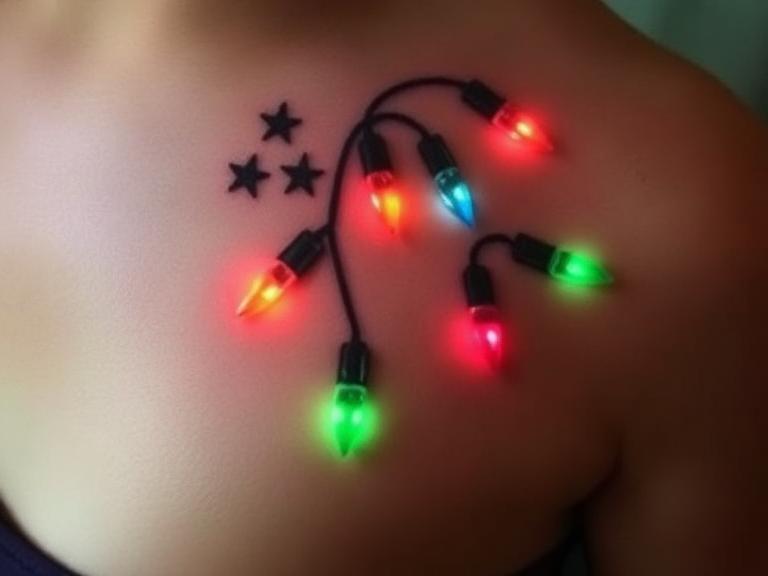
Tattooing a light that actually appears to be turned on is an optical illusion grounded in high-contrast color theory. The skin itself does not glow. To make a bulb look illuminated, the artist must surround the bulb with deep, saturated dark tones (black or dark grey whip shading). Against this dark background, the artist packs a highly saturated bright color (like neon green or bright red) into the bulb, leaving negative skin space or packing pure white ink at the exact center to represent the filament's glare.
This technique demands precision. If the stencil rubs off mid-session, the wire will look jagged. This is precisely why elite artists rely on a dedicated wireless tattoo stencil printer to lock down a high-resolution, smudge-proof map before a single needle touches the skin.
7 Cool Christmas Light Tattoo Ideas for 2026
1. The Neo-Traditional Glowing Strand

Bold lines, heavy black shading, and ultra-saturated colors define the neo-traditional style. This is the most durable way to tattoo a light strand. The thick black outlines ensure the bulbs retain their shape even as the skin ages, while the heavy color packing creates a vintage, illustrative glow.
2. Minimalist Fine-Line Blackwork Bulbs
For those who want a subtle nod to the holidays without committing to a massive color piece. Using a 3RL (Round Liner), the artist creates a delicate, unlit strand of classic C9 bulbs wrapped around a wrist or collarbone. It is elegant, fast to heal, and ages beautifully if applied correctly.
3. The Stranger Things Alphabet Wall

A pop-culture phenomenon that has cemented its place in tattoo culture. This design features the alphabet painted on a wall with a string of colorful lights hanging above it. To execute the messy, painted letters accurately, artists must use an elite thermal printer. Check our best tattoo stencil printers guide to ensure your text transfers perfectly.
4. Tangled Cord Wrap (Wrist or Ankle)
A highly requested design where the cord appears to squeeze or tangle around an extremity. This requires masterful stencil placement to ensure the 3D wrap aligns anatomically. If you are struggling with stencil warping on curved surfaces, reading up on how to use tattoo transfer paper is mandatory.
5. Watercolor Bulb Splash
This style eschews heavy black outlines in favor of vibrant, overlapping splashes of color mimicking a painter's brush. It looks phenomenal when fresh, but clients must be warned: without black borders to hold the shape, watercolor tattoos spread and fade much faster than traditional styles.
6. UV / Blacklight Reactive Lights
For heavy-duty party applications, artists are packing UV-reactive ink into the center of the bulbs. Under normal light, the tattoo looks standard, but under a blacklight, the bulbs physically glow. Note: Always ensure the UV ink is heavily vetted and skin-safe.
7. Micro-Realism Single Bulb
A solitary, hyper-realistic bulb (often broken or glowing warmly) tattooed on a micro-scale. This requires a rotary machine with a very short stroke for ultra-soft shading. It is a striking, melancholic piece that demonstrates massive technical proficiency.
The Benefits of This Aesthetic
The primary benefit of a Christmas light design is its versatility. The strand acts as a natural framing device, allowing it to easily fill awkward gaps between existing tattoos (often called "gap fillers"). Furthermore, the bright primary colors (red, green, blue, yellow) provide an incredible pop of contrast against traditional black and grey sleeve work.
Limitations and Fading Realities
We must apply commercial and practical judgment: bright colors are the first to degrade under ultraviolet sunlight. Yellow and white inks—the foundational colors for the "glow" effect—are notorious for fading into the skin tone within a few years. If you are getting a highly colored light strand on a high-exposure area like the forearm, you must commit to applying SPF 50 daily and budget for a color touch-up every three to five years.
Who Should Get One (And Who Shouldn't)
For commercial users and tattoo enthusiasts: If you love bold, highly saturated neo-traditional art, or you need a flexible design to tie a patchwork sleeve together, a light strand is an excellent choice. It works beautifully on complex anatomical curves.
Who does not need it: For beginners getting their first tattoo, a massive, full-color glowing piece is a heavy commitment with a difficult healing process due to the intense color packing required. We recommend starting with the minimalist fine-line variation to gauge your pain tolerance and healing capabilities.
Common Artist and Client Mistakes
The most catastrophic artist mistake is attempting to pull a long, continuous wire line with a machine that lacks the necessary torque, resulting in stuttering, blown-out lines. Artists must invest in appropriate hardware. Reviewing the best tattoo machines 2025 will help you select a pen with enough punch to sink a single-pass line.
For clients, the biggest mistake is sun exposure during the healing phase. A sunburn on a fresh color-packed tattoo will permanently destroy the vibrancy of the bulbs, turning a glowing masterpiece into a muddy blur.
Buying Considerations for Tattoo Artists
Executing these designs requires two foundational pieces of hardware: a high-resolution stencil printer and a versatile tattoo machine.
Never attempt to print a complex tangled wire stencil with a standard office inkjet. As explained in our guide on whether a regular printer for tattoo transfer paper works, standard ink will not bind to the skin. You must use a dedicated thermal printer. Secondly, you need a machine that can switch from a long stroke (for the black wire lining) to a medium stroke (for the smooth color blending inside the bulbs). Do not attempt this with a cheap coil machine if you are unpracticed; explore tattoo machines for beginners that offer stroke adjustability.
Essential Summary and Comparison Tables
| Tattoo Style | Visual Aesthetic | Longevity & Aging |
|---|---|---|
| Neo-Traditional | Bold black outlines, highly saturated solid colors. | Excellent. Holds shape and color for decades. |
| Fine-Line Blackwork | Delicate, thin black lines, no color filler. | Very Good. Minimal fading, low touch-up requirement. |
| Watercolor | No outlines, blended splashes of bright ink. | Poor. Spreads and fades rapidly without black borders. |
| Metric | Full Color (Glowing Effect) | Black and Grey Wash |
|---|---|---|
| Execution Difficulty | High (Requires advanced color theory and contrast) | Medium (Relies on standard whip shading) |
| Session Time | Longer (Requires heavy pigment saturation) | Shorter (Faster application, less skin trauma) |
| Fading Risk | High (Yellows and whites fade quickly) | Low (Carbon black degrades very slowly) |
| The Pros (Advantages) | The Cons (Disadvantages) |
|---|---|
| Highly vibrant, unique, and instantly recognizable. | Requires intense color packing which is more painful. |
| Excellent for filling awkward gaps in existing sleeves. | Vulnerable to rapid fading if exposed to UV sunlight. |
| Can incorporate UV ink for hidden blacklight effects. | Requires an artist highly skilled in high-contrast realism. |
Expert Recommendation from Inksoul
In most professional situations, the difference between a glowing masterpiece and a muddy failure comes down to the artist's hardware. You cannot pack vibrant yellow ink into the skin over a prolonged session using a machine that causes excessive trauma. You need a rotary pen with an adjustable stroke to shift seamlessly from crisp linework on the wire to soft, buttery color packing on the bulbs.

Dragonhawk Wireless Tattoo Pen Machine 2.4-4.2MM Strokes Length | Mast Fold 2 Pro
Unleash your artistry with the Dragonhawk Mast Fold 2 Pro. A wireless tattoo pen machine featuring a fully adjustable 2.4-4.2mm stroke length. This is the ultimate tool for executing complex holiday light designs.
- 4.2mm Stroke: Perfect for pulling single-pass, solid black lines for the tangled wires.
- 3.0mm - 3.3mm Stroke: Ideal for smooth, trauma-free color packing to create the glowing bulb effect.
- Wireless Freedom: Maneuver around the client's wrist or ankle without tripping over RCA cords.
We highly recommend pairing this machine with a dedicated touch screen tattoo printer to ensure your stencil transfers are utterly flawless before you begin lining.
Frequently Asked Questions (FAQ)
Do yellow and white tattoo inks fade quickly in light bulb tattoos?
Yes. In most professional situations, yellow, orange, and white inks used for glowing effects fade faster than black linework due to UV exposure and macrophage activity in the skin. We recommend routine touch-ups every 3 to 5 years to keep the glowing effect vibrant.
How do artists create a glowing effect in a tattoo?
Artists create a glowing effect through color theory and contrast. They pack a highly saturated, bright color in the center of the bulb, surround it with a lighter halo of the same hue, and place deep black or dark grey whip shading immediately adjacent to the light source to force the bright colors to visually pop.
What is the best placement for a tangled Christmas light tattoo?
For a tangled wire effect, the best placements are areas that naturally wrap, such as the forearm, wrist, lower calf, or ankle. The anatomy of these areas allows the stencil to curve naturally, creating a realistic 3D wrapping effect.
Authoritative Industry References
To ensure your tattooing practices and healing protocols adhere to strict safety standards, we advise consulting the following organizations:
- U.S. Food and Drug Administration (FDA) - Provides definitive safety guidelines regarding tattoo ink formulations, the risks of allergic reactions to color pigments, and general dermal safety.
- Occupational Safety and Health Administration (OSHA) - Outlines strict bloodborne pathogen standards that all professional tattoo artists and studios must adhere to for cross-contamination prevention.
- Alliance of Professional Tattooists (APT) - An international non-profit educational organization dedicated to the health and safety of the tattoo industry, providing best practices for sterilization and machine setup.