Nouvelles

5 Key Differences Between Portable and Desktop Tattoo Stencil Printers
The differences between portable and desktop tattoo stencil printers have become one of the most important buying considerations for modern tattoo artists. As tattoo studios evolve and mobile tattooing becomes more common, choosing the right stencil printer directly affects workflow efficiency, stencil quality, setup flexibility, and long-term operating costs.
From our experience working with tattoo artists at different skill levels, many professionals buy the wrong printer because they only focus on price or appearance. In reality, the differences between portable and desktop tattoo stencil printers go much deeper. Portability, connection stability, stencil precision, paper compatibility, maintenance, and workflow integration all matter in a professional environment.
At INKSOUL®, we have seen artists move away from bulky desktop systems toward lightweight wireless tattoo printers because modern tattooing increasingly requires speed, mobility, and convenience. However, desktop printers still hold advantages in certain studio environments. This guide breaks down the most important distinctions so artists can make the right investment.
Table of Contents
Portable vs Desktop Tattoo Stencil Printers Overview
Difference #1: Portability and Workspace Flexibility
Difference #2: Printing Technology and Stencil Quality
Difference #3: Connectivity and Device Compatibility
Difference #4: Maintenance and Operating Costs
Difference #5: Workflow Speed and Artist Efficiency
Portable vs Desktop Printer Comparison Table
Which Tattoo Stencil Printer Should You Choose?
FAQs
References
Portable vs Desktop Tattoo Stencil Printers Overview
Understanding the differences between portable and desktop tattoo stencil printers starts with identifying how each device is designed to function. Portable tattoo stencil printers prioritize mobility, wireless connectivity, and compact construction. Desktop tattoo stencil printers focus more on fixed workstation reliability and high-volume studio printing.
Portable models are now dominating among traveling artists, convention tattooers, apprentice artists, and small studios. Desktop printers remain common in traditional tattoo shops that process large numbers of stencils every day.
Feature
Portable Tattoo Stencil Printer
Desktop Tattoo Stencil Printer
Size
Compact and lightweight
Larger and heavier
Mobility
Excellent for travel and conventions
Best for fixed studio setups
Connectivity
Bluetooth and wireless options
Mainly wired USB connections
Workspace Needs
Minimal desk space required
Requires permanent setup area
Maintenance
Lower maintenance
Higher maintenance over time
Difference #1: Portability and Workspace Flexibility
The biggest differences between portable and desktop tattoo stencil printers involve mobility. Portable printers are specifically designed for artists who work in multiple locations or need flexible studio layouts.
Traditional desktop stencil printers can occupy a large amount of workstation space. In busy tattoo shops, clutter becomes a real problem. Desktop models also require dedicated power setups and stable desk placement.
Portable tattoo stencil printers solve these limitations by reducing both size and weight. For example, the INKSOUL® T08FS Wireless Tattoo Transfer Stencil Printer weighs only 0.75 kilograms and measures 310×68×41 mm. Artists can easily place it inside a travel case or workstation drawer.
From our experience, convention artists strongly prefer portable systems because carrying a heavy desktop stencil machine between booths becomes exhausting. Wireless tattoo stencil printers also create cleaner workstations with fewer cables.
Why Portability Matters for Modern Tattoo Artists
Ideal for tattoo conventions
Useful for guest spots and traveling artists
Reduces workstation clutter
Easier transportation between studios
Supports minimalist studio layouts
Difference #2: Printing Technology and Stencil Quality
Another major point in the differences between portable and desktop tattoo stencil printers is print performance. Years ago, desktop models clearly produced stronger stencil transfers. That gap has narrowed significantly with modern thermal tattoo printing technology.
High-quality portable thermal tattoo printers can now generate crisp linework and detailed shader stencils. We recommend artists prioritize print resolution and thermal consistency instead of simply assuming bigger machines produce better results.
The INKSOUL® T08FS Wireless Tattoo Transfer Stencil Printer supports both shader images and line images across multiple paper sizes including A4, LTR, Legal, and LTR+ formats. This flexibility matters for larger tattoo compositions that many desktop printers still struggle to handle efficiently.
The printer operates using thermal technology, eliminating the need for ink cartridges or ribbons. From our experience, thermal systems reduce long-term frustration because artists avoid clogged cartridges and messy refills.
Printing Specification
INKSOUL® T08FS
Printing Technology
Thermal Printing
Resolution
203 dpi
Printing Width
≤216 mm
Maximum Speed
13–15 mm/s
Paper Compatibility
A4 Thermal Paper
Stencil Types
Shader and Line Images
Difference #3: Connectivity and Device Compatibility
One of the most overlooked differences between portable and desktop tattoo stencil printers is connectivity. Older desktop stencil printers usually depend heavily on wired USB connections and desktop computers.
Modern tattoo artists increasingly work from tablets and smartphones. Artists edit designs in Procreate, Photoshop, and tattoo apps before transferring them directly to printers.
Portable wireless tattoo stencil printers support this workflow much better. The INKSOUL® T08FS supports Bluetooth connections for mobile phones and tablets while maintaining USB support for PC users.
We recommend wireless tattoo stencil printers for artists who frequently adjust sizing, reposition designs, or collaborate with clients in real time. Wireless printing dramatically speeds up consultation sessions.
Benefits of Wireless Tattoo Stencil Printers
Faster design transfers
Better compatibility with iPads and mobile devices
Cleaner workstation setup
Reduced cable management issues
Faster client approval process
Artists interested in advanced wireless models can also review our tattoo stencil printer collection for additional options.
Difference #4: Maintenance and Operating Costs
Maintenance costs create another important category within the differences between portable and desktop tattoo stencil printers. Traditional desktop systems often require more cleaning, replacement parts, and ongoing maintenance.
Portable thermal tattoo printers generally use simplified internal components. This reduces mechanical failures while lowering operating expenses.
The INKSOUL® T08FS uses economical thermal technology that only requires thermal paper refills. No ink cartridges or ribbons are necessary. From our experience, artists underestimate how much money ink systems consume over time.
Thermal tattoo printers also reduce downtime. Artists can continue working without dealing with clogged print heads or ink leakage.
Maintenance Factor
Portable Thermal Printers
Desktop Ink-Based Printers
Ink Replacement
Not required
Required regularly
Cleaning Frequency
Low
Moderate to high
Mechanical Complexity
Simplified
More complex
Long-Term Cost
Lower
Higher
Difference #5: Workflow Speed and Artist Efficiency
The final major point in the differences between portable and desktop tattoo stencil printers involves daily workflow efficiency. Speed matters in professional tattooing because delays reduce productivity and negatively impact client experience.
Portable tattoo stencil printers now integrate seamlessly into fast-paced tattoo workflows. Artists can print directly from their phones while consulting clients, resize designs immediately, and move between stations quickly.
Desktop printers still perform well for studios producing very high stencil volumes. However, they lack the flexibility modern artists increasingly expect.
From our experience, portable wireless printers significantly improve workflow for:
Solo tattoo artists
Traveling tattoo professionals
Small tattoo studios
Apprentices building mobile setups
Artists working conventions regularly
Artists researching professional stencil workflows should also review our detailed tattoo transfer printer guide.
Portable vs Desktop Printer Comparison Table
Category
Portable Tattoo Stencil Printer
Desktop Tattoo Stencil Printer
Mobility
Excellent
Limited
Wireless Capability
Usually included
Often unavailable
Studio Space Required
Minimal
Large workspace needed
Maintenance Cost
Lower
Higher
Travel Convenience
Excellent
Poor
Traditional Studio Use
Good
Excellent
Learning Curve
Easy
Moderate
Workflow Flexibility
Very high
Moderate
Which Tattoo Stencil Printer Should You Choose?
Choosing between portable and desktop systems depends entirely on your workflow style. From our experience, most modern artists benefit more from portable wireless tattoo stencil printers because tattooing is becoming increasingly mobile and digital.
We recommend portable thermal tattoo printers for artists who:
Travel frequently
Work conventions
Use tablets and smartphones for designs
Prefer cleaner workstations
Want lower maintenance costs
Desktop tattoo stencil printers still make sense for large studios with fixed workstations and extremely high daily stencil volumes.
Artists searching for reliable wireless solutions can explore:
Wireless Tattoo Stencil Printer
Touch Screen Tattoo Printer
Best Tattoo Stencil Printers
Thermal Tattoo Printer Guide
FAQs
Are portable tattoo stencil printers reliable for professional studios?
Yes. Modern portable thermal tattoo printers are highly reliable and now deliver professional-grade stencil quality suitable for most tattoo studios.
What are the biggest differences between portable and desktop tattoo stencil printers?
The biggest differences involve mobility, wireless connectivity, maintenance costs, workspace flexibility, and workflow efficiency.
Do wireless tattoo stencil printers lose print quality?
Not necessarily. High-quality thermal tattoo printers can produce extremely sharp stencil lines and detailed shader images when properly configured.
Why are thermal tattoo printers becoming more popular?
Thermal printers eliminate ink cartridges, reduce maintenance, lower operating costs, and simplify stencil production for artists.
Can portable tattoo stencil printers handle large tattoo designs?
Yes. Advanced models like the INKSOUL® T08FS support multiple paper sizes including Legal and LTR+ formats for larger stencil layouts.
Summary
The differences between portable and desktop tattoo stencil printers ultimately come down to workflow preferences and studio structure. Portable tattoo stencil printers dominate in flexibility, mobility, wireless convenience, and maintenance efficiency. Desktop tattoo stencil printers still provide value in fixed high-volume studio environments, but they no longer hold the clear technological advantage they once did.
From our experience, portable wireless tattoo stencil printers are now the smarter long-term investment for most professional tattoo artists because they align better with modern digital tattoo workflows.
References
INKSOUL® Tattoo Printer Collection
Tattoo Transfer Printer Guide
Best Tattoo Stencil Printers
Thermal Tattoo Printer Guide

6 Most critical features for a Bluetooth tattoo stencil printer
The tattoo industry has undergone a massive technological transformation over the past decade. The era of manually tracing complex designs over a light table is rapidly fading, replaced by digital illustration tools like iPads, Procreate, and highly specialized thermal transfer technology. For professional artists, translating a digital masterpiece into a flawless skin stencil requires precision hardware. Understanding the most critical features for a Bluetooth tattoo stencil printer is essential for maintaining workflow efficiency, ensuring line-art fidelity, and avoiding costly hardware failures during a client session.
At INKSOUL®, we design and engineer professional-grade tattoo equipment tailored to the rigorous demands of modern artists. From our experience working closely with top-tier tattooists globally, we know that a printer is not just an accessory; it is the vital bridge between a digital concept and the physical canvas of human skin. We recommend carefully evaluating the technical specifications of any device before integrating it into your studio. In this authoritative guide, we will break down the most critical features for a Bluetooth tattoo stencil printer, detailing why each component matters for your art.
Table of Contents
1. Uncompromising Connectivity and Cross-Platform Integration
2. High-Resolution Thermal Print Heads for Micro-Details
3. Intuitive User Interfaces and Smart Touch Controls
4. Broad Compatibility with Premium Transfer Papers
5. Robust Battery Life for True Portability
6. Optimal Print Speeds Without Quality Degradation
The Expert's Choice: INKSOUL® T08FD Specifications
Why Traditional Printers Fail for Tattoo Stencils
Summary Table: The 6 Critical Features
Frequently Asked Questions (FAQs)
References
1. Uncompromising Connectivity and Cross-Platform Integration
When analyzing the most critical features for a Bluetooth tattoo stencil printer, stable wireless connectivity ranks at the top. A professional studio environment is often filled with electromagnetic interference from power supplies, rotary machines, and other wireless devices. A printer must utilize advanced Bluetooth protocols to ensure a lag-free, uninterrupted connection between your tablet or smartphone and the printing unit.
We recommend devices that support seamless dual-connection capabilities. The ability to connect via Bluetooth to a mobile device while simultaneously supporting a hardwired USB-C connection to a desktop computer provides the ultimate flexibility. A dropped connection halfway through printing a massive back-piece stencil ruins the transfer paper and wastes valuable session time. Superior connectivity ensures that your designs render instantly, making the workflow fast and convenient.
2. High-Resolution Thermal Print Heads for Micro-Details
The rise of micro-realism, fine-line, and intricate geometric tattoo styles demands a printer capable of extreme precision. Thermal print heads operate by selectively heating specialized carbon paper to transfer the design. If the thermal elements are too large or imprecise, fine lines will bleed together, and delicate stippling or dot-work will turn into illegible smudges.
From our experience engineering the thermal tattoo printer ecosystem, the density of the heating elements dictates the fidelity of the stencil. The most critical features for a Bluetooth tattoo stencil printer include a specialized thermal head that can interpret complex digital shading gradients and render them as precise carbon deposits. This ensures that the artist has a perfect roadmap on the skin before the needle ever drops.
3. Intuitive User Interfaces and Smart Touch Controls
Historically, tattoo stencil machines were clunky, heavy pieces of office equipment repurposed for studio use. They featured confusing physical buttons and cryptic error lights. Today, the most critical features for a Bluetooth tattoo stencil printer encompass modern, intelligent user interfaces. An artist should spend their time designing, not troubleshooting hardware.
We highly recommend upgrading to devices that feature smart touch screens. For example, replacing physical buttons with fingertip sliding parameters allows artists to adjust image density, mirror settings, and print depth directly on the device without needing to open a separate app. A dedicated screen provides immediate visual feedback regarding battery life, connection status, and print settings, streamlining the entire setup process.
4. Broad Compatibility with Premium Transfer Papers
A high-end printer is only as good as the medium it prints on. The width of the thermal feed mechanism is a crucial specification. The most critical features for a Bluetooth tattoo stencil printer include a print width capacity of 210-216mm. This accommodates standard A4 and US Letter sizes perfectly, which are the industry standards for tattoo transfer paper.
Furthermore, the internal rollers must be engineered to grip the delicate transfer sheets without wrinkling or jamming. Understanding the chemistry of the paper itself is equally important. To maximize the efficiency of your printer, we advise artists to study our comprehensive tattoo stencil paper guide and review best practices on how to use tattoo transfer paper for flawless application.
5. Robust Battery Life for True Portability
The modern tattoo artist is no longer tethered to a single shop. Guest spots, international tattoo conventions, and private studio setups require hardware that travels easily. Therefore, power autonomy is among the most critical features for a Bluetooth tattoo stencil printer.
A professional unit should contain a high-capacity lithium-ion battery. From our experience, a 1200mAh battery provides the perfect balance between sustained printing power and lightweight portability. It allows an artist to print dozens of highly detailed stencils on a single charge without needing to hunt for an available wall outlet in a crowded convention hall.
6. Optimal Print Speeds Without Quality Degradation
In a busy street shop, time is money. However, in the realm of thermal printing, speed must be carefully balanced against quality. If a printer feeds the paper too quickly, the thermal head does not have adequate time to heat the carbon, resulting in light, patchy stencils. If it feeds too slowly, the carbon can overheat and bleed, ruining fine lines.
We recommend a highly calibrated print speed of 10-15mm/s. This specific velocity ensures that the carbon is transferred with maximum darkness and crispness while still allowing the artist to generate a large stencil in a matter of seconds. This calibrated speed is one of the most critical features for a Bluetooth tattoo stencil printer engineered for professional use.
The Expert's Choice: INKSOUL® T08FD Specifications
At INKSOUL®, we synthesized all the most critical features for a Bluetooth tattoo stencil printer into a single, flagship device. The INKSOUL® T08FD tattoo transfer printer touch screen is the culmination of rigorous engineering and artist feedback. Embodying our philosophy of Tap. Print. Perfect, this device sets the standard for 2026.
INKSOUL® T08FD Core Specifications
Interface: 2-inch Smart Touch Screen featuring fingertip sliding parameters.
Operation: Print instantly — fast and convenient for busy studios.
Connectivity: Computer and mobile phone can be connected seamlessly.
Print Speed: Calibrated at 10-15mm/s for optimal line crispness.
Battery Capacity: 1200mAh lithium-ion for extended, cordless convention use.
Print Width: 210-216mm, accommodating all standard professional sizes.
Compatible Supplies: Universal tattoo transfer paper compatibility.
Dimensions: Ultra-compact at 325x67x40mm.
Weight: Highly portable at just 745g.
Why Traditional Printers Fail for Tattoo Stencils
A frequent question we receive from apprentices is regarding standard office hardware. Many wonder, can a normal printer print tattoo stencils? The definitive answer is no. Standard inkjet or laser printers utilize liquid ink or powdered toner, which are highly toxic and entirely incompatible with human skin application.
Tattoo transfer requires a specific chemical reaction where thermal energy melts a specialized carbon wax onto a carrier sheet. If you attempt to use a regular printer for tattoo transfer paper, the paper will either jam the delicate ink rollers or, in the case of a laser printer, the intense heat of the fuser will melt the transfer wax inside the machine, causing catastrophic hardware failure. A dedicated thermal printer is an absolute necessity.
Summary Table: The 6 Critical Features
Critical Feature
Why It Matters for Tattoo Artists
INKSOUL® T08FD Standard
Bluetooth Connectivity
Eliminates cables; allows direct printing from iPads/tablets.
Dual mobile and PC connection.
Thermal Resolution
Ensures fine-line and dot-work fidelity without blurring.
Precision micro-thermal print head.
Touchscreen Interface
Speeds up workflow and parameter adjustments without apps.
2-inch smart touch screen with sliding parameters.
Battery Capacity
Enables portability for conventions and guest spots.
1200mAh rechargeable lithium-ion battery.
Paper Width Compatibility
Prevents cropping on large back-pieces and sleeve stencils.
210-216mm wide-feed mechanism.
Calibrated Print Speed
Balances fast output with dark, crisp carbon transfer.
Optimized 10-15mm/s feed rate.
Frequently Asked Questions (FAQs)
What are the most critical features for a Bluetooth tattoo stencil printer for traveling artists?
For traveling artists, battery capacity (at least 1200mAh), overall weight (under 800g), and compact dimensions are paramount. The INKSOUL® T08FD weighs only 745g, making it the ideal travel companion for conventions.
Does a thermal printer require ink cartridges?
No. Thermal tattoo printers use heat to melt the carbon from the transfer paper onto the tracing sheet. They do not use traditional ink cartridges, which completely eliminates the ongoing cost of purchasing ink and prevents toxic exposure to the client's skin.
Can I adjust the darkness of the stencil on the INKSOUL® T08FD?
Yes. One of the major benefits of the 2-inch smart touch screen is the fingertip sliding parameter control. From our experience, giving the artist immediate hardware control over print density ensures the perfect stencil regardless of the transfer paper brand being used.
How do I prevent the transfer paper from wrinkling during printing?
Wrinkling is usually caused by misaligned feeding or removing the protective slip sheet incorrectly. We recommend ensuring your paper is completely flat, opening the printer lid, aligning the yellow backing sheet precisely with the 210-216mm guides, and closing the lid firmly before initiating the print.
References
To further understand the safety, efficacy, and technological standards of thermal printing mechanisms and dermal applications, we encourage artists to review the following authoritative resources:
National Institutes of Health (NIH) - Dermatological Safety of Carbon Transfer Materials
Occupational Safety and Health Administration (OSHA) - Bloodborne Pathogens and Studio Equipment Safety
12+ Matching Tattoos for Couples Ideas 2026: The Ultimate Professional Guide
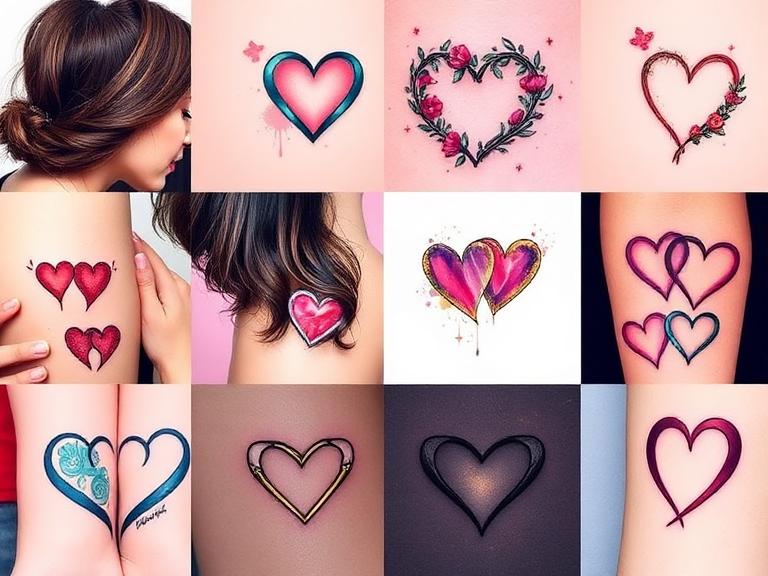
In the evolving landscape of body art, the desire to commemorate a profound emotional bond through permanent ink has reached unprecedented levels of creativity. As we progress through 2026, the demand for highly personalized, intricate, and meaningful couple tattoos has largely replaced the generic symbols of the past. Clients are no longer satisfied with simple infinity signs; they seek masterful artwork that tells their unique story. As industry leaders at INKSOUL, a premier provider of premium tattoo needles, pens, machines, and stencil printers, we collaborate closely with top-tier professional artists worldwide. We have analyzed studio trends, stencil data, and client consultations to compile the most authoritative resource for relationship ink.
From our experience, executing flawless matching tattoos requires more than just a beautiful concept; it demands absolute precision. When two people commit to wearing the same or complementary art, any discrepancy in line work, shading, or placement is immediately noticeable. This is why exploring matching tattoos for couples ideas must be paired with an understanding of professional execution and high-quality equipment. In this comprehensive guide, we will explore the top 12+ matching tattoos for couples ideas dominating 2026, and delve into the technical requirements needed to bring these visions to life on the skin.
Table of Contents
The Evolution of Couple Tattoos in 2026
12+ Matching Tattoos for Couples Ideas
1. Minimalist Fine Line Coordinates
2. Lock and Key Micro-Realism
3. Sun and Moon Mandalas
4. Geometric Animal Halves
5. Connected Fingerprints
6. Botanical Intertwining Vines
7. Abstract Soundwaves
8. Tarot Card Soulmates
9. Anatomical Heart Halves
10. Constellation Alignments
11. Custom Typography and Quotes
12. Negative Space Puzzle Pieces
13. Pop Culture Silhouettes
Professional Execution: Why Equipment Matters
Summary Table: Top Matching Tattoos for Couples Ideas
Frequently Asked Questions (FAQs)
References
The Evolution of Couple Tattoos in 2026
The tattoo industry has witnessed a massive shift toward fine line, micro-realism, and highly customized geometric styles. When analyzing the best matching tattoos for couples ideas, it is clear that discretion and artistry have taken precedence. Couples in 2026 are opting for designs that stand alone as beautiful pieces of art, but reveal a deeper, hidden meaning when placed side-by-side with their partner's tattoo. From our experience, this approach not only honors the relationship but also respects the individual's aesthetic preferences.
Furthermore, the technology used in studios has advanced. The ability to print flawlessly detailed stencils using specialized thermal and digital printers has allowed artists to achieve a level of symmetry that was previously impossible. This technological leap directly influences the matching tattoos for couples ideas that artists are willing to undertake, allowing for microscopic details and perfect mirrored images.
12+ Matching Tattoos for Couples Ideas
1. Minimalist Fine Line Coordinates
One of the most elegant and timeless matching tattoos for couples ideas is the use of geographical coordinates. These pinpoint the exact location of a significant event—where the couple first met, where they got engaged, or their first home. Executed with a single-needle fine line technique, these tattoos are subtle, modern, and easily hidden if necessary. We recommend placing these on the inner bicep or the ribcage for a delicate touch. The precision required for fine numbers demands a flawless stencil transfer to ensure the digits are perfectly legible without blowing out over time.
2. Lock and Key Micro-Realism
Moving away from the traditional, cartoonish lock and key, the 2026 trend focuses on micro-realism. These matching tattoos for couples ideas feature highly detailed, antique-style padlocks and intricate skeleton keys, complete with realistic shading and metallic highlights. Because this style relies heavily on smooth gradients and exact proportions, artists frequently utilize advanced stencil technology. Capturing the depth of a micro-realism piece requires a stencil that maps out the shading zones, not just the outlines.
3. Sun and Moon Mandalas
The dichotomy of the sun and moon is a classic symbol of complementary forces in a relationship. In 2026, these are being integrated into complex mandala patterns. One partner receives a sun-dominant mandala, while the other receives a moon-dominant mandala. The intricate dot-work and symmetrical linework required for mandalas are incredibly unforgiving. When researching matching tattoos for couples ideas, this option stands out for its spiritual aesthetic and visual impact, particularly when placed on the forearms or calves.
4. Geometric Animal Halves
For couples who share a "spirit animal" or a pet, geometric animal halves are a striking choice. One partner gets the left half of a wolf, lion, or owl, constructed entirely of sharp geometric shapes, while the other gets the right half. When the couple stands together, the animal is whole. This is one of the most popular matching tattoos for couples ideas because it perfectly symbolizes two halves making a whole. The linework must be razor-sharp, requiring premium needles and steady machine control.
5. Connected Fingerprints
Personalization reaches its peak with connected fingerprints. Artists take the actual fingerprint of each partner, often shaping them into a subtle heart or an infinity loop. This is perhaps the most unique of all matching tattoos for couples ideas, as no two sets will ever be the same. From our experience, capturing the exact ridges and whorls of a fingerprint requires a high-resolution stencil printer that will not smudge the microscopic lines before the needle hits the skin.
6. Botanical Intertwining Vines
Nature-inspired tattoos continue to dominate. A beautiful concept involves vines, florals, or olive branches that visually connect when the couple holds hands or embraces. For example, a branch that wraps around one partner's wrist and seemingly continues onto the other partner's wrist. These matching tattoos for couples ideas rely on organic flow and placement precision, ensuring the lines meet perfectly when the designated pose is struck.
7. Abstract Soundwaves
Audio-visual tattoos are a futuristic trend defining 2026. Couples record themselves saying "I love you," a snippet of their wedding vows, or a favorite song, and the audio waveform is converted into a visual stencil. These matching tattoos for couples ideas are deeply intimate. We recommend placing them over the heart or along the collarbone. The stenciling process here is critical, as any deviation in the waveform alters the "sound" visually represented.
8. Tarot Card Soulmates
For those drawn to mysticism, matching tarot cards are a fantastic choice. The most common pairing is "The Sun" and "The Star," or "The Emperor" and "The Empress." These matching tattoos for couples ideas allow for significant artistic interpretation, blending traditional woodcut styles with modern illustrative techniques. The rectangular framing of the cards requires absolute symmetry in the stencil application to avoid a warped appearance.
9. Anatomical Heart Halves
Moving away from the simplistic red heart, the anatomical heart split in two is a raw, edgy, and beautiful design. One partner takes the left ventricle side, the other the right. The level of detail in the veins, arteries, and muscle tissue makes this one of the most complex matching tattoos for couples ideas. It requires an artist skilled in black and grey realism and equipment capable of rendering soft washes and crisp details simultaneously.
10. Constellation Alignments
Astrology plays a massive role in modern relationships. A subtle and elegant idea is tattooing the constellation of your partner's zodiac sign, or the alignment of the stars on the exact night you met. These matching tattoos for couples ideas utilize fine dots and delicate lines. The minimalist nature of the design means there is zero room for error; a blowout on a tiny star will ruin the aesthetic.
11. Custom Typography and Quotes
While quotes are not new, the typography of 2026 is highly customized. Instead of standard computer fonts, couples are opting for custom lettering, sometimes even each other's handwriting. A popular approach to these matching tattoos for couples ideas is splitting a quote in half—one partner wears the beginning of the phrase, and the other wears the conclusion. Flawless stencil transfer is mandatory to ensure the kerning and baseline of the text remain perfectly aligned.
12. Negative Space Puzzle Pieces
A clever use of skin breaks, one partner gets a solid black (or patterned) puzzle piece, while the other partner gets a larger design with that exact puzzle piece shape left as negative space (bare skin). When considering clever matching tattoos for couples ideas, this represents how one person perfectly fits into the life of the other. The challenge here is ensuring the dimensions of the positive and negative spaces match to the millimeter.
13. Pop Culture Silhouettes
For couples bonded over a specific movie, book, or video game, subtle pop culture silhouettes offer a playful yet meaningful option. Instead of large, garish portraits, think of minimalist outlines of characters—like Wall-E and EVE, or two iconic lightsabers clashing. These matching tattoos for couples ideas are fun, nostalgic, and serve as an excellent conversation starter.
Expert Tip from INKSOUL: When executing matching tattoos, the stencil process is arguably the most critical step. A design that looks perfect on an iPad can easily distort when wrapped around the organic curves of the human body. We always recommend that artists apply both stencils while the couple stands side-by-side to ensure perfect alignment before opening a single needle cartridge.
Professional Execution: Why Equipment Matters
From our experience supplying the world's top studios, we know that bringing these matching tattoos for couples ideas to life requires unparalleled precision. Symmetry is the defining factor of a successful couple tattoo. If a stencil is off by even a fraction of an inch, the illusion of connection is broken. This is where professional-grade equipment becomes non-negotiable.
At INKSOUL, we emphasize the importance of high-fidelity stencil creation. To capture the delicate fine lines of coordinates or the intricate shading zones of micro-realism, artists must utilize a dedicated tattoo stencil printer. Traditional hand-tracing often loses the microscopic details required for 2026's tattoo trends.
For modern artists requiring mobility and precision, a wireless tattoo stencil printer is revolutionary. It allows the artist to transfer designs directly from a tablet, ensuring that the exact digital symmetry designed on the screen translates perfectly to the thermal paper, complete with shadow mapping for realism pieces. Furthermore, incorporating a touch screen tattoo printer streamlines the workflow in a busy studio, allowing for quick adjustments if a couple decides to slightly resize their matching designs during the consultation.
If you are an artist looking to upgrade your studio to accommodate the rising demand for complex matching tattoos for couples ideas, we strongly suggest reading our comprehensive tattoo transfer printer guide. Additionally, our industry analysis of the best tattoo stencil printers in 2026 provides invaluable insights into selecting the right hardware for your specific artistic style.
Summary Table: Top Matching Tattoos for Couples Ideas
Tattoo Idea
Best Placement
Recommended Tattoo Style
Technical Requirement
Coordinates
Inner Bicep, Ribcage
Minimalist Fine Line
Single needle, high-resolution stencil
Lock and Key
Forearm, Calf
Micro-Realism
Shadow-capable stencil printer
Animal Halves
Outer Thigh, Forearm
Geometric / Linework
Flawless symmetry mapping
Soundwaves
Collarbone, Chest
Abstract / Blackwork
Exact digital-to-stencil transfer
Connected Vines
Wrist, Ankle
Botanical / Organic
Freehand alignment combined with stenciling
Frequently Asked Questions (FAQs)
Do matching tattoos for couples have to be in the exact same spot?
Not necessarily. From our experience, anatomical differences mean that a tattoo on a male partner's forearm might sit differently than on a female partner's forearm. We recommend placing the matching tattoos for couples ideas in complementary spots rather than strictly identical ones, ensuring the art flows beautifully with each individual's musculature.
What happens to the tattoo if the relationship ends?
This is a common concern. The 2026 trend of matching tattoos for couples ideas focuses heavily on designs that are complete and beautiful on their own (like a single tarot card or an animal half). Avoid names and portraits; instead, choose art that you would love regardless of the relationship status. If needed, geometric and botanical designs are much easier to cover up or alter later.
Why is the stencil so important for couple tattoos?
When executing matching tattoos for couples ideas, the pieces are constantly compared to one another. If one circle is slightly oval or a line is slightly thicker, it becomes glaringly obvious when the couple holds the tattoos next to each other. High-quality thermal printers ensure exact mathematical duplication of the design.
References
To ensure the highest standards of safety and technical accuracy in body modification, INKSOUL aligns its practices and equipment manufacturing with industry regulations and dermatological guidelines. For further reading on the safety of tattoo pigments and the psychological impact of body art, we reference the following authoritative source:
National Center for Biotechnology Information (NCBI) - "Tattoos and Body Piercings in the United States: A National Data Set" (Dermatological and Sociological Review).
The 5 Exact Steps to Print a Tattoo on Skin
Authored by INKSOUL — Your Complete Tattoo Solution. We provide a one-stop inventory for professional tattoo studios, including premium tattoo needles, pens, machines, thermal stencil printers, high-contrast stencil paper, and studio lighting. Every product we supply is meticulously crafted for quality, compliance, and unmatched performance.
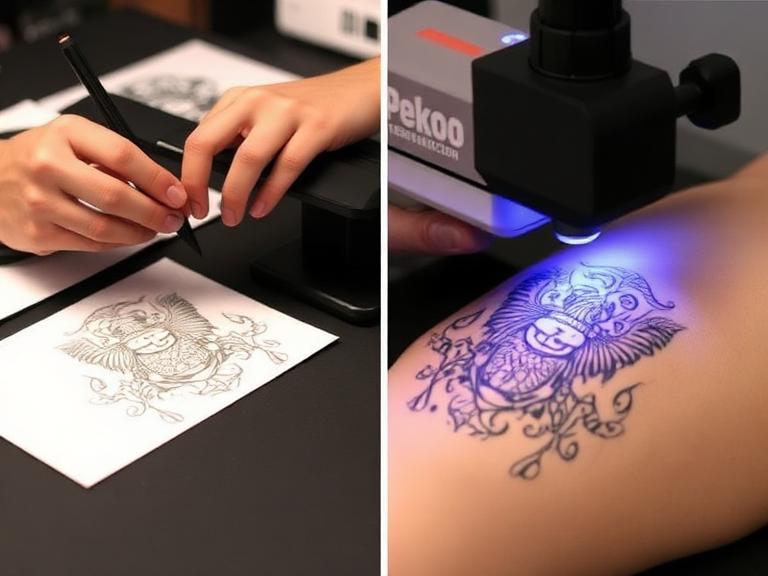
The foundation of any breathtaking tattoo is a flawless stencil. Before a single drop of ink penetrates the dermal layer, the artist must successfully transfer their meticulous design from a two-dimensional medium onto the complex, contoured, and dynamic canvas of the human body. Learning the exact methodology and steps to print a tattoo on skin is arguably as critical as mastering the shading or lining process itself. Without a crisp, highly visible, and durable stencil, executing a precise piece becomes an exercise in frustration and guesswork.
From our experience supplying elite studios worldwide, the transition from a digital or hand-drawn sketch to a physical stencil on the client's body requires specialized equipment, chemical adherence, and precise physical technique. When you attempt to print a tattoo on skin, you are essentially performing a localized chemical transfer using carbon-based pigments and specialized transfer gels. We recommend approaching this process with the utmost attention to detail, as a stencil that bleeds, smudges, or rubs off mid-session can severely compromise the final artwork. In this comprehensive, authoritative guide, we will break down the professional protocol required to print a tattoo on skin flawlessly, ensuring your stencil holds strong from the first line to the final highlight.
Table of Contents
1. The Anatomy of a Perfect Stencil Transfer
2. Essential Equipment Needed to Print a Tattoo on Skin
3. Step-by-Step Guide: How to Print a Tattoo on Skin
Step 1: Design Preparation and Thermal Printing
Step 2: Skin Preparation and Sterilization
Step 3: Applying the Transfer Solution
Step 4: Placement, Pressing, and Peeling
Step 5: Drying and Curing the Stencil
4. Troubleshooting Common Stencil Transfer Issues
5. Alternatives: Temporary and Cosmetic Applications
6. Post-Transfer: The Transition to Tattooing
7. Summary Table: Stencil Transfer Process at a Glance
8. Frequently Asked Questions (FAQs)
9. Authoritative References
1. The Anatomy of a Perfect Stencil Transfer
To consistently and accurately print a tattoo on skin, one must understand the interaction between the transfer paper, the transfer medium (gel or fluid), and the human epidermis. The stratum corneum, the outermost layer of the skin, is naturally coated in sebaceous oils, dead skin cells, and microscopic hairs. If a stencil is applied directly to an unprepared surface, the carbon pigment will not bond to the tissue, resulting in immediate flaking or wiping away during the tattoo process.
The goal when you print a tattoo on skin is to create a semi-permanent bond that can withstand the friction of green soap, continuous wiping, and the mechanical vibration of high-performance rotary and coil machines. This requires stripping the skin of its natural barriers and replacing them with a tacky, molecularly receptive transfer solution. Furthermore, the environment must be highly controlled; the quality of your INKSOUL adjustable, flicker-free LED studio lighting plays a crucial role in ensuring the stencil is aligned perfectly with the musculature and natural flow of the client's body.
2. Essential Equipment Needed to Print a Tattoo on Skin
Professional results demand professional tools. Attempting to print a tattoo on skin using inferior paper or generic deodorants as a transfer medium is a recipe for disaster. We recommend equipping your studio with the following INKSOUL-approved essentials to guarantee a flawless transfer process:
Tattoo Transfer Printers: The cornerstone of modern stenciling. We highly recommend utilizing reliable thermal and wireless printers capable of rendering ultra-crisp lines. Models such as the INKSOUL T08FS, Phomemo TP31, and XIRU XR3 are engineered specifically for tattoo artists, ensuring dense carbon deposits on the transfer sheet.
Tattoo Stencil Paper: High-contrast, smudge-resistant transfer paper is non-negotiable. INKSOUL provides premium stencil paper compatible with both thermal and ink-based systems, ensuring that every microscopic detail of your design is captured.
Skin Preparation Solutions: Medical-grade green soap, 70% isopropyl alcohol, and sterile disposable razors are required to create a sterile, oil-free canvas.
Professional Transfer Gel: A high-quality stencil application gel (often referred to as stencil stuff or transfer fluid) is the chemical bridge that allows you to print a tattoo on skin effectively. It activates the carbon on the paper and bonds it to the epidermis.
Tattoo Lighting Supply: Proper visibility is critical. Our adjustable, flicker-free LED lights are tailored for studio visibility and color accuracy, allowing you to identify any anatomical distortions during stencil placement.
3. Step-by-Step Guide: How to Print a Tattoo on Skin
Executing a flawless transfer is a sequential process. Rushing any of these stages will result in a compromised stencil. Follow these professional guidelines to print a tattoo on skin with precision and longevity.
Step 1: Design Preparation and Thermal Printing
The process begins at the workstation. Whether you have hand-drawn the design or created it digitally on a tablet, the image must be converted into a thermal carbon copy. Insert your high-contrast INKSOUL stencil paper into your thermal printer (such as the INKSOUL T08FS or Phomemo TP31). Ensure that the machine's heat settings are calibrated correctly; if the heat is too high, the carbon will melt and bleed, resulting in blurry lines. If the heat is too low, the carbon deposit will be insufficient to properly print a tattoo on skin. Once printed, carefully cut around the design, leaving a small border. Cutting away excess paper allows the stencil to curve naturally around cylindrical body parts like arms and legs without creasing.
Step 2: Skin Preparation and Sterilization
You cannot print a tattoo on skin that is covered in hair, lotion, or natural oils. Begin by cleansing the target area with a professional green soap solution to remove surface dirt. Next, using a sterile, single-use disposable razor, shave the area completely, extending several inches beyond the planned perimeter of the tattoo. Shaving not only provides a smooth surface for the stencil but also prevents the tattoo needles from driving microscopic hairs into the dermis, which can cause severe infections. After shaving, aggressively wipe the area with 70% isopropyl alcohol. The alcohol acts as an astringent, stripping away all sebaceous oils and completely dehydrating the immediate surface of the stratum corneum, creating an ideal receptive surface.
Step 3: Applying the Transfer Solution
With a sterile, gloved hand, dispense a dime-sized amount of professional transfer gel. Massage the gel into the prepped skin. From our experience, the most common mistake artists make when trying to print a tattoo on skin is applying too much transfer solution. The skin should not be wet or slippery; it should feel slightly tacky to the touch, almost like the adhesive backing of a high-quality sticker. If the skin is too wet, the carbon will immediately liquefy and blur upon contact. If it is too dry, the carbon will not release from the paper.
Step 4: Placement, Pressing, and Peeling
This is the critical moment of execution. Under the illumination of your INKSOUL studio lighting, align the stencil carefully. Have the client stand or sit in a natural, relaxed posture to ensure the design does not warp when their muscles are at rest. Gently lay the center of the stencil onto the tacky skin, and then smoothly roll the edges outward to prevent air bubbles from trapping underneath the paper.
Once the paper makes contact, do not shift, slide, or adjust it. To effectively print a tattoo on skin, apply firm, even, downward pressure with a dry paper towel for approximately 5 to 10 seconds. The heat from your hand combined with the pressure forces the carbon to bond with the transfer gel. To remove the paper, peel it away starting from one corner in a smooth, continuous motion. Do not pull it straight up, as this can create a suction effect that lifts the carbon off the skin.
Step 5: Drying and Curing the Stencil
A beautifully placed stencil is useless if it wipes away during the first pass of your liner. Once you have successfully managed to print a tattoo on skin, you must allow the stencil to cure. We recommend letting the client sit for a minimum of 10 to 15 minutes before touching the area. This curing period allows the transfer gel to evaporate entirely, locking the carbon pigment into the microscopic crevices of the epidermis. A fully cured stencil will withstand hours of wiping, green soap applications, and the friction of your hands during the procedure.
4. Troubleshooting Common Stencil Transfer Issues
Even seasoned professionals encounter issues when attempting to print a tattoo on skin. Here are the most common problems and their immediate solutions:
The Stencil is Blurry or Bleeding: This occurs when too much transfer gel was applied. The excess moisture liquefies the carbon, causing it to bleed laterally across the skin. Solution: Wipe the area clean with alcohol, allow it to dry, apply a significantly lighter coat of gel, and use a fresh stencil print.
The Stencil is Too Light or Spotty: This usually indicates that the skin was too dry, or the thermal printer settings (like on an older XIRU XR3 model) were not set to a dense enough carbon deposit. Solution: Re-print the stencil with a darker thermal setting and ensure the transfer gel is sufficiently tacky before application.
The Stencil Distorts with Movement: If the stencil looks perfect when the client is sitting but warps when they stand, the placement was executed in the wrong posture. Always print a tattoo on skin while the client is in a neutral, weight-bearing position.
5. Alternatives: Temporary and Cosmetic Applications
Not every transfer is destined for the permanent insertion of ink. The principles required to print a tattoo on skin are heavily utilized in the cosmetic and temporary body art industries. For clients who are hesitant about permanent modifications, or for artists looking to test a design's placement, exploring temporary options is highly beneficial.
You can discover excellent inspiration in our guide to temporary tattoo ideas, which outlines the best commitment-free ink options available today. For freehand artists, reading our comprehensive temporary tattoo pens review will help you select skin-safe markers that hold their pigment. Furthermore, if you are working without thermal equipment at home, learning how to make temporary tattoos provides a foundational understanding of carbon transfer techniques. Finally, for event artists and festival applications, our glitter tattoo guide explores an entirely different, adhesive-based method of skin decoration.
6. Post-Transfer: The Transition to Tattooing and Healing
Once you successfully print a tattoo on skin and the stencil is fully cured, the true artistry begins. Utilizing INKSOUL's high-performance rotary or coil machines, equipped with our full selection of round liners, shaders, and magnums, you will trace and fill the design, driving ink into the dermis.
The responsibility of the artist extends beyond the physical application of the ink. Educating your client on the biological process of recovery is mandatory. We recommend instructing every client to read our detailed breakdown of the tattoo healing stages to ensure their artwork heals cleanly without infection or ink fallout. Additionally, for professional artists evaluating their business models and hourly rates, our tattoo pricing guide offers an honest, industry-standard breakdown of studio economics and valuation.
7. Summary Table: Stencil Transfer Process at a Glance
Process Stage
Action Required
Recommended INKSOUL Product
Critical Warning
Design Printing
Convert digital/hand-drawn design to thermal carbon copy.
INKSOUL T08FS Printer & INKSOUL Stencil Paper
Do not overheat the thermal printer; carbon will melt and blur.
Skin Preparation
Shave, wash with green soap, and degrease with 70% alcohol.
Medical-grade studio supplies
Failure to remove skin oils will cause the stencil to wipe away instantly.
Gel Application
Apply a micro-thin layer of transfer gel until skin is tacky.
Professional Transfer Solution
Too much gel will cause the carbon to bleed across the skin.
Placement
Align under proper lighting, roll onto skin, apply firm pressure.
INKSOUL Adjustable LED Studio Lighting
Do not shift or slide the paper once it makes contact with the gel.
Curing
Allow the stencil to dry completely for 10-15 minutes.
Ambient Studio Air
Do not begin tattooing or wiping before the gel has fully evaporated.
8. Frequently Asked Questions (FAQs)
Why does my stencil wipe off so easily while I am tattooing?
From our experience, premature stencil loss is caused by three main factors: inadequate skin preparation (failing to remove all oils with alcohol), applying too much transfer gel, or failing to let the stencil cure for at least 10 to 15 minutes before beginning the tattoo procedure. Always allow the carbon to lock into the epidermis completely.
Can I use regular printer paper to print a tattoo on skin?
No. Standard printer paper and standard inkjet or laser toner are entirely incompatible with human skin and transfer gels. Furthermore, printer toner is highly toxic and should never be introduced to an open wound. You must use specialized, skin-safe, high-contrast tattoo stencil paper containing cosmetic-grade carbon.
What is the difference between thermal stencil paper and freehand stencil paper?
Thermal stencil paper is engineered to react to the heat elements inside machines like the Phomemo TP31 or INKSOUL T08FS, melting the carbon onto the transfer sheet. Freehand paper does not require heat; it transfers carbon onto the tracing sheet through the sheer physical pressure of a pen or stylus pressing down on it. We supply both variants for artists depending on their preferred workflow.
9. Authoritative References
For further reading on maintaining the highest standards of safety, sterilization, and procedural technique in a professional tattoo environment, we recommend consulting the following authoritative organizations:
Centers for Disease Control and Prevention (CDC) - Body Art Safety and Infection Control
Occupational Safety and Health Administration (OSHA) - Bloodborne Pathogens Standard
Alliance of Professional Tattooists (APT) - Health and Safety Guidelines
```
9 Best Wireless Tattoo Stencil Printers 2026: An Expert Industry Guide
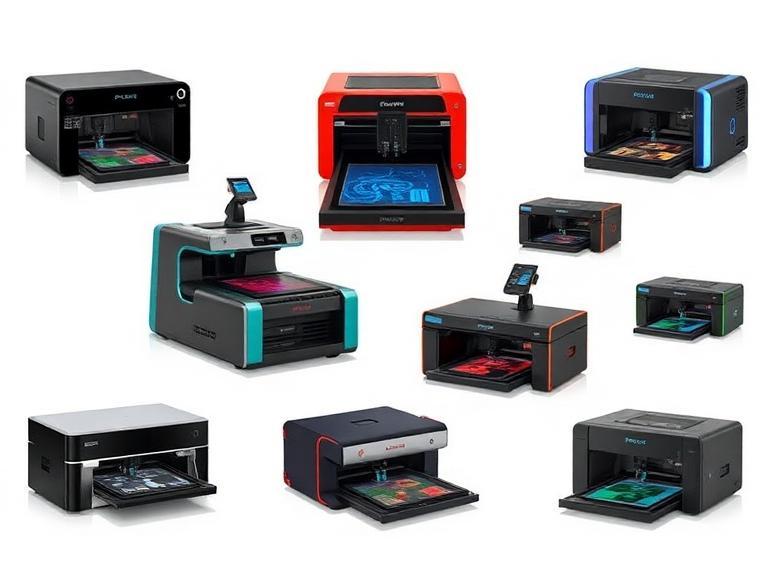
The tattoo industry has undergone a massive digital transformation over the last decade. Gone are the days when artists spent countless hours hand-tracing complex designs over a light box. Today, software applications like Procreate on the iPad allow artists to render hyper-realistic stencils in minutes. However, bridging the gap between a digital design and physical skin requires highly specialized hardware. In 2026, finding the Best wireless tattoo stencil printers is critical for professional artists seeking to streamline their workflow, maintain cross-contamination protocols, and achieve absolute precision.
From our experience as industry suppliers at INKSOUL®, the evolution of thermal printing technology has eliminated the need for messy ink cartridges and cumbersome power cables. The modern tattoo station demands portability and seamless Bluetooth connectivity. We recommend that artists prioritize devices that not only offer reliable wireless connections but also possess the thermal resolution necessary to print delicate gradients and microscopic fine lines. In this comprehensive guide, we will analyze the technological advancements defining the market and review the 9 Best wireless tattoo stencil printers available in 2026.
Table of Contents
1. The Evolution of Thermal Stencil Technology
2. Key Factors When Choosing the Best Wireless Tattoo Stencil Printers
3. The 9 Best Wireless Tattoo Stencil Printers for 2026
4. Integrating Your Printer into Your Tattoo Station
5. Summary Table: Comparison of Stencil Printers
6. Frequently Asked Questions (FAQs)
7. Industry References
1. The Evolution of Thermal Stencil Technology
Traditional hectograph copiers utilized a system of infrared bulbs and rolling belts to transfer carbon onto transfer paper. These legacy machines were notoriously heavy, prone to overheating, and frequently caused paper jams. More frustratingly, they struggled to differentiate between subtle shades of gray, often turning complex realism stencils into an unreadable, dark blob of purple carbon.
The introduction of the Best wireless tattoo stencil printers has completely revolutionized this process. Modern devices utilize direct thermal printing technology. By precisely heating a specialized print head, these printers melt the carbon from the transfer sheet directly onto the backing paper. Because there are no ink cartridges or ribbons involved, maintenance is virtually nonexistent. Furthermore, the integration of Bluetooth technology means artists can keep their printers on a clean, isolated station away from their active workspace, thereby adhering to strict bloodborne pathogen safety standards.
2. Key Factors When Choosing the Best Wireless Tattoo Stencil Printers
Not all thermal printers are created equal. When evaluating the Best wireless tattoo stencil printers, professionals must consider several specific engineering metrics:
Resolution (DPI): Dots Per Inch dictates the clarity of the stencil. For bold traditional work, standard resolutions suffice. However, for micro-realism, fine-line, or geometric styles, high DPI ensures that tight lines do not blur together.
Shadow Printing Capability: A critical feature for modern artists. The Best wireless tattoo stencil printers have advanced software algorithms that interpret gray washes and print them as distinct, dotted shadows rather than solid black lines.
Battery Life: A 1200mAh battery or higher is essential for artists who travel to conventions or guest spots, ensuring days of printing on a single charge.
Paper Compatibility: Depending on the size of the tattoo, your printer must accommodate various paper dimensions, including standard A4, Letter, Legal, or continuous roll paper.
3. The 9 Best Wireless Tattoo Stencil Printers for 2026
Based on rigorous testing, artist feedback, and technological specifications, we have compiled the definitive list of the Best wireless tattoo stencil printers dominating the market in 2026.
1. INKSOUL® T08FS Wireless Tattoo Transfer Stencil Printer
We proudly position the INKSOUL® T08FS Wireless Tattoo Transfer Stencil Printer at the top of our list. This machine is engineered specifically to address the most complex challenges of modern tattooing: printing shadows. It supports printing Shader images and line images of multiple sizes. The versatility is unmatched, supporting four paper sizes: A4 (8.3in x 11.7in), LTR (8.5in x 11in), Legal (8.5in x 14in), and LTR+ (8.5in x 16.5in).
Equipped with a robust 1200mAh battery, it offers extensive longevity for conventions. Connectivity is seamless; it utilizes a Bluetooth connection for mobile phones and tablets, while PC users can utilize a secure USB cable connection. Utilizing premium Thermal Printing technology, it processes A4 thermal paper at a high resolution of 203 dpi. With a maximum printing speed of 13-15 mm/s, it delivers rapid results without compromising detail. Weighing a mere 0.75 kilograms with dimensions of 310x68x41 mm, it is the ultimate portable powerhouse. You just need to refill A4 thermal paper—no ink cartridges, no ribbons.
2. Phomemo TP31 Bluetooth Tattoo Stencil Pocket Printer
For artists who specialize in smaller tattoos, patchwork sleeves, or those who travel extensively, the Phomemo TP31 Bluetooth Tattoo Stencil Pocket Printer is a revelation. Measuring just 145x70x54mm and weighing only 450g, it allows you to print anytime, anywhere.
This mini tattoo printer boasts versatile paper roll compatibility, specifically supporting 80mm Tattoo Transfer Paper, offering unique sizing options. It features powerful label creation capabilities and access to a vast array of design materials via the smart APP. The inkless printing technology allows you to install paper in just 3 seconds for a clean, eco-friendly design without toner. It offers high-definition 203 dpi printing at speeds up to 20mm/s, ensuring quality and efficiency. The battery life is exceptional, providing more than 72 hours of standby time and the ability to print up to 70 meters on a single charge.
3. Phomemo M08F Wireless Tattoo Transfer Stencil Printer 216mm
The Phomemo M08F Wireless Tattoo Transfer Stencil Printer is a highly reliable workhorse widely recognized among the Best wireless tattoo stencil printers. It utilizes direct thermal printing technology and offers excellent connectivity via both USB and Bluetooth.
This model (M08F-WS) is portable, lightweight, and compatible with phones, tablets, and PCs. It is specialized for tattoo stencils, operating completely inkless. It produces crisp monochrome output at a maximum print speed of 12 ppm. Weighing 715 grams with product dimensions of 2.3"D x 10.4"W x 1.2"H, it perfectly balances desk stability with convention portability.
4. S8 Stencil Printer (Bluetooth Edition)
The S8 Stencil Printer has long been an industry standard. Known for its rugged build quality, it partners exceptionally well with S8 Red stencil paper. While slightly heavier than modern minimalist designs, its thermal print head is legendary for burning deep, dark, and long-lasting stencils that withstand heavy wiping during long sessions.
5. Brother PocketJet PJ-883
Brother pioneered the portable thermal printer market. The PJ-883 is a premium device often considered one of the Best wireless tattoo stencil printers for artists who demand 300 dpi resolution. While it is priced at a premium, the absolute clarity of the stencil lines justifies the investment for high-end portrait artists.
6. Ozer Wireless Tattoo Stencil Printer
The Ozer printer has gained massive popularity on social media platforms due to its sleek design and user-friendly proprietary application. It processes gradient images exceptionally well, offering a solid middle-ground between budget-friendly options and high-end luxury printers.
7. ATS-801 Wireless Thermal Printer
The ATS-801 updates the classic clamshell thermal copier design with modern Bluetooth capabilities. It is slightly bulkier but is beloved by traditional tattooers who prefer a sturdy machine that can handle continuous, high-volume feeding of heavy transfer paper without jamming.
8. LifeBasis Bluetooth Tattoo Printer
For apprentices or artists operating on a strict budget, the LifeBasis offers reliable Bluetooth connectivity and standard 203 dpi printing. While it may not possess the advanced shadow-processing algorithms of the INKSOUL® T08FS, it provides consistent, clean line-work stencils at an accessible price point.
9. Dragonhawk Fold Pro Wireless Stencil Maker
Dragonhawk, a well-known name in tattoo hardware, offers a highly compact wireless stencil printer. It is designed to integrate seamlessly into their existing ecosystem of wireless battery packs and rotary pens, providing reliable thermal transfer with excellent iOS and Android compatibility.
4. Integrating Your Printer into Your Tattoo Station
From our experience, upgrading your hardware is only the first step. Creating a holistic, efficient, and sanitary workspace is what truly elevates your artistry. We recommend treating your digital stenciling station as a separate, clean zone within your studio.
Once you have selected one of the Best wireless tattoo stencil printers, you must ensure the rest of your equipment matches this standard of professionalism. A crisp stencil requires excellent visibility during the application and tattooing process. Investing in proper tattoo lighting equipment ensures that every purple line is illuminated, preventing eye strain during multi-hour sessions.
Furthermore, an organized station breeds efficiency. Pairing your pristine digital stencils with high-quality pigments is crucial; we advise guiding your apprentices to use reliable tattoo ink for beginners that flows easily into the skin. Keep your caps and bottles perfectly organized using a tattoo ink display rack, and ensure your custom gray washes are perfectly blended utilizing a professional tattoo mixer supply.
Lastly, maintaining the integrity of your tools is a non-negotiable safety standard. Implementing rigorous hygiene protocols using dedicated tattoo needle cleaning supplies ensures that your focus remains entirely on executing the flawless design you just printed.
5. Summary Table: Comparison of the Best Wireless Tattoo Stencil Printers
Printer Model
Resolution
Shadow Printing
Weight
Best Suited For
INKSOUL® T08FS
203 dpi
Yes (Advanced Algorithm)
0.75 kg
Realism, Fine Line, Multiple Paper Sizes
Phomemo TP31
203 dpi
Basic
450 g
Patchwork, Small Designs, Travel (80mm roll)
Phomemo M08F
Standard
Basic
715 g
Standard daily shop use, highly portable
Brother PJ-883
300 dpi
Yes
Approx 0.6 kg
High-end portraiture, extreme fine detail
S8 Stencil Printer
Standard
No
Varies
Traditional artists, heavy wiping sessions
6. Frequently Asked Questions (FAQs)
Do I need special paper for these wireless stencil printers?
Yes. The Best wireless tattoo stencil printers utilize thermal technology. You must use specific thermal tattoo transfer paper (often sold in 4-ply sheets). You must remove the protective tissue layer before feeding the transfer paper into the machine. Unlike standard office printers, absolutely no liquid ink is used.
Why is my thermal printer bunching up or jamming the paper?
Paper jams generally occur if the transfer paper is inserted at an angle, or if the yellow backing sheet is caught in the thermal roller. We recommend ensuring a perfectly straight feed. Additionally, keeping the thermal print head clean by gently wiping it with an alcohol swab (when powered off and cool) will prevent carbon buildup and ensure smooth feeding.
Can I print a stencil directly from my iPhone or iPad?
Absolutely. The defining feature of the Best wireless tattoo stencil printers is their Bluetooth capability. Using dedicated applications (such as the INKSOUL or Phomemo apps), you can wirelessly transmit your Procreate or Photoshop designs directly from your iOS or Android device to the printer in seconds.
7. Industry References
To ensure our clients have access to the highest standards of safety and operational efficiency, we recommend consulting the following authoritative bodies regarding tattoo studio hardware and cross-contamination protocols:
Alliance of Professional Tattooists (APT) - Safety, sanitation, and professional equipment guidelines.
Occupational Safety and Health Administration (OSHA) - Bloodborne Pathogens Standard for maintaining a sterile digital workstation.
U.S. Food & Drug Administration (FDA) - Insights on tattoo inks, transfer chemicals, and dermatological safety.

10 Best Friend Tattoos Ideas: An Expert Guide to Commemorative Ink
Marking a lifelong bond with permanent ink is a profound decision. When clients walk into a studio looking for best friend tattoos, they are not merely picking a design off a flash sheet; they are solidifying a shared history, private jokes, and mutual trust. As an industry-leading supplier, INKSOUL understands that the execution of best friend tattoos requires uncompromising precision. From our experience as a primary distributor for elite studios, the barrier between an average tattoo and a mind-bending illusion or crisp fine-line design is often the equipment used behind the scenes.
Finding the perfect concept for best friend tattoos requires balancing individual aesthetics with a unified theme. Whether you lean toward minimalist micro-tattoos, intricate realism, or bold traditional pieces, the design must age gracefully on two different canvases. In this authoritative guide, we explore the top 10 best friend tattoos ideas, delve into the professional equipment required to execute them flawlessly, and provide essential insights into pricing, stenciling, and aftercare.
Table of Contents
1. Why Professional Equipment Matters for Best Friend Tattoos
2. The 10 Best Friend Tattoos Ideas for 2026
3. Stenciling Precision: The Foundation of Matching Tattoos
4. Temporary Alternatives and Test Runs
5. Pricing Expectations and Healing Stages
6. Summary Table: Best Friend Tattoos Guide
7. Frequently Asked Questions (FAQs)
8. Industry References
1. Why Professional Equipment Matters for Best Friend Tattoos
INKSOUL provides a one-stop inventory for tattoo studios, ensuring that every product is chosen for quality, compliance, and performance. When executing matching best friend tattoos, consistency is paramount. If one artist is using substandard equipment, the matching pieces will heal differently, leading to unmatched line weights and uneven fading.
Executing pristine best friend tattoos requires machines that hit consistently. We supply high-performance rotary and coil machines suited for every style—lining, shading, and packing dense color. Furthermore, realism and smooth gradients demand exceptional needles. Our full selection includes round liners for sharp, matching edges, and round shaders, magnums, curved magnums, and cartridges for buttery soft shadows. Upgraded grips, foot pedals, and flicker-free lighting are vital workspace essentials for the multi-session endurance required when tattooing two individuals back-to-back.
2. The 10 Best Friend Tattoos Ideas for 2026
We recommend exploring designs that hold deep personal resonance while remaining aesthetically pleasing on their own. Below are the 10 most compelling best friend tattoos ideas trending in professional studios.
1. Minimalist Fine Line Coordinates
One of the most sophisticated best friend tattoos involves pinpointing a location significant to your friendship—where you met, a memorable trip, or a shared hometown. Executed with a tight 3RL (Round Liner) cartridge, coordinate tattoos offer an elegant, subtle nod to your bond without being overly conspicuous.
2. Interlocking Geometric Shapes
For those who appreciate modern, abstract art, interlocking geometric shapes make brilliant best friend tattoos. One friend might have a solid triangle, while the other features an outlined triangle. When placed side-by-side, the designs complete a larger geometric puzzle. This style relies heavily on the artist's ability to pull perfectly straight lines using reliable rotary machines.
3. Sun and Moon Energies
The classic dichotomy of sun and moon remains a staple in best friend tattoos. This concept honors the balance of opposite yet complementary personalities. To elevate this traditional idea, we recommend incorporating micro-realism or delicate stippling (whip shading) to give the celestial bodies a textured, three-dimensional depth.
4. Half-and-Half Illustrative Designs
Half-and-half designs are best friend tattoos that only form a complete image when the two individuals bring their tattooed body parts together. Popular variations include a split butterfly, a continuous landscape, or a quote broken across two forearms. Precision stenciling is non-negotiable here, as the alignment must be mathematically flawless.
5. Matching Fingerprint Hearts
A deeply personal take on best friend tattoos involves taking each other's actual fingerprints, shaping them into a heart or a continuous loop, and tattooing the exact dermal ridges. Because fingerprints contain microscopic details, your artist must use ultra-fine needles and premium ink that will not blow out or spread over time.
6. Floral Birth Month Bouquets
Floral designs are timeless. Combining both of your birth flowers into a single bouquet creates elegant, nature-inspired best friend tattoos. For these designs, we recommend seeking an artist who specializes in fine-line botanicals or watercolor techniques, ensuring the flora looks organic and fluid on the skin.
7. Tarot Card Symbolism
Tarot cards offer rich, allegorical imagery perfect for best friend tattoos. Selecting cards that represent your dynamic—such as The Sun and The Star, or two distinct suits—provides a highly illustrative and deeply symbolic tattoo. These designs usually require intricate line work and careful shading.
8. Pop Culture Nods and Private Jokes
Many best friend tattoos stem from shared laughter or a mutual love for a specific film, book, or song. Whether it is a subtle icon from a favorite movie or a stylized illustration of an inside joke, these tattoos capture the joy of the friendship. We recommend keeping these designs stylized rather than hyper-realistic to ensure they age well.
9. Animal Familiars
If you and your best friend identify with specific animals, having matching or complementary animal portraits is a striking option. Depending on your preference, these can range from minimalist line-art silhouettes to detailed, hyper-realistic portraits requiring extensive shading and layering.
10. Continuous Line Art
Continuous line (or one-line) tattoos are created using a single, unbroken stroke to form an image, such as two faces, holding hands, or a specific object. These best friend tattoos are minimalist masterpieces that require an incredibly steady hand and a machine tuned to deliver consistent ink flow without snagging the skin.
3. Stenciling Precision: The Foundation of Matching Tattoos
When executing best friend tattoos, a 3D piece or a matching geometric shape fails if the foundation is flawed. Creating an identical stencil for two different body types is an exact science. We recommend our reliable thermal and wireless printers, specifically the INKSOUL T08FS, Phomemo TP31, and XIRU XR3.
Paired with high-contrast, smudge-resistant stencil paper, these transfer printers lock the illusion in place before the needle ever touches the skin. Wireless connectivity allows the artist to manipulate the design on an iPad, scale it perfectly to fit each friend's anatomy, and print a flawless, identical stencil in seconds. Without this technology, achieving symmetry in best friend tattoos is nearly impossible.
4. Temporary Alternatives and Test Runs
If you and your friend are hesitant about permanent ink, or if you want to test the placement of your best friend tattoos, temporary solutions are highly effective. We recommend exploring temporary tattoo ideas to visualize the design on your skin.
For custom placement testing, you can use specialized tools. Read our comprehensive temporary tattoo pens review to find skin-safe markers that allow you to draw the design directly. Additionally, learning how to make temporary tattoos at home can be a fun bonding activity before hitting the studio. For a more festive approach to events or parties, our glitter tattoo guide offers vibrant, short-term alternatives.
5. Pricing Expectations and Healing Stages
Understanding the financial commitment is a vital step in planning best friend tattoos. Professional artists charge based on their experience, overhead, and the premium supplies they utilize. If you are wondering about industry standards, we highly recommend reading our tattoo pricing guide, which provides a professional and honest breakdown of studio rates.
Once your best friend tattoos are complete, the aftercare process dictates how the ink will settle and age. Because everyone's immune system reacts differently, your tattoos may heal at slightly different rates. To ensure your matching ink remains crisp and vibrant, educate yourselves on the tattoo healing stages day by day. Proper cleaning, moisturizing, and sun protection are non-negotiable for preserving the integrity of the artwork.
6. Summary Table: Best Friend Tattoos Guide
Tattoo Concept
Ideal Style / Technique
Equipment Recommendation
Coordinates / Fine Line
Minimalist, Single Needle
High-precision rotary machine, 3RL cartridge
Half-and-Half Designs
Illustrative, Geometric
INKSOUL T08FS or Phomemo TP31 printer for exact alignment
Birth Month Flowers
Botanical, Whip Shading
Curved magnums for soft floral gradients
Matching Fingerprints
Micro-Realism
High-contrast stencil paper, fine liners
Sun and Moon
Traditional or Stippling
Reliable coil machine for bold outlines, round shaders
7. Frequently Asked Questions (FAQs)
Do best friend tattoos have to be exactly identical?
From our experience, the most successful best friend tattoos are not always carbon copies. Complementary tattoos—such as a lock and a key, or day and night motifs—often look better because they can be tailored to fit the individual anatomy and personal style of each person while still maintaining a cohesive theme.
How do we ensure our matching tattoos are aligned perfectly?
Alignment is achieved through high-quality stenciling. We recommend that artists utilize advanced thermal transfer printers like the XIRU XR3 or INKSOUL T08FS. These printers ensure that the scale, proportion, and line details are exactly the same on both individuals before the tattooing process begins.
Will our best friend tattoos fade at the same rate?
Not necessarily. Fading depends on several variables, including skin type, sun exposure, placement, and adherence to aftercare protocols. Even if executed by the same artist using the same INKSOUL supplies, one friend's tattoo may heal differently. Diligent aftercare and applying SPF to the healed tattoo are crucial for longevity.
8. Industry References
At INKSOUL, we align our supply standards with the highest medical and dermatological guidelines. For more information on tattoo safety, ink regulations, and dermatological care, we recommend consulting the following authoritative sources:
U.S. Food and Drug Administration (FDA) - Tattoo and Permanent Makeup Safety Guidelines
American Academy of Dermatology (AAD) - Caring for Tattooed Skin
Centers for Disease Control and Prevention (CDC) - NIOSH Body Art Health and Safety
"The barrier between an average tattoo and a mind-bending illusion is often the equipment. Equip your studio with INKSOUL, and let the artistry of best friend tattoos speak for itself."

The 9 Best Tattoo Ink Printers in 2026
Authored by INKSOUL®
The tattoo industry has evolved rapidly, demanding precision, speed, and uncompromising reliability. Gone are the days of painstakingly hand-tracing complex stencils for hours. For the modern tattoo artist, time is the ultimate currency, and workflow efficiency is dictated by the caliber of equipment in the studio. From our experience at INKSOUL®, upgrading to the Best tattoo ink printers transforms not only the preparation phase but also the final outcome of the artwork on the skin. A high-resolution, perfectly transferred stencil eliminates guesswork, allowing the artist to focus entirely on application, shading, and technique.
In 2026, the technological advancements in thermal printing have rendered traditional carbon copiers obsolete. Finding the Best tattoo ink printers requires evaluating connectivity, battery life, resolution (dpi), and most importantly, the ability to print complex shadows and gradients. We recommend artists prioritize portability and app compatibility to streamline the transition from digital design on a tablet directly to thermal paper. In this authoritative guide, we will analyze the 9 Best tattoo ink printers available in 2026, breaking down their technical specifications to help you equip your studio with the industry's premier tools.
Table of Contents
Summary Table: The 9 Best Tattoo Ink Printers
Expert Criteria: What Defines the Best Tattoo Ink Printers?
In-Depth Reviews: The 9 Best Tattoo Ink Printers
1. INKSOUL® T08FS Wireless Tattoo Transfer Stencil Printer
2. Phomemo M08F Wireless Tattoo Transfer Stencil Printer
3. INKSOUL® Touch Screen Tattoo Printer T08FD
4. Brother PocketJet 8 Thermal Printer
5. S8 Stencil Printer Series
6. Ozer Wireless Stencil Printer
7. ATS801 Portable Tattoo Printer
8. LifeBasis Thermal Copier
9. Cridoz Tattoo Transfer Machine
Thermal Technology vs. Standard Printers
Expert Tips for Flawless Stencil Transfers
Frequently Asked Questions (FAQs)
Authoritative References
Summary Table: The 9 Best Tattoo Ink Printers
To assist artists in making a rapid, informed decision, we have compiled a summary matrix of the Best tattoo ink printers available in 2026. This table compares the core functionalities necessary for a professional studio environment.
Rank
Printer Model
Printing Technology
Key Feature
Portability
1
INKSOUL® T08FS Wireless
Thermal (203 dpi)
Prints Shading/Shadows
Ultra-Portable (1200mAh)
2
Phomemo M08F Wireless
Thermal (Monochrome)
Ultra-Lightweight (715g)
High (Rechargeable)
3
INKSOUL® Touch Screen T08FD
Advanced Thermal
Integrated Touch Interface
Studio & Travel
4
Brother PocketJet 8
Direct Thermal
High-Speed Output
High
5
S8 Stencil Printer
Thermal
Red Stencil Compatibility
Moderate
6
Ozer Wireless Printer
Thermal
App Integration
High
7
ATS801 Portable
Thermal Copier
Budget-Friendly
Moderate
8
LifeBasis Thermal Copier
Thermal Copier
Mirror/Normal Modes
Low (Desktop)
9
Cridoz Transfer Machine
Thermal Copier
Entry-Level Basic Lines
Low (Desktop)
Expert Criteria: What Defines the Best Tattoo Ink Printers?
When compiling our list of the Best tattoo ink printers, our engineering and artistic teams evaluated several strict criteria. The professional tattoo industry requires tools that do not fail under continuous daily use. We recommend assessing a printer based on its resolution, connectivity, and paper compatibility.
From our experience, the absolute Best tattoo ink printers utilize direct thermal printing technology. This means they require zero ink cartridges or ribbons, drastically reducing long-term operational costs. Instead, heat is applied precisely to a specialized tattoo stencil printer paper to create the image. Furthermore, modern artists design almost exclusively on iPads and mobile devices. Therefore, a wireless tattoo stencil printer with seamless Bluetooth connectivity is no longer a luxury; it is a fundamental requirement for a modern studio.
In-Depth Reviews: The 9 Best Tattoo Ink Printers
1. INKSOUL® T08FS Wireless Tattoo Transfer Stencil Printer
Securing the top position among the Best tattoo ink printers is the INKSOUL® T08FS. What sets this machine apart from legacy copiers is its profound ability to print shadows and gradients (Shader images), not just harsh outlines. For artists specializing in black and grey realism, portraiture, or fine-line aesthetics, this capability is revolutionary.
Technical Specifications:
Paper Compatibility: Supports A4 (8.3in x 11.7in), LTR (8.8 x 11in), Legal (8.5in x 14in), and LTR+ (8.5in x 16.5in).
Battery & Connectivity: Equipped with a 1200mAh battery. It connects flawlessly via Bluetooth for mobile phones and tablets, and via USB for PC.
Printing Technology: Inkless thermal printing at a crisp 203 dpi resolution.
Speed & Dimensions: Maximum printing speed of 13-15 mm/s. It weighs only 0.75 kg with dimensions of 310x68x41 mm, making it the ultimate travel companion for guest spots and conventions.
We recommend the T08FS as the apex choice for professionals seeking the Best tattoo ink printers because it relies on the most economical thermal technology—requiring only A4 thermal paper refills without the mess of ribbons.
2. Phomemo M08F Wireless Tattoo Transfer Stencil Printer
Ranked second on our list of Best tattoo ink printers is the Phomemo M08F. Known for its ultra-lightweight profile, this monochrome printer weighs a mere 715 grams. It utilizes advanced thermal technology specialized for tattoo stencils, ensuring deep, dark transfers without bleeding.
The M08F-WS model offers dual connectivity (Bluetooth and USB) and is highly compatible with phones, tablets, and PCs. Its compact dimensions (2.3"D x 10.4"W x 1.2"H) allow it to slide effortlessly into any artist's travel bag. From our experience, its 12 ppm maximum print speed ensures you are never keeping a client waiting in the chair.
3. INKSOUL® Touch Screen Tattoo Printer T08FD
Innovation continues with the touch screen tattoo printer from INKSOUL®. By integrating a high-definition touch interface directly into the hardware, artists can manage print density, adjust alignment, and troubleshoot connectivity without constantly referencing their mobile application. As one of the Best tattoo ink printers of 2026, the T08FD bridges the gap between digital convenience and physical control, ensuring a flawless stencil every single time.
4. Brother PocketJet 8 Thermal Printer
The Brother PocketJet series has long been an industry staple. The PJ-8 iteration continues this legacy, offering robust, high-speed thermal printing. While it lacks some of the specialized shadow-printing software calibrations found in the INKSOUL® T08FS, it remains a highly durable, professional-grade unit. We categorize it among the Best tattoo ink printers for high-volume studios that require rapid, continuous output of traditional line-work stencils.
5. S8 Stencil Printer Series
Designed specifically for the tattoo industry, the S8 printer is optimized to work seamlessly with S8's proprietary red thermal paper. While red stencils are excellent for visibility on darker skin tones, artists are locked into a specific ecosystem of consumables. Despite this limitation, the hardware's reliability and crisp line generation solidify its place among the Best tattoo ink printers.
6. Ozer Wireless Stencil Printer
The Ozer Wireless printer is a strong competitor in the portable market. It offers a dedicated application that allows artists to edit, crop, and invert their designs prior to printing. It holds a firm position among the Best tattoo ink printers due to its user-friendly interface and reliable internal battery, making it a solid choice for apprentices and traveling artists.
7. ATS801 Portable Tattoo Printer
The ATS801 bridges the gap between older rotary copiers and modern digital printers. While it does not offer the high-definition gradient capabilities of our top-ranked Best tattoo ink printers, it is highly affordable and indestructible. We recommend it as a reliable backup machine for busy street shops.
8. LifeBasis Thermal Copier
If you prefer drawing your stencils by hand and feeding them through a machine, the LifeBasis Thermal Copier remains a relevant tool. It does not connect via Bluetooth; instead, it optically scans a physical drawing and burns it onto thermal paper. While lacking digital integration, it is one of the Best tattoo ink printers for traditionalists who prefer analog workflows.
9. Cridoz Tattoo Transfer Machine
Rounding out our list of the Best tattoo ink printers is the Cridoz machine. This is an entry-level, budget-friendly thermal copier. We recommend this unit strictly for beginners or apprentices practicing their stencil application techniques on synthetic skin, as it provides basic line transfers without the advanced features required for professional studio realism.
Traditional vs. Thermal: Why Thermal Wins
A frequent question we receive from new artists is: can a normal printer print tattoo stencils? The definitive answer is no, not effectively. Normal inkjet or laser printers utilize liquid ink or powdered toner, neither of which possess the specific chemical properties required to adhere to the skin safely and endure the wiping process during a tattoo procedure.
When searching for the Best tattoo ink printers, you are actually looking for thermal printers. For a deeper dive into this topic, we highly advise reading our expert guide addressing whether you can use a regular printer for tattoo transfer paper. Thermal technology uses heat to melt a specialized carbon or purple dye layer from a master sheet directly onto the transfer sheet. This is why investing in a dedicated thermal tattoo printer is mandatory for professional safety and precision.
Expert Tips for Flawless Stencil Transfers
Owning one of the Best tattoo ink printers is only half the battle; knowing how to utilize the consumables dictates the final result. Understanding tattoo stencil paper guide chemistry ensures you pair the right paper with your machine.
From our experience, properly preparing the skin with a high-quality stencil application gel is critical. For detailed instructions on application techniques, consult our comprehensive manual on how to use tattoo transfer paper. Furthermore, when using advanced machines like the T08FS, always ensure your digital file is set to high contrast and that your iPad or tablet is fully synced before initiating the print command.
Frequently Asked Questions (FAQs)
What defines the Best tattoo ink printers for realism artists?
For realism, the Best tattoo ink printers must be capable of printing gradients and shadows (Shader images), not just hard outlines. Models like the INKSOUL® T08FS achieve this by modulating the heat intensity applied to the thermal paper, allowing for soft, grey-wash style reference lines directly on the skin.
Do the Best tattoo ink printers require ink cartridges?
No. The Best tattoo ink printers utilize direct thermal technology. They do not require any liquid ink cartridges or toner. The only consumable required is high-quality thermal transfer paper, making them highly cost-effective and completely mess-free.
Can I use my iPad to print directly to these machines?
Yes. The modern Best tattoo ink printers, particularly the wireless models we reviewed, feature robust Bluetooth connectivity. By downloading the manufacturer's dedicated application, you can beam your Procreate designs directly from your iPad or mobile phone to the printer in seconds.
Where can I find more information on choosing a machine?
For a broader overview of studio setup requirements, we recommend exploring our extensive tattoo transfer printer guide and reviewing our constantly updated list of the best tattoo stencil printers to ensure your equipment aligns with current industry standards.
Authoritative References
To ensure the utmost safety and hygiene in your tattooing practice, we recommend consulting the following authoritative bodies regarding skin safety, equipment sanitation, and material standards:
U.S. Food and Drug Administration (FDA) - Tattoos and Permanent Makeup Guidelines
Centers for Disease Control and Prevention (CDC) - Bloodborne Infectious Diseases in the Workplace

10+ 3D Tattoos for Men Ideas 2026: An Expert Guide
As the tattoo industry continues to evolve through advanced technical equipment and refined pigment formulations, optical illusion body art has reached unprecedented levels of realism. From our experience at INKSOUL outfitting elite tattoo studios worldwide, the demand for high-caliber 3D tattoos for Men is the defining trend for 2026. This intricate style requires an expert understanding of light sources, drop shadows, and anatomical placement, transforming flat skin into dynamic visual masterpieces.
Whether you are a collector looking for your next major piece or an artist researching the technical requirements to execute complex realism, understanding the anatomy of 3D tattoos for Men is crucial. The structural foundation of these pieces relies entirely on the precise application of opaque grays, stark whites, and deeply saturated blacks. In this comprehensive guide, we dissect the top 3D tattoos for Men concepts dominating 2026, alongside the professional hardware required to bring them to life.
Table of Contents
The Rise of 3D Tattoos for Men in 2026
Summary Table: Top 10+ 3D Tattoos for Men
Detailed Breakdown: 10+ 3D Tattoos for Men Ideas
1. Biomechanical Sub-Dermal Armor
2. Hyper-Realistic Animal Portraits
3. Torn Skin and Anatomical Reveals
4. Hovering Geometric Optical Illusions
5. Hyper-Real Arachnids and Insects
6. Carved Stone and Ancient Masonry
7. Floating Script and Typography
8. Steampunk Circuitry and Gears
9. 3D Pop-Out Skulls
10. Hyper-Realistic Timepieces
11. Trompe l'œil Compass and Maps
Essential INKSOUL Equipment for 3D Realism
Preparation, Pricing, and Healing Stages
Testing the Waters: Temporary Alternatives
Frequently Asked Questions (FAQs)
References
The Rise of 3D Tattoos for Men in 2026
We consistently monitor global studio requests, and the data is clear: 3D tattoos for Men have moved past niche novelty into mainstream high-art. The technique, known historically as trompe l'œil (deceive the eye), utilizes intense contrast. Artists build realistic drop shadows below the subject and stark highlights on the upper edges, tricking the brain into perceiving depth on a two-dimensional surface.
From our experience supplying the industry's top realism artists, executing flawless 3D tattoos for Men requires immense technical skill. It is not simply about tracing a stencil; it is about manipulating ink opacity. Artists must blend varying washes of black ink while ensuring the skin is not overworked, requiring top-tier tattoo ink for beginners and veterans alike to achieve smooth gradients.
Summary Table: Top 10+ 3D Tattoos for Men
Concept
Best Placement
Required Technical Skill
Key Aesthetic Feature
Biomechanical Armor
Full Arm / Leg Sleeve
Advanced Shading
Cyborg integration, deep mechanical shadows
Hyper-Realistic Portraits
Chest / Back
Master-Level Realism
Lifelike eyes and fur/skin texture
Torn Skin Anatomy
Forearm / Calf
High Contrast Blending
Flesh pulling back to reveal muscles or gears
Hovering Geometry
Forearm / Neck
Precision Lining
Optical illusion of floating shapes
Arachnids / Insects
Shoulder / Hand
Micro-Detailing
Extreme drop shadows simulating crawling
Carved Stone
Full Back / Chest
Texture Building
Chiseled masonry effect on the skin
Floating Script
Ribs / Forearm
Calligraphy & Shadowing
Words casting a shadow on the skin below
Steampunk Circuitry
Forearm / Bicep
Color Realism
Brass and copper metallic reflections
3D Skulls
Hand / Thigh
High Contrast
Bone texture with hollow, deep-set eyes
Realistic Timepieces
Inner Forearm
Precision Stenciling
Glass glare and intricate watch faces
Trompe l'œil Maps
Shoulder / Back
Fine Line Shading
Parchment texture that appears to peel off
Detailed Breakdown: 10+ 3D Tattoos for Men Ideas
We recommend selecting a concept that compliments the natural musculature of the body. The most successful 3D tattoos for Men utilize the body's natural curvature to enhance the optical illusion.
1. Biomechanical Sub-Dermal Armor
Biomechanical designs remain the apex of 3D tattoos for Men. This style creates the illusion that the skin has been ripped away to reveal cybernetic parts, hydraulic tubes, and metallic plates beneath. To execute the deep, dark voids between the mechanical parts, artists rely on high-performance rotary and coil machines capable of pushing large magnum needles without trauma.
2. Hyper-Realistic Animal Portraits
Wildlife realism has shifted into the 3D space by incorporating extreme depth of field. A wolf or lion portrait where the snout appears to protrude from the chest is highly sought after. This requires flawless color blending and a fully optimized workspace. Artists frequently upgrade their setup with professional tattoo lighting equipment to ensure flicker-free visibility and perfect color accuracy when mixing earth tones.
3. Torn Skin and Anatomical Reveals
Torn skin illusions are a classic staple among 3D tattoos for Men. The design mimics ripped flesh, revealing either hyper-realistic anatomical muscles, historical maps, or pop-culture elements beneath. The edges of the torn skin require stark white highlights and thick, soft drop shadows to appear curled outward.
4. Hovering Geometric Optical Illusions
For the modern minimalist, hovering geometric blocks, hexagons, or optical illusion spirals provide a clean but mind-bending aesthetic. Because geometric 3D tattoos for Men rely entirely on perfect symmetry, artists must use reliable thermal and wireless printers for crisp stencil transfers, such as the INKSOUL T08FS, Phomemo TP31, or XIRU XR3.
5. Hyper-Real Arachnids and Insects
Nothing evokes a visceral reaction quite like a 3D spider or scorpion tattooed on the shoulder or neck. By tattooing a heavily saturated drop shadow slightly offset from the insect's legs, the subject appears to be sitting inches above the skin. Executing this requires pinpoint precision using round liner needles.
6. Carved Stone and Ancient Masonry
Transforming the body into cracked marble or carved stone is a breathtaking application of 3D tattoos for Men. By mimicking the texture of granite and adding deep, shadowed fissures, the skin takes on the appearance of an ancient statue. A well-organized palette is essential here, which is why professionals utilize a tattoo mixer supply to maintain consistent gray-wash consistencies over multi-hour sessions.
7. Floating Script and Typography
Instead of traditional lettering, 3D typography creates the illusion that the words are hovering just above the skin. This is achieved by tattooing the solid black lettering first, and then adding a lighter gray, slightly blurred version of the text a few millimeters below it to act as a shadow.
8. Steampunk Circuitry and Gears
Steampunk themes heavily incorporate brass, copper, and clockwork. The 3D element shines when artists capture the reflective metallic glares of the gears. To keep a wide array of metallic inks organized and easily accessible during these complex pieces, studios benefit greatly from tools like a tattoo ink display rack.
9. 3D Pop-Out Skulls
Skulls will always be a cornerstone of tattoo culture. The 2026 iteration involves extreme forced perspective, where the teeth and jaw of the skull seem to push outward against the viewer. Achieving the deep blacks in the eye sockets requires heavy saturation and impeccable needle hygiene, often maintained mid-session with proper tattoo needle cleaning supplies.
10. Hyper-Realistic Timepieces
Pocket watches and compasses rendered in 3D capture the passage of time. The focal point of these 3D tattoos for Men is the cracked glass glare over the watch face, created by leaving open skin or packing pure white pigment.
11. Trompe l'œil Compass and Maps
Nautical themes featuring compasses resting on ancient, curled parchment maps provide excellent canvas coverage. The curled edges of the paper create natural shadow pockets, making it an ideal candidate for 3D realism shading.
Essential INKSOUL Equipment for 3D Realism
From our experience as a primary distributor for elite studios, the barrier between an average tattoo and a mind-bending 3D illusion is often the equipment. INKSOUL provides a one-stop inventory for tattoo studios, ensuring that every product is chosen for quality, compliance, and performance.
The INKSOUL Tattoo Supply Ecosystem
Tattoo Machines: Executing 3D tattoos for Men requires machines that hit consistently. We supply high-performance rotary and coil machines suited for every style—lining, shading, and packing dense color.
Tattoo Needles: Realism requires smooth gradients. Our full selection includes round liners for sharp edges, and round shaders, magnums, curved magnums, and cartridges for buttery soft shadows.
Tattoo Transfer Printers: A 3D piece fails if the foundation is flawed. We recommend our reliable thermal and wireless printers (INKSOUL T08FS, Phomemo TP31, XIRU XR3) paired with high-contrast, smudge-resistant stencil paper to lock the illusion in place before the needle ever touches the skin.
Workspace Essentials: Upgraded grips, foot pedals, and flicker-free lighting are vital for the multi-session endurance required for large-scale 3D tattoos for Men.
Preparation, Pricing, and Healing Stages
Because 3D tattoos for Men require heavy black saturation and extensive layers of white highlights, the trauma to the skin is significant. We highly recommend educating clients on the aftercare process. Proper moisture management is non-negotiable. For an in-depth look at what to expect physically, review our complete guide on tattoo healing stages.
Financially, clients must be prepared for the investment. Realism artists charge premium rates because of the time and equipment required. If you are questioning studio rates, we have provided a transparent tattoo pricing guide to help clients understand the professional breakdown of hourly costs.
Testing the Waters: Temporary Alternatives
If you are captivated by the optical illusions of 3D tattoos for Men but are not ready for a lifetime commitment, the temporary market has advanced significantly. We recommend experimenting with placement and scale before committing to the needle.
Explore temporary tattoo ideas to test sleeve concepts.
For freehand experimentation, check out our temporary tattoo pens review.
Learn how to make temporary tattoos safely at home.
For festival or event-based body art, our glitter tattoo guide covers alternative styling.
Frequently Asked Questions (FAQs)
Do 3D tattoos for Men fade faster than traditional styles?
From our experience, 3D tattoos for Men rely heavily on smooth gray washes and stark white highlights. White ink can fade or yellow depending on sun exposure and skin tone, which may slightly reduce the "pop" of the 3D effect over a decade. However, the foundational black shadows remain solid. Sunscreen is essential.
Why do realism artists use curved magnums for 3D pieces?
Curved magnums conform slightly to the natural dip in the skin when pressure is applied. This prevents the harsh edges that standard flat magnums might leave behind, allowing the artist to build the ultra-smooth drop shadows required for believable 3D tattoos for Men.
Are 3D tattoos more painful?
The pain is comparable to traditional tattoos, but the duration is longer. Because 3D tattoos for Men require multiple passes over the same area to build depth, layer shadows, and pack highlights, the skin can become highly sensitized toward the end of a session.
Can an existing tattoo be upgraded to 3D?
We recommend consulting with an expert realism artist. In many cases, if the original tattoo has clean lines and open space, a skilled artist can add structural drop shadows and white highlights to give an older, flat piece a modern 3D face-lift.
References
American Academy of Dermatology (AAD) - Tattoo Safety and Care
National Institutes of Health (NIH) - Dermatological Implications of Tattoo Ink and Healing
INKSOUL Internal Hardware Performance Reports, 2026 Studio Logistics Data.
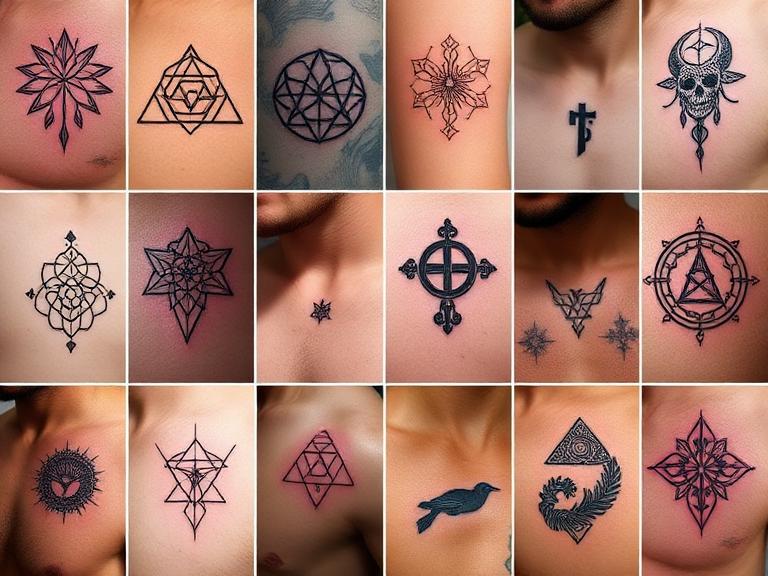
9+ Small Tattoos for Men Ideas in 2026: Technical Execution and Industry Trends
Written by INKSOUL. Welcome to INKSOUL Tattoo Supply — Your Complete Tattoo Solution. We are committed to empowering tattoo artists with reliable, high-performance supplies. Serving retail and wholesale customers worldwide, INKSOUL supplies everything a modern tattoo studio needs — from precision needles to advanced stencil printers and studio lighting.
The landscape of body art has shifted significantly. While massive back pieces and full sleeves remain staples of the industry, the demand for highly detailed, miniature designs has surged. In 2026, small tattoos for men are no longer viewed simply as entry-level ink. They are heavily requested by clients seeking minimalist aesthetics, precise execution, and sophisticated placements. From our experience supplying thousands of studios globally, creating flawless small tattoos for men requires more technical discipline than many large-scale pieces. A single blowout or a shaky line on a one-inch design is immediately noticeable.
In this comprehensive guide, we will analyze the top 9+ small tattoos for men ideas for 2026. We will approach these concepts not just from a design perspective, but from the technical viewpoint of the working artist. We will recommend specific needle configurations, machine choices, and technical approaches to ensure these miniature designs age perfectly and heal sharply.
Table of Contents
Summary Table: Top Small Tattoos for Men in 2026
1. Micro-Realism Animal Portraits
2. Fine-Line Geometric Shapes
3. Minimalist Typography and Script
4. Single-Needle Nature Silhouettes
5. Abstract Dotwork Symbols
6. Nautical and Compass Accents
7. Precise Coordinates and Locations
8. Roman Numeral Dates
9. Subtle Pop Culture Icons
10. Ignorant Style Line Art
Expert Hardware Recommendations for Small Tattoos
Frequently Asked Questions
References
Summary Table: Top Small Tattoos for Men in 2026
Design Idea
Ideal Placement
Recommended Needle Style
Technical Difficulty
Micro-Realism Portraits
Inner Forearm, Calf
Tight Bugpin Liners, Small Curved Mags
Very High
Fine-Line Geometric
Wrist, Tricep
3RL or 5RL
High
Minimalist Script
Ribs, Collarbone
1RL or 3RL
Medium
Nature Silhouettes
Ankle, Forearm
Standard Round Liners
Medium
Abstract Dotwork
Shoulder Cap, Hand
3RL (Stippling technique)
High
Nautical Accents
Bicep, Forearm
Round Liners & Round Shaders
Medium
Coordinates
Chest, Wrist
3RL Tight
Medium
Roman Numerals
Forearm, Neck
5RL or 7RL
Low
Subtle Pop Culture
Ankle, Thigh
Dependent on design
Medium
Ignorant Style
Knee, Elbow
Thick Round Liners (9RL+)
Low
1. Micro-Realism Animal Portraits
One of the most requested small tattoos for men in 2026 involves shrinking high-definition portraits of pets or wildlife into an area no larger than a coin. Micro-realism demands absolute precision. We recommend using premium, ultra-tight bugpin needles to achieve the softest shading gradients without causing excessive trauma to a highly concentrated area of the skin.
Artists attempting these designs must rely on machines with minimal vibration. If you are updating your studio equipment for high-detail work, reviewing the best tattoo machines 2025 will guide you toward rotary pens engineered specifically to reduce hand fatigue during intricate micro-realism sessions.
2. Fine-Line Geometric Shapes
Geometric designs consisting of interlocking circles, triangles, and hexagons remain a staple among small tattoos for men. The challenge here is the unforgiving nature of straight lines and perfect circles. There is no shading to hide a wobbled line. From our experience, achieving crisp geometric shapes requires a machine with a consistent, hard hit to pack the line perfectly in a single pass.
For artists researching reliable equipment for line work, exploring the top tattoo machine brands ensures you invest in a motor capable of delivering the consistent torque required for flawless geometry.
3. Minimalist Typography and Script
Lettering continues to dominate the market for small tattoos for men. Whether it is a single word, a name, or a brief quote, clients are favoring ultra-fine typewriter fonts and elegant, minimalist cursive. To prevent these small letters from blurring together as the skin ages, the artist must master depth control. Utilizing the correct needle size is paramount; utilizing our tattoo needle sizes guide will help you select the precise grouping needed to keep script legible for decades.
4. Single-Needle Nature Silhouettes
Minimalist interpretations of nature—such as a single pine tree, a subtle mountain range, or a small ocean wave—are highly popular small tattoos for men. These designs typically utilize a single-needle approach or a tight 3RL. Because these tattoos are often placed in areas with high movement, like the wrist or ankle, stretching the skin correctly and using high-quality needles is essential. We strongly suggest reviewing the best tattoo needle brands to ensure you are stocking cartridges that do not spit ink or rattle in the tip.
5. Abstract Dotwork Symbols
Dotwork, or stippling, provides a highly textured, unique aesthetic that ages exceptionally well. Small tattoos for men utilizing dotwork often feature abstract runes, mandalas, or geometric fades. Executing stippling efficiently without overworking the skin requires an understanding of machine voltage and needle selection. It is critical to know whether to use a liner or a shader configuration for your dots. Understanding the rs vs rl tattoo needles distinction will allow artists to create varying dot sizes effectively.
6. Nautical and Compass Accents
Nautical imagery, including traditional anchors, compasses, and ship wheels, has been scaled down for the modern era. These small tattoos for men offer a nod to traditional tattooing while maintaining a clean, contemporary footprint. Because these designs often incorporate both strict lining and smooth whip shading, artists need a versatile machine setup. If you are seeking industry-standard equipment that can handle both tasks seamlessly, reviewing the professional tattoo machines available on the market is highly recommended.
7. Precise Coordinates and Locations
Commemorating a specific location through latitude and longitude coordinates is a subtle, deeply personal choice for small tattoos for men. Typically placed on the inner bicep, chest, or ribcage, these designs require absolute typographic uniformity. Similar to fine-line script, coordinates must be executed with precision. A reliable wireless machine allows the artist to maneuver around the client's body to find the perfect angle for straight lettering. Understanding wireless tattoo gun battery life is crucial to ensure your machine does not lose power mid-line.
8. Roman Numeral Dates
Roman numerals remain an elegant way to mark birthdates, anniversaries, or significant life events. When executing these small tattoos for men, the artist must focus on creating sharp, block-like line endings. Depending on the desired thickness of the numerals, the artist may choose a 5RL or 7RL. For newer artists looking to build their confidence with these fundamental designs, selecting the right starter equipment is vital. We recommend consulting our guide on tattoo machines for beginners to find hardware that offers forgiveness and stability.
9. Subtle Pop Culture Icons
Fandom tattoos have evolved from massive, colorful sleeves into minimalist, easily concealable icons. Think of a simple outline of a lightsaber, a minimalist comic book emblem, or a tiny video game artifact. These small tattoos for men allow clients to express their interests professionally. Since these designs often vary wildly in style—some requiring heavy blackwork and others needing delicate linework—ensuring your cartridge system is universally adaptable is key. You can refer to our technical breakdown on do all needles fit tattoo machines to optimize your studio inventory.
10. Ignorant Style Line Art
The "ignorant style" tattoo—characterized by bold, simplistic, deliberately unrefined line work reminiscent of graffiti or doodles—has gained massive traction. Despite the name, executing these small tattoos for men effectively requires intentionality. The lines must be consistently thick and solidly packed with black ink. Using a robust round liner (9RL or 14RL) is common practice here. This style heals incredibly well and offers a bold contrast to the delicate micro-realism trends.
Expert Hardware Recommendations for Small Tattoos
From our experience at INKSOUL, the success of small tattoos for men relies entirely on the artist's ability to control needle depth and machine speed. When working on a canvas that is only two inches wide, you do not have the luxury of blending out a mistake. We recommend utilizing short-stroke rotary machines for black and grey micro-realism, as the softer hit prevents blowouts on delicate skin.
Furthermore, lighting and stencil application are heavily scrutinized in micro-tattooing. Ensure your studio is equipped with glare-free LED lighting and that you are using a high-resolution thermal printer for your stencils. A stencil that rubs off halfway through a micro-portrait can ruin the entire session.
Frequently Asked Questions
Do small tattoos for men fade faster than large tattoos?
Yes and no. The rate of fading depends heavily on placement and technical execution. Small tattoos with very fine lines are more susceptible to UV degradation and cellular breakdown over time compared to bold, traditional pieces. Sunscreen and proper moisturization are strictly required.
What is the best placement for small tattoos for men?
From our experience, areas with minimal sun exposure and low skin stretching are ideal. The inner forearm, upper thigh, and calves hold fine details well. We recommend avoiding fingers, the sides of the feet, and palms, as cellular turnover in these areas causes rapid ink fallout.
How painful are small tattoos compared to large pieces?
Because small tattoos for men typically take under an hour to complete, the body does not usually enter the deep fatigue state associated with full-day sessions. The pain is generally highly manageable, though placements like the ribs or collarbone will inherently cause more discomfort regardless of tattoo size.
References
American Academy of Dermatology (AAD) - Caring for Tattooed Skin
U.S. Food and Drug Administration (FDA) - Tattoos & Permanent Makeup