Thermal printing paper is one of the most important yet misunderstood materials used in tattoo stencil creation. Many artists focus on buying the latest tattoo machine or upgrading to a wireless stencil printer, but overlook the paper that directly determines stencil clarity, transfer quality, and ultimately tattoo accuracy.
From our experience supplying tattoo studios worldwide, stencil failures are often caused by poor thermal printing paper rather than the printer itself. Whether you use a compact wireless printer, a traditional thermal copier, or a modern touchscreen tattoo transfer system, understanding thermal printing paper can save time, reduce rework, and improve consistency.

Quick Answer
Thermal printing paper is a specially coated paper that reacts to heat instead of liquid ink. In tattooing, thermal printing paper is used to create stencil transfers by converting digital artwork into precise line designs that can be transferred onto skin.
- Uses heat instead of ink cartridges
- Produces sharp stencil lines
- Compatible with thermal tattoo printers
- Fast and cost-effective
- Ideal for professional tattoo workflows
- Requires compatible thermal transfer paper
- Not suitable for standard inkjet printing
Table of Contents
What Is Thermal Printing Paper?
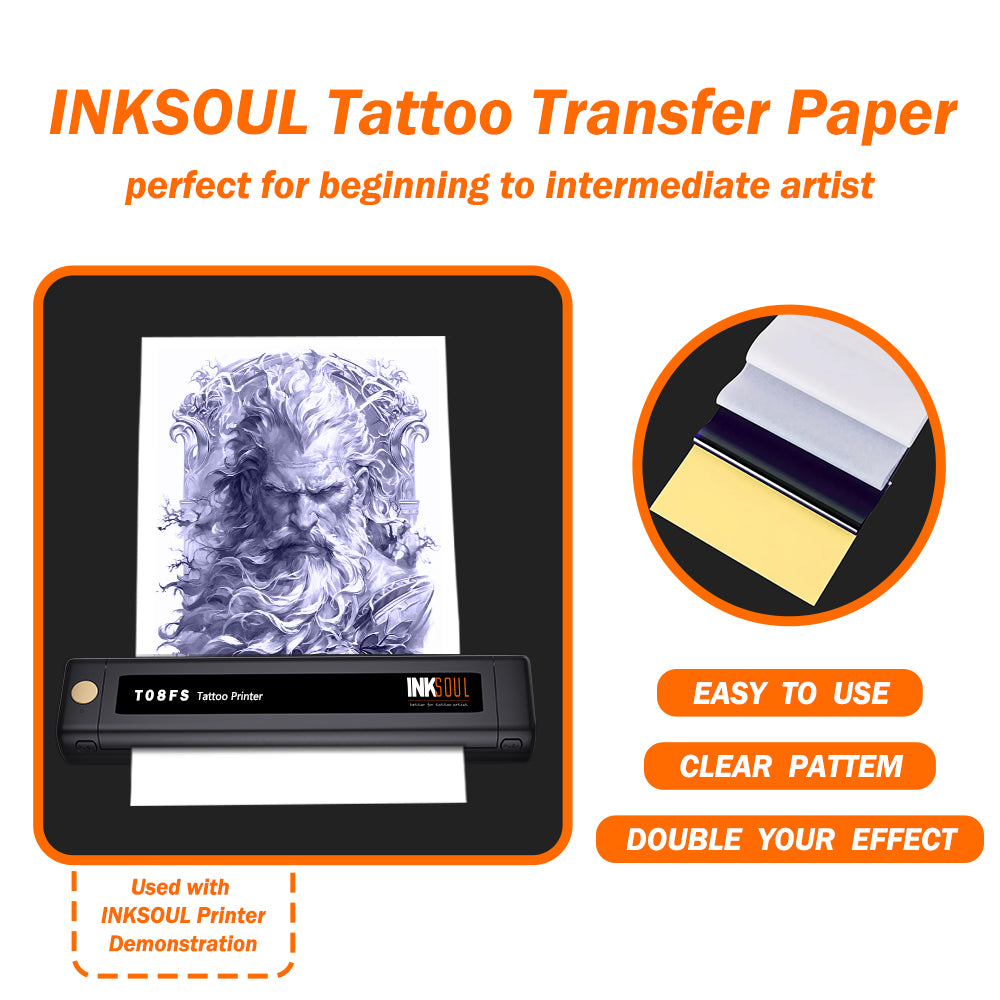
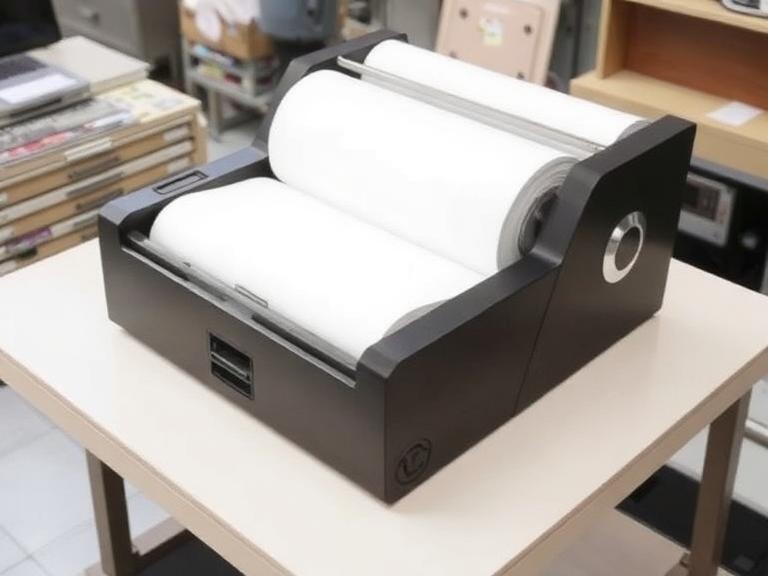
Thermal printing paper is paper coated with a heat-sensitive layer that changes color when exposed to controlled heat. Unlike conventional printers that require ink or toner, thermal printers create images through heat activation.
In tattoo applications, thermal printing paper is commonly referred to as tattoo stencil paper. It allows tattoo artists to print designs that can later be transferred onto skin before tattooing begins.
The technology is simple but highly effective. Modern tattoo studios increasingly use thermal printing paper together with portable stencil printers because the workflow is faster, cleaner, and more predictable than traditional hand-drawn transfers.
Professional Insight: In most professional situations, thermal printing paper delivers more consistent stencil quality than manually traced transfers, especially for complex geometric, fine-line, and realism designs.
How Does Thermal Printing Paper Work?
The process involves three primary components:
- Digital artwork
- Thermal tattoo printer
- Thermal printing paper
The printer head generates controlled heat. The heat activates specific areas of the thermal layer, producing the stencil image without using liquid ink.
When paired with professional equipment such as a wireless tattoo stencil printer, artists can generate clean stencil designs directly from smartphones, tablets, or computers.
Modern systems have significantly improved stencil quality compared to older thermal copiers. New-generation devices can reproduce fine details, smooth curves, and even subtle shadow indications.
Quick Summary Table
| Feature | Thermal Printing Paper |
|---|---|
| Printing Method | Heat activated |
| Ink Required | No |
| Speed | Very fast |
| Tattoo Stencil Quality | Excellent |
| Maintenance Cost | Low |
| Portability | High |
| Studio Use | Professional standard |
Why Tattoo Artists Use Thermal Printing Paper
Professional tattoo artists prioritize precision. Every line transferred onto skin affects the final tattoo.
Thermal printing paper offers several practical advantages:
1. Faster Workflow
Artists can prepare stencils in seconds instead of manually tracing artwork.
2. Better Detail Retention
Fine-line tattoos require accurate stencil reproduction. Thermal systems excel at maintaining line integrity.
3. Consistency
The same design can be reproduced repeatedly with minimal variation.
4. Studio Efficiency
For commercial users handling multiple clients daily, thermal printing paper dramatically improves productivity.
If you are evaluating equipment, our guide on best tattoo stencil printers provides additional insights into printer compatibility.
Benefits of Thermal Printing Paper
| Benefit | Why It Matters |
|---|---|
| Sharp stencil output | Improves tattoo accuracy |
| No ink cartridges | Reduces operating costs |
| Portable workflow | Supports travel artists |
| Fast production | Handles high client volume |
| Easy operation | Minimal learning curve |
| Clean process | Less mess than ink systems |
In our testing, thermal printing paper remains the most efficient option for daily stencil production.
Limitations of Thermal Printing Paper
No product is perfect.
| Limitation | Impact |
|---|---|
| Requires thermal printer | Cannot use all standard printers |
| Heat-sensitive | Storage conditions matter |
| Variable quality among brands | Cheap paper may blur |
| Not ideal for photo printing | Designed for stencil work |
For beginners, the biggest mistake is assuming all thermal printing paper performs equally. Quality differences are substantial.
Thermal Printing Paper vs Inkjet vs Laser Printing
| Factor | Thermal | Inkjet | Laser |
|---|---|---|---|
| Stencil Speed | Excellent | Moderate | Moderate |
| Operating Cost | Low | Medium | Medium |
| Portability | Excellent | Poor | Poor |
| Tattoo Compatibility | Excellent | Limited | Limited |
| Maintenance | Low | Higher | Higher |
We recommend thermal systems for nearly all tattoo studios. The productivity advantage is difficult to ignore.
Artists still asking can a normal printer print tattoo stencils often discover that traditional printers create unnecessary complications.
Who Should Use Thermal Printing Paper?
Ideal Users
- Professional tattoo studios
- Traveling tattoo artists
- Fine-line specialists
- Realism artists
- High-volume commercial shops
- Apprentices learning stencil placement
Who May Not Need It
- Artists creating exclusively hand-drawn stencils
- Hobby users producing very few transfers
- Studios unwilling to invest in thermal printers
For most professional environments, thermal printing paper is no longer optional. It has become standard workflow equipment.
Pros and Cons Table
| Pros | Cons |
|---|---|
| Fast printing | Requires compatible printer |
| Excellent stencil quality | Quality varies by manufacturer |
| Low maintenance | Heat-sensitive storage requirements |
| No ink needed | Limited non-tattoo applications |
| Portable workflow | Premium paper costs more |
Buying Guide: How to Choose Thermal Printing Paper
| Buying Factor | Recommendation |
|---|---|
| Printer Compatibility | Verify manufacturer specifications |
| Transfer Clarity | Choose high-contrast paper |
| Paper Durability | Look for smudge resistance |
| Brand Reputation | Purchase from professional suppliers |
| Volume Requirements | Buy bulk for commercial studios |
| Storage Stability | Heat-resistant packaging preferred |
Artists upgrading their stencil setup should review our detailed tattoo transfer printer guide before purchasing equipment.
Understanding the relationship between printer technology and paper quality is equally important. We also recommend reading our tattoo stencil paper guide.
Common Mistakes When Using Thermal Printing Paper
Using Cheap Generic Paper
Low-cost paper often produces broken lines and inconsistent transfers.
Improper Storage
Heat exposure can prematurely activate thermal coatings.
Wrong Printer Settings
Incorrect density settings may create overly light or overly dark stencils.
Using Non-Compatible Printers
Many beginners attempt to use standard office printers despite compatibility limitations.
If you're unsure about equipment selection, our articles covering regular printer for tattoo transfer paper and thermal tattoo printer systems explain the differences in detail.
How Professionals Approach Thermal Printing
Professional artists focus on workflow reliability rather than simply reducing costs.
From our experience, successful studios standardize three components:
- Consistent stencil paper brand
- Reliable thermal printer
- Documented stencil transfer process
This approach minimizes client delays and improves repeatability.
Many studios now utilize modern devices such as the touch screen tattoo printer because they simplify stencil preparation while maintaining high-quality output.
Expert Recommendation
If your goal is professional-quality stencil production, thermal printing paper remains the best choice available in 2026.
For beginners, we recommend investing in quality paper before upgrading to premium equipment. Good paper can dramatically improve results even on mid-range printers.
For commercial users processing dozens of clients weekly, thermal printing systems are essential. The labor savings alone justify the investment.
INKSOUL Tattoo Supply supports professional studios with complete stencil workflows including thermal printers, transfer paper, machines, needles, lighting systems, and studio accessories. Rather than selling individual products, our focus is helping artists build reliable, efficient tattoo operations.

Whether you use a wireless tattoo stencil printer or a dedicated thermal transfer system, pairing it with premium thermal printing paper will produce noticeably better results.
Frequently Asked Questions
What is thermal printing paper used for?
Thermal printing paper is used to create images or text through heat activation. In tattooing, it is primarily used to produce stencil transfers.
Can thermal printing paper be used in a regular printer?
No. Thermal printing paper is designed for thermal printing technology and generally requires compatible thermal printers.
Is thermal printing paper the same as tattoo stencil paper?
Many tattoo stencil papers use thermal printing technology, although formulations may vary by manufacturer.
How long do thermal stencils last?
Properly applied thermal stencils can remain visible throughout the tattooing process, depending on skin preparation and transfer products used.
Do professional tattoo artists use thermal printers?
Yes. Most modern studios use thermal printers because they improve speed, consistency, and stencil accuracy.
Which thermal printer is best for tattoo artists?
The best choice depends on workflow needs, but portable wireless systems and dedicated tattoo thermal printers remain the most popular options.