The body art industry is undergoing a massive technological revolution. For decades, the defining characteristic of a tattoo has been its absolute permanence. However, a growing demographic of art enthusiasts, professionals, and commitment-averse individuals are driving the demand for a new category of body art: the made-to-fade tattoo. This rising trend leads to one of the most frequently asked questions in our industry today: How do ephemeral tattoos work? To fully comprehend this innovation, one must look beyond the surface of the skin and dive deep into the medical-grade chemistry and biological responses that govern how ink interacts with the human body.

At INKSOUL, we have spent years studying the mechanics of dermal ink implantation. As a leading provider of professional tattoo equipment, we recognize that whether an artist is applying permanent heavy-metal pigments or biodegradable polymers, the quality of the tools directly dictates the quality of the artwork. In this comprehensive, expert-led article, we will dissect the science of made-to-fade ink, explain the application process, and outline the exact equipment required to execute these temporary masterpieces flawlessly. If you have ever wondered how do ephemeral tattoos work, this guide will provide you with the authoritative answers you need.
Table of Contents
- The Science of Fading: How Do Ephemeral Tattoos Work?
- Dermis Delivery: The Application Process
- Essential Equipment for Made-to-Fade Tattoos
- The Disappearance Timeline: What to Expect
- Pros and Cons: Ephemeral vs. Traditional Ink
- Summary Table: How Do Ephemeral Tattoos Work
- Frequently Asked Questions (FAQs)
- References
INKSOUL Tattoo Supply — Your Complete Tattoo Solution
Welcome to INKSOUL. We are committed to empowering tattoo artists with reliable, high‑performance supplies. Serving retail and wholesale customers worldwide, INKSOUL supplies everything a modern tattoo studio needs — from precision needles to advanced stencil printers and studio lighting.

The Science of Fading: How Do Ephemeral Tattoos Work?
To answer the question of how do ephemeral tattoos work, we must first understand why traditional tattoos are permanent. Traditional tattoo inks are formulated using heavy metals, plastics, and large pigment clusters. When these particles are injected into the dermis (the second layer of the skin), the body's immune system recognizes them as foreign invaders. White blood cells, specifically macrophages, rush to the site to consume and remove the ink. However, traditional ink particles are simply too large for the macrophages to carry away. As a result, the macrophages essentially swallow the ink and remain locked in the dermis indefinitely, trapping the color under the skin.
So, how do ephemeral tattoos work differently? The secret lies in the molecular engineering of the ink itself. Ephemeral inks are synthesized using medical-grade, bioabsorbable polymers—similar to the materials used in dissolving surgical sutures. These polymers encapsulate smaller, safe, and biodegradable dye particles. When injected into the dermis, the macrophages attack the ink just as they would a permanent tattoo. Over a period of 9 to 15 months, the moisture and natural processes of the body break down the bioabsorbable polymer matrix. As the polymer degrades, the pigment particles shrink. Eventually, they become small enough for the macrophages to successfully consume and flush out through the body's lymphatic system. Understanding this natural immune response is the key to understanding how do ephemeral tattoos work.
Dermis Delivery: The Application Process
A common misconception among the public is that because the ink is temporary, the application process must be different, perhaps similar to a henna or a sticker tattoo. This is entirely false. When clients ask how do ephemeral tattoos work during application, the answer is that they work exactly like traditional tattoos. The ink must be deposited precisely into the dermis layer. If it is placed too shallow (in the epidermis), it will flake out in a matter of weeks during natural skin shedding. If it is placed too deep (in the subcutaneous tissue), it can cause blowout and scarring, which disrupts the natural fading process.
Because the application technique is identical, professional artists must rely on professional equipment. The use of high-quality Tattoo Machines is non-negotiable. Whether an artist prefers high‑performance rotary & coil for lining, shading, color work, the mechanical precision required to implant biodegradable ink is paramount. Furthermore, the needle configuration plays a massive role in how the ink settles. Artists utilize standard Tattoo Needles, including round liners, shaders, magnums, curved magnums, cartridges, to achieve the desired aesthetic.
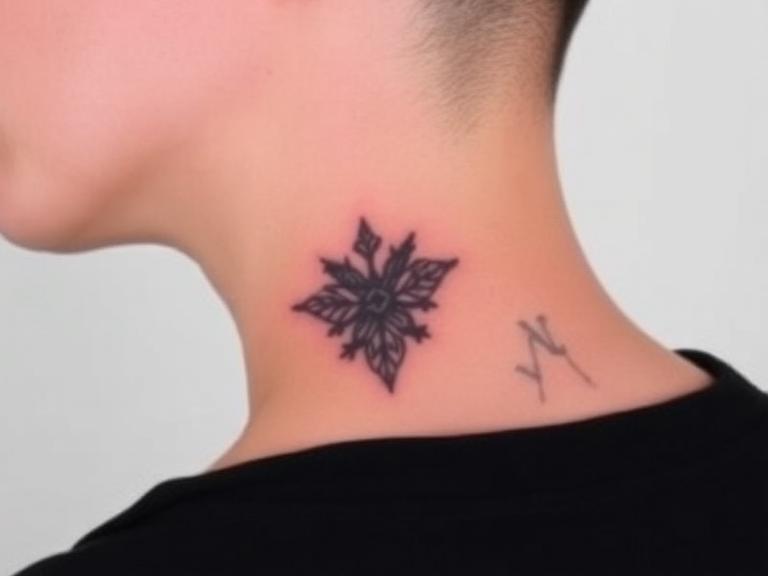
Delicate placements, such as the neck, are incredibly popular for made-to-fade tattoos because they allow clients to test highly visible placements without lifelong commitment. From our experience, using professional equipment makes a tangible difference in neck tattoo outcomes. We recommend exploring the INKSOUL range on our Shopify store to ensure you have the precise tools required for such sensitive dermal applications.
Essential Equipment for Made-to-Fade Tattoos

Now that we have established how do ephemeral tattoos work chemically and mechanically, we must look at the preparation phase. A made-to-fade tattoo demands the exact same level of hygiene, precision, and setup as a permanent piece.
The journey begins with the stencil. Because ephemeral ink can sometimes be more fluid or behave slightly differently under the skin during the initial application, having a flawless stencil is critical. Artists rely heavily on advanced Tattoo Transfer Printers. Devices like the INKSOUL T08FS, T08FD, Phomemo TP31, XIRU XR3 – crisp stencils are the industry standard for transferring intricate designs from tablet to skin. These printers must be paired with premium Tattoo Stencil Paper that is high‑contrast, smudge‑resistant for thermal/ink systems, ensuring the design holds up against green soap and wiping during the tattoo process.
Visibility during the procedure is another critical factor. Proper Tattoo Lighting Supply, featuring adjustable, flicker‑free LED lights for color accuracy, allows the artist to monitor the depth and saturation of the bioabsorbable ink. Finally, a seamless workflow relies on reliable Tattoo Toys & Accessories, including ergonomic grips, responsive foot pedals, steady power supplies, studio essentials. Without consistent voltage from a high-quality power supply, the tattoo machine will fluctuate, leading to uneven ink deposition and, ultimately, an uneven fade.
The Disappearance Timeline: What to Expect
A critical aspect of answering how do ephemeral tattoos work is explaining the timeline of their disappearance. Unlike laser tattoo removal, which shatters permanent ink with targeted light, ephemeral tattoos fade passively through biological degradation. The typical lifespan of a made-to-fade tattoo is between 9 and 15 months, though this can vary based on several physiological factors.
- Placement: Areas of the body with higher blood flow and more frequent friction (such as the hands, wrists, or feet) tend to flush the broken-down polymer particles much faster than areas with more subcutaneous fat and lower friction (such as the outer thigh or upper arm).
- Skin Type and Immune System: Because the fading process relies on the body's lymphatic system and macrophage activity, individuals with highly active immune systems or elevated metabolic rates may experience faster fading.
- Aftercare: Just like traditional body art, a made-to-fade tattoo requires scrupulous aftercare. Infection, excessive scabbing, or sun damage during the initial healing phase can lead to scarring, which can trap the biodegradable ink and prevent it from fading uniformly.
Pros and Cons: Ephemeral vs. Traditional Ink
To fully grasp how do ephemeral tattoos work within the broader context of the industry, it is helpful to compare them directly to traditional permanent tattoos. Below is a breakdown of the advantages and limitations of this new technology.
| Feature | Ephemeral (Made-to-Fade) Tattoos | Traditional Permanent Tattoos |
|---|---|---|
| Ink Composition | Bioabsorbable polymers and specialized degradable dyes. | Heavy metals, plastics, and large pigment clusters. |
| Lifespan | 9 to 15 months (fades entirely). | Permanent (requires painful laser removal to erase). |
| Application Method | Standard tattoo machines and needles. | Standard tattoo machines and needles. |
| Pain Level | Identical to a traditional tattoo. | Identical to an ephemeral tattoo. |
| Best Use Case | Testing placements, trend-based art, avoiding commitment. | Memorial pieces, lifelong body suits, traditional artistry. |
Summary Table: How Do Ephemeral Tattoos Work
For artists and clients looking for a quick reference on the mechanics of this innovative process, we have compiled a summary table detailing the core stages of the ephemeral tattoo lifecycle.
| Stage | Action / Mechanism | Required INKSOUL Equipment |
|---|---|---|
| 1. Preparation | Designing and applying a high-contrast guide to the skin. | Tattoo Transfer Printers, Tattoo Stencil Paper |
| 2. Implantation | Injecting the bioabsorbable polymer ink into the dermis layer. | Tattoo Machines, Tattoo Needles, Tattoo Toys & Accessories |
| 3. Healing | The skin repairs the epidermis while trapping the ink in the dermis. | Tattoo Lighting Supply (for post-application inspection) |
| 4. Degradation | Moisture and body heat begin to break down the polymer matrix over months. | N/A (Biological Process) |
| 5. Elimination | Macrophages consume the shrunken pigment particles and flush them via the lymphatic system. | N/A (Biological Process) |
Frequently Asked Questions (FAQs)
Henna is a plant-based dye that sits entirely on the surface of the skin (the epidermis) and naturally exfoliates away in 1 to 3 weeks. When people ask how do ephemeral tattoos work, they are often surprised to learn it involves needles piercing the skin. Ephemeral ink is injected into the deeper dermis layer using real tattoo machines, lasting 9 to 15 months before the body's immune system breaks it down.
No. Because the application process utilizes the exact same equipment—specifically professional Tattoo Machines and standard Tattoo Needles—the physical sensation is identical. The needle must penetrate to the same dermal depth to ensure the ink sets properly.
Yes, any licensed and trained tattoo artist can apply ephemeral ink. The technique of lining, shading, and packing color remains the same. The artist simply loads the bioabsorbable ink into their cartridges or standard needle setups instead of traditional heavy-metal ink.
A clean, even fade relies heavily on consistent needle depth. If an artist fluctuates their depth, the tattoo will fade patchily. Therefore, relying on high-quality Tattoo Toys & Accessories like stable power supplies, and utilizing crisp stencils from advanced Tattoo Transfer Printers (like the INKSOUL T08FS or Phomemo TP31) is vital for setting up an accurate, professional procedure.
References
- INKSOUL Research and Development Division: The Mechanics of Dermal Ink Implantation (2025).
- Journal of Dermatological Science: Macrophage Response to Bioabsorbable Polymers in Subcutaneous Applications.
- Global Tattoo Industry Report: The Rise of Temporary and Made-to-Fade Alternatives in Modern Body Art.