Entering a tattoo studio to commission a new piece of permanent art is a thrilling experience. However, before the stencil is applied and the machine begins to run, one of the most critical conversations you will have with your artist revolves around budgeting. As the industry evolves into 2026, pricing structures have become more standardized, yet they still retain a degree of complexity. When clients ask for quotes, the most reliable metric studios use as a baseline is the tattoo cost by size. Understanding how dimensions dictate the final price tag empowers you to plan your sessions, select the right artist, and avoid unexpected financial surprises.

From our experience working closely with thousands of professional artists and studio owners across the country, we know that transparency in pricing builds trust between the client and the creator. While variables such as color complexity, placement on the body, and the artist's tenure absolutely influence the final bill, calculating the baseline tattoo cost by size remains the most accurate starting point. In this comprehensive, expert-led guide, we will break down the exact financial expectations for every dimension of body art in the United States for the year 2026, ensuring you are fully prepared for your next appointment.
Table of Contents
1. Understanding Modern Tattoo Pricing Structures
Before analyzing the exact tattoo cost by size, it is vital to understand the operational economics of a modern tattoo studio in 2026. Artists generally utilize two distinct pricing models: flat rates and hourly rates. We recommend that clients always clarify which pricing model is being applied during their initial consultation.
Flat Rates: Flat rate pricing is almost exclusively used for smaller, pre-designed pieces (often referred to as flash art) or tattoos that can be completed in a single, short session. When quoting a flat rate, the artist has already calculated the tattoo cost by size, the complexity of the design, and the cost of disposable materials into one fixed number. This provides total financial predictability for the client.
Hourly Rates: For medium, large, and extra-large custom pieces, hourly rates are the gold standard. In 2026, a junior artist (1 to 3 years of experience) typically charges between $100 and $150 per hour. An experienced artist (5+ years) will charge between $150 and $250 per hour, while highly sought-after, elite artists command $300 to $500+ per hour. When dealing with hourly rates, the tattoo cost by size becomes a function of time; a larger canvas naturally requires more hours of meticulous needlework.
Shop Minimums: It is also crucial to account for the shop minimum. Even if you want a simple dot that takes three minutes to execute, a sterile setup is required. Needles must be opened, barriers must be applied, and medical-grade disinfectants must be used. In the US, shop minimums in 2026 generally range from $80 to $150. Therefore, the absolute lowest tattoo cost by size for any project will default to this minimum threshold.
2. The 2026 Breakdown: Tattoo Cost by Size

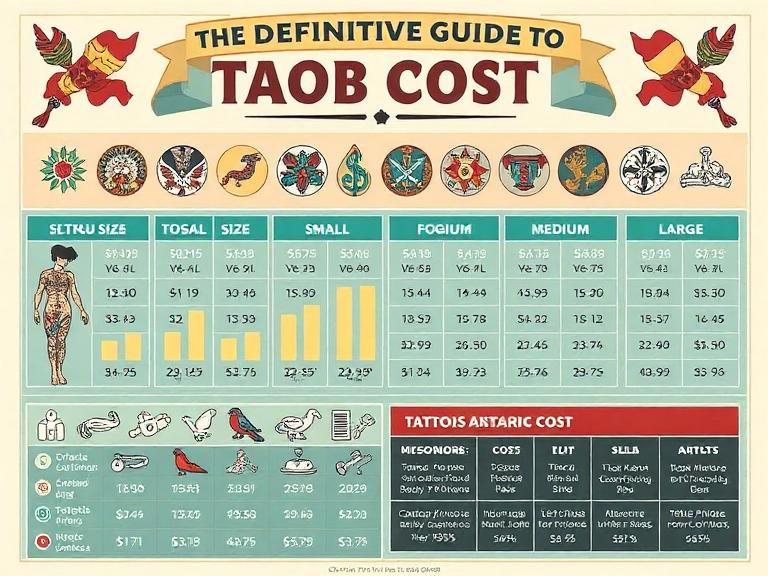
To provide a clear, actionable budget for your next piece, we have categorized the current market rates into distinct dimensional brackets. Keep in mind that these figures represent the national averages for high-quality, reputable studios.
2.1 Tiny Tattoos (Under 2 Inches)
Micro-tattoos, fine-line symbols, tiny hearts, and single-word scripts fall into this category. Despite their minimal footprint, they require a high degree of precision to ensure the ink does not blur or blow out over time. The tattoo cost by size for tiny pieces is heavily dictated by the shop minimum. You can expect to pay between $80 and $150. These pieces typically take 15 to 30 minutes of actual tattooing time, though the consultation, stenciling, and station setup will add to your total appointment duration.
2.2 Small Tattoos (2 to 4 Inches)
Small tattoos are the most common entry point for first-time collectors. This size is ideal for minimalist floral designs, classic American traditional flash, or detailed lettering. Covering an area roughly the size of a credit card, the tattoo cost by size in this bracket ranges from $150 to $300. At this dimension, artists begin to introduce basic shading and perhaps a secondary color. A piece of this size generally takes one to two hours to complete, depending on the intricacy of the linework.
2.3 Medium Tattoos (4 to 6 Inches)
When you graduate to medium-sized designs—roughly the size of an adult hand—the complexity and the required skill level increase significantly. This canvas size allows for stunning portraits, detailed mandalas, and vibrant neo-traditional pieces. The average tattoo cost by size for a 4 to 6-inch piece spans from $300 to $800. Because these tattoos require between two and five hours of chair time, many artists will shift from a flat rate to their standard hourly rate to account for the detailed shading, color packing, and textural work involved.
2.4 Large Tattoos (7 to 12 Inches)
Large tattoos represent a serious commitment of both time and capital. Covering expansive areas such as the outer thigh, the upper back, or the full calf, these designs demand a master's understanding of bodily anatomy and flow. The tattoo cost by size for large pieces generally starts around $800 and can easily exceed $2,500. Projects of this magnitude often require full-day booking blocks (typically 6 to 8 hours) or are split into two separate sessions to allow the skin to heal and to manage client fatigue.
2.5 Extra Large Pieces and Sleeves
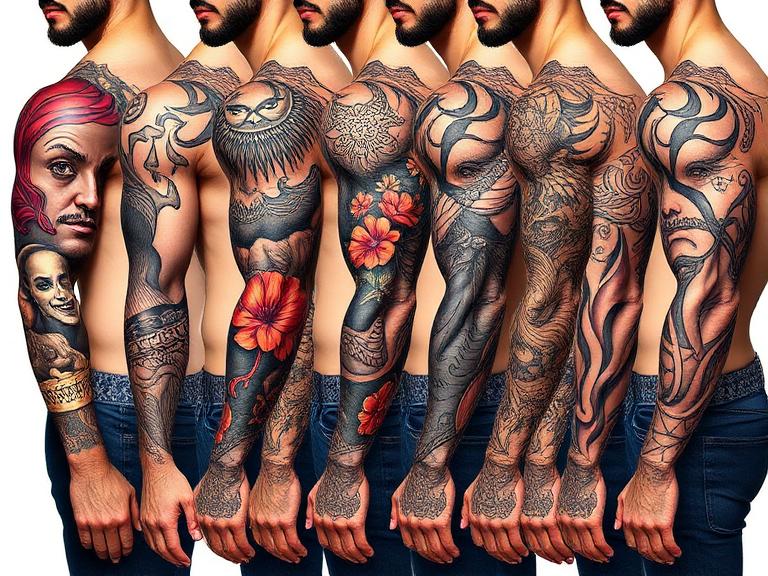
At the apex of the pricing hierarchy are full sleeves (arm or leg), full back pieces, and entire chest panels. When discussing massive, cohesive projects, the traditional tattoo cost by size calculation morphs into a long-term investment strategy. These pieces are never completed in a single sitting.
- Half Sleeves: Covering from the shoulder to the elbow, or the elbow to the wrist, half sleeves average between $1,000 and $3,000.
- Full Sleeves: A cohesive design wrapping the entire arm will cost anywhere from $3,000 to $6,000+.
- Full Back Pieces: The largest single canvas on the human body, a highly detailed back piece by a veteran artist can range from $4,000 to $10,000+, often taking 30 to 50 hours of total needle time spread across several months.
3. Beyond Size: Additional Factors Influencing Price
While establishing a baseline using the tattoo cost by size is incredibly helpful, we recommend factoring in several other critical variables that can cause the final price to fluctuate.
Color vs. Black and Grey: Creating smooth, saturated color gradients requires significantly more time, multiple passes, and a larger variety of inks than standard black and grey shading. If you opt for full-color realism or vibrant watercolor styles, expect the final price to increase by 15% to 30% compared to a similarly sized black and grey piece.
Body Placement: The human body is not a flat, uniform canvas. Tattoos placed on highly sensitive or notoriously difficult areas—such as the ribs, the neck, the stomach, or the hands and feet—require the artist to work slower and stretch the skin more carefully. Because these areas take longer to tattoo properly, the overall cost increases, even if the strict tattoo cost by size metric suggests a lower price.
Design Complexity: A 5-inch geometric outline will always cost less than a 5-inch hyper-realistic micro-portrait. The sheer density of the details, the required needle groupings, and the concentration demanded from the artist directly impact the duration of the appointment.
4. The INKSOUL Advantage: Empowering Studio Excellence
From our experience at the manufacturing level, we know that an artist's efficiency, speed, and precision are inextricably linked to the quality of the equipment they utilize. When an artist is fully equipped with reliable, high-performance tools, they can work faster and produce cleaner results, ensuring that your investment in the tattoo cost by size yields absolute perfection.
Welcome to INKSOUL Tattoo Supply — Your Complete Tattoo Solution. We are committed to empowering tattoo artists with reliable, high-performance supplies. Serving retail and wholesale customers worldwide, INKSOUL supplies everything a modern tattoo studio needs. Beyond basic hardware, we provide a one-stop inventory where each product is meticulously chosen for quality, compliance, and performance.
We recommend that studios looking to optimize their workflow and justify premium hourly rates integrate the following INKSOUL product ranges into their daily operations:
- Tattoo Machines: We offer high-performance rotary and coil machines tailored for every specific style, including precision lining, soft shading, and dense color work.
- Tattoo Needles: A full, uncompromising selection of round liners, round shaders, magnums, curved magnums, and advanced safety cartridges designed for flawless ink deposit.
- Tattoo Transfer Printers: Time spent manually redrawing a failed stencil is time wasted. We supply reliable thermal and wireless printers for crisp, immaculate stencil transfers, featuring industry-leading models like the INKSOUL T08FS, Phomemo TP31, and XIRU XR3.
- Tattoo Stencil Paper: High-contrast, smudge-resistant transfer paper that is fully compatible with both thermal and ink-based printing systems.
- Tattoo Lighting Supply: Precision requires vision. Our adjustable, flicker-free LED lights are specifically tailored for studio visibility, reducing eye strain and ensuring absolute color accuracy during long sessions.
- Tattoo Toys & Accessories: We provide the essential workspace upgrades, ergonomic grips, responsive foot pedals, and stable power supplies that keep a bustling studio running seamlessly.
5. Summary Table: Average Tattoo Cost by Size
To assist in your financial planning, we have consolidated the 2026 national averages into a quick-reference guide. Please remember that these are baseline estimates for the tattoo cost by size, and premium artists will command rates at the higher end of these spectrums.
| Tattoo Size Category | Approximate Dimensions | Estimated Time Required | Average 2026 Cost Range |
|---|---|---|---|
| Tiny / Micro | Under 2 Inches | 15 - 45 Minutes | $80 – $150 (Shop Minimum) |
| Small | 2 to 4 Inches | 1 - 2 Hours | $150 – $300 |
| Medium | 4 to 6 Inches | 2 - 5 Hours | $300 – $800 |
| Large | 7 to 12 Inches | 5 - 8+ Hours (Full Day) | $800 – $2,500 |
| Half Sleeve | Shoulder to Elbow | 10 - 20 Hours | $1,000 – $3,000 |
| Full Sleeve | Shoulder to Wrist | 30 - 50+ Hours | $3,000 – $6,000+ |
6. Frequently Asked Questions (FAQs)
Why does a tiny 1-inch tattoo still cost over $100?
Regardless of how small the design is, the artist must still utilize fresh, sterile needles, high-quality ink, medical-grade barriers, and extensive sanitation protocols. The shop minimum covers the cost of these single-use materials and the artist's setup time, ensuring your health and safety are never compromised.
Is it cheaper to get pre-drawn flash art or a custom design?
Pre-drawn flash art is generally more affordable. Because the artist has already designed the piece and likely tattooed it before, they can execute it rapidly and efficiently. Custom designs require off-the-clock drawing, sizing, and revision time, which is factored into the final hourly rate or custom flat rate.
How does color impact the tattoo cost by size?
Color tattoos require multiple ink caps, frequent needle switching, and layered blending techniques to achieve smooth saturation without traumatizing the skin. This meticulous process adds significant time to the appointment, generally increasing the overall cost by 15% to 30% compared to black and grey work.
How much should I tip my tattoo artist in 2026?
Tipping remains a standard practice in the US service and body art industries. Industry standards indicate that tipping between 15% and 20% of the total session cost is customary and highly appreciated, recognizing the intense physical labor and customized artistry provided during your appointment.