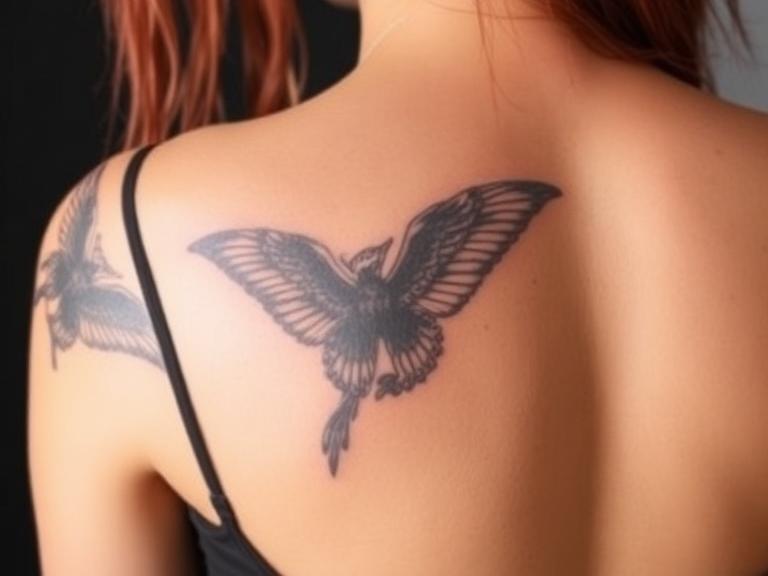

When clients are preparing to invest a significant amount of money into permanent body art, the most frequent question that arises in the consultation room revolves around scale and coverage. Specifically, determining exactly how big is a $3,000 tattoo is a complex inquiry that goes far beyond simple square inches. In the highly specialized world of premium tattooing, a $3,000 tattoo is a major financial commitment that reflects not just the physical footprint of the ink on the skin, but the extensive experience of the artist, the geographic location of the studio, and the excruciating level of detail required by the chosen artistic style.

From our experience working closely with elite tattoo artists and supplying top-tier transfer technology to high-end studios globally, we know that pricing structures can vary wildly. A $3,000 tattoo executed by a world-renowned hyper-realism specialist in a major metropolitan hub will look vastly different in size compared to a $3,000 tattoo applied by a highly skilled traditional artist in a mid-western city. In this authoritative industry guide, we will break down the variables that dictate tattoo pricing, explore how different artistic styles impact the final size of your piece, and provide clear, practical estimates so you know exactly what to expect when you commission a $3,000 tattoo.
Table of Contents
1. The Economics of High-End Body Art
To accurately visualize a $3,000 tattoo, one must first understand how professional tattoo artists calculate their fees. The industry standard heavily relies on hourly rates or full-day session rates. Currently, highly skilled, established artists charge anywhere from $150 to $300 per hour. Elite artists, particularly those with massive social media followings or television exposure, may charge upward of $400 to $500 per hour. Therefore, the size of a $3,000 tattoo is directly correlated to how many hours of labor that budget secures.
If you are working with an artist who charges $200 per hour, your budget affords you exactly 15 hours of tattooing. In the context of a $3,000 tattoo, 15 hours is generally split across two full-day sessions. During 15 hours of focused needle time, a proficient artist can cover a substantial amount of skin. However, we recommend factoring in that not all of this time is spent actively tattooing. A portion of this billed time includes the final consultation, resizing the design, applying the stencil, and allowing for brief sanitary breaks. Therefore, when you pay for a $3,000 tattoo, you are also paying for the professional preparation that ensures the final application is flawless.
Geographic location is another massive variable. A $3,000 tattoo commissioned in New York City, Los Angeles, or London will inherently be smaller than a $3,000 tattoo commissioned in a smaller suburban market. The overhead costs of operating a sterile, fully licensed studio in a high-rent district are passed down to the client. Despite this, we recommend prioritizing the artist's portfolio and hygienic standards over finding the largest possible piece for your budget. A smaller, perfectly executed $3,000 tattoo is vastly superior to a massive, poorly saturated piece that will require expensive laser removal later.
2. Style Complexity vs. Square Footage
The artistic style you choose is the ultimate determining factor in how big a $3,000 tattoo will be. The density of detail, the necessity for smooth color blending, and the specific needle configurations required all dictate the speed at which the artist can work.
Color Realism and Hyper-Realism
Color realism is arguably the most time-consuming style in the tattoo industry. Achieving photographic accuracy requires the artist to build multiple layers of pigment, slowly transitioning between incredibly subtle shade variations. There are no thick, bold outlines to rely on. Because of this meticulous, slow-paced process, a $3,000 tattoo in the color realism style is usually relatively compact. You can expect a $3,000 tattoo in this category to cover the outer forearm, the calf, or a localized section of the thigh. It typically equates to an area roughly the size of standard printer paper, taking the full 15 to 20 hours to complete.
American Traditional and Neo-Traditional
Conversely, American Traditional and Neo-Traditional styles are designed for visual impact and longevity. These styles utilize bold, heavy black outlines, stark black shading, and solid, saturated color fills. Because the artist uses large magnum needles to pack solid color quickly, these tattoos progress much faster than realism. A $3,000 tattoo in the American Traditional style is going to be exceptionally large. From our experience, this budget could easily fund an entire patchwork sleeve on the arm, a massive and complete chest piece, or a striking, full-coverage back piece. The square footage you receive for a $3,000 tattoo in this style is immense.
Black and Grey Wash
Black and grey tattooing sits comfortably in the middle of the spectrum. Without the need to constantly clean the needle and switch between dozens of color ink caps, the artist can move efficiently. A $3,000 tattoo executed in smooth black and grey can easily encompass a full half-sleeve (from the shoulder down to the elbow) wrapping entirely around the arm, or a highly detailed, sprawling thigh piece. It offers an excellent balance between intricate detail and substantial bodily coverage.
3. Estimating the Physical Dimensions of a $3,000 Tattoo
While the variables of speed and style are critical, clients still desire concrete physical estimates. Based on the industry average of a mid-to-high-tier professional operating at $200 an hour, a $3,000 tattoo buys you roughly 15 hours of continuous tattooing. What does 15 hours actually cover?
For the average adult arm, 15 hours is enough to complete a highly detailed half-sleeve. If the design features a lot of negative space (areas where the natural skin tone acts as a color), a $3,000 tattoo might stretch into a three-quarter sleeve. If you are focusing on the leg, a $3,000 tattoo will comfortably cover the entire outer thigh or wrap entirely around the lower calf and shin. For torso work, this budget secures a complete sternum-to-navel stomach panel or a fully realized, edge-to-edge upper back piece.
We recommend keeping in mind that the specific anatomy being tattooed also affects the speed, and therefore the size, of a $3,000 tattoo. Areas with highly elastic skin, such as the ribs, stomach, or inner bicep, require the artist to stretch the skin forcefully and work slower to prevent blowouts (ink spreading beneath the skin). Consequently, a $3,000 tattoo on the ribs may be slightly smaller than a $3,000 tattoo on the sturdy, taut skin of the outer thigh.
4. The Role of Technology in Premium Tattoos
When an individual commits to a $3,000 tattoo, they are rightfully expecting absolute perfection. The margin for error at this premium price point is non-existent. From our experience supplying elite studios, the foundation of a flawless, high-end piece is the initial stencil transfer. If the stencil is smudged, improperly sized, or lacks fine detail, the entire 15-hour session is compromised. This is why top-tier artists rely on advanced technology to guarantee their clients receive the exact value of their $3,000 tattoo.

We highly recommend integrating professional hardware like the INKSOUL® T08FD Tattoo Transfer Printer into the workflow. This device bridges the gap between digital design and physical application, ensuring that the intricate details you are paying for are perfectly mapped onto the skin before a single needle is used. It is designed specifically for the mobility and precision required by modern tattoo professionals.
- Smart Touch Screen: A 2-inch interface allows for fingertip parameter adjustments, completely eliminating the need for a cumbersome PC connection for settings. This speeds up the consultation phase, giving you more actual tattooing time for your $3,000 tattoo.
- Unmatched Mobility: With a built-in 1200mAh battery and a highly portable weight of only 745g, it is completely wireless. Artists can bring the printer directly to the station, making collaborative sizing adjustments on the spot.
- Flawless Precision: Printing at a controlled speed of 10-15mm/s ensures that complex geometric patterns, fine line work, or micro-realism details are transferred flawlessly without the machine "eating" or jamming the thermal paper.
- Universal Compatibility: It supports standard print widths of 210-216mm (A4 size), making it compatible with all standard tattoo transfer papers on the market, ensuring the largest possible stencils for your $3,000 tattoo.
By utilizing precision tools like the INKSOUL® T08FD, artists eliminate guesswork, streamline their preparation time, and ensure that every minute of your budget is spent applying world-class art to your skin.
5. Summary Table: Size Estimates by Style
To provide a clear, quick-reference guide on how big a $3,000 tattoo will be, we have compiled this summary table comparing different tattoo styles against their estimated coverage areas and required timeframes.
| Tattoo Style | Average Hourly Rate | Estimated Hours for $3,000 | Estimated Size / Body Coverage for a $3,000 Tattoo |
|---|---|---|---|
| Hyper-Realism (Color) | $250 - $350 | 8 - 12 Hours | Outer forearm, single calf, or focused portrait piece. |
| Realism (Black & Grey) | $200 - $300 | 10 - 15 Hours | Half-sleeve (shoulder to elbow), full thigh panel. |
| Japanese Traditional (Irezumi) | $180 - $250 | 12 - 16 Hours | Full forearm sleeve (wrapping), large chest panel. |
| American Traditional | $150 - $200 | 15 - 20 Hours | Full arm patchwork sleeve, massive full back piece. |
| Fine Line / Geometric | $200 - $300 | 10 - 15 Hours | Intricate full forearm wrap, large intricate sternum/torso piece. |
6. Frequently Asked Questions (FAQs)
Yes. Tipping etiquette in the tattoo industry applies regardless of the total cost. While 20% is the standard for smaller pieces, tipping on a $3,000 tattoo is often handled slightly differently. Many clients tip a flat rate of $100 to $200 per full-day session. We recommend discussing tipping preferences with the studio manager, but acknowledging the artist's hard work with a gratuity is always a sign of a respectful client.
It is highly unlikely and medically unadvisable. A $3,000 tattoo generally requires 15 to 20 hours of needle time. The human body typically hits an endorphin wall after 6 to 8 hours of continuous tattooing, after which the pain becomes incredibly difficult to manage. Furthermore, the skin becomes overly traumatized and will stop accepting ink properly. You should expect to split a $3,000 tattoo into two or three full-day sessions.
Typically, yes. Most reputable artists include the drawing and preparation time within their overall quote or hourly rate. However, when commissioning a $3,000 tattoo, the artist will usually require a non-refundable deposit (often $200 to $500) to secure the appointment dates and cover their drawing time in case of a cancellation. This deposit is then deducted from the final cost of the tattoo.
All tattoos age with the skin, but a $3,000 tattoo executed by a highly skilled professional using premium pigments will hold up significantly better than a cheaper alternative. Proper depth penetration and solid saturation prevent premature fading. To protect your investment, we strongly recommend strict adherence to the artist's aftercare instructions and the daily application of a high-SPF sunscreen over the tattooed area whenever exposed to direct sunlight.
7. Industry References
To ensure the accuracy of our pricing estimates and technical advice regarding the application of a $3,000 tattoo, we constantly monitor the standards set by leading authorities within the professional body art and dermatology sectors. We recommend consulting these resources for further education:
- Alliance of Professional Tattooists (APT) - An organization dedicated to promoting health, safety, and hygiene within the tattoo industry.
- American Academy of Dermatology (AAD) - Providing peer-reviewed medical guidelines on tattoo aftercare, skin trauma healing, and safe pigment application.
- Occupational Safety and Health Administration (OSHA) - Establishing the strict bloodborne pathogen standards and cross-contamination protocols that justify the overhead costs of premium tattoo studios.