Welcome to INKSOUL. We are committed to empowering tattoo artists with reliable, high-performance supplies. Serving retail and wholesale customers worldwide, INKSOUL supplies everything a modern tattoo studio needs — from precision needles to advanced stencil printers and studio lighting. As the industry continues to evolve, the integration of digital tools has streamlined the preparation process for artists globally. However, to truly master your craft, it is essential to understand both the capabilities and the limitations of using a tattoo stencil printer.

From our experience equipping top-tier tattoo studios, we recognize that while thermal and wireless printers save countless hours, they are not without their structural and mechanical boundaries. Acknowledging the limitations of using a tattoo stencil printer allows artists to adapt their workflows, choose the right supplementary equipment, and avoid costly mistakes during the application process. In this comprehensive guide, we will dissect the technical constraints of these devices, explore how to mitigate them, and demonstrate how INKSOUL Tattoo Supply provides your complete tattoo solution.
Table of Contents
- Summary Table: Core Limitations and Solutions
- Resolution and Tonal Constraints
- Size and Dimension Restrictions
- Tattoo Stencil Paper Compatibility Issues
- Thermal Overheating and Hardware Maintenance
- How INKSOUL Mitigates These Limitations
- The Role of Supporting Studio Equipment
- Expert Recommendations for Optimal Stencil Printing
- Frequently Asked Questions (FAQs)
- References
Summary Table: Core Limitations and Solutions
To provide a quick overview, we have compiled a summary table detailing the primary limitations of using a tattoo stencil printer alongside our expert recommended solutions. Understanding these factors is the first step toward optimizing your studio's efficiency.
| Identified Limitation | Technical Cause | INKSOUL Recommended Solution |
|---|---|---|
| Loss of Soft Shading | Thermal printers operate in binary (black or white), unable to print gray washes. | Utilize high-contrast line work digital preparation; rely on your expertise with Tattoo Machines for shading. |
| Width Restrictions | Most portable printers have a maximum print width of 210-216mm (A4 size). | Segment large designs digitally and print in tiles using reliable Tattoo Transfer Printers. |
| Paper Jamming & Wrinkling | Uneven roller tension or low-quality carbon paper. | Use premium INKSOUL Tattoo Stencil Paper and devices with precision rollers like the INKSOUL T08FS. |
| Thermal Distortion | Continuous printing causes the thermal head to overheat, blurring lines. | Pace your printing; select devices with intelligent thermal management. |
| Battery Depletion | High-drain thermal printing drains standard batteries rapidly. | Upgrade to devices with high-capacity batteries, such as the INKSOUL T08FD with a 1200mAh battery. |
Resolution and Tonal Constraints
One of the most prominent limitations of using a tattoo stencil printer is its inability to accurately reproduce soft gradients and gray washes. Thermal printers operate by applying heat to specialized carbon paper, transferring the carbon onto the tracing sheet. Because the thermal head either applies heat or it does not, the resulting print is binary. For artists specializing in micro-realism or black and gray portraiture, this presents a significant workflow challenge.
From our experience, artists must digitally manipulate their reference images before sending them to the printer. Converting soft shading into high-contrast line art or stippling patterns is required. If an artist expects a thermal printer to output a perfect photographic reproduction, they will be severely disappointed by the dark, blocky carbon transfers that result. Understanding this specific limitation ensures that the artist relies on their fundamental skills with Tattoo Machines and Tattoo Needles rather than expecting the stencil to dictate the exact shading values.
Size and Dimension Restrictions
Another major factor when discussing the limitations of using a tattoo stencil printer involves physical dimensional constraints. The vast majority of portable and studio-grade thermal printers are designed to accommodate standard A4 or US Letter sizes. For a massive back piece, a full sleeve, or a sprawling chest panel, a single print width of 210-216mm is simply insufficient.
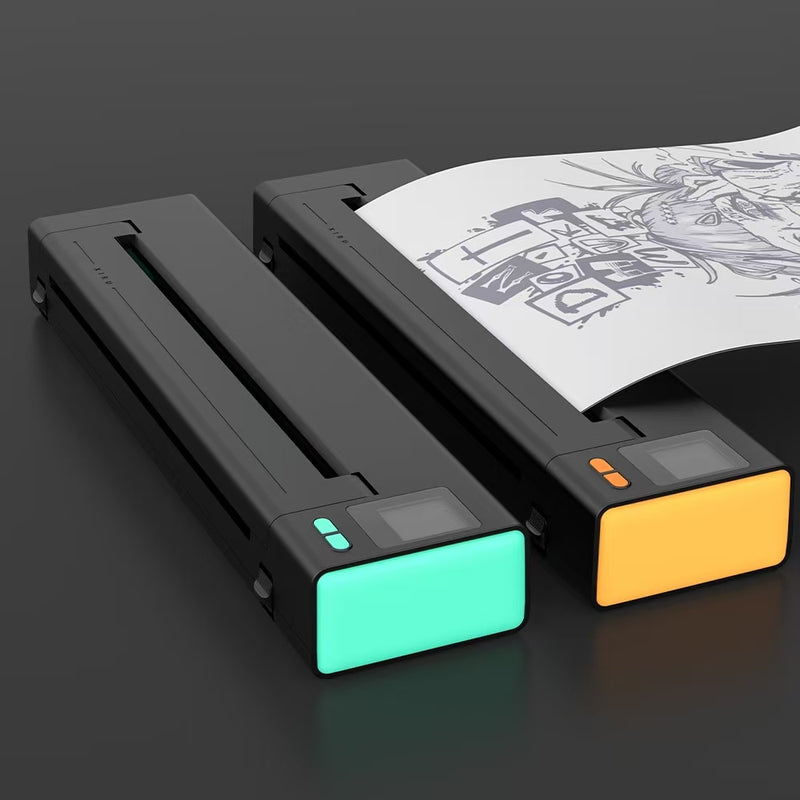
We recommend overcoming this spatial limitation by utilizing digital editing software to slice the large-scale design into manageable segments. Printing these segments individually and meticulously aligning them on the client's skin requires patience and precision. While this highlights one of the physical limitations of using a tattoo stencil printer, utilizing high-quality Tattoo Transfer Printers such as the Phomemo TP31 or the XIRU XR3 ensures that the edges of your segmented prints remain crisp and easy to align.
Tattoo Stencil Paper Compatibility Issues
The mechanical efficiency of any printer is heavily dependent on the substrate fed into it. One of the often-overlooked limitations of using a tattoo stencil printer is its sensitivity to low-grade paper. If the carbon sheet is too thick, the thermal head cannot penetrate adequately, resulting in faded lines. If the paper is prone to wrinkling, it will jam the internal rollers, destroying the design and potentially damaging the printer's delicate mechanisms.
To combat this, INKSOUL provides a one-stop inventory for tattoo studios. Each product is chosen for quality, compliance, and performance. We highly advise pairing your hardware exclusively with premium Tattoo Stencil Paper. High-contrast, smudge-resistant transfer paper compatible with thermal and ink-based systems ensures that the limitations of using a tattoo stencil printer are not exacerbated by inferior consumables. The correct paper guarantees that the stencil adheres securely to the skin, resisting erasure during long sessions.
Thermal Overheating and Hardware Maintenance
Thermal printing relies on controlled heat. However, during busy conventions or fully booked studio days, running multiple complex stencils back-to-back can cause the thermal print head to overheat. When evaluating the limitations of using a tattoo stencil printer, thermal distortion is a critical concern. An overheated print head can cause the carbon to bleed, transforming crisp, delicate linework into thick, illegible smudges.
Our studio testing indicates that pacing your printing process and keeping the device free of carbon dust buildup is essential. Regular maintenance extends the life of the machine. Furthermore, portable printers are restricted by their power reserves. A low battery can lead to inconsistent roller speeds and faded prints. This highlights the importance of selecting modern hardware with optimized power management systems.
How INKSOUL Mitigates These Limitations

Beyond needles and pens, INKSOUL provides a one-stop inventory for tattoo studios. We understand the limitations of using a tattoo stencil printer, which is why we engineer hardware designed to push past standard boundaries.
To directly address the historical limitations of using a tattoo stencil printer, we developed the INKSOUL® T08FD tattoo transfer printer touch screen. This device represents the pinnacle of thermal transfer technology. The integration of a 2-inch Touchscreen removes the guesswork from device operation, allowing for precise control over print settings. With a print speed of 10-15mm/s, it balances rapid output with meticulous thermal control, preventing the overheating issues common in older models.

Furthermore, the INKSOUL® T08FD tattoo transfer printer touch screen boasts a robust 1200mAh battery, ensuring continuous, reliable operation throughout long convention days without suffering from voltage drops that ruin stencil clarity. With a print width of 210-216mm and a highly portable footprint (Dimensions: 325x67x40mm, Weight: 745g), it perfectly accommodates premium Tattoo transfer paper while maintaining ultimate studio flexibility. Alongside our other reliable thermal and wireless printers for crisp stencil transfers—like the INKSOUL T08FS, Phomemo TP31, and XIRU XR3—we provide solutions that minimize the operational limitations of using a tattoo stencil printer.
The Role of Supporting Studio Equipment
Even with the best printer on the market, the application and execution of the tattoo depend on the holistic studio environment. Because the limitations of using a tattoo stencil printer dictate that the stencil is a structural guide rather than a finished piece of art, the artist must rely on superior lighting and mechanical tools to bring the design to life.
Proper illumination is critical when reading a stencil on the skin, especially when dealing with complex or tightly clustered lines. This is why we offer premium Tattoo Lighting Supply—adjustable, flicker-free LED lights tailored for studio visibility and color accuracy. Perfect lighting reduces eye strain and ensures that no detail of the stencil is missed during the outline phase.
Once the stencil is applied, the execution relies entirely on the artist's tools. INKSOUL supplies high-performance rotary and coil machines for every style — lining, shading, and color work. Our comprehensive range of Tattoo Machines ensures that whether you are pulling a bold traditional line or executing delicate pepper shading, your equipment performs flawlessly. To complement these machines, we offer a full selection of Tattoo Needles: round liners, round shaders, magnums, curved magnums and cartridges. Additionally, our inventory includes workspace upgrades, grips, foot pedals, power supplies, and studio essentials under our Tattoo Toys & Accessories category, ensuring your entire workflow is fully optimized.
Expert Recommendations for Optimal Stencil Printing
From our experience serving elite artists globally, we recommend the following best practices to navigate the limitations of using a tattoo stencil printer:
- Pre-Process Your Designs: Always use photo-editing software to increase the contrast, sharpen the lines, and remove soft gray backgrounds before sending the image to the printer.
- Maintain the Print Head: Clean the thermal head regularly with isopropyl alcohol wipes to prevent carbon buildup, which causes lines to blur.
- Manage Battery Life: For wireless units like the INKSOUL® T08FD tattoo transfer printer touch screen, ensure the 1200mAh battery is fully charged before a heavy session to maintain a consistent print speed of 10-15mm/s.
- Use Compatible Paper: Avoid cheap, counterfeit transfer papers. Stick to authorized INKSOUL Tattoo Stencil Paper for guaranteed crispness and smudge resistance.
Frequently Asked Questions (FAQs)
What are the primary limitations of using a tattoo stencil printer?
The main limitations include the inability to print soft gradients (gray washes), physical size restrictions (usually limited to A4/Letter widths), potential thermal distortion if the machine overheats, and susceptibility to paper jams if low-quality transfer paper is used.
Can a thermal tattoo printer print in color?
No. One of the strict limitations of using a tattoo stencil printer that utilizes thermal technology is that it only transfers carbon from the master sheet to the tracing paper, resulting in a monochromatic (dark purple/black) stencil. Color must be referenced from your digital tablet or physical printout.
How does the INKSOUL T08FD address traditional printer issues?
The INKSOUL® T08FD tattoo transfer printer touch screen mitigates common issues by offering a 2-inch touchscreen for precise control, a steady 10-15mm/s print speed to prevent thermal tearing, and a high-capacity 1200mAh battery housed in a compact 325x67x40mm, 745g chassis, ensuring reliable, high-quality output.
Do I need specific paper for my tattoo stencil printer?
Yes. Using standard office paper or cheap carbon copies will damage your printer and yield unusable stencils. We highly recommend using dedicated Tattoo Stencil Paper, specifically formulated for thermal and ink-based systems to ensure smudge-resistant, high-contrast transfers.
References
To further understand the safety, hygiene, and technological standards in the modern tattoo industry, we encourage artists and studio managers to consult authoritative regulatory and academic resources: