

Entering the tattoo industry in 2026 is an exciting venture, but it requires a significant financial commitment. Whether you are an apprentice just starting your journey, a studio owner upgrading your facility, or a seasoned artist looking to refresh your gear, understanding the financial landscape is crucial. The tattoo industry has evolved rapidly over the last decade, moving from heavy coil machines to sophisticated wireless pens, and from hand-tracing stencils to digital thermal printing. Consequently, the answer to how much do tattoo supplies usually cost has shifted as technology advances.

In this guide, we will break down the costs associated with setting up a professional tattoo station in 2026. We will analyze the price of hardware, consumables, sterilization equipment, and furniture. By the end of this article, you will have a clear, itemized understanding of the investment required to create safe, high-quality body art.
1. Primary Hardware: Machines and Power
The most significant upfront cost for any artist is the tattoo machine. In 2026, the industry standard has firmly shifted toward wireless rotary pen-style machines. While traditional coil machines are still used by purists, wireless pens offer superior ergonomics and ease of use. When asking how much do tattoo supplies usually cost, the machine is the variable that swings the widest.
The Wireless Revolution
High-end machines from legacy brands can cost upwards of $1,000 to $1,500. However, manufacturing advancements have allowed for professional-grade equipment at a fraction of that price. The modern artist looks for versatility—specifically, a machine with an adjustable stroke length. This allows one machine to handle lining, shading, and color packing, rather than needing three separate guns.
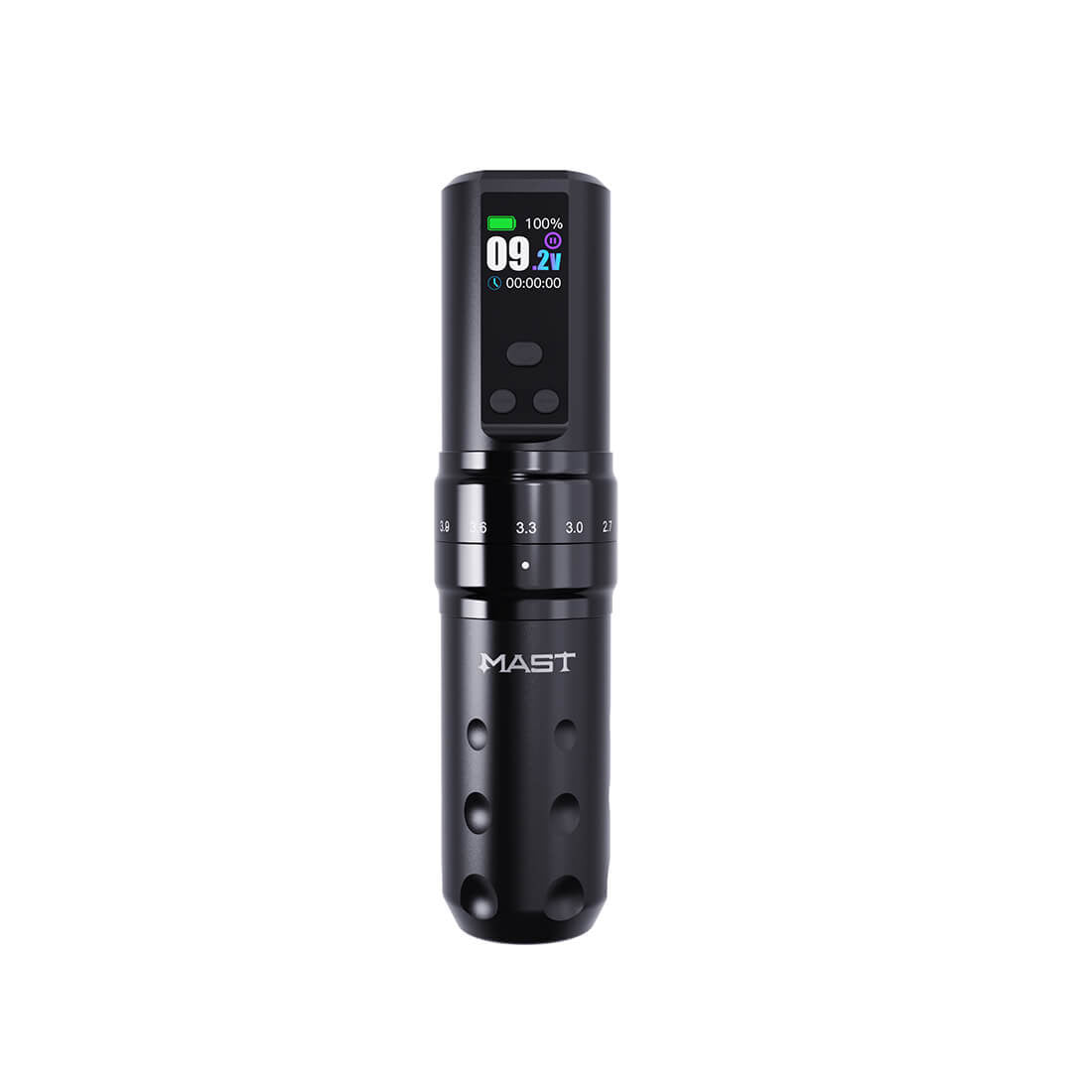
This is a prime example of 2026 technology offering incredible value. The Mast Fold 2 Pro features a variable stroke length of 2.4mm to 4.2mm. This versatility means you do not need to buy multiple machines for different techniques. It is wireless, reducing the need for expensive clip cords and foot pedals, and it offers the precision required for professional work.
If you opt for a traditional wired setup, remember to factor in the cost of a power supply ($100-$300), a high-quality foot pedal ($30-$80), and clip cords ($20-$40). Wireless machines eliminate these extra costs, which is why they are the preferred choice for cost-conscious professionals.
2. The Digital Stencil Revolution
Gone are the days of hand-tracing every design onto transfer paper. In 2026, time is money. Artists create designs on tablets using software like Procreate and then print them directly onto stencil paper. This workflow requires a specialized thermal printer. When calculating how much do tattoo supplies usually cost, do not overlook this efficiency tool.
Standard thermal copiers of the past were bulky and prone to jamming. Modern solutions are compact, portable, and often feature touch screens for PC-free operation.

The INKSOUL® T08FD represents the modern standard for studio efficiency. With its built-in touch screen, you can manage your designs directly on the device without needing a computer connection. This saves counter space and streamlines the client prep process, ensuring crisp, clean stencils every time.
Additionally, you will need transfer paper (roughly $30-$50 for a box of 100 sheets) and stencil application gel ($15-$25 per bottle). These are recurring costs, but a good printer minimizes waste by preventing bad transfers.
3. Essential Consumables: Needles and Ink
Hardware is a one-time purchase, but consumables are where the ongoing budget goes. Understanding how much do tattoo supplies usually cost on a monthly basis requires analyzing your volume of work.
Needle Cartridges
Most modern pens use needle cartridges. These are safer and easier to swap than traditional needles on bars.
- Cost: A box of 20 cartridges typically runs between $20 and $35.
- Usage: An artist might use 2-5 cartridges per session depending on the complexity of the tattoo (e.g., a liner, a shader, and a mag).
- Quality: Never skimp here. Cheap cartridges can wobble or lack safety membranes, risking cross-contamination.
Tattoo Ink
Ink prices have risen slightly due to stricter global regulations (like REACH compliance in Europe) ensuring safer pigments.
- Black Ink: A large bottle (8oz) of high-quality lining or shading black costs between $30 and $60.
- Color Sets: A comprehensive set of 1 oz color inks (10-20 colors) can cost between $100 and $200. Individual bottles usually cost $10-$15.
4. Hygiene and Safety Supplies
Safety is non-negotiable. The cost of hygiene supplies must be factored into every tattoo session. If you are asking how much do tattoo supplies usually cost, you must include the barrier protection that keeps you and your client safe.
Gloves
Black nitrile gloves are the industry standard because they are durable and hide ink stains. Prices fluctuate, but in 2026, expect to pay around $15-$20 for a box of 100. You will likely use 2-4 pairs per client.
Barrier Films and Covers
Everything you touch must be covered.
- Machine Bags: $10 for 100.
- Clip Cord Covers: $10 for 100 (if not wireless).
- Surface Barrier Film: $15 per roll (blue barrier tape).
- Bottle Bags: $10 for 100 (for wash bottles).
Skin Prep and Aftercare
You will need Green Soap (concentrate costs ~$20 per gallon), distilled water, paper towels (lots of them), and ointments for during and after the tattoo process. Second-skin bandages (like Saniderm) are now standard, costing roughly $30 for a bulk roll.
5. Studio Furniture and Ergonomics
If you are setting up a private studio, furniture is a massive chunk of the budget. Ergonomics ensures a long career; cheap furniture leads to back problems.
Client Chair/Bed
A fully adjustable hydraulic tattoo bed allows you to position the client perfectly.
- Entry Level: $300 - $500.
- Professional Electric: $1,000 - $2,500.
Artist Stool
Do not buy a cheap office chair. You need a straddle stool or an ergonomic rolling stool that supports your posture during long sessions. Expect to spend $150 to $400.
Lighting
Good lighting is essential for precision. An adjustable LED floor lamp or ring light typically costs between $50 and $150.
Workstation
A metal rolling tool chest (like mechanics use) makes for an excellent, easy-to-clean tattoo station. These range from $150 to $400 depending on size.
6. Total Cost Breakdown: Beginner vs. Pro
So, how much do tattoo supplies usually cost in total? Let's look at two scenarios.
Scenario A: The Apprentice / Starter Kit
This setup is for someone practicing on fake skin or just starting in a shop where furniture is provided.
- Machine: Dragonhawk Mast Fold 2 Pro ($189)
- Printer: INKSOUL T08FD ($189)
- Needles & Ink (Starter): $150
- Hygiene Supplies: $100
- Fake Skin for Practice: $50
- Total Estimate: ~$678
Scenario B: The Professional Studio Setup
This is for an artist equipping their own private room.
- Machine: Pro Wireless Pen ($189 - $1,000)
- Printer & Stencil Supplies: $250
- Full Ink Set & Bulk Needles: $500
- Furniture (Bed, Stool, Station): $800 - $1,500
- Lighting: $150
- Bulk Hygiene Supplies: $300
- iPad Pro for Design: $800 - $1,100
- Total Estimate: ~$3,000 - $5,000+
Summary Price Table (2026 Estimates)
| Item Category | Low End Cost | High End Cost | Notes |
|---|---|---|---|
| Tattoo Machine | $150 | $1,200+ | Wireless is now standard. |
| Transfer Printer | $180 | $400 | Thermal printing saves hours. |
| Power Supply | $0 (Wireless) | $300 | Not needed for wireless pens. |
| Needle Cartridges | $20 / box | $40 / box | Recurring cost. |
| Inks (per bottle) | $10 | $25 | Prices vary by brand/color. |
| Furniture | $400 | $2,000+ | Critical for ergonomics. |
| Hygiene (Monthly) | $100 | $300 | Depends on client volume. |
Frequently Asked Questions
While technology like wireless machines has actually lowered the entry barrier for hardware, the cost of consumables has risen. Stricter safety regulations regarding ink ingredients and the global rise in shipping costs for sterile medical goods (gloves, needles) contribute to higher operating costs.
In the long run, rotary pens are often cheaper. Although a cheap coil machine kit looks inexpensive, you need a power supply, cords, pedals, and constant tuning/maintenance. A wireless pen like the Mast Fold 2 Pro is an all-in-one solution that requires fewer accessories.
A busy artist doing 3-5 tattoos a week should budget approximately $200-$300 per month for consumables like gloves, paper towels, ink caps, barriers, and needles.
You don't need the most expensive one, but hand-stenciling is inefficient for a business. A mid-range printer like the INKSOUL T08FD at roughly $190 pays for itself quickly by saving hours of drawing time.
References
1. "Global Tattoo Market Analysis & Trends 2026," Industry Research Reports.
2. "Safety Regulations and Reach Compliance in Tattoo Inks," European Chemicals Agency.
3. Product Specifications: Dragonhawk Mast Fold 2 Pro and INKSOUL T08FD official product pages.

